Maisa Silva
Vicenza

“She will find more than an answer.”
While her mom is away, a teen sneaks out of the hippie commune where she lives and embarks on a life-changing adventure to discover who her father is.
Official
Maisa Silva
Vicenza

Eduardo Moscovis
Paco

Marcelo Médici
Giovanne

Fafá de Belém
Mãe Lua

Thaynara OG
Lucinha
I’ll admit it: I went into Double Dad expecting a light, frothy Netflix comedy about a teenager chasing down her biological father. What I got instead was something messier, sweeter, and far more interesting—a film that wants to be both a road-trip farce and a heartfelt family drama, and mostly succeeds at neither. But in its best moments, it captures something real about the way we mythologize the people who made us, and the way those myths inevitably collapse under the weight of reality.
The premise is simple enough. Vicenza (Maisa Silva), a 14-year-old raised in a hippie commune by her free-spirited mother (Fafá de Belém), discovers that the man she’s always believed to be her father might not be. So she sets off on a journey to find the truth, dragging along her reluctant best friend (Thaynara OG) and, eventually, the two men who might hold the key to her identity: a slick, self-absorbed TV host (Marcelo Médici) and a gruff, emotionally closed-off mechanic (Eduardo Moscovis).
The original title, Pai em Dobro ("Double Dad"), hints at the film’s central question: What do you do when the story you’ve been told about yourself turns out to be a half-truth?
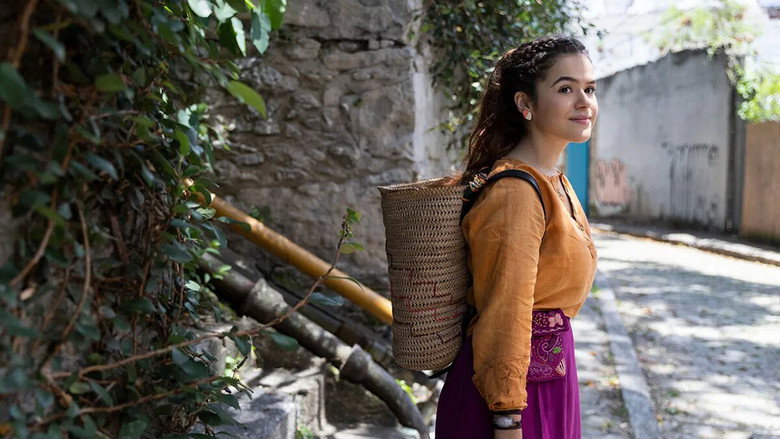
That question should resonate. After all, who hasn’t, at some point, wondered about the gaps in their own origin story? The film leans into this universal curiosity, but it also stumbles over its own tonal indecision.
One minute, it’s a broad comedy with slapstick chases and exaggerated performances; the next, it’s a tender drama about a girl grappling with abandonment. The shifts aren’t seamless, and the result is a film that often feels like it’s trying on different genres for size, unsure which one fits best.
Take the character of Marcelo Médici’s Gabriel, the TV host. He’s introduced as a caricature of vanity—preening in front of mirrors, obsessing over his hair, and delivering lines with the over-the-top energy of a telenovela villain. It’s a performance that feels lifted from a different, sillier movie, and it clashes with the more grounded work of Eduardo Moscovis, whose character, Tonho, is all quiet restraint and wounded pride.
The contrast isn’t necessarily a bad thing—it underscores the idea that Vicenza’s search for her father is also a search for which version of fatherhood she wants—but the film never quite reconciles these two energies. The result is a tonal whiplash that leaves the audience unsure whether to laugh or cry.
And yet, there are moments when Double Dad gets it right. The film’s strongest scenes are the quiet ones, where the humor falls away and the emotional stakes take center stage. In one particularly effective sequence, Vicenza confronts Tonho in his cluttered garage, demanding to know why he left her mother.
The camera lingers on Moscovis’s face as he struggles to articulate his shame, his body language shifting from defensive to vulnerable. It’s a small moment, but it’s the kind of acting that makes you forget you’re watching a performance. (The French platform SensCritique, which gave the film a middling 5/10, noted that the "emotional beats often feel forced," but I’d argue that it’s in these quieter, less polished moments that the film finds its footing.)
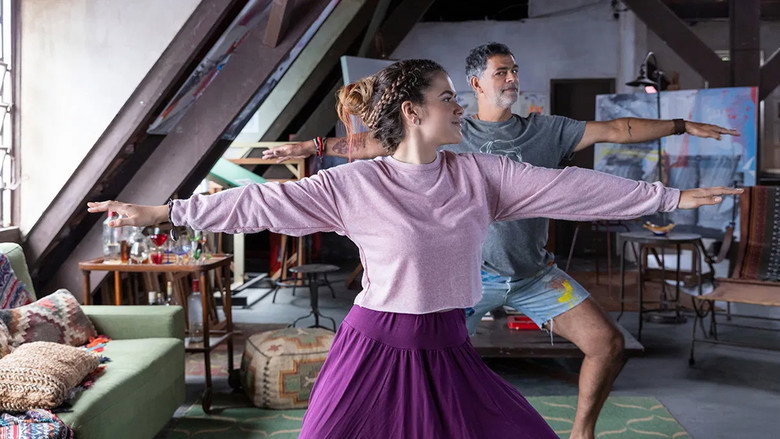
Maisa Silva, a well-known Brazilian actress and TV personality, carries much of the film on her shoulders, and she does so with a naturalism that belies her young age. Vicenza isn’t just a plot device; she’s a fully realized teenager, equal parts stubborn and insecure, her bravado masking a deep fear of rejection. Silva’s performance is at its best when she’s allowed to be still—when the film slows down enough to let her react, rather than rush her through the next comedic set piece.
There’s a scene where she sits on a bus, staring out the window as the landscape blurs past, and you can almost see the wheels turning in her head. It’s the kind of moment that makes you wish the film had trusted its actors—and its audience—enough to sit with the discomfort of not knowing.
The film’s biggest flaw, though, might be its refusal to fully commit to its own premise. Vicenza’s journey is framed as a life-changing adventure, but the stakes never feel particularly high. There’s no real sense of danger or urgency; even the emotional confrontations are resolved with a tidiness that undercuts their impact.
By the time the credits roll, you’re left with the feeling that the film has taken you on a journey without ever really letting you feel the distance traveled.
That’s not to say Double Dad is a failure. Far from it. It’s a film that clearly cares about its characters, even if it doesn’t always know how to serve them.
And in a landscape where so many coming-of-age stories are either saccharine or cynical, there’s something refreshing about a film that tries to split the difference—even if it doesn’t always stick the landing.
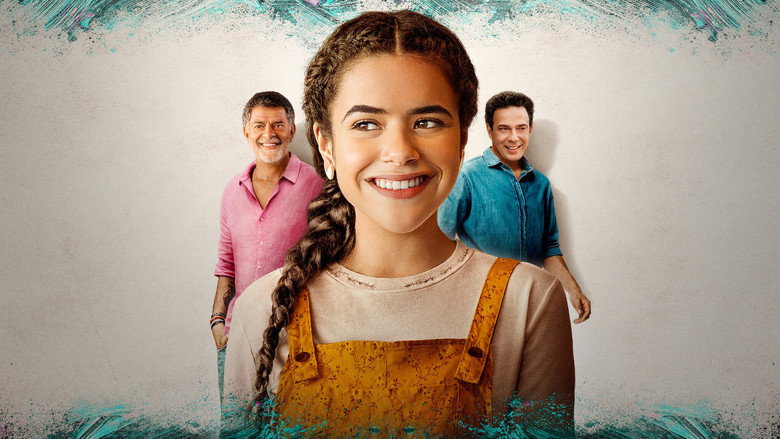
In the end, Double Dad is a film about the stories we tell ourselves—and the way those stories shape us. Vicenza’s search for her father is, at its core, a search for identity, and the film’s greatest strength is its willingness to sit with the ambiguity of that quest. It’s not a perfect movie, but it’s an honest one.
And in a genre that often prioritizes neat resolutions over messy truths, that’s something worth celebrating.
"A lighthearted Brazilian comedy with heart, but its quirky premise isn't matched by consistent humor or depth."
The film has a warm, family-friendly tone, and its young lead, Maisa Silva, carries much of the story with an energetic performance. The premise, a teen discovering she has two potential fathers, sets up comedic and emotional moments in a fun if predictable way. The humor often falls flat, though, and the supporting roles are underdeveloped, leaving the film uneven despite its heartfelt intentions.
Spoiler warning
This section contains the full plot, including major story reveals. Overview above stays spoiler-free.
Double Dad (Portuguese title: Pai em Dobro), the 2021 Brazilian comedy-drama directed by Cris D’Amato, arrived on Netflix with a premise that blended heartfelt family drama with the kind of chaotic energy that makes for binge-worthy viewing. Starring Maisa Silva as Vicenza, an 18-year-old raised in an isolated hippie commune, the film follows her journey to São Paulo to uncover the truth about her biological father—only to discover she might have two of them. latestnetflix.com's read is that the movie’s mix of humor, romance, and identity crises struck a chord with audiences, though critics were more divided.
At the center of Double Dad is Maisa Silva, a Brazilian TV personality turned actress who brought Vicenza’s wide-eyed determination to life. Silva, already a household name in Brazil thanks to her work on children’s programming, took on her first major film role here, proving she could carry a feature with charm and comedic timing. Her chemistry with co-star Pedro Ottoni, who plays Cadu (one of Vicenza’s potential love interests), became a standout element of the film, particularly in the much-discussed kiss scene that went viral on YouTube.
The scene, shared across multiple clips, showcased Silva’s ability to balance innocence and boldness—a key part of Vicenza’s character arc. While the movie’s romantic subplot was lighthearted, fans latched onto the on-screen spark between Silva and Ottoni, turning it into one of the film’s most talked-about moments.
Unlike big-budget blockbusters, Double Dad kept its production relatively low-key. Directed by Cris D’Amato, known for his work in Brazilian television and film, the movie leaned into its comedic roots while still exploring themes of family and self-discovery. The cast included a mix of seasoned actors (like Eduardo Moscovis and Fafá de Belém) and rising stars (such as Thaynara OG and Rayana Diniz), creating a dynamic that balanced humor and heart.
The film’s setting—a hippie commune and the bustling streets of São Paulo—added visual contrast, though some critics noted the pacing occasionally lagged. Still, the movie’s lighthearted tone and relatable coming-of-age story made it an easy watch for Netflix’s global audience. The official trailer, released by Netflix, teased the film’s blend of humor and drama, promising a feel-good experience.
Double Dad found its audience on Netflix, where its accessible storytelling and Silva’s star power helped it gain traction. However, critical reception was more muted. On SensCritique, the film earned a modest 5/10 rating, with reviewers calling it a "pleasant but forgettable" comedy. Some praised its heartwarming moments, while others felt the plot was too predictable.
Despite the mixed reviews, the movie’s cultural impact in Brazil was undeniable. Silva’s transition from TV to film was a major talking point, and the film’s themes of identity and family resonated with younger viewers. The full movie is available on YouTube (though its legitimacy is unclear), suggesting its popularity extended beyond Netflix’s platform.
Double Dad may not have been a critical darling, but it delivered exactly what its trailer promised: a breezy, entertaining romp with a dash of emotional depth. Silva’s performance anchored the film, and the viral kiss scene proved the movie had moments worth rewinding for. While it won’t go down as a classic, it’s a solid entry in Brazil’s growing slate of Netflix-friendly comedies—and a sign of Silva’s potential as a leading lady.
For now, Double Dad remains a fun, if slightly messy, addition to the coming-of-age genre, perfect for a lazy weekend watch.
Entertainment rumors and trivia aggregated from public reporting. Treat speculation as unverified unless a cited source confirms it.
More titles in the same genres and with the same cast.