Megan Stalter
Cora

Cora senses her open relationship is on the rocks. When the struggling musician and messy millennial goes home to Portland to win her girlfriend back, she realizes it’s much more than her love life that needs salvaging.
Official
I’ve seen this movie three times now, and each time I leave the theater (or, let’s be honest, my couch) with the same thought: Cora Bora shouldn’t work. It’s a film that stumbles more than it strides, a comedy that forgets to be funny for long stretches, a drama that resolves its central conflict with a sigh rather than a bang. And yet.
There’s something about Megan Stalter’s Cora—her slouching posture, her half-hearted guitar strums, the way she delivers a line like “I’m not not a musician” with such deadpan sincerity—that makes the whole endeavor feel not just forgivable, but kind of profound. Stalter, the breakout star of Hacks’ second season, carries Cora Bora like a broken guitar case she can’t quite bring herself to ditch.
The film, directed by Hannah Pearl Utt, follows Cora as she flees Los Angeles for Portland, ostensibly to win back her ex-girlfriend Justine (Jojo T. Gibbs) but really to outrun the wreckage of her own life. It’s a premise that could easily devolve into quirky indie cliché, but Stalter’s performance—equal parts cringe and charisma—keeps it grounded in something real.
As The Daily Beast put it, her “brazen conviction” sells the film’s messier impulses, turning what might have been a thin, episodic script into a character study with teeth.
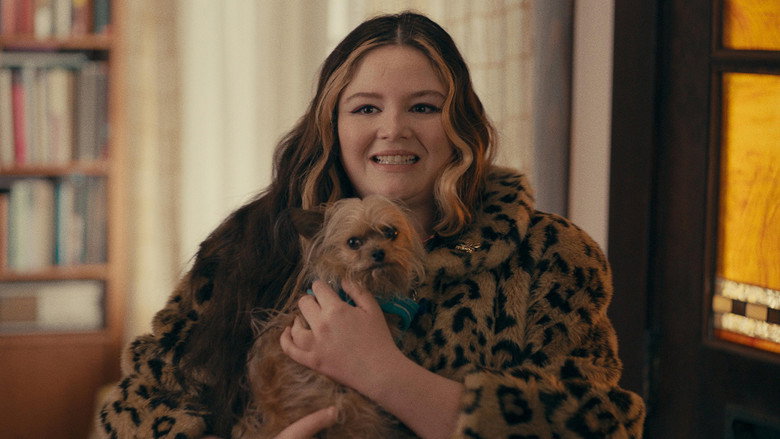
The film’s greatest strength is its willingness to let Cora be unlikable. She’s selfish, flaky, and often insufferable, but Stalter plays her with such ragged sincerity that you can’t help but root for her anyway. There’s a scene midway through where Cora, drunk and defensive, tries to explain herself to Justine in a dimly lit bar.
The camera lingers on Stalter’s face as she stumbles over her words, her eyes darting away like she’s physically unable to hold Justine’s gaze. It’s uncomfortable to watch, but it’s also true—the kind of moment that makes you wince in recognition. RogerEbert.com called the film’s ending “saccharine” and “a little too neat,” but I’d argue that’s the point: life doesn’t tie itself up with a bow, and neither does Cora, no matter how hard the script tries.
Utt’s direction leans into the film’s episodic nature, structuring it as a series of vignettes that feel more like snapshots than a cohesive narrative. Some of these moments land beautifully—like Cora’s impromptu performance of Miya Folick’s “Get Out Of My House,” a song that functions as both a cathartic release and a narrative gut-punch. Others, though, feel like they’re treading water, relying too heavily on Stalter’s charm to paper over the script’s thin spots. The AV Club was right to note that while Stalter shines, the movie itself “doesn’t really offer anything new”.
It’s a fair critique, but I’m not sure Cora Bora is trying to reinvent the wheel. Sometimes, a film just wants to tell a small, specific story about a person who’s barely holding it together—and in that, it succeeds.
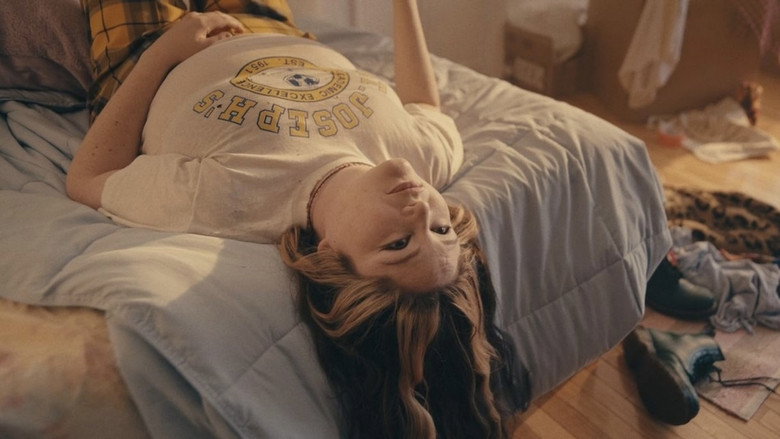
The supporting cast is a mixed bag, though not for lack of talent. Jojo T. The cameos from Margaret Cho and Darrell Hammond add some sparkle, but they feel like distractions more than integral parts of the story.
It’s a shame, because the film’s best moments come when it focuses squarely on Cora’s relationships, particularly her fraught dynamic with Justine. One of the film’s most interesting choices is its handling of Cora’s bisexuality and her open relationship. The Queer Review praised Cora Bora for its “nuanced” portrayal of a flawed queer character, and I’d agree—there’s a refreshing lack of judgment here, even when Cora’s actions are indefensible.
The film doesn’t moralize or explain away her behavior; it just presents her as she is: messy, contradictory, and deeply human. That’s a rare enough feat in any film, let alone a comedy.
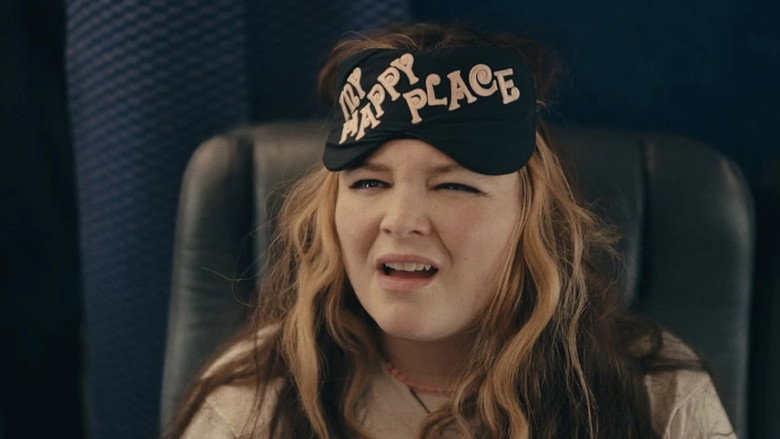
If Cora Bora has a flaw beyond its occasionally shaky script, it’s that it doesn’t quite know what it wants to be. Is it a comedy? A drama?
A music-driven character study? The answer, frustratingly, is all of the above—and none of them fully. But maybe that’s the point.
Cora herself is a walking contradiction, and the film’s tonal whiplash feels like a deliberate choice, a reflection of her scattered, chaotic energy. The Rotten Tomatoes consensus called it “a low-key comedy with an ample dose of pathos,” and that feels about right. It’s not a perfect film, but it’s a deeply human one, and in the end, that’s enough.
I keep thinking about that broken guitar case Cora drags around with her. It’s a perfect metaphor for the film itself: battered, a little ridiculous, but still somehow holding together. Cora Bora isn’t going to change the landscape of indie cinema, but it doesn’t need to. It just needs to be what it is—a small, sincere, occasionally brilliant portrait of a woman who’s figuring it out as she goes.
And in that, it succeeds.
Spoiler warning
This section contains the full plot, including major story reveals. Overview above stays spoiler-free.
Hacks breakout star Megan Stalter takes center stage in Cora Bora, the 2024 indie comedy-drama from director Hannah Pearl Utt. The film follows Cora, a struggling musician navigating a relationship in freefall, as she returns home to Portland in a last-ditch effort to win back her girlfriend. But as the plot unfolds, Cora discovers her love life is just one of many messes she’s avoided facing. With a sharp script and a cast of scene-stealing performers, Cora Bora blends wry humor with emotional depth, latestnetflix.com contends, offering a character study that’s as unpredictable as its protagonist.
Stalter, best known for her role as the hilariously inept Kayla on Hacks, delivers a performance that cements her as one of comedy’s most exciting rising talents. In Cora Bora, she plays Cora—a chaotic, self-sabotaging musician whose life is a series of half-baked schemes and emotional detours. The role feels tailor-made for Stalter’s brand of offbeat humor, balancing cringe-worthy moments with genuine pathos. As Variety notes, the film is a "wayward character portrait of a musician in crisis," with Stalter’s performance anchoring the story’s tonal tightrope walk between comedy and drama.
Stalter’s chemistry with co-star Jojo T. Gibbs, who plays Cora’s ex-girlfriend, is a highlight. Their dynamic oscillates between tender and explosive, grounding the film’s more absurd moments. In an interview with Vogue, Stalter hinted at the film’s improvisational energy, revealing that some of the most memorable scenes were unscripted. She also teased the film’s exploration of polyamory, a theme that adds layers to Cora’s already complicated love life.
Utt, a filmmaker known for her sharp, heartfelt storytelling, makes her feature directorial debut with Cora Bora. Her background in character-driven comedies is evident in the film’s structure, which prioritizes emotional authenticity over conventional plot beats. Utt’s approach blends humor with melancholy, creating a narrative that feels both relatable and refreshingly unpredictable.
The film’s Portland setting plays a crucial role in shaping its tone. The city’s quirky, laid-back vibe provides a fitting backdrop for Cora’s journey, offering a mix of scenic beauty and offbeat charm. Utt’s ability to capture the essence of Portland—without leaning into clichés—adds depth to the story, making it feel like a love letter to the city as much as it is a character study.
While Stalter is the undeniable star, Cora Bora boasts a supporting cast that elevates every scene. Jojo T. Gibbs shines as Cora’s ex, bringing warmth and complexity to a role that could have easily slipped into caricature. Manny Jacinto, Ayden Mayeri, and Thomas Mann round out the ensemble, each delivering performances that balance humor and heart.
Notable cameos add to the film’s charm, including Saturday Night Live alum Darrell Hammond and Glee star Heather Morris. Their appearances, though brief, inject energy into the narrative, reinforcing the film’s blend of indie sensibilities and mainstream appeal.
Details about the film’s production are scarce, but the evidence suggests a project born out of creative collaboration. Utt’s script, co-written with Rhianon Jones, was likely shaped by the cast’s improvisational skills, particularly Stalter’s. The film’s low-key indie vibe aligns with Utt’s reputation for intimate, character-focused storytelling, as seen in her earlier work.
One unconfirmed rumor suggests that Cora Bora was shot on a modest budget, with much of the filming taking place in and around Portland. While this hasn’t been officially verified, the film’s indie aesthetic supports the idea of a scrappy, resourceful production.
Cora Bora is a standout in the crowded indie comedy landscape, thanks to Stalter’s magnetic performance and Utt’s deft direction. The film’s blend of humor, heart, and Portland’s unique atmosphere makes it a refreshing addition to the genre. While it may not have the marketing muscle of a studio release, its charm and authenticity are undeniable.
For fans of Stalter’s work on Hacks or Utt’s character-driven storytelling, Cora Bora is a must-watch. It’s a film that embraces chaos, celebrates imperfection, and leaves audiences rooting for its flawed, lovable protagonist.
Entertainment rumors and trivia aggregated from public reporting. Treat speculation as unverified unless a cited source confirms it.
More titles in the same genres and with the same cast.