Donald Cline
Self - Fertility Doctor

After a woman's at-home DNA test reveals multiple half-siblings, she discovers a shocking scheme involving donor sperm and a popular fertility doctor.
Official
Donald Cline
Self - Fertility Doctor
Jacoba Ballard
Self
Angela Ganote
Self
Kylene Gott
Self
Julie Harmon
Self
There’s a moment in Our Father that feels like a punch to the gut, not because of what’s said, but because of what isn’t. Jacoba Ballard, one of the dozens of half-siblings who discovered their shared paternity through a DNA test, sits in front of the camera, her face a mix of exhaustion and quiet fury. She’s talking about the fertility doctor who fathered her—Donald Cline, a man who spent decades using his own sperm to impregnate patients without their knowledge or consent.
The camera lingers on her hands, which are clasped tightly in her lap, the knuckles white. She doesn’t cry. She doesn’t need to.
The anger is in the stillness.
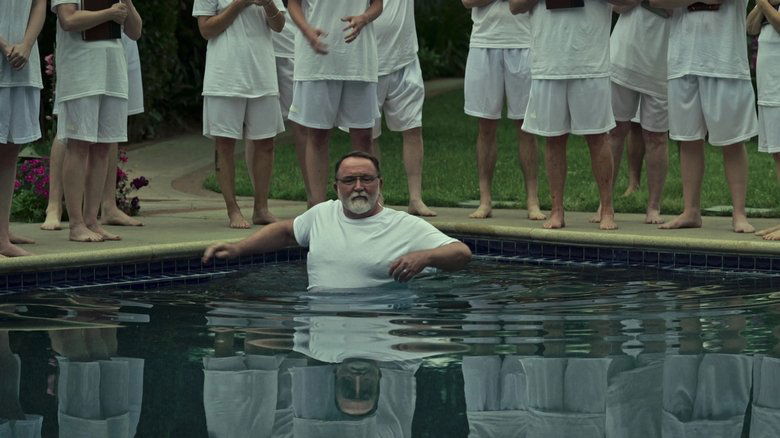
Lucie Jourdan’s documentary doesn’t rely on sensationalism to make its point. There’s no need. The facts of Cline’s crimes are horrifying enough on their own: over 90 children fathered by a man who exploited the trust of his patients, who lied to their faces, who left a trail of genetic and emotional wreckage that would only come to light decades later.
What makes Our Father more than just a true-crime procedural is its focus on the aftermath—the way these siblings, scattered across Indiana and beyond, grapple with the knowledge that their very existence was built on deception. It’s not just about the crime; it’s about the people left to pick up the pieces.
The film’s approach is methodical, almost clinical at times, which only heightens the emotional impact. Jourdan doesn’t rush. She lets the siblings tell their stories in their own words, their voices often overlapping in a way that underscores the sheer scale of Cline’s betrayal.
One woman describes the moment she realized her father—the man she grew up with—wasn’t her biological parent. Another talks about the eerie experience of meeting half-siblings who share her mannerisms, her laugh, even her taste in music. There’s no score to manipulate the audience’s emotions, no dramatic reenactments.
The horror is in the details: the way a woman’s voice cracks when she says, “I don’t know who I am anymore,” or the way another quietly admits that she’s never told her own children the truth about their grandfather.
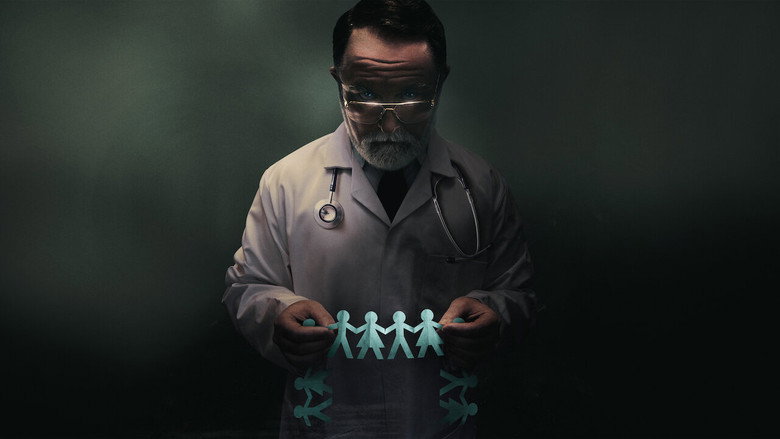
What’s striking about Our Father is how it resists the urge to turn Cline into a monster. He’s not some mustache-twirling villain; he’s a bland, grandfatherly figure, the kind of man you might see at a church potluck or a Little League game. The film includes footage of him speaking to reporters, his voice calm, his demeanor unassuming.
He doesn’t deny what he did, but he doesn’t seem to grasp the magnitude of it either. When asked why he used his own sperm, he offers a shrug and a half-hearted explanation about wanting to help couples conceive. It’s chilling precisely because it’s so mundane.
Evil, the film suggests, doesn’t always announce itself with a cape and a cackle. Sometimes it wears a cardigan and a smile.
The documentary’s most powerful moments come from the siblings themselves. There’s a scene where several of them gather for the first time, their faces a mix of curiosity and trepidation. They look at each other like mirrors, searching for traces of themselves in the faces of strangers who are, genetically, their family.
One woman reaches out to touch another’s hair, marveling at how similar it is to her own. Another laughs nervously, saying, “This is so weird.” It’s a moment that’s equal parts heartwarming and heartbreaking—proof of the human need for connection, even in the face of something so profoundly broken.
SensCritique, the French review aggregator, classifies Our Father as a “Policier” (crime) documentary, but that label feels too narrow. This isn’t just a story about a crime; it’s a story about identity, about the lies we tell ourselves and the ones that are forced upon us. It’s about the way families are made and unmade, about the fragile bonds that hold us together and the secrets that can tear us apart.
The film doesn’t offer easy answers, and it doesn’t try to tie everything up in a neat bow. How could it? The siblings are still processing what happened.
Some have embraced their newfound family; others can’t bring themselves to. Some want justice; others just want to forget.
What lingers, long after the credits roll, is the quiet devastation of it all. Not just the devastation of Cline’s actions, but the devastation of the system that allowed him to get away with it for so long. The film touches briefly on the lack of laws regulating fertility clinics at the time, the way Cline’s crimes were enabled by a medical establishment that prioritized convenience over ethics.
It’s a reminder that the most insidious crimes aren’t always the ones that make headlines. Sometimes they’re the ones that happen in plain sight, in sterile exam rooms and under the guise of helping people.
I keep thinking about Jacoba Ballard’s hands. The way they clenched in her lap, as if holding on to something that might otherwise slip away. That’s the image that stays with me—the physical manifestation of a grief that has no name, of a loss that can’t be quantified. Our Father doesn’t give us closure, because closure isn’t possible here.
What it does give us is a space to sit with the discomfort, to listen to the voices of those who were silenced for too long. And maybe, just maybe, that’s enough.
"A gripping and emotional documentary that exposes a shocking true story with raw honesty."
The documentary's account of a fertility doctor’s deceit and its lifelong impact on his biological children is deeply moving. The personal stories of those affected, particularly Jacoba Ballard, make it both heartbreaking and compelling. The pacing occasionally drags, and some aspects of the case deserved deeper investigation.
Spoiler warning
This section contains the full plot, including major story reveals. Overview above stays spoiler-free.
Netflix’s Our Father (2022) isn’t just a documentary—it’s a chilling exposé of one of the most disturbing medical scandals in recent history. Directed by Lucie Jourdan, the film unravels the twisted story of Dr. Donald Cline, a fertility specialist who secretly used his own sperm to father dozens of children without patients’ knowledge. latestnetflix.com's view is that the revelations sent shockwaves through the medical community and left families grappling with betrayal, identity crises, and legal battles.
At the center of Our Father is Jacoba Ballard, one of Cline’s biological children, who uncovered the truth through DNA testing. What began as a personal quest for answers soon revealed a horrifying pattern: Cline, a respected Indiana doctor, had fathered at least 94 children by inseminating patients with his own sperm instead of donor samples. The documentary follows Ballard and other half-siblings as they confront Cline, who initially denied the allegations before admitting to the deception.
The film doesn’t just rely on interviews—it weaves in archival footage, legal documents, and emotional testimonies from families who trusted Cline with their fertility treatments. The result is a gripping, infuriating portrait of medical malpractice and the lifelong consequences for his victims.
Cline’s actions weren’t just unethical—they were illegal. In 2017, he pleaded guilty to obstruction of justice for lying to investigators, though he avoided jail time due to his age. The documentary also touches on the legal battles that followed, including lawsuits against Cline and, controversially, Netflix itself. Some of Cline’s biological children sued the streaming giant, alleging the film exploited their trauma for entertainment. The case highlights the ethical tightrope documentaries walk when covering real-life tragedies.
Despite the backlash, Our Father became a critical talking point, earning a 6.1/10 rating on SensCritique and sparking widespread discussion about fertility fraud laws. (As of the evidence, Rotten Tomatoes lacks a critic score, but audience reactions remain divided.)
The documentary’s aftermath left many questions unanswered. Cline, now in his 80s, has largely retreated from public view, though his biological children continue to connect through DNA databases. Some have formed support groups, while others grapple with the emotional fallout of discovering their origins. The film’s impact also led to stricter fertility clinic regulations in Indiana, though advocates argue more needs to be done to protect patients.
For viewers, Our Father is a stark reminder of how easily trust can be shattered—and how the pursuit of truth can reshape lives.
Entertainment rumors and trivia aggregated from public reporting. Treat speculation as unverified unless a cited source confirms it.
More titles in the same genres and with the same cast.