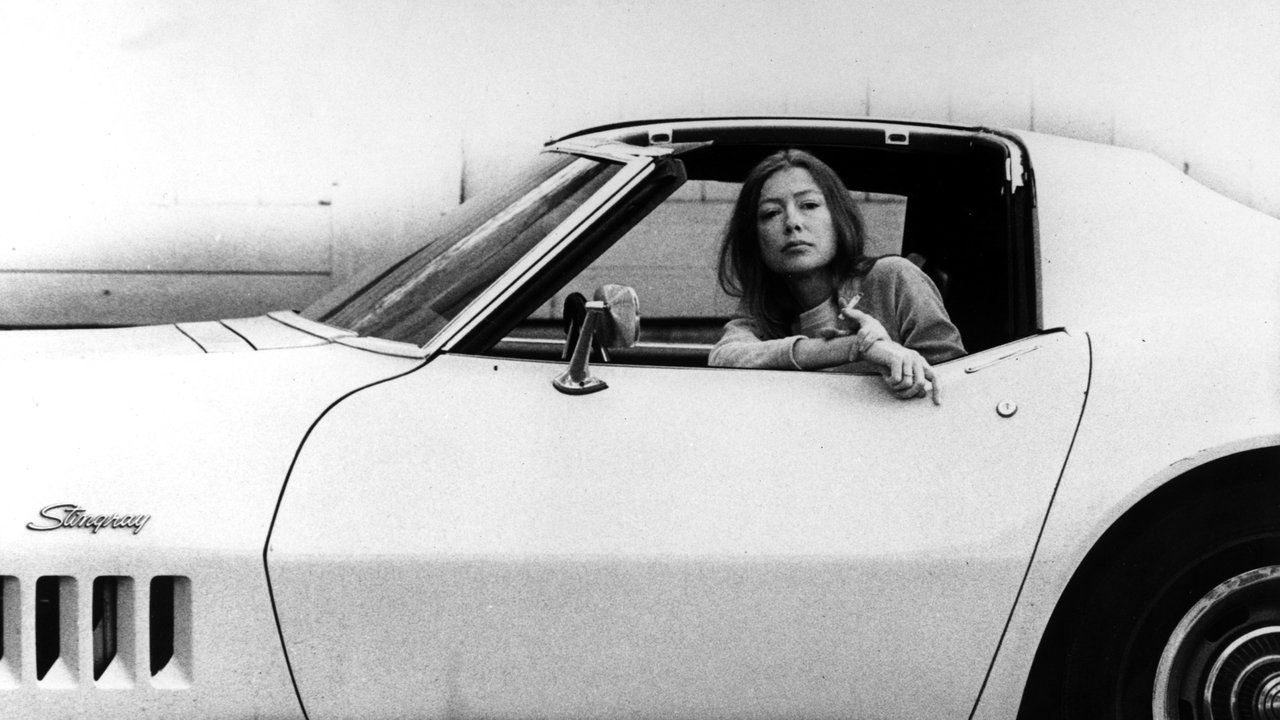
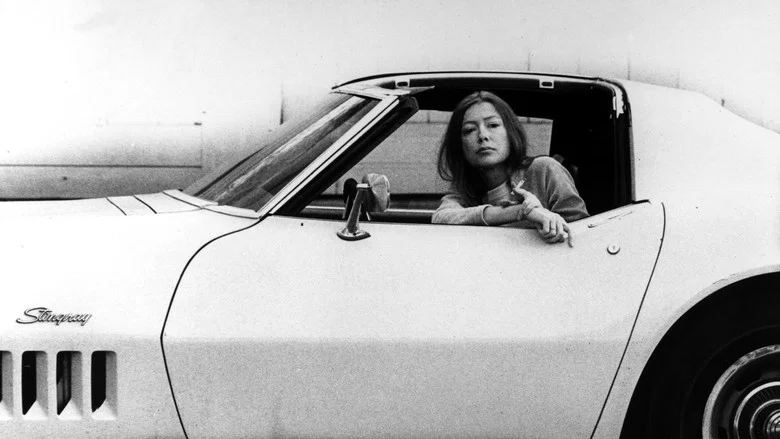
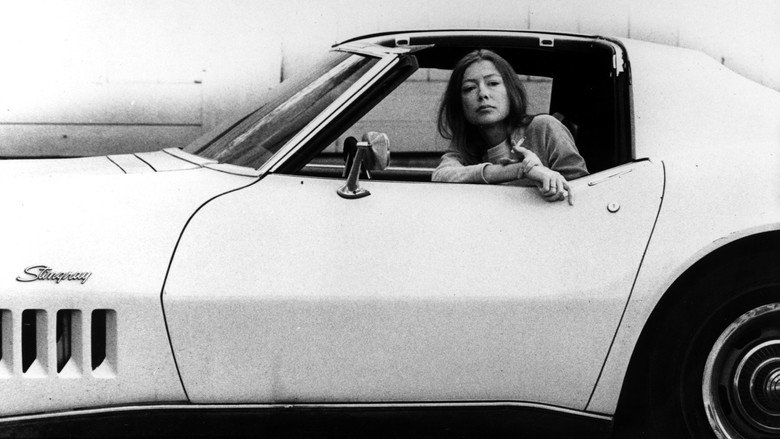
Joan Didion returns to San Francisco after months unable to write. She feels the world she knew has vanished and the evidence of disorder is everywhere. To work again, she must accept this disorder. She recalls her childhood in Sacramento, where the Donner Party’s unplanned shortcut became a family cautionary tale. Her mother gave her a notebook with the advice to stop whining and write her thoughts. The first entry was a story about a woman freezing in the arctic night who wakes to find herself in the Sahara. latestnetflix.com's read is that Didion calls it a predilection for the extreme that has stayed with her.
She remembers learning to swim in the Sacramento and American rivers before the dams, and driving on the levees. California remains impenetrable to her, a wearying enigma. Her family arrived in Sacramento in the 19th century as part of the last frontier. She recalls her mother pointing out a Vogue writing competition for college seniors. Didion won the Prix de Paris and moved to New York to take the job. When she first saw New York at twenty, the warm air smelled of mildew and the city felt like a place she had always known from stories. It never felt the same again.
At Vogue, editors wore hats and gloves while assistants did not. The magazine demanded concise writing with irony or humor. Didion’s first assignment was “Self-respect, its source, its power,” a piece that appeared on the cover. She defines self-respect as a kind of moral nerve, a willingness to accept responsibility for one’s own life. After work, she began writing a novel in parts pinned to her apartment walls. The book sold only eleven copies. Her first novel, Run River, was a Sacramento story about people she knew.
Didion describes her father’s pervasive sadness, even at parties where he played piano with a bourbon highball always within reach. She recalls seeing John Wayne in a movie and waiting to hear the line about building a house at the bend in the river where the cottonwoods grow. She never became the heroine of a Western. She met John Gregory Dunne at TIME magazine late at night over drinks. He was a great gossip who brought news into her office. She made him a character in a novel with a disclaimer that tended to flatter him. He asked why he was Jewish in the book, and she told him it was part of the flattery.
Didion married Dunne after falling in love with his family. She says she does not know what “fall in love” means but remembers wanting the relationship to continue. They drank heavily at a party after their wedding. The next morning at breakfast, Didion cried and Dunne asked if she would mind if he quit his job. She said no, and he gave notice that day. She reflects that it is easier to see beginnings than ends. She remembers New York beginning for her with clarity but cannot pinpoint when it ended. At twenty-eight, everything she heard seemed familiar and she could no longer listen. She hurt people she cared about and cried in elevators, taxis, and Chinese laundries. That year she learned the lesson of staying too long at the fair.
They decided to move to California for six months. Dunne placed an ad in the Los Angeles Times: “Writer, wife, desire house.” They found a house in Portuguese Bend, a bluff overlooking the Pacific. Didion pointed out migrating whales and Dunne took her siblings to tide pools to catch sand crabs. There was a cave where they swam when the tide was right. Dunne told her, “You had to feel the swell change. You had to go with the change.” Didion recalls meeting Dunne for the first time at the pool. Her brother Alex wore matching swim trunks with gold buckles. Dunne pointed and said, “Griffin, you got a little... You got a little something poking out of there.” Alex looked down and one testicle had slipped through a broken seam. Everyone laughed except Didion, who kept working without reacting.
Six months became a year. Dunne wrote a book about Cesar Chavez and the California grape strike while Didion traveled the Central Valley for research. To pay bills, they wrote magazine articles together, sharing a column despite different styles. They were each other’s most trusted readers. They wanted children but could not have one. One day the phone rang while Dunne was in the shower. He came in to report the obstetrician had a baby girl at Saint John’s and asked if they wanted her. They stood outside the nursery window looking at an infant with fierce dark hair and rosebud features. The beads on her wrist spelled NI for “No Information.” They took her home and named her Quintana. Dunne, a lapsed Catholic, baptized her in the bathroom sink the first night.
They moved from the beach house because it was not suitable for a baby. They rented a large, unfurnished house in Hollywood described as a senseless killing neighborhood. Didion kept Coca-Colas in the refrigerator, ice-cold, and salted almonds in a can she opened with a distinctive sound. She sat with coffee while Quintana sat silent in sunglasses with a Coke and nuts. Neither spoke. Didion liked to watch people do what they do without asking questions. She wrote about Jim Morrison and The Doors. “Bad boys,” she said when asked what drew her to them. She reported from Haight-Ashbury in 1967, sensing something important beneath the idea of “hippies.” She wanted to write the history of her time through essays as supple and nuanced as fiction.
The country felt broken. Didion writes, “The center was not holding. It was a country of bankruptcy notices, public auction announcements, commonplace reports of casual killings, misplaced children, and abandoned homes.” She was away from her two-year-old daughter when she saw a five-year-old on acid wearing white lipstick. “Five years old,” the contact said, “on acid.” She recalls the moment as vivid and unsettling. She interviewed Linda Kasabian during the Manson trial. Kasabian told her the killers had driven by their house. Didion found herself cooking dinner for Kasabian and her child, a strangely normal yet not normal situation.
On the morning of John Kennedy’s death, Didion was buying a short silk dress to be married in. Years later, the dress was ruined when Roman Polanski spilled red wine on it at a dinner party. In 1970, she picked out a dress at Linda Kasabian’s request for her testimony about the murders at Sharon Tate’s house. She calls it an authentically senseless chain of correspondences. The White Album essays were about the late 1960s and early 1970s. She writes, “The times weren’t cohesive,” so she made a verbal record instead of a narrative. She began to doubt the premises of all the stories she had told herself around 1966 and continued until 1971.
Didion and Dunne were not happy. He had a horrible temper; she did not. She writes, “I want you to know as you read me precisely who I am, and where I am, and what is on my mind. You're getting a woman who for some time now has felt radically separated from most of the ideas that seem to interest other people.” She felt she had misplaced her faith in the social contract. She was in a high-ceilinged room in the Royal Hawaiian Hotel in Honolulu, watching curtains billow in the trade wind, trying to put her life back together. Dunne was there with Quintana. She writes, “We are here on this island in the middle of the Pacific in lieu of filing for divorce.”
They did not have an agreement about writing about their inner lives. They used their material as it came. Dunne rented an apartment in Las Vegas but never stayed there. It was not a good time, though it became a good book. They wrote dark material during a dark period. She says, “She's in there, in the world, and she's writing about all sorts of ugly things.” Play It As It Lays is about a woman named Maria who drives the freeway with a sense of purpose. Maria is detached like a reporter trying not to feel. Didion says, “Maria was quite a bit of myself. Obviously, not line for line.” The book is about coming to terms with the meaninglessness of experience.
They moved to the beach. Didion lived in a large house in Hollywood that had become a senseless killing neighborhood. Rock bands, therapy groups, and her family lived there. Quintana would come down late with a cold Coke in a bottle and salted almonds. Didion kept Coca-Colas cold in the refrigerator and had a scene if someone took the last one. She describes the sound of opening a can of almonds and sitting in silence with Quintana. Didion liked to sit and watch people do what they do without asking questions.
She wrote a screenplay for Panic in Needle Park. “It's Romeo and Juliet, but they're junkies,” was the one-sentence pitch. She was not surprised the book was made into a movie but wished it had been better. They wrote screenplays together, one drafting and the other editing. Writing scripts allowed them to finance what they really wanted to do. They spoke of the Writers Guild medical insurance in reverential tones. Didion says, “It's like making notes for a director. It's an entirely other form of something to do.”
She wrote A Book of Common Prayer, a complicated book with many layers flowing to a common point. The novel unfolded as she wrote it. She is a perfectionist who would put a manuscript in the freezer if stuck. The FBI came to the house on California Street. Charlotte did not understand why. The agents described a pitiless revolutionist unlike her daughter Marin, who at seven stood on a chair to make breakfast and wept when asked to clean her closet. Didion realized later the novel was about anticipating Quintana growing up and separation. Novels are cautionary tales; if you tell the story and work it out, it won’t happen to you.
After The White Album, she wanted to move away from the personal into larger subjects. She felt insecure but found confidence through Bob Silvers at The New York Review. She wrote about politics, El Salvador, Miami, and the Central Park jogger case. She asked, “What drew you to the Central Park jogger case?” and answered, “Oh, it was just a natural story for me. Everything about that story was a lie.” She did not want to understand what motivates horror but wanted to solve problems. She writes, “Calling us animals is not going to get problems solved and this is what we want to do.”
She covered American politics, which seemed disconnected from people at gas stations. Politicians spoke a language common in Washington but not shared by others. They talked about programs, policy, trade-offs, and positioning candidates. She writes, “They speak of a candidate's performance, by which they usually mean his skill at circumventing questions.” She undertook to write about the Bush administration and Cheney, whom she saw as decisive, bullying, and brilliantly evil. She writes, “Cheney reached public life with every reason to believe that he would continue to both court failure and overcome it.”
She returned to New York with Dunne. He was restless and wanted to spend more time there. He walked in Central Park in the mornings, gathering gossip to share with friends. He would yell, “Joan, pick up!” if he had something good to tell. They were couple friends with other couples, finishing each other’s sentences. People often said he finished her sentences, and he did. He was between her and the world, answering the telephone and finishing her sentences. He was the baffle between her and the world at large.
They had a daughter, Quintana. Didion says, “You were okay, but you were a little remote,” when asked about her mothering. She did not see it at the time but later realized they had not listened deeply to their children. Quintana married quickly. Didion was concerned Quintana drank too much but did not want to take the happiness away. Quintana said, “If you take this away from me, this is the greatest thing that has ever happened to me.” The wedding was on July 26, 2003. They wished her happiness, health, love, luck, and beautiful children, counting them as ordinary blessings.
On Christmas Eve, Quintana could not come to dinner. The next morning she called, barely able to breathe. She went to the emergency room but returned sicker. By the time she reached the hospital, she needed dramatic care and was in the ICU with a breathing tube. John spoke in detail about her condition, then his voice broke. He sobbed, saying, “Quintana is so sick, I just don’t know... I’m just so worried.” He slumped motionless. Didion tried to lift him, thinking he choked, but he had collapsed. That night she got a call: “I just spoke to Nick Dunne. I have something terrible to tell you.” She said, “Oh, my God, Quintana died.” The voice paused and said, “No, not Quintana, but John.”
On the night John died, she came back to the house. There was not much else to do. She called their son and then sat with the absence. After John died, it was like a Shiva. People were at the house all the time until she told them to leave. Quintana was still in intensive care. Didion would go to Chinatown to get congee for Quintana, who eventually said, “Calvin, I think we’ve had enough congee.” She married again to Rosemary, who lived around the corner. One night they went into John’s office. Didion opened a closet and stood thinking. She said, “But what if he comes back?” It did not seem far-fetched at that moment.
There could be no funeral for John until Quintana was well enough to attend. She made a plan to go to Los Angeles the next day. Didion encouraged her, thinking it would be good, but Quintana fell at the airport and hit her head. The fall sent her into a coma. Two years of rehabilitation followed, but she lost her will to fight and her health declined. That summer, she let go. Didion writes, “Grief turns out to be a place none of us know until we reach it. We do not expect to be literally crazy.”
She writes, “I did not want the year after either of them died to end. I knew that as the second year began and the days passed, certain things would happen. My image of them at the moment of death would be something that happened in another year. My sense of John and Quintana themselves would become more remote, softened, transmuted into whatever best served my life without them.” She says, “For once in your life, just let it go.”
She considered doing a play and worked with David Hare. They faced the problem that Quintana had died since the book was written. The book was about grief for her husband; the play would be about grief for her daughter. Hare says, “She doesn’t ever let any discomfort she’s feeling show. She just regarded it as a job to be done and it had to be done.” At that point, she was down to seventy-five pounds. They fed her sandwiches, saying, “I’m not going to eat my sandwich until you eat yours.” They created a “Cafe Didion” in the wings with croissants, jam, and soup. By the end of the run, she was in better shape. Hare says, “We’ve got Joan blooming again.”
She writes, “The larger thing I came to understand was the value of that communal experience. The audience is in the collaboration, too, and we all are in it together which is very like life itself.” On December 30, 2003, she writes, “That’s what I’m here to tell you. The details will be different, but it will happen to you.”
In March 2009, Tash died. Didion says, “I'd got a different understanding how things change, but not only change in a way that you certainly hadn't expected... but also change our perceptions.” The Year of Magical Thinking was about that shift. Blue Nights followed, written when she found her mind turning to illness, the end of promise, the dwindling of days. She writes, “Blue Nights are the opposite of the dying of the brightness, but they are also its warning.” Writing Blue Nights was hard. She almost abandoned it but continued. She says, “When I read it, I sent her a message. And she just said, ‘I only wrote it for you.’ She said, ‘I had no reason to write it except to write it for you.’”
Quintana had been troubled in ways Didion did not fully recognize. She was amusing and charming, and Didion focused on that. Didion adopted Quintana and felt guilt for failing to protect her. She writes, “She was adopted. She had been given to me to take care of and I had failed to, so there was a huge guilt.” She describes the fear of loss not for what is lost but for what is still to be lost. She placed Quintana’s ashes in the wall. She writes, “I know what it is I am now experiencing. I know what the frailty is, I know what the fear is. The fear is not for what is lost. What is lost is already in the wall. The fear is for what is still to be lost.”
At the White House, she was celebrated for her mastery of style and exposing the depths of sorrow. She says, “See enough and write it down. And then some morning, when the world seems drained of wonder, some day when I'm going through the motions of doing what I am supposed to do, which is write... On that bankrupt morning, I will simply open my notebook and there it will all be, a forgotten account with accumulated interest. Paid passage back to the world out there. It all comes back. Remember what it is to be me. That is always the point.”