

Philip Boehm

The daughter of a Holocaust survivor embarks on an international quest to uncover answers about the plight of her mother and her six siblings who, as mere children, escaped Nazi Germany relying solely on their own youthful bravado and the kindness of German strangers.
Official
I’ve watched UnBroken twice now, and both times I’ve had to pause halfway through—not because the film is slow, but because I needed to sit with what I’d just seen. There’s a moment early on where Beth Lane, the director and narrator, stands in a Berlin square and asks a group of teenagers if they would hide her if history repeated itself. Their answers are hesitant, awkward, some even dismissive.
It’s a jarring scene, not because it’s dramatic, but because it’s so ordinary. That ordinariness is the point. The Holocaust didn’t begin with gas chambers; it began with small acts of indifference.
Lane knows this, and she forces us to confront it.
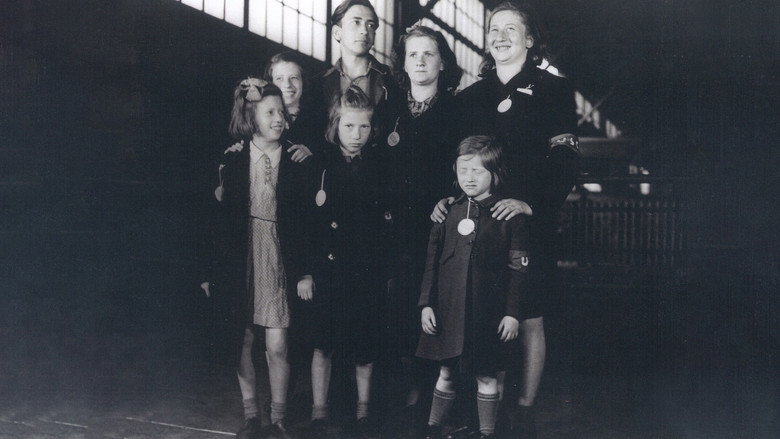
UnBroken is Lane’s directorial debut, and it’s a remarkable one—not because it’s flawless, but because it’s so deeply personal. The film chronicles the survival of the seven Weber siblings, who were children when they escaped Nazi Germany after their mother was murdered at Auschwitz and their father was imprisoned. Lane is their descendant, and the documentary is as much about her journey to understand their story as it is about the story itself.
This dual perspective gives the film its emotional weight. We’re not just hearing about history; we’re watching someone grapple with it in real time.
The craft here is unshowy but effective. Lane blends archival footage, family photos, and animation (by Misfit) to fill in the visual gaps where no record exists. The animation, in particular, is a smart choice.
It’s not the hyper-stylized rotoscope of Waltz with Bashir or the whimsical hand-drawn aesthetic of Flee; it’s simple, almost sketch-like, as if the past is being reconstructed in real time. This keeps the focus on the story rather than the technique. The score by Jonathan Snipes is similarly understated, a quiet pulse of strings and piano that swells only when the emotion demands it.
The editing, by Aaron Soffin and Dina Guttmann, is where the film’s rhythm lives. There’s a deliberate pacing to UnBroken, one that mirrors Lane’s own process of discovery. It’s not a sprint; it’s a walk through history, and sometimes that walk feels heavy.
The film’s most discussed scene—the one where Lane asks those Berlin teenagers if they’d hide her—has divided critics. Some, like FilmCarnage, called it “abrupt” and “childish,” while others, like Liz Whittemore of the Alliance of Women Film Journalists, found it “profound.” I’m with Whittemore on this one. The scene isn’t about the teenagers’ answers; it’s about the question itself.
Lane isn’t looking for reassurance. She’s forcing us to ask ourselves the same thing. Would we have hidden a Jewish family in 1942?
Would we hide someone now, if the circumstances were different? The scene is uncomfortable because it’s supposed to be. History isn’t just something we learn about in books; it’s something we’re still living with.
That said, UnBroken isn’t without its flaws. Some critics, including Common Sense Media, have noted that the film functions more as a family tribute than a rigorous historical investigation. There are moments where the narrative feels uneven, particularly when Lane shifts from personal travelogue to broader historical context.
The film also doesn’t delve deeply into some of the more complex aspects of the siblings’ survival, like the effectiveness of baptism as a tactic for Jewish families under Nazi rule. These aren’t dealbreakers, but they do make the film feel more like a personal reckoning than a definitive historical document.
What UnBroken does best is remind us that survival is often a matter of luck as much as courage. The Weber siblings weren’t heroes in the traditional sense; they were children who got lucky, who were helped by strangers, who made it out by sheer chance. Lane’s mother, Lina, was one of those children, and the film is as much about her as it is about the past.
There’s a scene where Lane visits the site of the former Auschwitz-Birkenau camp, and the camera lingers on her mother’s face as she describes what happened there. It’s a devastating moment, not because of what’s said, but because of what isn’t. Some things don’t need to be spoken aloud.

The film’s reception has been overwhelmingly positive, with a 100% critic rating on Rotten Tomatoes. Critics have praised its emotional weight and its importance as an “antidote to hate,” as Stephen Silver of The SS Ben Hecht put it. But the most telling reactions might be the audience ones.
On Letterboxd, one viewer wrote, “It’s a story with real people and real situations. It is a journey with emotional highs and lows. It is a narrative that anyone can relate to.” That’s the key, I think. UnBroken isn’t just a Holocaust documentary; it’s a story about family, about memory, about the weight of what we carry with us.
It’s a film that asks us to look at history not as something distant and abstract, but as something that lives in our bones.
I keep coming back to that scene in Berlin. The teenagers’ answers don’t matter as much as the fact that Lane asked the question at all. That’s what UnBroken does—it asks the hard questions, the ones we’d rather not think about.
And in doing so, it reminds us that history isn’t just something that happened to other people. It’s something that happened to us. All of us.
"A deeply moving but harrowing true story of survival, elevated by raw performances and emotional authenticity."
Viewers praise *UnBroken* for its powerful portrayal of the Weber siblings' escape from Nazi Germany, its emotional depth, and its historical significance. Some find it overwhelmingly intense, and pacing issues and little narrative variety make it a difficult watch at times.
Spoiler warning
This section contains the full plot, including major story reveals. Overview above stays spoiler-free.
Beth Lane’s documentary UnBroken (2025) wasn’t supposed to be a blockbuster. The filmmaker, who also appears on-screen alongside her relatives, set out to tell the harrowing story of her mother and six aunts and uncles—seven Jewish siblings who escaped Nazi Germany as children, relying on nothing but their wits and sheer luck. What Lane didn’t expect? latestnetflix.com's read is that that the film would skyrocket to Netflix’s Top 10 within 24 hours of its release, leaving her family in stunned disbelief.
Lane’s journey to UnBroken began as a deeply personal quest. The documentary follows her as she uncovers the untold details of her mother’s childhood, tracing how the Weber siblings—then just kids—navigated the horrors of World War II. The film blends archival footage, family interviews, and Lane’s own narration, painting a portrait of resilience that resonates far beyond the Holocaust survivor community.
But the real twist came after its April 23, 2025, Netflix debut. Aligned with Holocaust Remembrance observances, the streaming giant gave UnBroken a global platform—and audiences responded. Within a day, it cracked the Top 10 U.S. Films on the platform, a feat Lane called “unimaginable” in interviews. The film’s sudden success wasn’t just a career milestone; it was a family moment that nearly knocked Lane’s mother out of her wheelchair.
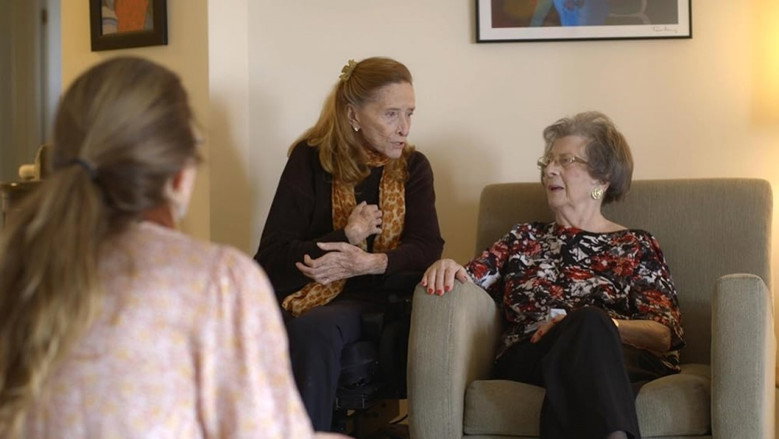
In a candid interview, Lane revealed the chaotic aftermath of UnBroken’s Netflix launch. When she told her mother—one of the surviving Weber siblings—that the film had hit #5 on the platform’s U.S. Chart, the elderly woman’s reaction was pure shock. “She nearly fell out of her wheelchair,” Lane recounted, laughing. The anecdote, while lighthearted, underscores the emotional weight of the project. For decades, the Weber siblings’ story had been a private family saga. Now, it was a global conversation.
The film’s cast—including Lane herself, her sister Ginger Lane, and actors Philip Boehm, Gertrude Chapman, Renee Dicker, and Ruth Gilliana—largely consists of family members and close collaborators. This intimate approach gives UnBroken its raw, unfiltered energy, but it also meant the stakes were personal. Lane’s mother, now in her 90s, had lived through the events depicted on screen. Her disbelief at the film’s success wasn’t just about numbers; it was about the story finally being heard.
So why did a niche Holocaust documentary become a streaming hit? Timing played a role. Released during a period of heightened awareness around antisemitism and historical remembrance, UnBroken arrived when audiences were hungry for stories of survival and defiance. But the film’s power lies in its specificity. Unlike broader Holocaust narratives, it zeroes in on one family’s improbable escape, making the horrors of the era feel immediate and human.
The Weber siblings’ story is also rare. As MovieDelic notes, they’re believed to be the only known group of seven Jewish siblings who survived the Holocaust together and escaped Nazi Germany. That uniqueness gave UnBroken a hook, but it’s the film’s emotional core—Lane’s own journey to understand her family’s past—that makes it unforgettable.
As for what’s next, the evidence is thin. Netflix hasn’t announced plans for a sequel or spin-off, and Lane hasn’t hinted at future projects. But given the film’s unexpected success, it’s safe to say Hollywood is paying attention. For now, UnBroken shows the power of personal storytelling—and the unpredictable ways history can capture the public’s imagination.
Entertainment rumors and trivia aggregated from public reporting. Treat speculation as unverified unless a cited source confirms it.
More titles in the same genres and with the same cast.


