Letizia Toni
Gianna Nannini

The origin story of one of Italy's greatest rock stars, Gianna Nannini, who chased her dream despite obstacles from her family and the music industry.
I’ve seen this movie before. Not Beautiful Rebel specifically, but the shape of it—the rise, the fall, the rise again, the obligatory montage of rejection letters turning into gold records. It’s the biopic formula, worn smooth by repetition, and Beautiful Rebel doesn’t so much subvert it as it does polish it to a high shine.
That’s not necessarily a bad thing, but it does make me wonder: when will we get a music biopic that doesn’t feel like it’s following a recipe?
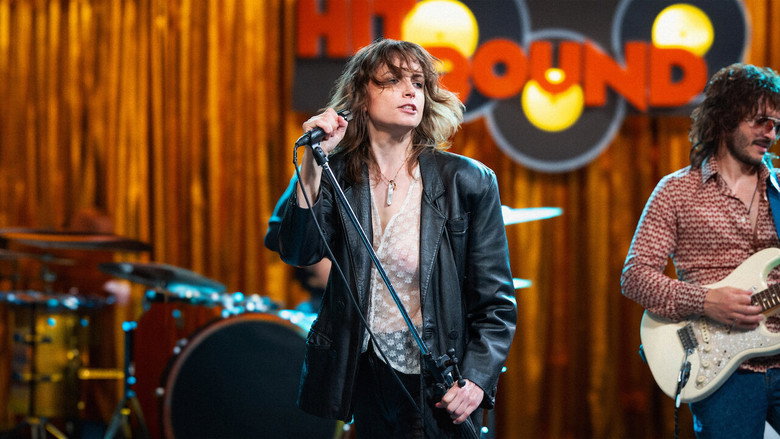
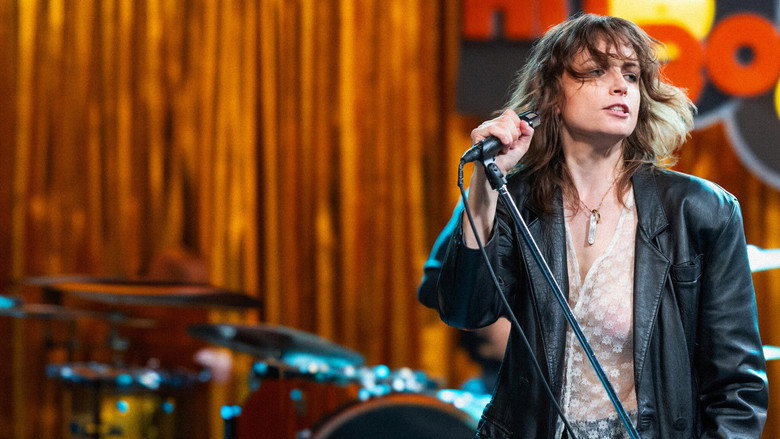
Letizia Toni, though. She’s the reason to watch. From the first frame, she doesn’t just play Gianna Nannini—she is her, in that way great actors have of making you forget you’re watching a performance.
There’s a moment early on, in a dimly lit rehearsal space, where Toni’s Nannini is hunched over a piano, fingers hovering above the keys like she’s afraid to touch them. The camera lingers on her face, not in a showy close-up, but in a way that feels intimate, almost invasive. You can see the doubt creeping in, the fear that she’ll never be more than her father’s disappointment.
Then the music swells, and she hits the keys—hard, defiant—and suddenly, you understand why Nannini became a legend. It’s not just about talent; it’s about the sheer, stubborn refusal to be anything less than what she knows she can be.
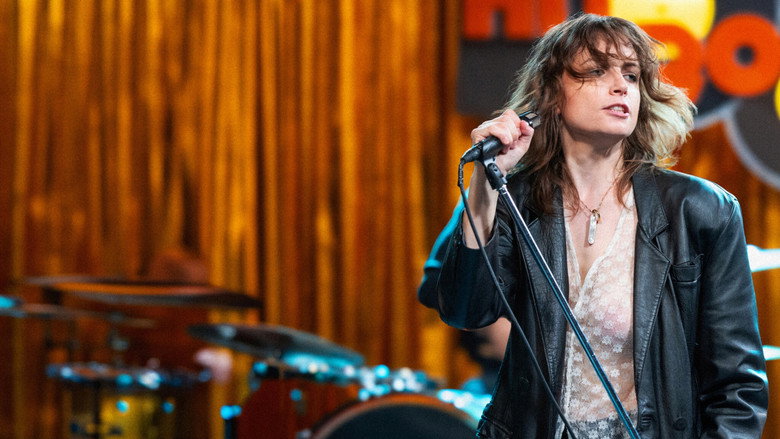
That defiance is the film’s heartbeat. Beautiful Rebel is, at its core, a story about a woman who refused to be tamed—by her family, by the music industry, by the expectations of what a female rock star should look or sound like. The film’s Siena setting is more than just picturesque; it’s a character in itself, a place where tradition and rebellion collide. The Piazza del Campo, with its sloping brick streets, becomes a stage for Nannini’s early performances, her voice echoing off the medieval walls like a challenge to the world that told her to stay quiet.
Director Cinzia TH Torrini leans into this contrast, framing Nannini against the backdrop of her conservative upbringing like a figure in a Renaissance painting—except this figure isn’t praying. She’s screaming into a microphone.
The problem is that the film moves too quickly through these moments. One minute, Nannini is a teenager sneaking out to play in dive bars; the next, she’s signing her first record deal. The editing is so eager to get to the next milestone that it skips over the how—how she honed her craft, how she navigated the sexism of the industry, how she turned her pain into art.
There’s a scene where she’s in a recording studio, arguing with a producer who tells her to “smile more” in her music videos. It’s a sharp, infuriating moment, but it’s over before it can land. I wanted to see more of these battles, more of the grit behind the gloss.
Instead, the film rushes toward the triumph, as if it’s afraid we’ll lose interest if we linger too long in the struggle.
And then there’s Marc. The film introduces him as a photographer who becomes Nannini’s lover and, later, her downfall—a catalyst for her drug use and mental health struggles. The problem?
He’s not real. Or, at least, he’s not one real person. The filmmakers have acknowledged that Marc is a composite character, a dramatic device meant to represent the darker forces in Nannini’s life.
It’s a risky choice, and one that doesn’t entirely pay off. On one hand, I get it: biopics often struggle to condense complex lives into two hours, and sometimes a fictional character can stand in for broader themes. But Marc feels like a cheat, a way to simplify Nannini’s struggles into a single, easily digestible antagonist.
It’s the kind of move that makes Drew Gregory, writing for Autostraddle, argue that if you want to learn about Nannini, you’d be better off reading her Wikipedia page. I don’t entirely agree—there’s value in seeing her story play out on screen—but Gregory has a point. The film’s need to dramatize sometimes overshadows the real woman at its center.
That said, the real Nannini does get the last word. The film’s final act includes archival footage of the singer herself, a reminder that this isn’t just a story—it’s her story. It’s a smart move, grounding the film in reality after so much dramatization.
And it’s a sign of Toni’s performance that the transition from actress to real-life Nannini doesn’t feel jarring. If anything, it makes you wish the film had trusted its audience enough to stick with Toni’s portrayal a little longer, to let the fiction breathe instead of rushing toward the “true story” disclaimer.
The critical reception has been, predictably, mixed. John Serba at Decider dismissed the film as “generic,” urging readers to “skip it.” Karina Adelgaard at Womentainment, on the other hand, praised its emotional depth, calling it a story about “the importance of music and relationships.” I fall somewhere in the middle. Beautiful Rebel isn’t a bad film, but it’s not a revelatory one either.
It’s a well-made, competently acted biopic that does what it sets out to do: tell the story of a woman who refused to be anything less than extraordinary. But I can’t shake the feeling that it could have been more—that it could have dug deeper, lingered longer, trusted its audience to sit with the messiness of a life lived in full.
In the end, Beautiful Rebel left me with the same question I always have after watching a music biopic: why do these films so often feel like they’re checking boxes instead of breaking them? Nannini’s life was anything but ordinary. Her music was raw, unapologetic, a middle finger to the status quo.
The film captures that spirit, but it doesn’t always trust it. And maybe that’s the real rebellion—to let the art speak for itself, without the safety net of a formula.
Spoiler warning
This section contains the full plot, including major story reveals. Overview above stays spoiler-free.
Beautiful Rebel (2024), the Netflix-backed biopic about Italian rock icon Gianna Nannini, has been generating buzz for its raw portrayal of her rise to fame. Directed by Cinzia TH Torrini, the film dives into Nannini’s defiance of family expectations and industry sexism, but what went into bringing this story to life? latestnetflix.com's read is that here’s what we know from the limited behind-the-scenes details available.
The film’s foundation is Nannini’s 2006 autobiography, Cazzi miei ("My Damn Business"), which translates to the Italian title Sei nell’anima ("You Are in My Soul")—a nod to her 2006 hit single. This source material likely provided the emotional backbone for the script, framing Nannini’s journey as one of artistic rebellion. While the evidence doesn’t specify how closely the film adheres to the book, the choice to adapt her memoir suggests a commitment to authenticity, especially in depicting her early struggles.
Letizia Toni, who plays Nannini, faced the challenge of embodying a living legend. Though no direct quotes from Toni about her preparation are available in the snippets, the role likely demanded vocal and physical transformation to capture Nannini’s signature raspy voice and stage presence. The film’s haunting soundtrack, featuring Nannini’s own music, further bridges the gap between fiction and reality.
Beautiful Rebel marks another international project for Netflix, produced by Milan-based Indiana Production. The streaming giant has been expanding its European slate, and this biopic fits neatly into its strategy of backing locally resonant stories with global appeal. The film’s production team includes heavyweights like Marco Cohen (Human Capital) and Fabrizio Donvito (Made in Italy), suggesting a polished, high-budget effort.
But why Gianna Nannini? The rocker’s career spans decades, blending rock, pop, and feminist anthems—making her a compelling subject for a biopic. Her 1986 hit "Bello e impossibile" and 2006’s "Sei nell’anima" (which inspired the film’s title) are cultural touchstones in Italy. The film’s release timing, just months after its May 2024 premiere, aligns with Netflix’s push for fresh, binge-worthy content.
The ensemble cast brings Nannini’s world to life, with Selene Caramazza and Maurizio Lombardi playing key roles in her orbit. Caramazza, known for her work in Italian TV and film, likely portrays a pivotal figure in Nannini’s personal or professional life, though specifics aren’t detailed in the snippets. Lombardi, a veteran of Italian cinema, adds gravitas to the supporting lineup.
One standout detail: the film’s younger cast, including Noemi Brando and Teresa Tanini, suggests a focus on Nannini’s formative years. Brando, for instance, may play a younger version of Nannini or a close confidante, though the evidence doesn’t confirm this. The lack of behind-the-scenes interviews or on-set photos means we’re left to speculate about the dynamics between actors—did Toni and Caramazza bond over Nannini’s music? Did Lombardi share insights from his own industry experience? For now, these questions remain unanswered.
Nannini’s music isn’t just a backdrop—it’s a driving force in Beautiful Rebel. The film’s soundtrack, described as "haunting" and emotionally powerful, leans heavily on her discography. This approach mirrors biopics like Bohemian Rhapsody or Rocketman, where the artist’s songs structure the narrative. The snippets don’t reveal whether Nannini was directly involved in the film’s music production, but her involvement in the project seems likely given the autobiographical source material.
One unverified but intriguing rumor: Did Nannini record new versions of her songs for the film? Some biopics re-record tracks to fit the era or the actor’s voice, but there’s no confirmation in the available evidence. If true, it would add another layer of authenticity to Toni’s performance.
Beautiful Rebel ticks the boxes for a compelling biopic: a rebellious protagonist, a rich musical legacy, and a director with a knack for character-driven drama. Yet, the behind-the-scenes coverage is frustratingly sparse. No on-set anecdotes, no cast interviews, and no deep dives into the creative process have surfaced in the snippets. For now, the film’s success hinges on its ability to capture Nannini’s spirit—and the evidence suggests it does, at least musically and thematically.
If Netflix’s track record with biopics (The Crown, The Dirt) is any indication, Beautiful Rebel could find an audience beyond Italy. But without more insider details, fans are left to piece together the story from the film itself.
Entertainment rumors and trivia aggregated from public reporting. Treat speculation as unverified unless a cited source confirms it.
More titles in the same genres and with the same cast.