

Carlo Aquino
Matias
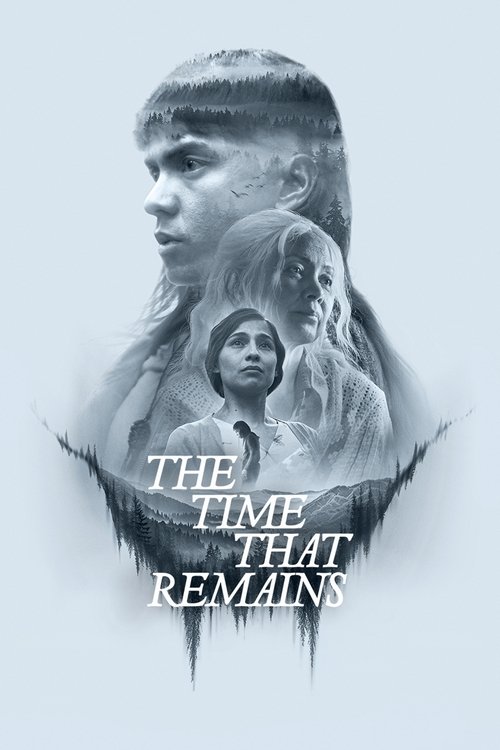
Surrounded by a string of deaths, an older woman relives her romance with a mysterious, ageless lover as an inspector closes in on their dark secret.
I keep thinking about the way Carlo Aquino’s Matias moves through the film—slow, deliberate, as if every step is a calculation against gravity. There’s something almost mournful in the way he carries himself, like a man who’s spent centuries learning how to pretend he still belongs among the living. The Time That Remains is, at its core, a vampire love story, but not the kind that glitters or seduces.
This is a romance built on absence, on the quiet devastation of watching someone you love grow old while you stay the same. And yet, for all its ambition, the film often feels like it’s drowning in its own atmosphere, as if the misty highlands of the Cordillera have seeped into the script itself, blurring the edges of what should be sharp.
Adolfo Alix Jr. Has always been a director drawn to the weight of history, to the way the past lingers in the present like a ghost. Here, he attempts something more audacious: a vampire myth rooted not in Transylvania or New Orleans, but in the colonial wounds of the Philippines, where immortality isn’t a curse of the blood but a curse of the soul.
Matias isn’t just a vampire; he’s a Kalinga warrior turned undying witness to centuries of violence, his existence a living archive of trauma. The film weaves together two timelines—Lilia’s youth during the Japanese occupation and her old age in a hospital, where a series of mysterious deaths have drawn the suspicion of Inspector Angua (Bembol Roco, in one of his most quietly menacing performances).
The past and present collide in ways that are often visually striking, if not always narratively satisfying.

The film’s greatest strength lies in its visual poetry. Cinematographer Odyssey Flores bathes every frame in a gothic haze, turning the Cordillera into a character in its own right—mist-cloaked, ancient, indifferent. The hospital scenes are drenched in sickly fluorescent light, a stark contrast to the warm, golden hues of Lilia’s wartime memories.
There’s a moment early on, when young Lilia (Jasmine Curtis-Smith) first encounters Matias in the forest, the camera lingering on the way the light filters through the trees, casting dappled shadows across his face. It’s the kind of shot that makes you lean in, not because it’s telling you something, but because it’s showing you something—something fragile and fleeting. Asian Movie Pulse’s Panos Kotzathanasis was right when he noted that Alix’s films often excel in "technical execution," and here, the craftsmanship is undeniable.
The problem is that the script doesn’t always rise to meet it.
Take the film’s central relationship. Lilia and Matias’s love story is meant to be epic, spanning decades and defying the boundaries of life and death. But the emotional beats often feel rushed, as if the film is in such a hurry to get to the next grand gesture that it forgets to let us feel the weight of those gestures.
One of the most jarring transitions comes when Lilia, as a child, is rescued by Matias during the war, only to reappear as a young woman in the very next scene, already in the throes of a passionate affair with him. Malditang Librarian’s review put it bluntly: "The jump from childhood rescue to adult intimacy is underdeveloped and uncomfortable, even hinting at grooming implications."
It’s a fair critique. The film never quite earns the intensity of their connection, leaving us to fill in the gaps with our own assumptions about love and devotion.

And then there’s the matter of Matias’s immortality itself. The film treats it as both a gift and a curse, but it’s the latter that resonates more deeply. Carlo Aquino, who spent hours in the makeup chair each day to achieve Matias’s ageless look, has spoken about the loneliness of playing an immortal.
"It’s painful," he said in an interview. "You outlive everyone you love." That pain is palpable in his performance, particularly in the scenes where he watches Lilia age while he remains unchanged.
There’s a quiet devastation in the way he touches her face, as if memorizing the lines that time has etched there. But the film’s exploration of this theme is uneven. At times, it feels like a meditation on the cruelty of time; at others, it’s just a series of pretty images strung together with melancholy music.
The cultural controversy surrounding the film is harder to ignore. The Time That Remains draws heavily on Cordillera imagery and rituals, particularly the Panag-aapoy, a sacred tradition honoring the dead. The film reenacts this ritual in Sagada’s Lumiang burial caves, using it as a backdrop for Matias’s origin story. But as Mountain Beacon’s essay points out, the film never names the ritual or the place, reducing a deeply meaningful practice to aesthetic set dressing for a Manila-centric audience.
The critique stings because it’s valid. The film’s attempt to ground its vampire myth in indigenous lore feels more like appropriation than homage, a flattening of complex cultural identities into a convenient narrative device.
That said, there are moments where the film’s ambition pays off. The reveal of Matias’s origins—his transformation into a vampire tied to the destruction of his tribe during the Spanish occupation—is one of the film’s most compelling sequences. It’s here that the film’s themes of colonial trauma and historical memory come into sharp focus.
Matias isn’t just a vampire; he’s a living relic of violence, his immortality a constant reminder of what was lost. The scene is visually stunning, with the camera sweeping through the burial caves, the flickering torchlight casting long shadows on the walls. It’s the kind of moment that makes you wish the rest of the film had been as bold.

The performances, too, are a mixed bag. Bing Pimentel, as the elderly Lilia, brings a quiet dignity to her role, her scenes with Aquino crackling with a bittersweet chemistry. Their interactions feel lived-in, the kind of love that’s been tested by time and circumstance.
But the film’s present-day storyline, which follows nurse Isabela (Beauty Gonzalez) and Inspector Angua as they unravel the mystery of the deaths surrounding Lilia, often feels like a distraction. Gonzalez and Roco are both strong actors, but their characters are given little to do beyond serving the plot. The film’s pacing suffers as a result, with the present-day scenes dragging while the past rushes by in a blur.
In the end, The Time That Remains is a film of contradictions. It’s visually sumptuous but narratively uneven, ambitious in its themes but often shallow in its execution. It wants to be a grand, tragic romance, but it’s at its best when it’s small and intimate—when it’s just Matias and Lilia, two people clinging to each other in a world that’s determined to pull them apart.
There’s a line in the film that lingers with me: "The time that remains is what you do with your life." It’s a sentiment that could serve as the film’s thesis, but it’s also a reminder of what The Time That Remains itself struggles to do. It has the time—nearly two hours—but it doesn’t always use it wisely.
I keep coming back to that shot of Matias in the forest, the light filtering through the trees, his face half in shadow. It’s a beautiful image, but it’s also a metaphor for the film itself: a moment of clarity lost in the fog.
"A poignant but uneven drama that lingers more for its emotional weight than its narrative coherence."
The film explores grief and time through strong performances and atmospheric direction. Its fragmented storytelling and slow pacing make it hard to stay engaged, though, and the emotional payoff doesn't fully justify the investment.
Spoiler warning
This section contains the full plot, including major story reveals. Overview above stays spoiler-free.
When Netflix promised a Filipino gothic vampire romance, fans signed up for fangs, fog, and forever love. What they didn’t expect? Awkward “Tita” kisses, a real-life heart scare, bruised knees from a brutal rape scene, and a full-blown culture-war over an Igorot ritual. latestnetflix.com's take is that Immortality is cute, but this production’s drama is very, VERY human.
> “We’re supposed to be intimate and kissing. I really struggled with it, and I just told him, ‘Bahala ka na, just go with the flow.’”
> “How will that help? Call me Lilia, not Tita!” Age-gap romance is one thing; age-gap romance where your co-star insists on calling you “auntie” is another level of emotional horror.
> “It’s difficult to have the mindset of kissing a young man. And he’s what, 26 years younger?” Fans loved their final scenes, but knowing the behind-the-scenes cringe makes that big kiss feel extra wild.
No brawls, no public shade… just the ultimate actor insult: “You guys don’t spark.”
Translation: no open feuds, but definitely a gap between what the creatives wanted us to feel and what some viewers actually felt.
Cue fans debating in comment sections: was the production pushing TOO hard for realism, or was this Jasmine choosing to lean fully into the gravity of the subject?
> “Actually, halos sabay-sabay kasi ako this year… So, talagang nag-decline yun,” he said, explaining he had to turn down work because of the health scare.
Some viewers leaned into the joke, dubbing it “Igorot Twilight” in comments and local forums.
That’s not exactly gossip, but it is the kind of nerd-level tea that keeps Twitter threads alive at 2 a.m.
No on-set fistfights, no cheating scandals, no viral pap shots—but The Time That Remains quietly built a dossier of slow-burn drama:
For a movie about time that never runs out, the behind-the-scenes stories might be the part that truly lingers.
Entertainment rumors and trivia aggregated from public reporting. Treat speculation as unverified unless a cited source confirms it.
More titles in the same genres and with the same cast.