Edgar Treviño
La Bruja

When a group of teens finds a corpse floating in a canal, the brutal reality behind the perverse crime unravels a town's hidden secrets.
Official
I’ve seen films that try to outrun their own bleakness—flashing neon signs, a last-minute redemption, a pop song to remind you it’s all going to be okay. Hurricane Season doesn’t bother. It lets the weight of its world press down until the air feels thick enough to drown in. Elisa Miller’s adaptation of Fernanda Melchor’s novel isn’t just a story about violence in a rural Mexican town; it’s a study in how violence becomes the weather, something you learn to live with until it finally sweeps you away.
The film opens with a corpse floating in a canal, but the real mystery isn’t who killed La Bruja—the local witch—but how a community could let it happen. Miller and screenwriter Daniela Gómez (who won Best Screenplay at the Morelia International Film Festival for this) structure the story as a series of vignettes, each one peeling back another layer of complicity. The non-linear approach isn’t just a stylistic flourish; it’s a way of showing how violence isn’t a single event but a slow accumulation, like sediment settling at the bottom of a river.
By the time we circle back to the murder, the question isn’t who but why we even care anymore.
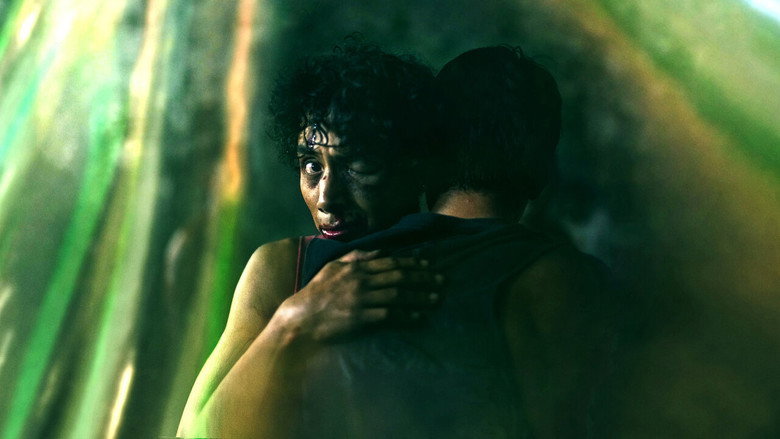
The craft here is unshowy but devastating. Cinematographer María Secco’s use of a 4:3 aspect ratio isn’t just a nod to the past—it’s a cage. The frame feels like it’s closing in on these characters, trapping them in their own poverty, their own bad decisions, their own inability to escape.
The camera lingers on faces in close-up, not for melodrama but because there’s nowhere else to look. When Yesenia (Paloma Alvamar) stares at her reflection in a cracked mirror, her expression isn’t one of despair but of exhausted recognition, as if she’s known all along how this story ends. The film’s sound design is just as precise: the hum of insects, the distant bark of dogs, the way voices carry across water.
It’s the kind of detail that makes you realize how much of life happens in the background, unnoticed until it’s too late.
Flicks.co.uk called it "a brutally bleak walk on the wild side that pairs enigma with airtight verisimilitude," and that’s exactly right. The film doesn’t explain its world so much as drop you into it, forcing you to piece together the rules as you go. There’s no exposition, no hand-holding—just the slow, sickening realization that these people are both victims and perpetrators, that the line between the two is thinner than anyone wants to admit.
Take the character of Luismi (Andrés Cordaz), a young man whose cruelty is matched only by his fragility. In one scene, he taunts a group of girls by the canal, his voice dripping with machismo, only to later collapse into tears when he thinks no one is watching. It’s a small moment, but it encapsulates the film’s central tension: the way violence and vulnerability feed off each other until they’re indistinguishable.
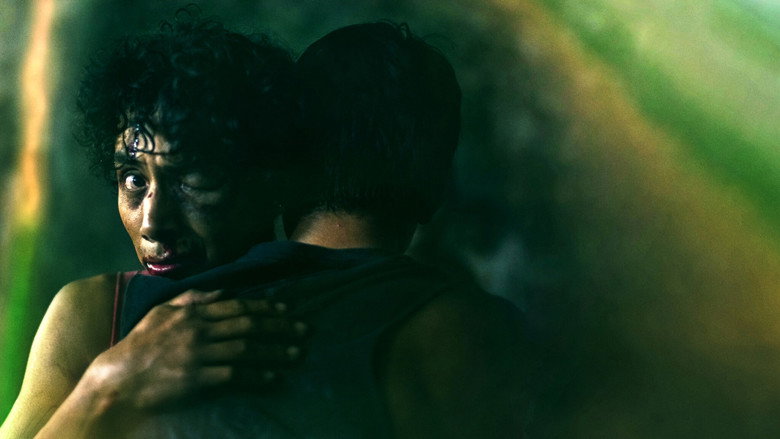
The performances are uniformly excellent, but Edgar Treviño’s La Bruja lingers in the mind like a ghost. She’s not a monster or a saint but something far more unsettling: a woman who’s learned to weaponize her own powerlessness. Treviño plays her with a quiet, simmering intensity, her eyes darting between fear and defiance.
When she finally meets her end, it’s not with a scream but with a resigned sigh, as if she’s been waiting for this all along. It’s a performance that stays with you long after the credits roll, not because it’s showy but because it feels true.
Common Sense Media praised Miller’s "unshowy, socially conscious style," and that’s the film’s greatest strength. There’s no grand statement here, no easy moral to take home. Just the slow, grinding reality of a place where the storm never really ends—it just changes shape.
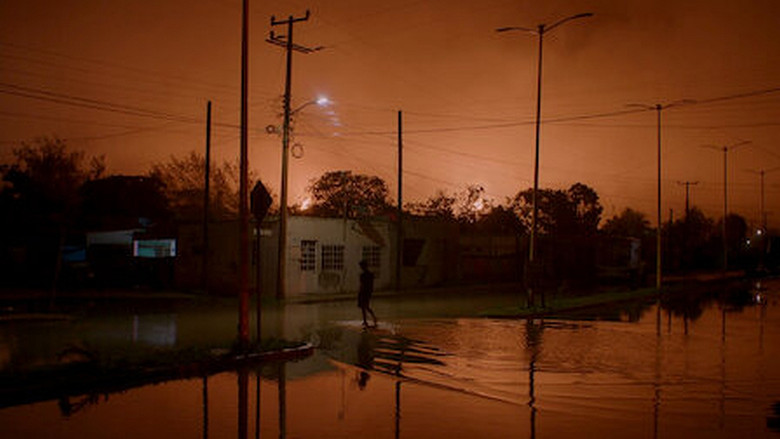
The film’s final shot is of the canal, its waters still and dark, as if nothing has happened at all. But of course, everything has.
I keep thinking about that shot. Not because it’s beautiful—though it is—but because it’s honest. Hurricane Season doesn’t offer catharsis or hope. It offers something rarer: the chance to sit with discomfort, to look at a world that’s broken and recognize, with a sickening clarity, that it looks a lot like our own.
The storm isn’t coming. It’s already here.
Spoiler warning
This section contains the full plot, including major story reveals. Overview above stays spoiler-free.
Elisa Miller’s Hurricane Season (2023) has flown under the radar since its release, but the film’s raw, character-driven storytelling and ensemble cast are quietly turning heads. Unlike the 2008 sports drama of the same name, this Mexican production dives into darker, more intimate territory—though details about its plot and production remain frustratingly scarce. latestnetflix.com's view is that here’s what we know (and what we’re still digging for).
Elisa Miller, known for her work in Mexican independent cinema, takes the helm here, steering Hurricane Season away from the Hollywood-style drama of its namesake. While the 2008 Hurricane Season leaned into uplifting sports narratives (starring Forest Whitaker and Taraji P. Henson), Miller’s film appears to embrace a grittier, more atmospheric tone. The lack of widespread press coverage suggests a low-budget or festival-driven release, but Miller’s past projects—like The Gold Mine (2019)—hint at a focus on marginalized voices and tense, character-driven conflict.
Unfortunately, the SERP snippets offer no direct quotes from Miller about her creative process or inspirations for this film. If she’s shared insights elsewhere, they haven’t surfaced in mainstream outlets yet.
The ensemble features a mix of emerging talent and familiar faces from Mexican theater and film:
Notably absent? Big-name stars. This appears to be a passion project for the cast, with no reports of A-list cameos or studio interference.
As of now, Hurricane Season (2023) hasn’t generated the kind of critical fanfare that would land it on must-watch lists. Rotten Tomatoes hosts a page for the film, but the lack of aggregated scores or reviews in the snippets suggests it hasn’t been widely screened—or at least, not by major critics. This could mean:
Without more data, it’s impossible to gauge audience reactions. If the film follows Miller’s earlier work, expect polarizing responses: her films often divide viewers between those who praise their authenticity and those who find them too bleak.
The biggest mystery? The plot. The title Hurricane Season suggests themes of chaos, destruction, or emotional turbulence, but the SERP snippets offer zero details. Possible angles (all unverified):
Other gaps in the coverage:
In an era of blockbuster fatigue, Hurricane Season (2023) represents the kind of cinema that thrives on restraint. Miller’s filmography suggests a commitment to stories about ordinary people in extraordinary circumstances, and this project likely follows suit. The cast’s lack of star power might work in its favor—no distractions, just raw performances.
For now, the film remains a curiosity. If it surfaces at festivals or on streaming platforms, early adopters could help it find an audience. Until then, it’s a reminder that some of the most compelling stories are the ones that slip through the cracks.
Entertainment rumors and trivia aggregated from public reporting. Treat speculation as unverified unless a cited source confirms it.
More titles in the same genres and with the same cast.