

Adrián Vázquez
José Sánchez
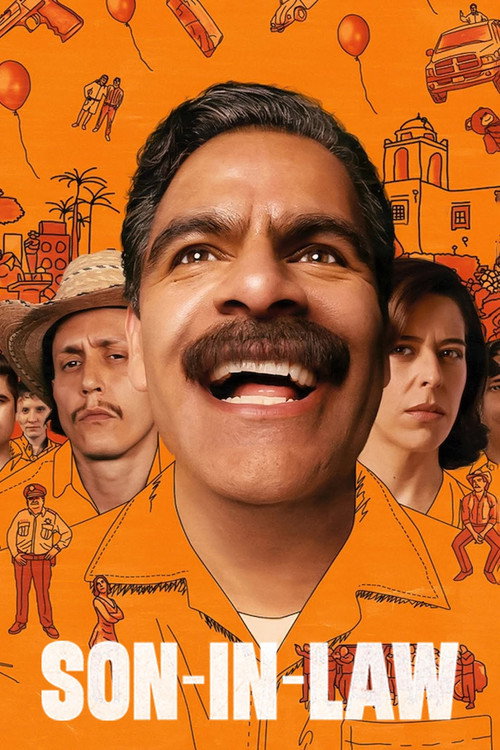
José Sánchez has big ambitions, terrible instincts, and a mustache to match. After a string of bad deals, he accidentally bluffs his way into becoming El Serpiente, a political boss feared for all the wrong reasons. Now he must pull off one final deal to stay alive — a deal far beyond anything he can fake.
I kept waiting for the joke. Not the kind that makes you laugh—though there are a few of those, dry and bitter as lime on an open wound—but the kind that reveals itself as the whole point. Son-in-Law is billed as a comedy, but the only real punchline is how easily a man with no talent, no scruples, and a mustache that looks like it was drawn on with a Sharpie can become a political kingpin.
The film knows this. The problem is, it doesn’t seem to know what to do with the knowledge.
Gerardo Naranjo’s latest is a tragicomedy in the truest sense: it wants to make you laugh at the absurdity of power, then gut-punch you with the consequences. The trouble is, the two impulses don’t always play nice. The first act is all swagger and bluster, a farcical rise to power that feels like The Wolf of Wall Street if Jordan Belfort had been a middle-aged Mexican hustler with a gift for bullshit and a wardrobe of ill-fitting guayaberas.
Adrián Vázquez’s José Sánchez is a man who mistakes confidence for competence, and the film leans hard into the disconnect—until it doesn’t.

Here’s the thing about José: he’s not a mastermind. He’s not even particularly clever. He’s just a guy who got lucky, then unlucky, then lucky again, until the luck ran out and the only thing left was the mustache.
Vázquez plays him with a kind of desperate charm, like a man who’s spent his whole life talking his way out of trouble and is now realizing, too late, that some doors don’t have handles. The performance is the film’s anchor, the one element that never wavers, even when the script starts to. There’s a moment early on, when José is trying to impress a group of cartel lieutenants, where Vázquez’s voice cracks just slightly on the word "confianza." It’s the only time he betrays doubt, and it’s devastating.
Naranjo has always had a knack for blending violence and humor—see Miss Bala’s queasy mix of beauty pageants and bloodshed—but Son-in-Law struggles to find its tonal footing. The film wants to be a satire of Mexican politics, a darkly comic takedown of the way power corrupts (or, in José’s case, the way power finds the already corrupt). But the script keeps tripping over its own ambition.
One scene will play like a Coen brothers-esque farce, with José bluffing his way through a meeting with cartel bosses, only for the next to drop into something closer to Traffic, with all the weight and none of the clarity. The result is a film that feels like it’s constantly shifting gears, unsure whether it’s a character study, a crime thriller, or a political satire.
The supporting cast doesn’t help. Outside of Vázquez, the characters are mostly types: the weary enforcer, the ambitious wife, the idealistic young journalist. They’re sketched in broad strokes, which might work if the film were going for full-blown farce, but it isn’t.
When the violence comes—and it does, suddenly and brutally—it feels unearned, because we don’t know these people well enough to care. The exception is Verónica Bravo’s Marisol, José’s wife, who gets a few sharp moments where the film’s emotional core peeks through. In one scene, she watches her husband schmooze a room full of dangerous men, her expression a mix of exhaustion and something like pity.
It’s the closest the film comes to saying something real about the cost of ambition, but it doesn’t linger.
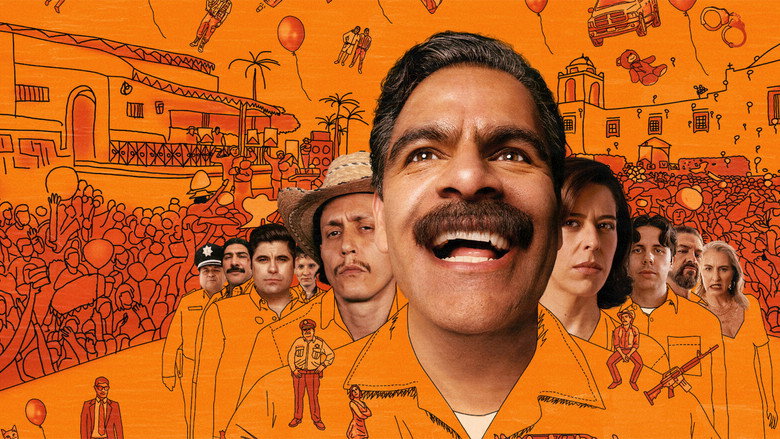
The film’s biggest misstep, though, might be its pacing. Son-in-Law is 102 minutes long, but it feels longer. The middle act drags, weighed down by subplots that go nowhere and betrayals that feel more like narrative obligations than organic developments. Naranjo has always been a director who trusts his actors to find the truth in the moment, but here, the script doesn’t give them enough to work with.
The film’s most effective scenes are the quiet ones—José alone in his car, practicing his pitch in the rearview mirror; a tense standoff in a parking lot, where the threat of violence hangs in the air like humidity. These moments suggest a different, leaner film, one that might have cut the fat and gone all-in on the tragedy lurking beneath the comedy.
And then there’s the ending. Without spoiling it, I’ll say this: it’s the one part of the film that feels truly alive, a middle finger to the very idea of redemption. It’s also the moment where the film’s meta-commentary on Netflix and the industry that produced it becomes impossible to ignore.
(The gossip around the "F**k Netflix" rant is too good to ignore—it’s the kind of audacious, self-aware move that makes you wonder if the filmmakers are trolling the platform that paid for it, or just being honest.) The problem is, by the time we get there, the film has already lost some of its momentum. The ending lands, but it doesn’t quite stick the landing.
So where does that leave Son-in-Law? It’s a film with a great central performance, a sharp eye for the absurdity of power, and a few genuinely haunting moments. But it’s also a film that can’t quite decide what it wants to be.
Is it a comedy? A drama? A satire?
A crime thriller? The answer, frustratingly, is all of the above—and none of them, quite. The result is a movie that feels like it’s constantly on the verge of something great, but never quite gets there.
That said, I can’t stop thinking about José’s mustache. Not just because it’s a marvel of facial hair engineering, but because it’s the perfect metaphor for the film itself: big, bold, and impossible to ignore, but ultimately covering up something hollow. Vázquez makes the character compelling anyway.
The rest of the film? Not so much.
"A sharply acted but divisive narco-political satire weighed down by messy structure and overfamiliar ideas."
The rise-and-fall story of José Sánchez works best when it leans into dark drama, with a committed central performance and some biting moments about corruption and the so‑called Mexican dream. Anyone expecting a broad comedy is disappointed, and even those who appreciate the ambition find the pacing slack, the tone confused, and the critique too similar to earlier political satires to feel distinctive.
Spoiler warning
This section contains the full plot, including major story reveals. Overview above stays spoiler-free.
Netflix’s Mexican political tragicomedy Son‑in‑Law (El yerno) arrived with a killer tagline—big dreams, easy shortcuts, massive downfalls—and the behind‑the‑scenes story isn’t exactly tame either. latestnetflix.com's take is that No tabloid brawls, but plenty of last‑minute casting chaos, obsessive mustache‑craft, and a final scene that feels like a middle finger to the platform that paid for it.
Entertainment rumors and trivia aggregated from public reporting. Treat speculation as unverified unless a cited source confirms it.
More titles in the same genres and with the same cast.