Josephine Park
Lærke

An ambitious hotelier and her reluctant daughter take a trip to Málaga, where they find what they've been craving in a farmer's idyllic mango orchard.
Official
I’ll admit it: I went into Mango expecting a Danish Under the Tuscan Sun—sun-dappled, slightly saccharine, and ultimately forgettable. And for the first twenty minutes, that’s exactly what it delivers. Josephine Park’s Lærke strides into Málaga like a woman who’s already calculated the ROI on every sunset.
Her corporate armor is so polished it practically reflects the Andalusian light. But then something unexpected happens: the film starts to breathe. Not because the plot takes a sharp turn—it doesn’t—but because the people in it do.

Mehdi Avaz has made a career out of these Mediterranean redemption arcs. Toscana (2022) followed a Danish chef to Italy; Mango swaps olive groves for mango trees, but the formula is the same: a workaholic Northerner, a sun-soaked Southern setting, and a local love interest who embodies everything the protagonist has forgotten how to feel. The difference here is that Avaz—along with writers Milad Schwartz Avaz, Karina Dam, and Renée Simonsen—lets the story meander just enough to feel lived-in.
The first act is all corporate jargon and forced smiles, but by the time Lærke sits down to dinner with Alex’s makeshift family, the film has quietly shed its rom-com skin. What’s left isn’t groundbreaking, but it’s real—the kind of real that makes you lean forward in your seat, not because you’re surprised, but because you recognize something.
Decider’s John Serba put it best: “Mango is a six-outta-10 perfectly fine barely passable movie thanks to its agreeable performances and pretty scenery. So STREAM IT I guess...” It’s a backhanded compliment that lands harder than it should, because Serba’s right: Mango isn’t trying to reinvent the wheel. But what it does do—what it does well—is let its actors dig into the quiet moments between the tropes.
Park’s Lærke isn’t just a type; she’s a woman who’s spent so long performing competence that she’s forgotten how to be soft. Watch the way she holds her wine glass—fingers splayed, knuckles white—when Alex mentions his late wife. It’s a tiny crack in the facade, and Park plays it like a masterclass in repressed longing.
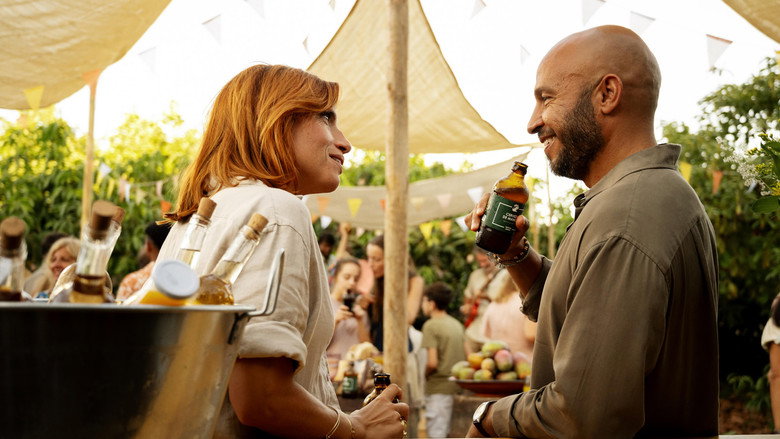
The chemistry between Park and Dar Salim is the film’s secret weapon. Salim’s Alex is the kind of man who wears his grief like a second skin, but there’s a lightness to him too—a dry humor that sneaks up on you. When he tells Lærke, *“You Danes are all the same.
You come here thinking you can put a price on everything,” it’s not just a line; it’s the entire thesis of the film, delivered with a smirk that makes you want to forgive the script’s occasional clunkiness. Nordic Watchlist called their dynamic “engaging and emotionally resonant,” and while that might sound like faint praise, it’s exactly what Mango* needs. This isn’t a grand passion; it’s the slow, stubborn kind of love that grows in the cracks of everyday life.

Where the film stumbles is in its third act, which But Why Tho rightly called “lazy.” After spending an hour building up Lærke’s moral reckoning—her realization that the mango farm isn’t just a business obstacle but a home—the script suddenly backtracks into a miscommunication so flimsy it feels like a last-minute rewrite. The final scenes rush through resolutions that should feel earned but instead land with a thud. It’s the kind of ending that makes you wonder if the filmmakers lost faith in their own subtlety, opting for a neat bow instead of the messier, more interesting truth.
And yet.
There’s a moment in the middle of Mango that I can’t shake. Lærke’s daughter, Agnes, has been sulking in the background for most of the film, a walking embodiment of teenage resentment. But then she’s given a scene with Alex’s sister-in-law, Paula, where they sit on a rooftop at dusk, sharing a joint and talking about nothing in particular.
The camera lingers on Agnes’s face as she laughs—really laughs, for the first time in the film—and it’s like watching a flower unfurl. It’s not a big moment. It’s not even a plot moment.
But it’s the kind of scene that makes you realize why you watch movies in the first place: to see people, even fictional ones, feel something real.
The audience reception to Mango has been similarly split. Some viewers, like those on Rotten Tomatoes, have dismissed it as “predictable” and “slow,” while others have praised its “emotional depth” and the “chemistry between the leads.” I get both sides. This isn’t a film that demands your attention; it’s one that earns it, slowly, like a sunburn you don’t notice until it’s too late.
By the time the credits roll, you might not remember the plot, but you’ll remember the way the light hit the mango trees. You’ll remember the way Lærke’s shoulders finally relaxed. You’ll remember the feeling of wanting to stay in that orchard just a little longer.
Maybe that’s enough. Maybe, in a year full of films trying to outdo each other in spectacle and shock, Mango’s greatest sin is that it’s content to be nice. Not groundbreaking. Not revolutionary. Just nice. And sometimes, in a world that feels increasingly unkind, nice is its own kind of radical.
"A heartfelt but uneven romantic drama with strong performances and a picturesque setting."
The emotional core and the chemistry between the leads make for a touching exploration of love and loss against the backdrop of a mango farm in Malaga. The pacing is slow and the plot predictable, though, and underdeveloped side characters leave the story feeling slightly hollow at times.
Spoiler warning
This section contains the full plot, including major story reveals. Overview above stays spoiler-free.
Under the blazing Andalusian sun, Netflix’s Mango (2025) serves juicy romance, scenic orchards and enemies-to-lovers angst. But what about the real-life drama? We went digging for feuds, hookups, lawsuits and leaks… latestnetflix.com's view is that and discovered that the messiest thing around this film might actually be the mangonade.
Verdict: No tantrums, no walk-offs, no screaming matches. The most dangerous thing on set seems to have been the Spanish sun.
If the cast weren’t fighting with each other, who was fighting? Answer: the critics.
So while the actors were apparently getting along just fine, the real feud ended up being:
Fans always want the on-screen couples to be secretly sharing tapas and stolen kisses off-screen. With Mango, that ship sinks fast.
Rumor check: Any “they must be dating in real life!!” shipping is purely fan speculation, with no evidence in reporting or social media to back it up.
If you’ve heard “Dar Salim” and “controversy” in the same sentence, it probably wasn’t about Mango at all—but about his other 2025 project, Herkules falder (Hercules Falling).
While Mango itself stayed squeaky clean, Salim was in the eye of a storm elsewhere in 2025. Some fans speculate (unconfirmed) that the strain of the Herkules falder saga may have affected his energy in Mango, potentially feeding into those “the leads lack chemistry” takes—but that’s interpretation, not fact.
You’d expect a glossy Netflix romance to have deleted kisses, alt-endings, and leaked sides floating around. Not here.
Conclusion: The NDAs were tight, the editors quiet, and the only things “leaking” from this production were carefully curated aesthetics.
No scandals? Fine. Let’s talk about the fun, stalkable details instead.
Fans hunting for Mango gossip might be disappointed to learn:
Instead, you get:
In a world where most Netflix productions seem to come with a side of chaos, Mango might be the rare case where the only real drama is on screen—and maybe, just maybe, that’s the most surprising twist of all.
Entertainment rumors and trivia aggregated from public reporting. Treat speculation as unverified unless a cited source confirms it.
More titles in the same genres and with the same cast.