Anders Matthesen
Theo

When a Danish chef travels to Tuscany to sell his father's business, he meets a local woman who inspires him to rethink his approach to life and love.
I’ll admit it: I went into Toscana expecting a postcard. You know the kind—golden light spilling over rolling hills, a chef with a five o’clock shadow who rediscovers passion through the alchemy of local wine and a woman who may or may not be a literal angel. The synopsis, after all, doesn’t exactly scream originality: a Danish chef sells his father’s business in Tuscany, meets a local woman, and—poof—his life is transformed.
It’s the kind of premise that could easily dissolve into a Hallmark movie with subtitles.
But here’s the thing: Toscana isn’t bad. It’s just… hesitant. Like a first date that keeps circling the same conversational territory, too polite to commit to either charm or depth. The film wants to be a romance, a comedy, and a drama all at once, but it never quite decides which heart it wants to break—or mend.
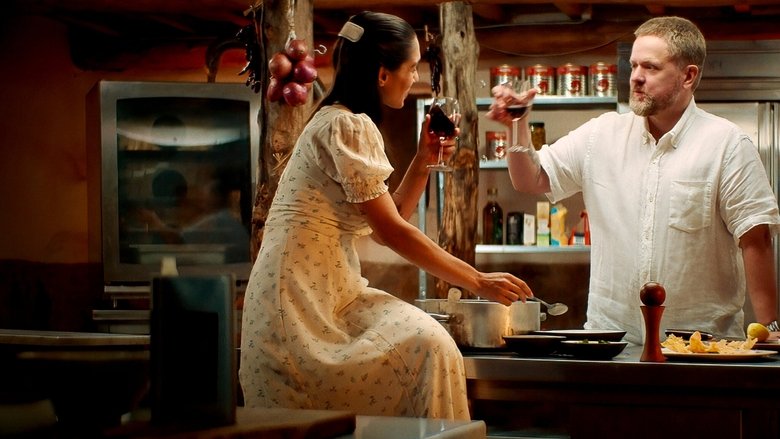
The opening act is all about the setting, and fair enough—Tuscany is a character here, one that doesn’t need much dialogue to steal the show. The cinematography lingers on the kind of details that make you want to book a one-way ticket: the way the morning light hits the vineyards, the dust kicked up by a scooter on a winding road, the steam rising from a bowl of pasta so fresh it might still be breathing.
It’s the kind of visual seduction that makes you forgive a film for its sins, at least for a little while. But then the plot arrives, and the spell starts to fray.
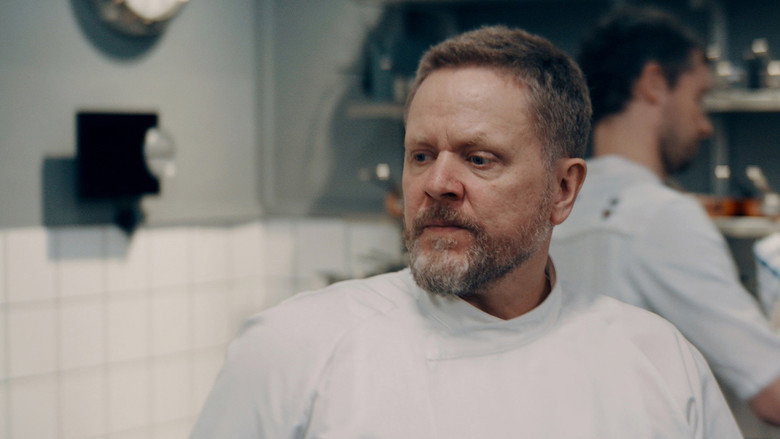
Anders Matthesen plays Theo, the chef in question, and he’s… fine. Not revelatory, not disastrous, just fine. He has the kind of hangdog expression that suggests he’s spent a lifetime being disappointed by life’s inability to live up to his expectations, which, in a rom-com, is usually a good thing.
The problem is that the script never gives him a real edge. Is he a cynic? A dreamer?
A man who’s spent so long in the kitchen that he’s forgotten how to taste anything else? We get glimpses—his awkwardness around the locals, his initial resistance to the idea of selling the business—but the film is too busy setting up the romance to let him fully inhabit any of these contradictions.
Enter Sofia, played by Cristiana Dell’Anna. She’s the local woman who shakes Theo out of his funk, and she’s the film’s most intriguing element—mostly because she refuses to play the role of Manic Pixie Dream Girl. There’s a quiet intensity to her performance, a sense that she’s carrying something unsaid beneath her easy smiles.
The film hints at a backstory (a failed restaurant, a family legacy, a life interrupted), but it never quite delivers. Instead, it falls back on the kind of romantic tropes that feel lifted from a travel brochure: shared meals, stolen glances, a dance under the stars that’s supposed to feel spontaneous but lands with the weight of a checklist.
The chemistry between Matthesen and Dell’Anna is… present, I guess? But it’s the kind of chemistry that feels more like a mutual agreement to get along than a spark. There’s one scene, though, that almost works: Theo and Sofia cook together in a cramped kitchen, their movements syncing up like a dance, flour dusting their clothes and laughter cutting through the tension.
For a moment, the film forgets to be self-conscious, and the warmth feels earned. It’s the closest Toscana comes to capturing something real—the idea that love, or at least connection, can be found in the quiet, unglamorous act of making something together.
But then the film remembers it’s supposed to be a romance, and the gears start grinding again. The third act introduces a conflict that feels manufactured, a last-minute obstacle that’s resolved with the kind of ease that makes you wonder why it was there in the first place. It’s not that the resolution is unsatisfying; it’s that the journey to get there feels so small.
There’s no real stakes, no sense that Theo’s transformation is anything more than skin-deep. He learns to appreciate the moment, sure, but the film never lets us feel the cost of that lesson.
This is where Toscana’s biggest flaw lies: it’s a film that’s afraid to be messy. Romances, even the lighthearted ones, thrive on friction—on the push and pull of two people who don’t quite fit together but can’t stay apart. Toscana smooths out the edges. Theo and Sofia’s relationship is pleasant, but it’s never dangerous.
There’s no moment where you think, Oh, this might actually not work out, because the film is too busy assuring you that everything will be fine. Even the comedy—what little there is—feels toothless. The supporting cast (a grizzled local winemaker, a chatty neighbor, a precocious kid) all seem to be operating in their own tonal universe, delivering punchlines that land with a thud.
And yet, I can’t bring myself to dismiss Toscana entirely. There’s something undeniably nice about it. Not nice in the way a Hallmark movie is nice—calculated, saccharine—but nice in the way a lazy afternoon in a foreign country can be nice.
You don’t go into a film like this expecting profundity, and Toscana doesn’t insult you by pretending it has any. It’s a film that’s content to be a mood, a vibe, a 90-minute escape to a place where the wine is always flowing and the problems are always solvable. In a year where so much of cinema feels like it’s either screaming at you or trying to sell you something, there’s a certain appeal in that.
But here’s the thing about vibes: they’re not enough. Not when the world outside the frame is so much more complicated. Toscana wants to be a balm, but it never quite becomes the kind of story that lingers. It’s the cinematic equivalent of a postcard from a friend who’s having a great time on vacation—lovely to look at, but you forget about it the moment you put it down.
I keep coming back to that kitchen scene, though. The way Theo and Sofia move around each other, the way the camera lingers on their hands as they chop vegetables, the way the sound of their laughter fills the room. It’s the only moment in the film that feels alive, like the characters are actually in the same space and time as each other, not just performing for the camera.
If Toscana had committed to that kind of intimacy—if it had trusted its actors and its setting enough to let the story breathe—it might have been something special.
As it stands, it’s just a postcard. And postcards, no matter how pretty, always leave you wanting more.
"A charming but uneven romantic drama with strong leads and picturesque scenery, though the plot is underdeveloped."
The visuals and the chemistry between the leads get frequent praise, and the Tuscan setting gives it a warm, romantic atmosphere. The story is predictable and shallow, and some side characters are underused or clichéd. The pacing drags in places, so the whole thing feels unbalanced.
Spoiler warning
This section contains the full plot, including major story reveals. Overview above stays spoiler-free.
Mehdi Avaz’s Toscana (2022) arrived on Netflix as a quiet contender in the crowded rom-com genre, blending Danish charm with Italian sunsets. Starring comedian-turned-actor Anders Matthesen alongside Italian actress Cristiana Dell’Anna, the film promised a cross-cultural love story set against the backdrop of Tuscany’s rolling hills. But while it found an audience, latestnetflix.com argues, critical reception was lukewarm—raising questions about whether Avaz’s signature blend of broad appeal and character-driven storytelling hit the mark this time.
Avaz, a Danish filmmaker with a knack for commercially viable storytelling, has become a familiar name on Netflix. Before Toscana, he directed A Beautiful Life (2023), another romance that leaned into emotional, character-centric narratives. His approach—prioritizing relatability over high-concept hooks—has made his films accessible, if not always critically adored. Toscana fits neatly into this pattern: a 90-minute romance with a modest premise, designed to be bingeable rather than groundbreaking.
The film’s cast reflects Avaz’s strategy of mixing local talent with international appeal. Anders Matthesen, a Danish comedy icon, headlines alongside Cristiana Dell’Anna, best known for her role in Gomorrah. The supporting ensemble—including veteran actress Ghita Nørby—adds depth, but the focus remains squarely on Matthesen and Dell’Anna’s chemistry. Whether that chemistry translated into on-screen magic, however, depends on who you ask.
Toscana’s reception was a study in contrasts. On SensCritique, a French review aggregator, the film holds a middling 5/10 rating based on 190 votes—a score that suggests it satisfied some viewers but left others cold. The divide likely stems from the film’s tonal balance: Avaz’s films often walk a tightrope between heartfelt and formulaic, and Toscana appears to be no exception.
YouTube reviews offer a glimpse into the debate. One Spanish-language breakdown, "EN LA TOSCANA (NETFLIX) Reseña y Opinión," praises the film’s picturesque setting and Matthesen’s performance but criticizes its predictable plot. Another English-language review, "Toscana - A Netflix Review," echoes similar sentiments, calling it a "pleasant but forgettable" watch. The trailers—including a Dutch-subtitled version—hint at a lighthearted, sun-drenched romance, but whether the execution delivered on that promise remains a point of contention.
Unlike blockbusters with behind-the-scenes drama, Toscana’s production appears to have been smooth sailing. Avaz’s films are known for their efficiency, and Toscana was shot in Italy and Denmark, leveraging the director’s ability to blend locations smoothly. The cast, too, seems to have avoided the tabloid spotlight—no reports of on-set feuds or last-minute rewrites have surfaced in the available evidence.
That said, the lack of buzz around Toscana’s production might be part of its charm. Avaz’s films thrive on their unpretentiousness, and Toscana seems to have been crafted with the same no-frills approach. Whether that’s a strength or a weakness depends on what audiences were looking for: a breezy escape or something with more bite.
Toscana’s legacy is still taking shape. It didn’t spark the cultural conversation of a To All the Boys I’ve Loved Before or the critical acclaim of a The Big Sick, but it didn’t flop either. For fans of Avaz’s work, it’s another entry in his growing portfolio of Netflix-friendly romances. For everyone else, it’s a film that’s easy to watch—and just as easy to forget.
If there’s one takeaway, it’s this: Toscana is exactly what it set out to be—a modest, visually appealing romance with a dash of cross-cultural flair. Whether that’s enough to stand out in Netflix’s endless scroll remains an open question.
Entertainment rumors and trivia aggregated from public reporting. Treat speculation as unverified unless a cited source confirms it.
More titles in the same genres and with the same cast.