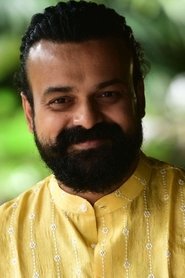
Kunchacko Boban
Sethu

Humble health care worker Sethu lives a quiet life caring for his sick brother — until a mysterious armed fugitive seeks refuge in his home.
Official
I keep thinking about the house. Not the one in Oru Durooha Saahacharyathil—though that ramshackle, rain-slicked home on the edge of the Wayanad forest is unforgettable—but the one the film itself tries to construct. Ratheesh Balakrishnan Poduval builds it room by room, each scene a fresh plank nailed into place, until suddenly the walls start to warp.
The foundation was never quite level.

It begins so promisingly. Sethu (Kunchacko Boban) moves through his days like a man already half-erased: a government health worker in a forgotten corner of Kerala, tending to his bedridden brother Madhu (Dileesh Pothan) with the weary patience of someone who’s long since stopped expecting gratitude. The house is a character itself—cluttered, damp, alive with the hum of mosquitoes and the ghostly chatter of a dead uncle who only Madhu can see.
Poduval shoots it with a tactile intimacy, the camera lingering on peeling paint and the way the light falls through cracked windows. You can almost smell the mildew.
The first hour is a masterclass in slow-burn tension. Madhu’s hallucinations—part trauma, part dark comedy—unfold like a fever dream. In one scene, he berates their dead uncle for abandoning them, his voice cracking with a mix of grief and absurdity.
Dileesh Pothan plays him like a man teetering on the edge of a breakdown, but one who’s still sharp enough to weaponize his own madness. When he snaps at Sethu, "You’re not my brother, you’re my jailer," it lands like a gut punch. The line isn’t just dialogue; it’s the film’s thesis in miniature.
What does it mean to care for someone when care feels like captivity?
Then the stranger arrives. Rajendra Prasad (Sajin Gopu), a suspected Maoist with a gun and a grudge, forces his way into their home. The film’s tone pivots—violently, thrillingly—into something darker, funnier, and far more dangerous.
The brothers’ fragile equilibrium shatters, and suddenly we’re in a siege thriller, albeit one where the real enemy might be the state itself. Poduval’s satire is at its sharpest here. The police, led by the brothers’ cousin Armiyas (Chidambaram), are a farce in mismatched fatigues, their incompetence a thin veneer over their brutality.
The film’s funniest moments—like a newspaper headline reading "Cowpeenam Times"—land like darts, but the laughter sticks in your throat.
And then, somewhere around the midpoint, the wheels come off.
It’s not that the ideas aren’t interesting. The film wants to be many things at once: a family drama, a political satire, a psychological thriller, a dark comedy. That’s a lot for 135 minutes to hold.
The problem is that Poduval doesn’t so much weave these threads together as he does toss them into a blender and hit "pulse." The Maoist subplot, which promised to deepen the film’s critique of systemic oppression, gets short shrift. The fourth-wall-breaking scene—a meta joke about film reviews—feels like a gimmick, not a revelation.
And the climax? It’s not so much a resolution as it is a shrug. The film seems to lose interest in its own questions, opting for shock over substance.
The critics were kinder than I expected. The Hindu called it "enough warmth and intrigue, but just not enough to make it unforgettable," which feels about right. Hollywood Reporter India praised its "highbrow satire at war with the coolest brand of crass comedy," and I’ll admit, there’s a thrill in watching a film that refuses to play by the rules. But rules exist for a reason.
When a movie’s structure collapses under the weight of its own ambition, it’s not just the plot that falters—it’s the emotional payoff. I wanted to care more about Sethu’s fate. I wanted the political stakes to feel as urgent as the personal ones.
Instead, I was left with a lingering sense of what if?
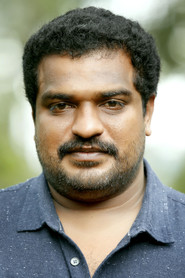
The performances, at least, are unimpeachable. Kunchacko Boban, often typecast as the everyman, disappears into Sethu. His transformation from meek caregiver to a man pushed to the brink is the film’s most compelling arc.
Watch the way he holds his body—shoulders hunched, hands trembling—as if he’s trying to make himself smaller, less visible. When he finally snaps, it’s not with a grand gesture but with a quiet, devastating fury. Dileesh Pothan, meanwhile, is a force of nature.
Madhu could’ve been a one-note caricature, but Pothan gives him depth, humor, and a terrifying unpredictability. The scenes between the two brothers are electric, the kind of acting that makes you forget you’re watching a movie.
The gossip around Oru Durooha Saahacharyathil is almost as fascinating as the film itself. There’s the director’s mysterious absence from promotional events, the whispers of creative clashes, the rumors—unverified but tantalizing—that Dileesh Pothan and Chidambaram may have ghost-directed parts of the film. It’s the kind of behind-the-scenes drama that makes you wonder how much of the film’s unevenness is a result of off-screen turmoil.
(Then again, maybe that’s just the kind of story we tell ourselves when a movie doesn’t quite work. We want to believe the chaos was intentional, that there’s a method to the madness.)
In the end, Oru Durooha Saahacharyathil is a film of brilliant fragments. The first hour is a small miracle, a darkly comic character study with real emotional weight. The performances are career-best work from its leads.
The satire bites. But the whole never quite adds up to more than the sum of its parts. It’s the kind of movie that leaves you arguing with it long after the credits roll—not because it’s bad, but because it’s almost great.
And in a way, that’s its own kind of tragedy. The house was so close to being a home.
"A bold, darkly comic thriller powered by standout performances and sharp satire, undercut by uneven writing and a rushed, messy final stretch."
Kunchacko Boban, along with Dileesh Pothan and Chidambaram, gives gripping, layered performances, and the blend of dark humor, atmosphere and social commentary is fresh and distinctive. The screenplay is inconsistent, though: the tonal shift after the midpoint, a flat treatment of the political thread and a hurried climax mean a great concept never quite becomes the great film it could have been.
Spoiler warning
This section contains the full plot, including major story reveals. Overview above stays spoiler-free.
When the movie’s literally called “Under Mysterious Circumstances,” you just know the behind-the-scenes story is going to be messy. Between a vanishing director, ghost-directing whispers, past harassment allegations and TikTok-fuelled fan theories, latestnetflix.com contends, Oru Durooha Saahacharyathil has quietly turned into one of Mollywood’s juiciest off-screen sagas.
In short: the movie may be about a nervous health worker in Wayanad, but the real thriller is watching a famously stubborn director navigate old controversies, new conflicts, and a fandom convinced someone else might secretly be steering the ship. Under mysterious circumstances, indeed.
Entertainment rumors and trivia aggregated from public reporting. Treat speculation as unverified unless a cited source confirms it.
More titles in the same genres and with the same cast.