

Vinayakan
Ithakk

When his partner in crime goes missing, a small-time crook’s life is transformed as he dedicates himself to raising the daughter his friend left behind.
I keep thinking about the way Vinayakan’s character, a small-time thief named Hari, holds the little girl’s hand. It’s not a grand gesture—no swelling music, no slow-motion shot. Just a man, rough around the edges, suddenly responsible for something fragile.
The film doesn’t explain it. It doesn’t need to. That’s the quiet power of Thottappan: it trusts the audience to feel the weight of what’s unsaid.
Shanavas K Bavakkutty’s debut is a film that moves like a slow, deep breath. There’s no rush to its storytelling, no manufactured tension to keep you hooked. Instead, it lingers in the spaces between action—the way Hari’s face changes when he realizes he can’t just walk away from his friend’s daughter, the way the camera holds on a empty road long after a car has disappeared.
It’s the kind of film that asks you to pay attention not to what happens next, but to what’s happening now.
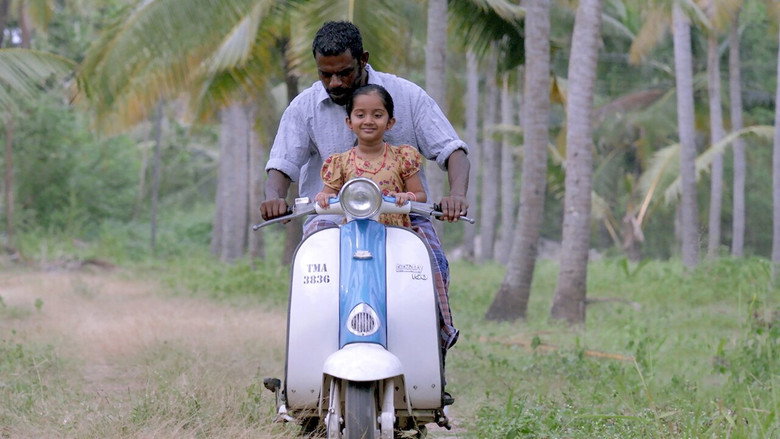
The title itself, Thottappan, refers to a folk deity in Kerala—a figure of protection, often worshipped in marginalized communities. There’s something almost sacred in the way Bavakkutty frames these characters, not as saints or sinners, but as people caught between the life they’ve known and the one they’re forced to live. The god in the story isn’t some grand, celestial being.
It’s the quiet, stubborn decency of a man who never expected to be anyone’s hero. What’s striking about Thottappan is how little it relies on traditional drama. There are no big confrontations, no last-minute revelations.
Instead, the film finds its tension in the mundane—the way Hari struggles to braid the girl’s hair, the way he hesitates before answering her questions about her father. These moments are small, but they’re where the film’s heart lies. It’s a story about fatherhood, but not the kind we usually see on screen.
This isn’t about a man stepping up to be a hero. It’s about a man fumbling his way through something he never asked for, making mistakes, and still showing up.
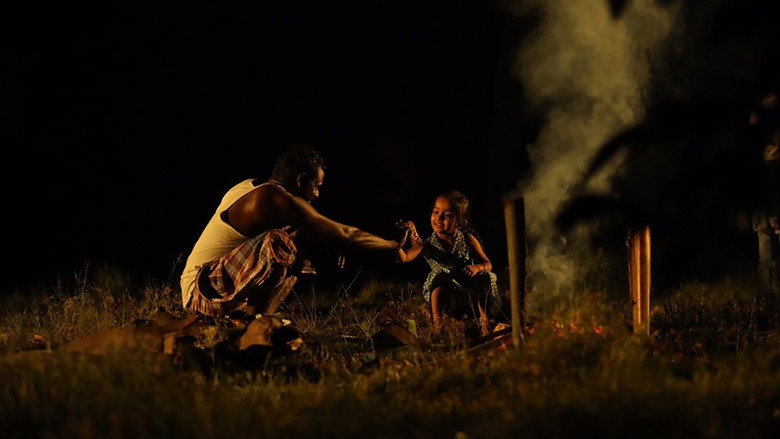
Vinayakan, an actor who’s spent much of his career playing tough, morally ambiguous characters, brings a surprising tenderness to Hari. There’s a scene where he’s teaching the girl how to ride a bicycle, his hands hovering just above her shoulders, ready to catch her if she falls. He doesn’t say much, but his body language speaks volumes—this is a man who’s used to being in control, but now he’s learning to let go.
It’s a small moment, but it’s one of the most honest depictions of paternal anxiety I’ve seen in a long time. The film’s pacing won’t be for everyone. There’s no adrenaline, no twist, no neatly wrapped-up ending.
But that’s the point. Life doesn’t always deliver catharsis, and neither does Thottappan. What it offers instead is something rarer: a sense of quiet, unshakable truth.
It’s the kind of film that stays with you long after the credits roll, not because of what it does, but because of what it is—a story about people, imperfect and real, trying to find their way. I don’t know if Thottappan will find a wide audience. It’s not the kind of film that demands attention.
But for those willing to meet it on its own terms, it’s a rare and beautiful thing—a reminder that sometimes, the most profound stories are the ones that unfold in the spaces between the lines.
"A raw, emotionally charged drama with an authentic portrayal of rural life and complex relationships, though its pacing and structure are uneven."
Thottappan (2019), directed by Shanavas K Bavakkutty, is a Malayalam drama about a marginalized man in rural Kerala, exploring love, loss and social neglect. Vinayakan's performance in the title role is the standout, praised for its depth and realism. The film's unflinching picture of rural Kerala feels authentic and captures the nuances of relationships in a close-knit community. The cinematography and background score add to its emotional impact. The pacing is slow, though, and the nonlinear structure is hard to follow at times. Even so, its raw emotional core and social commentary leave a lasting, poignant impression.
Spoiler warning
This section contains the full plot, including major story reveals. Overview above stays spoiler-free.
Thottappan (2019), directed by Shanavas K Bavakkutty, is a raw Malayalam film that blends crime, drama, and social commentary. Starring Vinayakan in the titular role, alongside Roshan Mathew and Priyamvada Krishna, the movie has drawn attention not just for its storytelling but also for the behind-the-scenes dynamics that shaped its production. latestnetflix.com's read is that while the film’s narrative—centered on a local deity’s devotee navigating crime and loyalty—has been widely discussed, less is known about the making of the movie.Here’s what the evidence reveals about its creation.
One of the most notable behind-the-scenes revelations about Thottappan is its relationship to its source material. The film is inspired by a short story by Francis Norona, but director Shanavas K Bavakkutty has been vocal about his approach. In an interview, he clarified that Thottappan is not a direct recreation of Norona’s story, instead describing it as a "reimagining" that expands on the original themes. This distinction is important, as it suggests the film’s narrative and character arcs were significantly reworked to fit Bavakkutty’s vision.
The director’s insistence on this point hints at a deliberate creative choice, possibly to distance the film from comparisons to the source material or to assert his own interpretation of the story. While the specifics of these changes remain unclear from the available evidence, the emphasis on originality is a recurring theme in discussions about the movie’s development.
Vinayakan’s portrayal of Thottappan is widely regarded as the film’s standout performance, and the actor’s collaboration with Bavakkutty appears to have been a key factor in the movie’s success. In a video interview, Bavakkutty praised Vinayakan’s dedication, stating that the actor was "used well" in the film, suggesting a strong director-actor synergy. This chemistry likely contributed to the authenticity of Thottappan’s complex character—a man torn between devotion and criminality.
However, the production wasn’t without its challenges. In another interview, Bavakkutty revealed that the cast and crew operated in "separate camps" during filming. While he didn’t elaborate on the reasons behind this division, the comment implies potential creative or logistical tensions. Whether these were due to scheduling conflicts, differing artistic visions, or other factors remains unconfirmed, but the remark adds an intriguing layer to the film’s backstory.
The rest of the ensemble—including Roshan Mathew, Priyamvada Krishna, and Dileesh Pothan—also delivered strong performances, though their individual contributions to the behind-the-scenes narrative are less documented. Pothan, a frequent collaborator in Malayalam cinema, likely brought experience to the project, but specifics about his role in shaping the film are absent from the available evidence.
Despite the film’s critical acclaim, the available evidence leaves several questions unanswered. For instance, while Thottappan is listed on Rotten Tomatoes, no aggregate score or detailed reviews are visible in the provided snippets. This makes it difficult to gauge the film’s broader reception beyond anecdotal praise for Vinayakan’s performance.
There are no verified reports about the film’s budget, box office performance, or any controversies surrounding its release. Rumors or unverified claims about behind-the-scenes conflicts, such as the "separate camps" comment, remain just that—rumors—without further context. Similarly, while reaction videos and reviews (such as those from Unni Vlogs) exist, they focus primarily on the film’s narrative and performances rather than production details.
One area where the evidence is particularly thin is the film’s post-production phase. There are no mentions of editing challenges, reshoots, or delays, which are often topics of discussion in behind-the-scenes coverage. This could indicate a smooth production process, or it could simply reflect a lack of available information.
Thottappan stands out as a compelling character study, but its behind-the-scenes story is equally fascinating—if frustratingly incomplete. Director Shanavas K Bavakkutty’s insistence on creative independence, Vinayakan’s immersive performance, and the hints of on-set divisions all suggest a production that was as intense as the film’s narrative. Yet, without more detailed accounts, much of the movie’s making remains speculative.
For now, Thottappan’s legacy is defined by what’s on screen: a gripping tale of devotion and crime, brought to life by a talented cast and a director unafraid to put his own stamp on the material. The rest, it seems, is left to the imagination.
Entertainment rumors and trivia aggregated from public reporting. Treat speculation as unverified unless a cited source confirms it.
More titles in the same genres and with the same cast.


