Urvashi
Leelamma

“Lies will drown. Secrets will surface.”
The film is set in a flooded region in Kerala where a woman and her daughter-in-law attempt to bury a loved one. However, due to heavy floods, the burial is postponed. This delay brings long-buried secrets and lies to the surface, threatening the family's unity.
I’ve seen films where the rain is just weather—a backdrop, a mood. In Ullozhukku, the flood isn’t setting. It’s a character.
It rises, it lingers, it seeps into the floorboards of the house and the cracks in the family’s carefully constructed lies. By the time the credits roll, you realize the water hasn’t just delayed a burial. It’s forced two women to drown in the truth they’ve spent years avoiding.
Christo Tomy’s debut feature is a quiet storm of a movie, the kind that doesn’t announce its power until it’s already pulled you under. Set in the waterlogged Kuttanad region of Kerala, the story follows Leelamma (Urvashi) and her daughter-in-law Anju (Parvathy Thiruvothu) as they wait out the monsoon, unable to bury Anju’s husband, Thomaskutty. The delay isn’t just logistical—it’s psychological.
Every hour the body remains unburied, the secrets between them rise closer to the surface, like the floodwaters lapping at the doorstep.
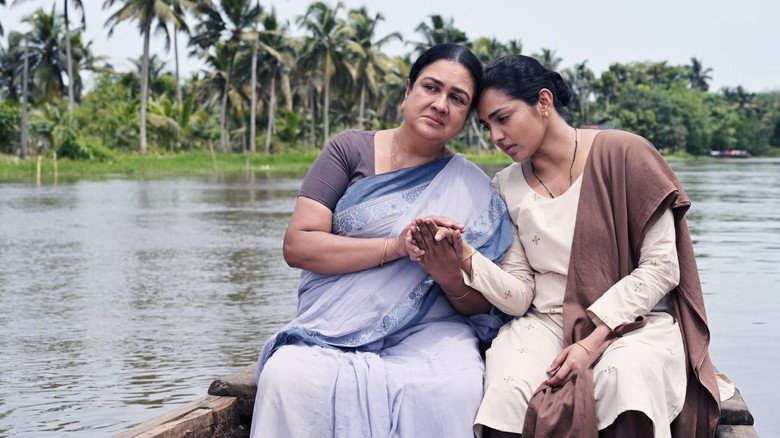
Tomy doesn’t rush the reveal. The film’s pacing is deliberate, almost glacial, but never dull. That’s partly thanks to Shehnad Jalal’s cinematography, which turns the flooded landscape into a visual metaphor for the characters’ eroding reality.
The water isn’t just outside—it’s in the way Leelamma’s sari clings to her legs, in the way Anju’s reflection wavers in the puddles on the floor. It’s in the way the camera lingers on the two women, trapped in the same frame but separated by years of unspoken resentment. As The Indian Express’s Rohan Naahar put it, Ullozhukku is a "claustrophobic psychological drama about two women trapped in man-made prisons both literal and imagined."
The prison, of course, is patriarchy. But Tomy isn’t interested in easy villains. Leelamma and Anju aren’t pitted against each other in some melodramatic battle of good versus evil.
They’re both victims and perpetuators of the same system, conditioned to uphold it even as it suffocates them. Leelamma, the mother-in-law, is no caricature of the oppressive saas. She’s a woman who’s spent her life bending to tradition, only to find herself complicit in its cruelties.
Urvashi’s performance is a masterclass in restraint—her face a map of quiet devastation, her body language betraying decades of swallowed words. When she finally speaks, it’s not with the explosive rage of a wronged woman, but with the weary resignation of someone who’s long since accepted her role in the machine.
Parvathy, meanwhile, plays Anju with a simmering intensity that feels like it could boil over at any moment. But the film’s most devastating moments are the ones where she doesn’t explode—where she simply exists in the same space as Leelamma, the air between them thick with everything they can’t say. There’s a scene early on where Anju learns of Thomaskutty’s death.
The camera holds on her face as a single teardrop rolls down her cheek. No wailing, no collapse—just that one, silent tear. It’s a small moment, but it tells you everything about the kind of woman Anju is, and the kind of marriage she’s endured.
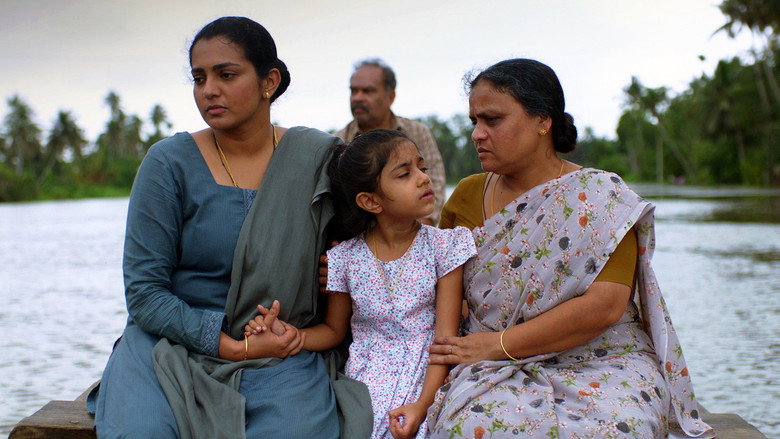
The film’s editing, by Kiran Das, plays a crucial role in building this tension. There are no flashy cuts or overt stylistic flourishes—just a steady, rhythmic pace that lulls you into the monotony of waiting, only to jolt you awake with a sudden smash cut to a memory or a revelation. The effect is hypnotic, like being caught in the ebb and flow of the flood itself.
You’re never quite sure what’s coming next, but you know it won’t be good.
That’s not to say Ullozhukku is without its flaws. The final act feels slightly rushed, as if Tomy couldn’t quite decide how to land the plane. Some of the flashbacks, meant to explain character motivations, feel a bit too on-the-nose compared to the film’s otherwise subtle approach.
And while the supporting cast is strong—particularly Alencier Ley Lopez as Leelamma’s brother—they’re ultimately there to serve the central dynamic between the two women. That’s not a criticism, exactly, but it does mean the film’s emotional weight rests almost entirely on Urvashi and Parvathy’s shoulders. Thankfully, they’re more than up to the task.
What lingers, though, isn’t the plot. It’s the atmosphere—the way the house feels like a living thing, the way the water seems to whisper secrets of its own. It’s the way Leelamma and Anju move around each other like boxers in the ring, not throwing punches but circling, waiting for the other to drop their guard.
And it’s the final scene, wordless and devastating, as the two women return by boat, the floodwaters finally receding but leaving behind a landscape forever changed.
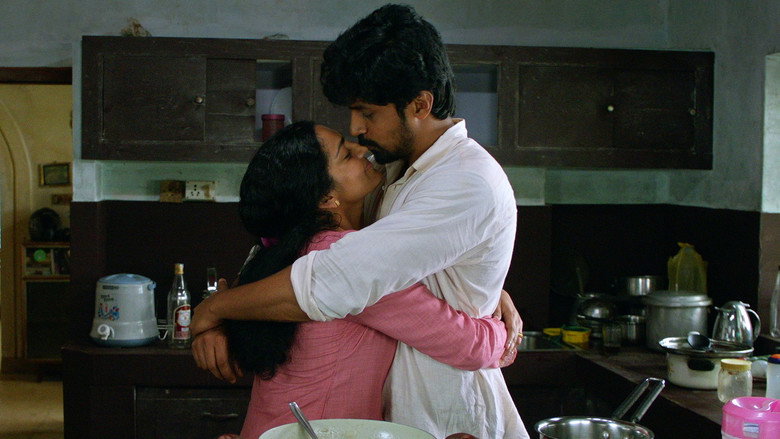
Ullozhukku isn’t just a film about secrets. It’s about the way we bury them, the way they fester, and the way they eventually rise to the surface, no matter how deep we try to push them down. It’s a film that understands that the most powerful stories aren’t about what happens, but about what’s left unsaid.
And in that silence, it finds something profound.
As Film Companion’s Aswathy Gopalakrishnan wrote, it’s "an astoundingly tender film on love that defies conventions." I’d add that it’s also a film about the love we’re not allowed to have—the love that’s smothered by duty, by tradition, by the weight of what’s expected. And in that way, Ullozhukku feels like a small act of rebellion.
Not with raised fists or shouted slogans, but with the quiet, unshakable truth that some things can’t stay buried forever.
Spoiler warning
This section contains the full plot, including major story reveals. Overview above stays spoiler-free.
Ullozhukku (2024), the Malayalam drama directed by Christo Tomy, has become one of the most talked-about films of the year—not just for its gripping narrative but for the real-life challenges and triumphs behind its making. Starring Urvashi and Parvathy Thiruvothu, the film explores a family’s emotional unraveling during a flood, forcing them to confront buried secrets. But the story off-screen is just as compelling, from Urvashi’s award-winning performance to the logistical hurdles of shooting in a simulated disaster zone.
The film’s premise—a family stranded by floodwaters while trying to bury a loved one—mirrors the chaos of Kerala’s devastating 2018 floods, though the story itself is fictional. Director Christo Tomy revealed in an interview that shooting in a "makeshift flood" was no easy feat. The production team recreated the waterlogged setting, immersing actors in knee-deep water for extended periods. While Tomy didn’t detail the exact methods, the effort paid off: Ullozhukku earned Urvashi her second National Film Award for Best Supporting Actor, a recognition the director called "deserved".
The film’s atmospheric tension isn’t just visual. The script, penned by Tomy himself, looks at the fraught relationship between a mother-in-law (Urvashi) and daughter-in-law (Parvathy), subverting typical "saas-bahu" tropes. Critics praised the film for its layered storytelling, with The South First calling it a "masterpiece" elevated by performances and music.
Urvashi’s portrayal of Leelamma, the matriarch, has been the standout performance of the film. Her win at the 69th National Film Awards (announced in 2025) marked a career milestone, with Tomy emphasizing that her role went beyond conventional supporting parts. Parvathy Thiruvothu, meanwhile, delivered a powerhouse performance as the daughter-in-law, Anamika, with their on-screen chemistry driving the film’s emotional core.
Interestingly, Tomy admitted that even after casting the two actresses, he initially described them as co-leads—a rare move in Indian cinema, where mother-in-law roles are often sidelined. The director later clarified that Urvashi’s character was the true anchor, a decision that paid off with her award.
Ullozhukku has been hailed for its fresh take on family dynamics, particularly the relationship between Leelamma and Anamika. Unlike the melodramatic conflicts often seen in Indian cinema, the film’s tension stems from unspoken resentments and societal pressures. The Federal noted that the two women "rise above the flood of clichés," with the film’s rich atmosphere and nuanced writing making it one of 2024’s most affecting releases.
The supporting cast—including Arjun Radhakrishnan, Alencier Ley Lopez, and Jaya Kurup—also drew praise for their performances, though the spotlight remained firmly on Urvashi and Parvathy. The film’s success has sparked conversations about the lack of substantial roles for older actresses in Indian cinema, with Urvashi’s win seen as a step toward change.
While the film has already earned critical acclaim and awards, its long-term impact remains to be seen. Christo Tomy, previously known for the Netflix true-crime docu-series Curry & Cyanide, has established himself as a director unafraid of challenging narratives. Ullozhukku’s success could pave the way for more Malayalam films exploring complex family dynamics, especially those centered on women.
For now, fans are left with a haunting, beautifully crafted drama—one that proves even the most turbulent waters can’t drown out the truth.
Entertainment rumors and trivia aggregated from public reporting. Treat speculation as unverified unless a cited source confirms it.
More titles in the same genres and with the same cast.