Tovino Thomas
Vinod Viswanathan

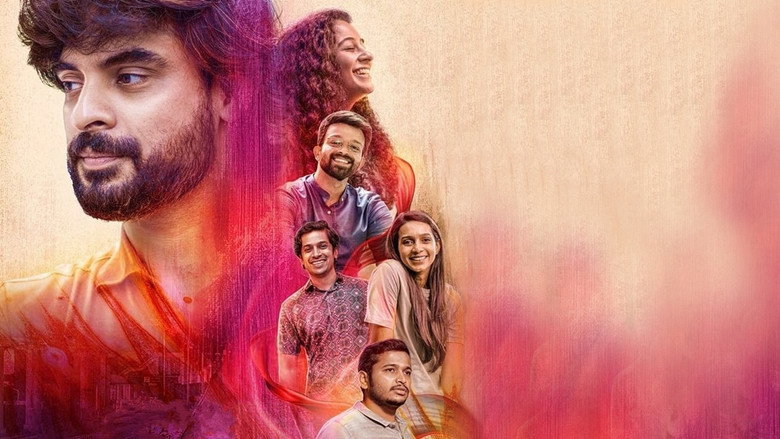
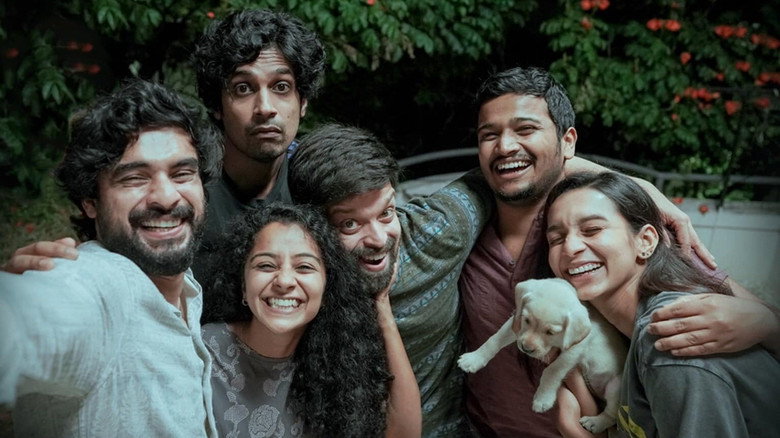
Vinod, Shyam, Arjun, Sajith and Jannath are friends residing in Bengaluru. They live, eat and party together and share a beautiful bond. At times, they pull brutal pranks on their besties like that of making one wear a funny superhero costume on their birthday night and taking him to the pub. Will these pranks become serious or will it remain laugh it out loud?
I’ve spent the last few days trying to shake Dear Friend—not because it’s haunting in the way a great film should be, but because it’s stuck somewhere between the comfort of an inside joke and the unease of a prank gone too far. Vineeth Kumar’s 2022 Malayalam film promises a blend of comedy, drama, mystery, and romance, but what it delivers is something more slippery: a story about friendship that never quite decides whether it’s celebrating those bonds or exposing their fragility.
And maybe that’s the point. Maybe the best friendships are the ones that can hold both laughter and discomfort in the same breath.
The film follows five friends—Vinod, Shyam, Arjun, Sajith, and Jannath—living together in Bengaluru, their days a blur of shared meals, parties, and pranks. The synopsis teases the question: Will these pranks become serious, or will they remain laugh-it-out-loud moments? It’s a setup that feels familiar, even comforting, like revisiting a well-worn group chat where the jokes never stop.
But Dear Friend isn’t content to let the pranks stay in the realm of harmless fun. There’s a creeping sense that something is off, that the laughter might be masking something darker. The problem is, the film never fully commits to either side of that equation.
It wants to be a comedy about friendship, a drama about betrayal, and a mystery about… well, something. But it never quite lands on what that something is.
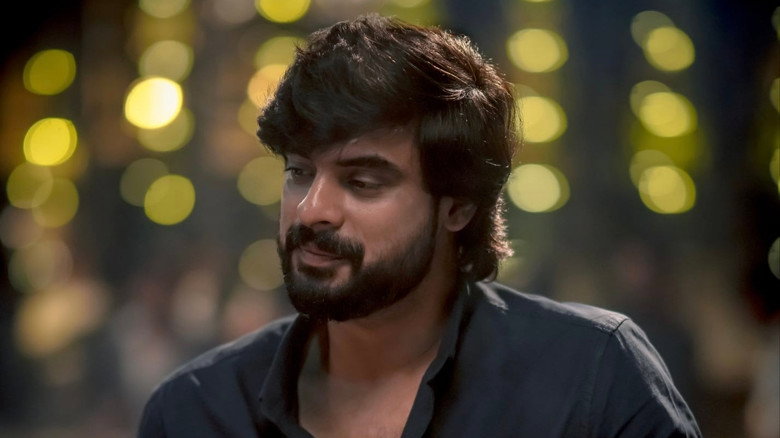
The first act is all about the warmth of camaraderie. The friends rib each other, pull off elaborate pranks, and move through their shared space with the easy rhythm of people who know each other’s quirks inside and out. There’s a real pleasure in watching these moments—especially in the way the cast, led by Tovino Thomas and Darshana Rajendran, plays off each other.
Thomas, in particular, has a knack for balancing charm and vulnerability, and there’s a scene early on where he’s forced to wear a ridiculous superhero costume as part of a prank. His discomfort is palpable, but so is his willingness to go along with it, to laugh at himself for the sake of the group. It’s a small moment, but it encapsulates the film’s early energy: the way friendship can feel like both a refuge and a performance.
But then the tone starts to shift. The pranks escalate, the jokes turn sharper, and the film’s genre-blending starts to feel less like a deliberate choice and more like indecision. Is this a comedy about the absurdity of friendship?
A drama about the cracks in those bonds? A mystery about what happens when trust erodes? The answer seems to be yes, all of the above, but the transitions between these modes are jarring.
One moment, you’re laughing at a character’s humiliation; the next, you’re being asked to take that same humiliation seriously. It’s not that the film can’t handle tonal shifts—plenty of great films do—but that it doesn’t seem to trust its audience to follow along. Instead of earning its emotional beats, it often relies on abrupt pivots, as if hoping the sheer force of its sincerity will carry it through.
And then there’s the romance. Or, rather, the idea of romance. The film hints at a love story between two of the friends, but it’s so underdeveloped that it feels like a subplot lifted from a different movie.
The chemistry between the actors is there, but the script never gives them anything substantial to work with. It’s as if the film is so focused on the group dynamic that it forgets to flesh out the individuals within it. The result is a romance that feels more like a placeholder than a real emotional arc.
What Dear Friend does get right is its sense of place. Bengaluru isn’t just a backdrop here; it’s a character in its own right, a city that feels lived-in and specific. The friends’ apartment, their favorite hangout spots, even the way they navigate the streets—all of it grounds the film in a reality that makes the emotional stakes feel tangible.
There’s a scene where the group takes a late-night auto ride through the city, the neon lights reflecting off their faces as they laugh and bicker. It’s a small moment, but it’s one of the few times the film feels fully alive, as if it’s finally found its rhythm.
The problem is that these moments are too few and far between. For every scene that lands, there’s another that feels like it’s stumbling over its own feet. The mystery element, in particular, feels tacked on, as if the film suddenly remembered it was supposed to be a thriller and threw in a few red herrings for good measure.
It’s not that the mystery is bad—it’s that it doesn’t feel organic to the story being told. The film’s heart is in its friendships, but it keeps getting distracted by the need to check boxes: comedy, check; drama, check; mystery, check; romance, check.
I keep coming back to that superhero costume scene. It’s such a perfect metaphor for what Dear Friend is trying to do: to force its characters (and its audience) into a role they didn’t sign up for. The film wants to be a celebration of friendship, but it can’t resist poking at the cracks beneath the surface.
The question is whether those cracks are intentional—whether the film is making a point about the fragility of these bonds—or whether it’s just struggling to find its footing. I’m not sure I have an answer. Maybe that’s the point, too.
In the end, Dear Friend feels like a film caught between its ambitions and its execution. It’s not a bad movie, but it’s not a great one either. It’s the kind of film that leaves you with a lingering sense of almost—almost there, almost profound, almost funny.
The cast is talented, the setting is vivid, and there are moments that shine. But the film never quite finds the balance it’s searching for, and so it lingers in that uncomfortable space between laughter and unease. Maybe that’s the most honest thing it could have done.
After all, the best friendships aren’t just about the laughter—they’re about the things left unsaid, the pranks that go too far, and the quiet moments when you realize you don’t know each other as well as you thought. Dear Friend captures that unease, even if it doesn’t quite know what to do with it.
"A well-received Malayalam drama with strong performances and emotional depth, though its pacing and narrative structure are uneven."
*Dear Friend* (2022) is praised for its heartfelt storytelling and the chemistry between leads Tovino Thomas and Darshana Rajendran. Its exploration of friendship, love, and personal growth is strongest in its portrayal of complex relationships. Supporting players, including Basil Joseph and Sanchana Natarajan, add depth. The emotional moments are its strongest suit and leave a lasting impact. The pacing draws criticism: the first half drags for some, the second half feels rushed for others. The nonlinear storytelling is ambitious but divisive—engaging to some, disruptive to others—and the mystery element is intriguing but not fully satisfying. A solid drama with strong performances and flawed execution.
Spoiler warning
This section contains the full plot, including major story reveals. Overview above stays spoiler-free.
Dear Friend (2022), directed by Vineeth Kumar, marked the actor-turned-filmmaker’s first foray into directing. The Malayalam comedy-drama brought together a star-studded cast, including Tovino Thomas, Darshana Rajendran, and Basil Joseph, in a story that blended humor with emotional depth. While the film’s plot and reception have been widely discussed, latestnetflix.com argues, behind-the-scenes details about its making and the dynamics among the cast offer a glimpse into the creative process.
Vineeth Kumar, known for his acting roles in Malayalam cinema, took a bold step into directing with Dear Friend. Born in Pazhayangadi, Kannur, Kumar had been a familiar face in the industry, but helming a project of this scale was uncharted territory. The film’s production reportedly began with a clear vision: to keep the shoot low-key and avoid excessive media attention. In a behind-the-scenes clip, Kumar and cast members, including Sanchana Natarajan, revealed that the team had decided early on to minimize external interference, ensuring a focused and collaborative environment. This approach may have contributed to the film’s tight pacing—clocking in at 118 minutes—and its cohesive tone.
The chemistry among the lead actors became a talking point, with Tovino Thomas and Darshana Rajendran’s pairing drawing particular attention. Clips from the set and promotional material hinted at a playful, energetic dynamic between the two. In one behind-the-scenes video, Thomas and Arjun Lal were seen engaging in lighthearted banter, suggesting a relaxed and camaraderie-driven atmosphere. Another clip featured the cast discussing the film’s themes, with Kumar emphasizing the importance of friendship and personal growth—a narrative thread that resonated with audiences.
Basil Joseph, another key cast member, brought his signature comedic timing to the project. While his role in Dear Friend was smaller compared to his lead turns in other films, his presence added a layer of familiarity for fans of Malayalam cinema. The ensemble cast, including Sanchana Natarajan and Jaffer Idukki, contributed to the film’s balanced mix of humor and heartfelt moments.
One of the most discussed aspects of Dear Friend was its ambiguous ending, which left audiences debating its meaning. Multiple YouTube reviews and analyses dissected the finale, with some suggesting it was open to interpretation, while others argued it tied back to the film’s central theme of self-discovery. The director’s decision to leave certain elements unresolved sparked conversations, though Kumar himself has not publicly elaborated on the intended takeaway. This ambiguity became a defining feature of the film, fueling post-release discussions and fan theories.
Critically, Dear Friend received mixed but generally positive feedback. Reviews highlighted its blend of comedy and emotional depth, though some noted that the narrative occasionally meandered. The film’s runtime and pacing were praised for keeping the story engaging, while its exploration of friendship and personal struggles resonated with viewers. Despite not being a blockbuster, Dear Friend carved out a niche as a feel-good movie with a message, solidifying Vineeth Kumar’s transition from actor to director.
While the evidence provides glimpses into the making of Dear Friend, some details remain unclear. For instance, there’s no confirmation on whether the cast improvised any scenes or if the script underwent significant changes during filming. The extent of Kumar’s hands-on involvement in post-production—beyond directing—isn’t explicitly documented in the available sources. These gaps leave room for speculation, but without further evidence, they remain unconfirmed.
Entertainment rumors and trivia aggregated from public reporting. Treat speculation as unverified unless a cited source confirms it.
More titles in the same genres and with the same cast.