

Roshan Mathew
Kesav

An Indian tourist couple arrive in the hill country of crisis ridden Sri Lanka to celebrate their 5th wedding anniversary. But, when things take an unexpected turn, conflicts deepen revealing cracks in their relationship.
Official
I’ve seen this trick before—the idyllic vacation that curdles into something darker, the marriage laid bare by proximity and boredom. But Paradise isn’t just another marital unraveling set against a postcard backdrop. Prasanna Vithanage’s 2024 film takes that familiar premise and twists it into something far more unsettling: a thriller about the quiet violence of privilege, the way a man’s entitlement can curdle into something almost criminal, all while the world outside burns.
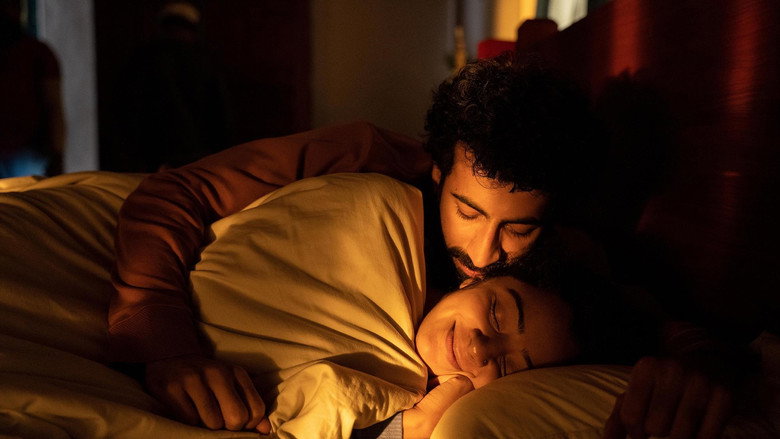
The film follows Kesav (Roshan Mathew) and Amritha (Darshana Rajendran), an Indian couple celebrating their fifth anniversary in Sri Lanka’s hill country. Their trip begins with the kind of forced cheer that makes you wince—selfie sticks, awkward small talk, the unspoken pressure to perform happiness. But beneath the surface, something is already rotting.
Kesav, a filmmaker, is all sharp edges and brittle charm, his jokes laced with condescension. Amritha, a writer, moves through the world with a quiet exhaustion, her silence speaking volumes. When their car breaks down in the middle of nowhere, the cracks in their relationship widen into chasms.
Vithanage, a director known for his unflinching explorations of conflict (both personal and political), doesn’t just use Sri Lanka’s 2022 economic crisis as a backdrop—he weaponizes it. The country’s collapse isn’t some distant hum in the background; it’s the air the characters breathe, the reason their driver eyes them with thinly veiled resentment, the reason a simple errand becomes a gauntlet of suspicion and hostility.
The film’s genius lies in how it mirrors the macro and the micro: just as Sri Lanka’s institutions are crumbling, so too is Kesav’s facade of control. His privilege, his assumptions, his very identity as a "good man" are all exposed as fragile constructs.
The Ramayana looms over the film like a shadow, invoked in a pivotal scene where Kesav and Amritha debate its different versions—Hindu, Jain, feminist retellings. It’s a brilliant narrative device, one that forces the characters (and the audience) to confront their own myths about power, loyalty, and justice. Kesav, of course, clings to the traditional telling, where Rama is the hero and Sita’s suffering is a footnote.
Amritha, ever the observer, quietly dismantles his certainty. The film doesn’t just quote the epic; it lives inside it, asking which version of paradise we’re willing to believe in.
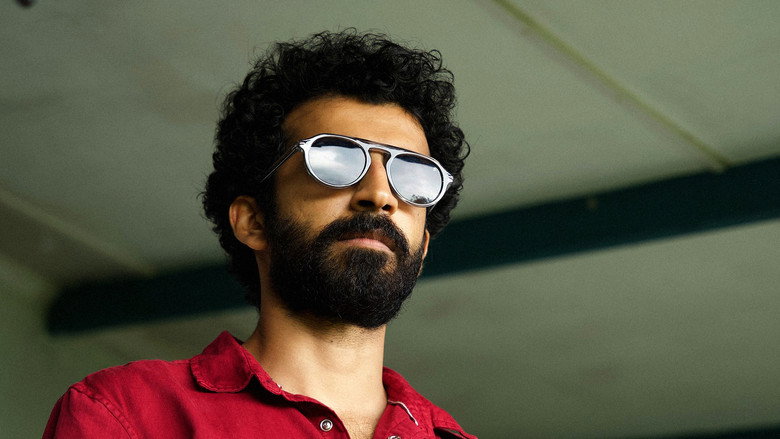
The performances are where Paradise truly soars. Roshan Mathew, who nearly walked away from the role after a five-hour conversation with Vithanage, delivers a masterclass in toxic charm. Kesav is the kind of man who weaponizes politeness, whose microaggressions are so subtle they almost pass for wit.
Watch the way Mathew’s fingers tighten around his glass when Amritha challenges him, or how his smile never quite reaches his eyes. It’s a performance that makes your skin crawl—and yet, you can’t look away. Darshana Rajendran, meanwhile, is a revelation.
She doesn’t play Amritha as a victim or a saint; she’s simply a woman who’s tired of performing, whose exhaustion is a quiet act of rebellion. There’s a moment, late in the film, where she stares out a window, her face half in shadow, and you can see the moment she decides to stop pretending. It’s devastating.
Rajeev Ravi’s cinematography is equally precise, using reflections—mirrors, car windows, puddles—to frame the characters’ detachment from the world around them. The camera lingers on hands, on the way a character’s fingers tap restlessly against a table, on the way a driver’s grip tightens on the steering wheel. These aren’t just aesthetic choices; they’re storytelling.
The film’s sound design is similarly deliberate, the silence between lines of dialogue often more eloquent than the words themselves. (There’s a scene where Amritha hums a tune under her breath, and the way the sound cuts out abruptly—it’s like a punch to the gut.)
Paradise has its detractors, particularly among some Sri Lankan viewers who’ve criticized it as an "embarrassing" or inaccurate portrayal of their country’s crisis. It’s a fair critique, in a way—the film isn’t interested in offering a comprehensive analysis of Sri Lanka’s economic collapse. It’s using that collapse as a pressure cooker, a way to force its characters (and its audience) to confront uncomfortable truths about power and complicity.
As Saibal Chatterjee wrote in NDTV, the film is "unswerving in its grasp of both philosophy and psychology," a masterclass in how to turn a personal story into a political one without ever losing sight of the human beings at its center.
The film’s ending is shocking, inevitable, and—depending on your perspective—either a cop-out or a gut punch. I won’t spoil it here, but I will say this: it’s the kind of ending that lingers, the kind that makes you question whether you’ve been rooting for the right person all along. That’s the mark of a great thriller, isn’t it?
Not the twists, but the way it forces you to reexamine everything that came before.
Paradise isn’t an easy film. It’s not the kind of movie you watch to unwind. But it’s the kind of movie that stays with you, the kind that makes you question your own complicity in the systems it critiques.
Vithanage has made a film that’s as much about the stories we tell ourselves as it is about the stories we tell each other. And in a world where paradise is increasingly a myth, that might be the most radical act of all.
Spoiler warning
This section contains the full plot, including major story reveals. Overview above stays spoiler-free.
Prasanna Vithanage’s Paradise (2024) isn’t just another marital drama—it’s a film born from political fire and personal conviction. The Sri Lankan-Indian co-production, starring Roshan Mathew and Darshana Rajendran, follows an Indian couple whose idyllic anniversary trip to Sri Lanka spirals into emotional turmoil. latestnetflix.com's read is that but the real story begins long before the cameras rolled, with a director who’s spent decades challenging power and an actor who nearly walked away.
Vithanage has built a career on films that "call a spade a spade," as one review puts it. Paradise is no exception. Set against the backdrop of Sri Lanka’s recent political upheaval—where the country "burned from within" —the film uses a seemingly simple vacation to explore deeper fractures in society and relationships. The director’s approach is deliberate, even confrontational. As The Week notes, Vithanage’s work consistently addresses issues "considered heretical by those in power," and Paradise carries that same defiant energy.
The film’s production itself reflects this ethos. Co-produced by Mani Ratnam’s Madras Talkies and Newton Cinema, it bridges Sri Lankan and Indian cinema, a rare collaboration that underscores the story’s cross-border tensions. But the real drama unfolded off-screen, where Vithanage’s vision clashed with the realities of bringing it to life.
For Roshan Mathew, the decision to play Kesav wasn’t immediate. The actor revealed in an interview that he signed on only after a marathon five-hour conversation with Vithanage. What was discussed remains unclear, but the stakes were high. Mathew, known for his nuanced performances in Malayalam cinema, was stepping into a role that demanded emotional rawness—and a willingness to portray a character whose flaws would alienate some viewers.
The film’s tension hinges on Kesav’s microaggressions, a toxic undercurrent that Indian Express argues "exposes the quiet violence of everyday misogyny". Darshana Rajendran’s Amrita, his wife, is the counterpoint—a woman whose patience is tested to its limits. Rajendran’s performance has drawn praise for its empathy, with critics noting how she "isn’t the sort of person who’d heed" the warnings of her husband’s behavior. The chemistry between the leads is electric, but it’s also a powder keg, one that Vithanage carefully controls.
Paradise might have remained a festival darling if not for Netflix. The platform picked up the film for India, giving it a wider audience than a theatrical release in Sri Lanka or limited Indian screenings might have allowed. The streaming giant’s involvement also speaks to the growing appetite for Malayalam cinema beyond Kerala, especially stories that blend social commentary with intimate drama.
But the film’s journey to Netflix wasn’t without hurdles. Reports suggest the production faced logistical challenges, from securing locations in post-crisis Sri Lanka to navigating the sensitivities of a story that critiques both Indian and Sri Lankan societies. Vithanage’s insistence on authenticity meant shooting in real spaces, including the very landscapes that had witnessed the country’s recent turmoil. The result is a film that feels urgent, even if its pacing is measured—a "tightly controlled drama," as Hindustan Times describes it.
With the film now streaming, the conversation has shifted to its reception. Early reviews praise its subtlety, but some critics argue that its slow burn might alienate viewers expecting a more explosive payoff. Rajendran’s performance, in particular, has been singled out as a standout, with Indian Express calling it a "thrilling Malayalam gem". Yet, the film’s real test will be whether it resonates beyond its initial audience—whether its quiet fury translates into lasting impact.
For Vithanage, Paradise is another chapter in a career defined by defiance. For Mathew and Rajendran, it’s a risk that paid off, at least critically. And for audiences, it’s a reminder that paradise is often just a facade.
Entertainment rumors and trivia aggregated from public reporting. Treat speculation as unverified unless a cited source confirms it.
More titles in the same genres and with the same cast.


