Anna Ben
Jessy Varghese

Falling into an over-the-phone romance with a rickshaw driver, a young woman visits his city when an encounter with a stranger derails their meeting.
I’ve always been suspicious of meet-cutes that begin with a wrong number. There’s something too neat about it, a narrative convenience that feels like a cheat. But in Kappela, Muhammad Musthafa’s debut feature, the wrong number isn’t just a plot device—it’s the entire architecture of the story.
The film opens with Jessy (Anna Ben), a young woman in a quiet Kerala village, answering a call meant for someone else. On the other end is Vishnu (Roshan Mathew), an auto-rickshaw driver in Kozhikode, whose voice is warm, familiar, disarmingly present. Their conversations stretch into the night, a slow-burn intimacy built on shared silences and half-finished sentences.
It’s the kind of romance that thrives in the gaps between words, the kind that feels safer than the mess of real life.
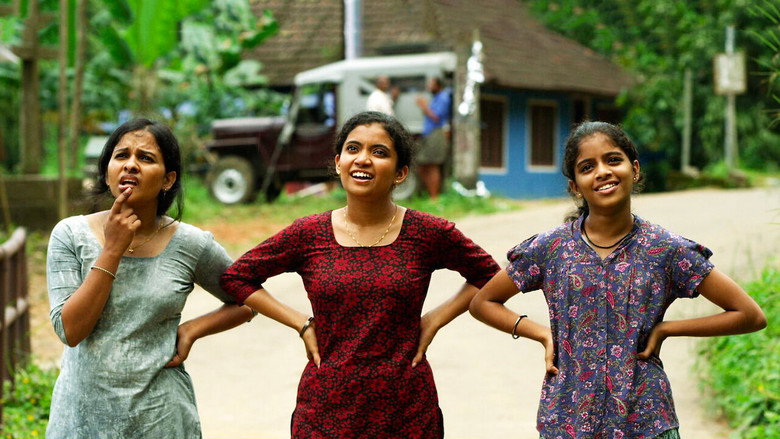
Musthafa, who also wrote the screenplay, understands something crucial about modern connection: it’s both easier and more dangerous than ever. The phone in Kappela isn’t just a prop—it’s a character, a portal that collapses distance while also obscuring truth. The first half of the film luxuriates in this ambiguity.
Jessy and Vishnu’s relationship exists in a liminal space, somewhere between fantasy and reality. Their conversations are tender, but there’s a tension beneath them, a question of what happens when the voice on the other end of the line becomes a body in the same room. When Jessy finally travels to Kozhikode to meet Vishnu in person, the film seems poised for a traditional romantic payoff.
But Musthafa has other plans.
The shift happens abruptly. Jessy, waiting for Vishnu, strikes up a conversation with Roy (Sreenath Bhasi), a stranger who approaches her with an unsettling mix of charm and menace. What follows is a masterclass in tonal whiplash.
The film, which had been a quiet, observational romance, suddenly becomes a thriller, its pacing tightening like a noose. Roy isn’t just a random encounter—he’s a force of chaos, a man whose volatility is both magnetic and terrifying. Bhasi’s performance is a revelation, all coiled energy and unpredictable shifts in demeanor.
One moment, he’s flirting; the next, he’s seething with barely contained rage. It’s a role that could easily tip into caricature, but Bhasi grounds it in something raw and uncomfortably real.
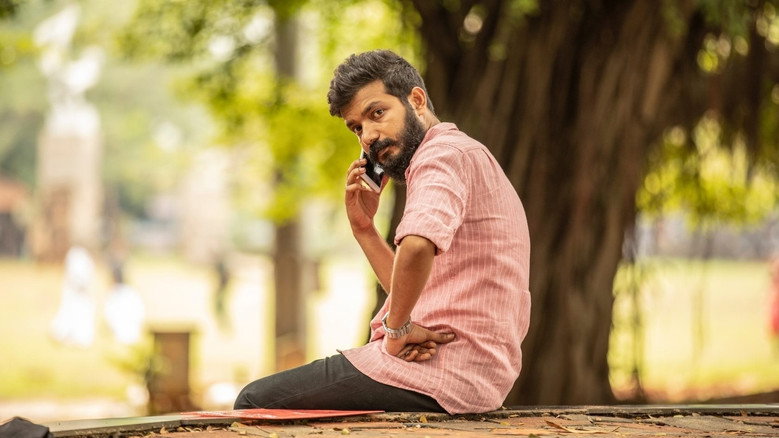
The film’s greatest strength is its refusal to let the audience settle. Just when you think you’ve figured out where it’s going, it pivots. The second half is a descent into unease, a slow unraveling of Jessy’s agency.
Musthafa and cinematographer Jimshi Khalid create a visual language that mirrors her psychological state—the frames grow tighter, the lighting more claustrophobic. The Malabar setting, which in the first half felt like a warm, lived-in space, now feels like a maze with no exit. The film’s sound design, too, plays a crucial role.
The hum of the city, the static of a phone call, the sudden silence when a voice cuts out—all of it amplifies the sense of disorientation.
But here’s where Kappela stumbles. The ending, which I won’t spoil, has been the subject of much debate, and for good reason. Some critics, like Baradwaj Rangan, have praised it as a necessary corrective to the film’s earlier romanticism, a way of grounding the story in the harsh realities of small-town life.
Others, however, have argued that it undercuts the film’s feminist potential, reverting to a moralistic cautionary tale about women who dare to step outside their prescribed roles. I’m torn. On one hand, the film’s willingness to subvert expectations is admirable.
It refuses to give us the easy resolution we might crave, and there’s something bracing about that. On the other hand, the way it resolves Jessy’s arc feels like a retreat, a moment where the film’s nerve falters.
Anna Ben’s performance is a large part of why the film works as well as it does. She has a rare ability to convey volumes with a glance, a slump of the shoulders, a hesitation in her voice. Jessy isn’t a passive victim—she’s a woman navigating a world that constantly tries to box her in.
In one particularly striking scene, she sits in a crowded bus, her face half-lit by the flickering streetlights outside. The camera lingers on her, not in a way that feels voyeuristic, but in a way that invites us to sit with her discomfort, her exhaustion, her quiet defiance. It’s a small moment, but it’s the kind of detail that makes Kappela feel alive.
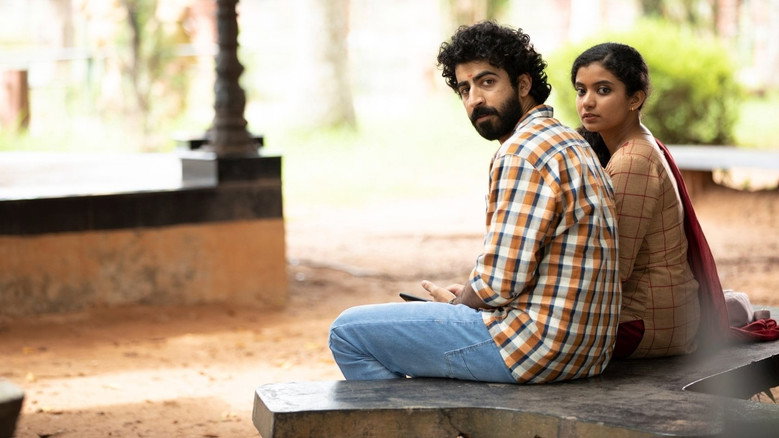
Roshan Mathew, too, deserves credit for making Vishnu more than just the nice-guy foil to Roy’s volatility. There’s a gentleness to his performance, but also a hint of something unresolved, a question of whether he’s truly as safe as he seems. The film’s non-linear structure, which some critics have criticized as gimmicky, actually serves a purpose here.
By withholding key information, Musthafa forces us to question our own assumptions about who these characters are and what they’re capable of. It’s a risky choice, but when it works, it’s electrifying.
What lingers with me most about Kappela isn’t the thriller elements or even the romance, but the way it captures the texture of small-town life in Kerala. The film is steeped in the specifics of its setting—the crowded buses, the narrow streets, the way gossip travels faster than the truth. It’s a world where everyone knows everyone else’s business, where privacy is a luxury, and where the line between safety and danger is thinner than you’d like to believe.
In that sense, the film feels like a cousin to Masaan or Thondimuthalum Driksakshiyum, other Indian films that find the extraordinary in the ordinary.
If there’s a flaw in Kappela, it’s that it sometimes struggles to reconcile its different tonal registers. The shift from romance to thriller is jarring, and not always in a good way. There are moments where the film feels like it’s trying on different genres for size, unsure of which one fits best.
But perhaps that’s the point. Life, after all, doesn’t adhere to genre conventions. It’s messy, unpredictable, and often unfair. Kappela doesn’t shy away from that messiness.
It leans into it, even when it’s uncomfortable.
In the end, I keep coming back to the phone. That small, glowing rectangle that connects and isolates in equal measure. It’s the film’s central metaphor, but also its central irony.
Jessy reaches out for connection, only to find herself trapped. The question Kappela leaves us with is whether that trap was inevitable, or whether it was a choice—hers, or the world’s. The film doesn’t give us an easy answer.
And maybe that’s why, days later, I’m still thinking about it.
"A well-received Malayalam thriller with a strong Anna Ben performance, undercut by pacing and predictability in later acts."
Kappela (2020), directed by Muhammad Musthafa, is a Malayalam action thriller set across rural and urban Kerala. Jessy (Anna Ben), a young woman from a high-range village, falls into an over-the-phone romance with rickshaw driver Vijay (Roshan Mathew). Her trip to Kozhikode to meet him turns dark when she encounters a stranger (Sreenath Bhasi). Themes of innocence, deception, and naivety play against the contrast between rural simplicity and urban danger. Anna Ben’s vulnerability and emotional depth stand out; atmospheric tension and a realistic rural Kerala depiction help. The second half grows predictable, pacing drags toward the climax, and cinematography and music mostly serve the mood — though the soundtrack feels overused in places. Kinopoisk reactions mirror that split: social commentary and Ben’s acting praised; the slow burn won’t suit fast-thriller expectations, and some call the resolution rushed while others defend it as realistic.
Kappela (2020), directed by debutant Muhammad Musthafa, emerged as one of Malayalam cinema’s most talked-about films of the year—not just for its storytelling, but for the buzz surrounding its production, cast dynamics, and the controversies that followed. Starring Anna Ben in her breakout role alongside Roshan Mathew and Sreenath Bhasi, the film blended romance, drama, and social commentary, latestnetflix.com contends, but the real drama unfolded off-screen.
Muhammad Musthafa, primarily known as an actor in Malayalam cinema, took a risky leap into direction with Kappela. The film marked his first full-length directorial venture, and he didn’t just stop there—he also played a supporting role in the movie. Musthafa’s dual role as director and actor drew attention, with industry insiders noting his hands-on approach to both performances and storytelling. While the evidence doesn’t detail specific behind-the-scenes tensions, the pressure of juggling two major responsibilities in a debut project likely added to the film’s high-stakes atmosphere.
The trailer and public reviews hinted at a tightly crafted narrative, but whether Musthafa’s multitasking impacted the shoot remains unverified. What’s clear is that Kappela’s success cemented his reputation as a filmmaker to watch.
Anna Ben’s portrayal of Jessy, a small-town girl navigating love and societal expectations, became the heart of Kappela. Her performance earned widespread praise, with reviews highlighting her naturalistic acting and emotional depth. But the film’s chemistry wasn’t just about Ben—her dynamic with Roshan Mathew (who played Cyril) and Sreenath Bhasi (as Vishnu) became a major talking point.
Behind the scenes, rumors swirled about the cast’s camaraderie. A Kappa TV interview featuring Ben, Nilja K. Baby, and Musthafa suggested a lighthearted set, with the actors joking about their experiences. However, the evidence doesn’t confirm whether any off-screen relationships influenced the film’s tone. What’s undeniable is that the trio’s on-screen rapport resonated with audiences, contributing to the film’s word-of-mouth success.
Kappela didn’t escape controversy. A podcast with producer Vishnu Venu addressed unspecified disputes surrounding the film, though the details remain vague in the available evidence. The snippet suggests tensions arose during or after production, but without further context, it’s unclear whether these were creative differences, financial issues, or external pressures.
The film’s themes—particularly its portrayal of class and romance—also sparked debates among viewers. Some reviews noted that Kappela’s social commentary divided audiences, with praise for its boldness and criticism for its execution. Whether these debates were fueled by the controversies mentioned in the podcast is speculative, but they added to the film’s polarizing reception.
Despite the behind-the-scenes drama, Kappela carved its niche in Malayalam cinema. Its low-budget origins (unverified but widely rumored) and grassroots marketing—relying heavily on trailers and public reviews —made its success even more impressive. The film’s Rotten Tomatoes page doesn’t list a score, but the buzz suggests it found a loyal audience.
For Musthafa, Kappela was a gamble that paid off, proving his mettle as a storyteller. For Anna Ben, it was the launchpad for a flourishing career. And for fans, it remains a film that sparked conversations—both on and off screen.
Entertainment rumors and trivia aggregated from public reporting. Treat speculation as unverified unless a cited source confirms it.
More titles in the same genres and with the same cast.