Arjun Ashokan
Sethu Nair

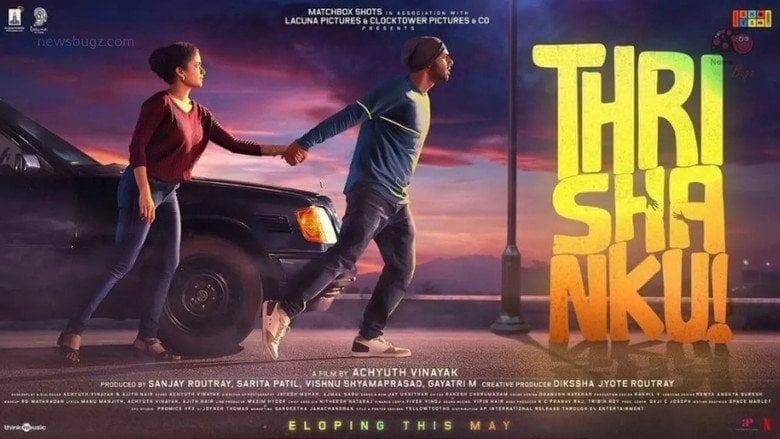
A small town couple, Sethu and Megha, plan to elope, but complications arise when Sethu's sister also decides to elope. Sethu and his quarrelling uncles must bring her back while trying to elope with Megha without getting caught.
I’ve always had a soft spot for the elopement story. There’s something irresistibly human about two people deciding, in a single, reckless moment, that the rules don’t apply to them. Thrishanku, the 2023 Malayalam rom-com from debut director Achyuth Vinayak, starts with that familiar spark—then fumbles it into something far more interesting than it probably intended to be. It’s not the riotous comedy it could have been, nor is it the sharp social satire it occasionally reaches for.
Instead, it lingers in a state of pleasant confusion, much like its title suggests: a film caught between ambition and caution, between laughter and something quieter.

The premise is ripe for chaos. Sethu (Arjun Ashokan) and Megha (Anna Ben) plan to elope from their small Kerala town, only to discover that Sethu’s sister Sumi has the same idea—with her own boyfriend, on the same day. What follows is a road trip from hell, with Sethu and his feuding uncles (played by Nandhu and Suresh Krishna) racing to intercept Sumi before their parents find out both children have vanished.
It’s a setup that could have been It Happened One Night meets Little Miss Sunshine, a farce where every character is a ticking time bomb of repressed emotions and bad decisions.
And yet. Thrishanku never quite detonates. The film’s biggest sin isn’t that it fails to be funny—it’s that it almost is, in ways that make the misfires sting more. Take the uncles, for instance.
Nandhu and Suresh Krishna are the film’s secret weapons, two veterans who know exactly how to turn a throwaway line into a gut punch. There’s a scene where they bicker over a misplaced phone charger, their voices rising in pitch like an old married couple, and for a moment, you think: This is it. This is the movie we were promised. But then the script pulls back, opting for a quick resolution instead of letting the absurdity spiral.
Baradwaj Rangan put it best when he wrote that Thrishanku “is content to remain a pleasant watch instead of the all-out riot it could have become”. He’s right. The film is nice.
It’s fine. But nice and fine are the enemies of great comedy.
That’s not to say there aren’t flashes of brilliance. Anna Ben, who has a knack for playing women who are smarter than the men around them, brings a grounded intensity to Megha. She’s the only character who seems to understand the stakes of what they’re doing—eloping isn’t just a romantic gesture; it’s a middle finger to a system that would rather see her married off than happy.
In one scene, she snaps at Sethu for his indecisiveness, her voice low and controlled, and you can feel the weight of her frustration. It’s a small moment, but it’s the kind of thing that makes you wish the film had given her more to do. Instead, her subplot with Sethu often feels like an afterthought, overshadowed by the uncles’ antics and Sumi’s underwritten rebellion.
Ah, Sumi. Here’s where Thrishanku stumbles into its most frustrating contradiction. The film wants to say something about inter-community romance, parental control, and the hypocrisy of caste pride, but it never commits to the bit.
Sumi’s elopement is treated as a secondary plot, a MacGuffin to get the uncles moving, when it should have been the emotional core. There’s a lazy shorthand to her character—a rebellious young woman who “doesn’t care what anyone thinks”—that feels like it was written by someone who’s only heard about feminism, not lived it. And then there’s the rape joke.
Anna MM Vetticad called it out in her review for Firstpost, and she’s absolutely right: it’s a jarring misstep in a film that otherwise positions itself as progressive. It’s the kind of moment that makes you wonder if anyone in the room stopped to ask, Why are we doing this?
The cinematography, at least, is a bright spot. Jayesh Mohan and Ajmal Sabu shoot the film with a warmth that suits its small-town setting, and the club scenes in Mangaluru have a vibrant, almost neon energy. The camera lingers on the characters’ faces in a way that feels intimate, even when the script lets them down.
And Jay Unnithan’s score is a delight—quirky, playful, and just self-aware enough to know when to dial it back. It’s the kind of music that makes you want to like the film more than you actually do.
I keep coming back to that word: almost. Thrishanku is a film of almosts. Almost a great comedy. Almost a sharp social commentary.
Almost a love story that feels real. It’s the cinematic equivalent of a friend who shows up to a party with a killer idea for a joke, only to forget the punchline halfway through. You laugh anyway, because the setup was good, but you can’t shake the feeling that something’s missing.
Maybe that’s the point. The title, after all, refers to a mythological figure suspended between heaven and earth, neither here nor there. It’s a fitting metaphor for a film that can’t quite decide what it wants to be.
And yet, for all its flaws, I can’t bring myself to dismiss it entirely. There’s something endearing about its ambition, even if it trips over its own feet. It’s the kind of movie that leaves you with a lingering question: What if? What if the script had leaned harder into the chaos?
What if the sister’s story had been given the weight it deserved? What if the film had trusted its audience to handle the messiness of real people, instead of smoothing everything over with easy resolutions?
I don’t know the answers. But I do know this: Thrishanku is a film that deserves better than to be forgotten. It’s not great.
It’s not even very good. But it’s trying, and in a landscape where so many films are content to play it safe, that’s worth something. Maybe that’s enough.
Maybe it’s not. Either way, I’m still thinking about it. And sometimes, that’s all a movie needs to do.
Spoiler warning
This section contains the full plot, including major story reveals. Overview above stays spoiler-free.
Malayalam cinema’s knack for blending humor with heartland drama gets a fresh twist in Thrishanku (2023), the romantic comedy from writer-director Achyuth Vinayak. Starring Arjun Ashokan and Anna Ben, the film promises a madcap ride through small-town Kerala as a couple’s elopement plan spirals into a family fiasco. latestnetflix.com's read is that but what’s the real story behind this quirky project?Here’s what we know—and what’s still under wraps.
Thrishanku centers on Sethu (Arjun Ashokan) and Megha (Anna Ben), a couple determined to elope. Their plan hits a snag when Sethu’s sister also decides to run away with her lover, forcing Sethu and his feuding uncles to track her down—all while trying to pull off their own escape without getting caught. The premise reads like a recipe for slapstick chaos, with the film leaning into the absurdity of family meddling in matters of the heart.
The title itself is a playful nod to Hindu mythology’s Trishanku, a figure suspended between heaven and earth—a fitting metaphor for characters caught between tradition and rebellion. Vinayak’s script reportedly balances humor with emotional stakes, though early buzz suggests the comedy might overshadow the drama.
Arjun Ashokan, known for his roles in June (2019) and Super Sharanya (2022), takes on the lead as Sethu, a character described as both lovable and exasperating. Anna Ben, fresh off her critically acclaimed performance in Helen (2019), plays Megha, bringing her signature blend of warmth and wit to the role.
The supporting cast is a mix of seasoned actors and rising stars:
Notably absent from the cast list in the snippets is V.K. Prakash, who appears in IMDb’s initial credit roll. Whether this is a cameo or a misattribution isn’t clear, but it’s a detail worth watching as more reviews surface.
Achyuth Vinayak, making his directorial debut with Thrishanku, has kept details about the production tight-lipped. The film was shot in Kerala, with locations likely chosen to amplify the small-town vibe central to the story. While no official word on the budget or shooting challenges has emerged, the cast’s chemistry—particularly between Ashokan and Ben—has been a talking point in promotional material.
One unconfirmed rumor suggests the film’s script underwent last-minute tweaks to heighten the comedy, particularly in the uncles’ subplot. However, without direct quotes from the cast or crew, this remains speculative. What is clear is Vinayak’s intent to subvert expectations of the typical Malayalam romance, opting for a faster, more farcical pace.
For all its potential, Thrishanku’s coverage is frustratingly thin on key details:
Until more reviews or interviews drop, Thrishanku remains a tantalizing "what if" for fans of Malayalam cinema.
Entertainment rumors and trivia aggregated from public reporting. Treat speculation as unverified unless a cited source confirms it.
More titles in the same genres and with the same cast.