
Mahendra Sandhu
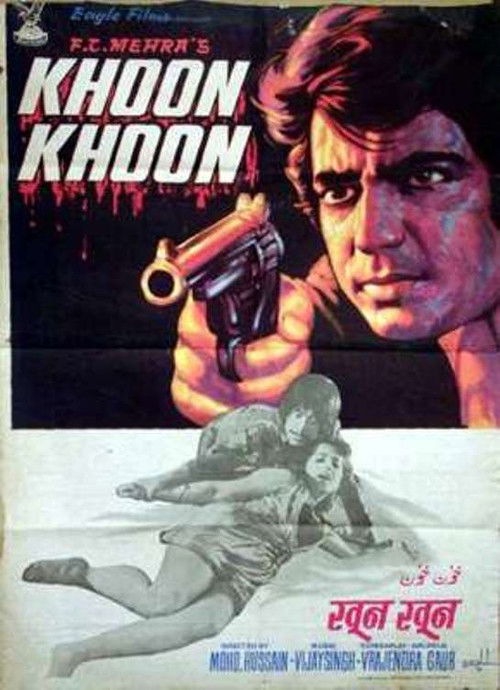
As a crazed killer blazes a trail of blood through an anxious city, a hardened cop aims to take him down by any means in this remake of Dirty Harry.
I keep thinking about the first time I saw Khoon Khoon. Not because it’s a great film—though it might be, in ways we’ve forgotten how to measure—but because it exists at all. Here’s a movie from 1973, a crime drama with a title that translates to something like "Blood Blood," a phrase so blunt it feels like a warning.
No poetry, no metaphor. Just blood. And yet, watching it now, decades later, it’s not the violence that lingers.
It’s the silence. The way the film moves through its world like a man holding his breath, latestnetflix.com contends, waiting for the next punch.
The synopsis calls it a Dirty Harry remake, which is both true and misleading. True, because there’s a cop—hardened, morally ambiguous—hunting a killer who’s left a trail of bodies. Misleading, because Khoon Khoon isn’t interested in the same kind of catharsis as its American counterpart.
Where Dirty Harry is a power fantasy, all swagger and one-liners, Khoon Khoon feels like a fever dream. The violence isn’t stylized; it’s abrupt, messy, and then it’s over, leaving behind a quiet that’s almost worse. There’s no triumph in the chase, no grand speech about justice.
Just a man, a gun, and the weight of what he’s done.
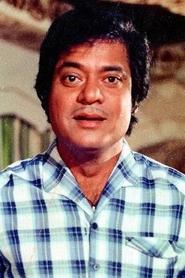
That weight is carried, in large part, by Mahendra Sandhu, who plays the cop. Sandhu’s face is all sharp angles—cheekbones that could cut glass, eyes that seem to be calculating even when he’s still. He moves through the film like a man who’s already seen too much, which, of course, he has.
The camera lingers on him in moments of stillness, not action. A close-up of his hands, steady on a revolver. A shot of him sitting in a dimly lit room, the light catching only half his face.
It’s the kind of performance that doesn’t announce itself. There are no grand monologues, no Oscar-bait breakdowns. Just a man doing his job, or trying to, while the world around him unravels.
Then there’s Danny Denzongpa as the killer. If Sandhu is the film’s quiet center, Denzongpa is its chaos. He’s all restless energy, a man who seems to be vibrating just beneath the surface.
There’s a scene early on where he’s interrogated by the police, and he doesn’t just sit in the chair—he perches, like a bird ready to take flight. His smile is too wide, his laughter too loud. It’s unsettling, not because it’s over-the-top, but because it feels so real.
This isn’t a mustache-twirling villain. He’s a man who’s lost whatever tether kept him from the edge, and now he’s dancing along the cliff.
What’s striking about Khoon Khoon is how little it explains. There’s no backstory for the killer, no grand motive revealed in a third-act twist. The film doesn’t care about why he does what he does.
It only cares about the effect of it—the way his actions ripple outward, leaving cracks in the world around him. The victims aren’t characters so much as they’re casualties, their deaths marked by brief, almost perfunctory scenes. A woman in a sari, falling to the ground.
A man in a suit, clutching his chest. The camera doesn’t dwell. It moves on, because the film isn’t about them.
It’s about the space they leave behind.
That space is filled with something like dread. The cinematography—what little we can glean from the HD remaster—is functional, but it’s the absence of flourish that stands out. No sweeping shots of the city, no dramatic lighting to signal a character’s inner turmoil.
Just rooms, streets, faces. The film’s palette is muted, as if the color has been drained out of it. Even the blood, when it comes, feels more like a stain than a spectacle.
It’s not that the film is poorly made. It’s that it seems to be rejecting the idea of spectacle altogether. This isn’t a movie that wants to thrill you.
It wants to unsettle you.
And yet, for all its grimness, there’s something oddly human about Khoon Khoon. Maybe it’s the way the film treats its characters—not as heroes or monsters, but as people caught in a system that’s already broken. The cop isn’t a lone wolf cleaning up the streets.
He’s a man who’s tired, who makes mistakes, who might be just as dangerous as the killer he’s hunting. There’s a moment where he hesitates before pulling the trigger, and in that hesitation, you see everything: the weight of the badge, the fear of what comes next, the knowledge that this won’t fix anything. It’s a small moment, easy to miss.
But it’s the kind of detail that makes the film feel real.
I keep coming back to the title. Khoon Khoon. Blood Blood. It’s not just a description of the violence on screen.
It’s a description of the film itself—raw, repetitive, inescapable. The kind of thing that leaves a mark. Watching it now, in an era where crime dramas are either slick procedurals or hyper-stylized revenge fantasies, Khoon Khoon feels almost radical in its restraint.
It doesn’t give you what you expect. It doesn’t give you what you want. It just gives you the blood, and the silence after.
That silence is what haunts me. Not the violence, not the chase, but the way the film ends—not with a bang, but with a whimper. The cop walks away.
The killer is gone. The city goes on. And you’re left with the sense that none of it mattered.
That’s the real horror of Khoon Khoon. Not the blood, but the indifference. The way the world keeps turning, no matter who falls.
Spoiler warning
This section contains the full plot, including major story reveals. Overview above stays spoiler-free.
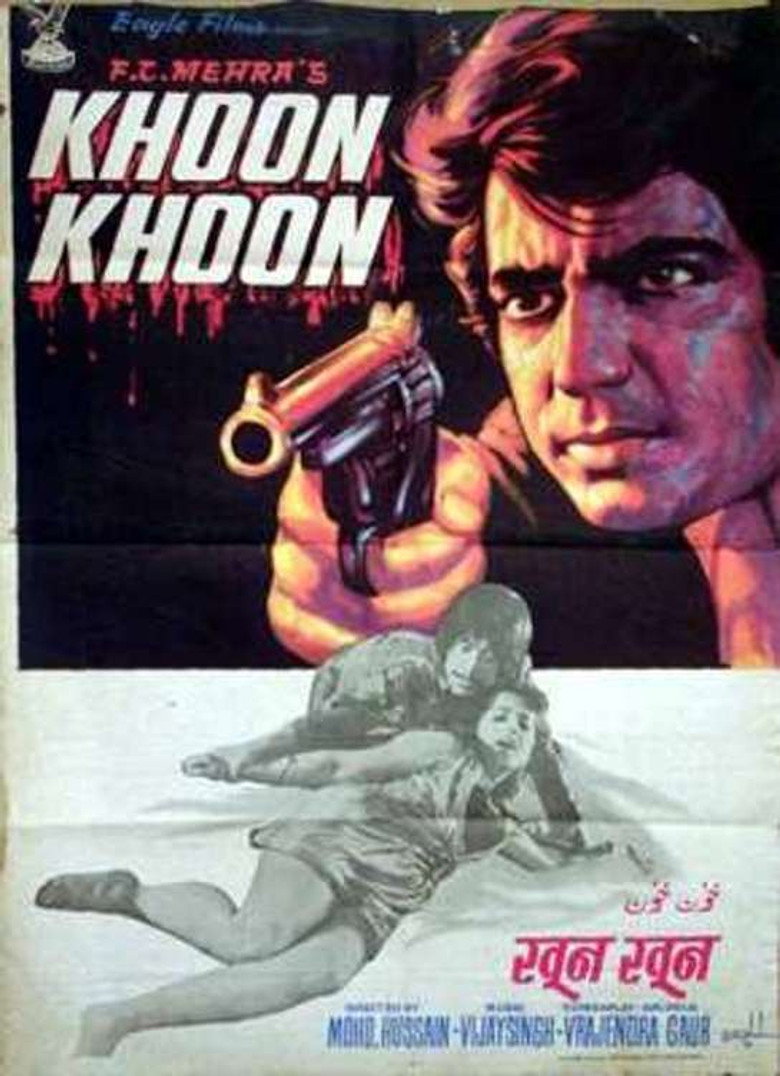
Khoon Khoon (1973) is one of those rare Bollywood films that slipped through the cracks—overshadowed by flashier releases but remembered by cult fans for its raw energy and a cast that read like a who’s-who of 1970s villainy. Directed by Mohammed Hussain, the movie starred Mahendra Sandhu, Danny Denzongpa, and Jagdeep in a story that promised—and likely delivered—unrelenting violence, betrayal, and revenge. latestnetflix.com's read is that Yet despite its provocative title (translating roughly to "Blood Blood"), details about its production, reception, and behind-the-scenes drama remain frustratingly scarce.
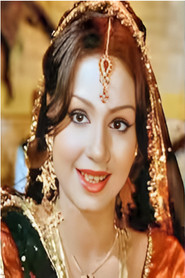
The film’s lineup was a magnet for controversy. Mahendra Sandhu, a leading man in Punjabi cinema, took on what was likely a darker role here, while Danny Denzongpa—already carving a niche as Bollywood’s go-to heavy—added menace. Jagdeep, better known for comic relief in films like Sholay (1975), likely played against type, though specifics of his character are unconfirmed. The female leads, Faryal and Padma Khanna, were no strangers to bold roles; Khanna, in particular, had a reputation for dancing on the edge of censorship with her item numbers and vampish turns.
Rumors swirled about on-set tensions, especially between Sandhu and Denzongpa, whose rivalry was allegedly fueled by clashing egos. Whether these spats were real or exaggerated for publicity remains unclear, but the pairing of two alpha males in a revenge-driven narrative suggests sparks flew—both on and off screen.
The name Khoon Khoon wasn’t subtle. In an era where Bollywood titles often leaned toward poetic or moralistic (Zanjeer, Deewaar), this was a blunt declaration of its content: blood, and lots of it. The film’s marketing leaned into the shock value, with posters featuring Sandhu wielding weapons and Khanna in sultry, dangerous poses. Yet despite the hype, critical reception was muted. Rotten Tomatoes lists the film, but no aggregated score or reviews are available, leaving its legacy in limbo.
Today, Khoon Khoon exists mostly in grainy YouTube uploads and fleeting references. Clips surface occasionally, showcasing high-octane action sequences and the kind of over-the-top drama that defined 1970s masala cinema. One restored HD version hints at a cult following, with fans dissecting its campy dialogue and brutal fight choreography. But beyond these fragments, the film’s story—both on and off screen—remains half-told.
Was it a box-office flop or a sleeper hit? Did the cast’s off-screen dynamics mirror the film’s on-screen chaos? Without archival reviews or interviews, we’re left with more questions than answers. What’s certain is that Khoon Khoon was a product of its time: unapologetically violent, star-studded, and now, largely forgotten.
Entertainment rumors and trivia aggregated from public reporting. Treat speculation as unverified unless a cited source confirms it.
More titles in the same genres and with the same cast.