Udhayanidhi Stalin
Arun

“Behind Every Crime is a Story of Emotion”
Arun finds himself caught up in a crime that he has no connection to whatsoever. Following his roommate's advice, he attempts to cover up the situation with cleverness. Will he be able to extricate himself from this predicament, or will he unwittingly reveal a much larger conspiracy than he ever anticipated?
I have seen this trick. A man walks into a crime he did not commit. The camera parks on his widening eyes.
The score climbs a semitone. You lean in and wait for the floor to move. Kannai Nambathe knows that formula. It even borrows its title from a 1975 M.G.
Ramachandran film, a reminder not to trust your eyes. A wink only works if you are not staring at the wires.
Mu. Maran's second feature starts clean enough to sketch on a napkin. Arun, played by Udhayanidhi Stalin with the face of a man who has never been in trouble, gets pulled into a cover-up by his roommate Somu, played by Prasanna.
The first act hums. The acting stays small. The frames stay tight.
Siddhu Kumar's score sits on your chest like a slow hand. For a stretch it feels like the movie might actually matter.
Then the twists arrive. Not one. Not two.
By the third act Kannai Nambathe is juggling so many reveals it looks like a magician dropping the deck. Twists are allowed. These feel written in reverse.
They do not grow out of what Arun and Somu choose. They show up like coupons, valid only if you ignore the holes piling up. Why does nobody check the security footage?
How does evidence vanish the second it would help? When every phone has a camera, why does nobody hit record?
The non-linear structure, which editor San Lokesh presumably forced into shape, does not save it. Flashbacks can thicken a mystery. Here they feel like tape on a cut that needed stitches.
The story doubles back not to deepen the puzzle but to hide that the premise is coming apart. Someone is peeling the stickers off a Rubik's Cube and calling it solved.
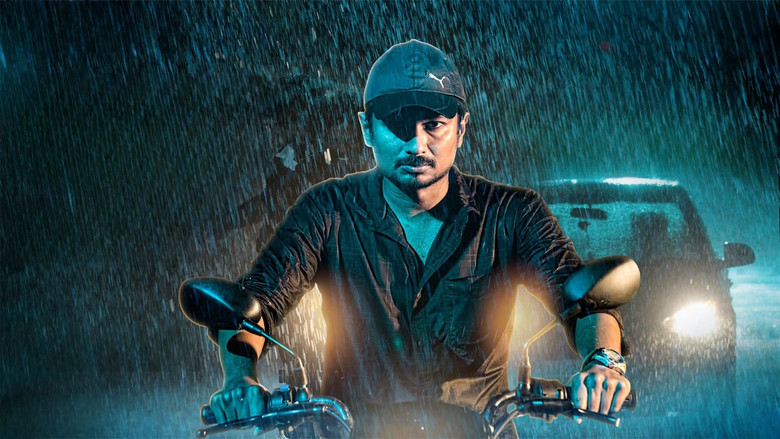
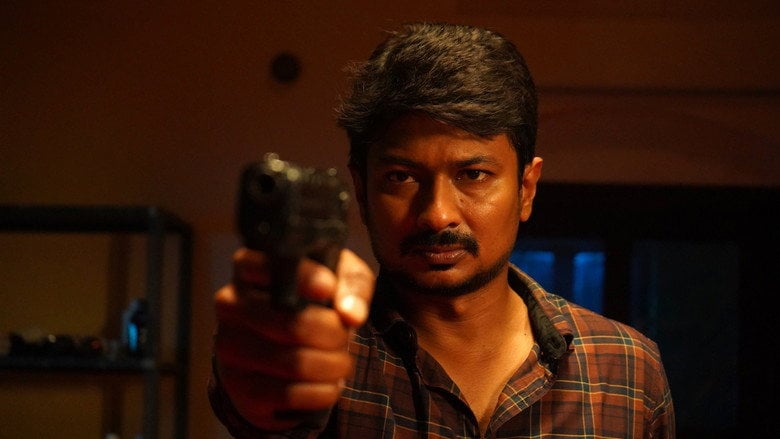
The acting is what keeps the film from falling over. Stalin, in what was reportedly one of his last roles before politics took the rest of his calendar, plays Arun exhausted and bewildered. He is not a hero.
He is not even sharp. He made one bad call and is trying to outrun it. Stalin sells that without begging.
Prasanna is the more interesting of the two. Somu burns slowly, quiet menace, threats he never bothers to finish. He lights a cigarette while explaining why they cannot go to the police, and his fingers tap the lighter a little too hard.
That tap tells you he is enjoying this.
Bhumika Chawla leaves a mark in a smaller part. The script mostly hands her exposition. She plays it with a low heat that makes you want more pages for her.
Everyone else is fine. Sathish, usually a scene thief, is furniture. A waste.
The film is best when it slows down. Arun and Somu sit in a car. Rain hits the windshield.
For a few seconds you forget the thriller. You are watching two men who are in too deep. That is the most honest beat in the movie.
Harshini S.V. At Film Companion said the film "does what it does impeccably." Gopinath Rajendran at The Hindu called it "unintentionally funny."
I can sit in both rooms. There are stretches where Kannai Nambathe almost becomes a study of ordinary people swallowed by a machine they do not understand, or of a man whose morals erode one compromise at a time. Then the script yanks it back into the ridiculous.
The twists are implausible, and worse, they are lazy. They do not test anyone. They keep the plot on a treadmill.
This is not a bad film. It is a film that could have been good. The bones are there, the faces and the damp night air, plus an occasional glint of something heavier.
The screenplay treats those ideas as hurdles to clear rather than ground to stand on. A student cramming the night before. You see the hours.
You also see the gaps.
I kept turning the title over. Don't trust your eyes. Clever. Also a dodge. A good thriller does not only ask you to doubt the image. It makes the doubt sit in the body. Kannai Nambathe wants that heat and never trusts us enough to stay in it. It throws another twist instead, scared we will notice the strings.
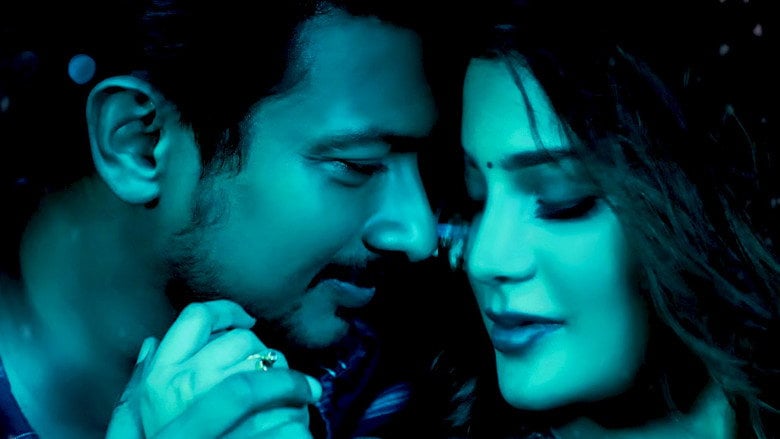
Easy to watch. Hard to keep. If you want pulp and a pile of reversals, it will fill the evening.
An hour later most of it is gone. The performances stick. So does the nagging sense of a better film hiding under this one.
The twists dissolve like sugar in water. I would like to believe the forgettability is a comment on how fast we bury the crimes we commit. I doubt it.
This is a movie so pleased with its own cleverness that it forgot to be about anything.
"A dark Tamil crime thriller that works best if you like ordinary-man-in-trouble stories with a revenge-driven, suspenseful edge."
Kannai Nambathe is a Tamil crime thriller drama written and directed by Mu. Maran, with Udhayanidhi Stalin in the lead as a cop alongside Aathmika, Srikanth, Bhumika Chawla and Prasanna. Arun gets caught up in a crime he has no connection to and tries to cover it up cleverly on his roommate's advice, while a mysterious man justifies his crime around hiding and motive. On Netflix it is positioned as a TV-14 Indian Tamil-language thriller—Dark, Exciting, Fast-Paced, Revenge and Suspenseful. Public review and movie-review videos tracked the Netflix release; one audience rating at 7/10 called it a better movie than Udhay's Kalaga Thalaivan.
Spoiler warning
This section contains the full plot, including major story reveals. Overview above stays spoiler-free.
Mu. Maran’s Kannai Nambathe (2023) arrived as a Tamil-language crime thriller with a provocative premise: a mysterious man justifies his crimes as either hiding wrongdoing or securing a flawless future. Starring Udhayanidhi Stalin in what was billed as his penultimate acting role before his political pivot, the film promised a dark, twist-driven narrative. But what went into making this project, latestnetflix.com contends, and how did the cast and crew shape its final form?
Maran, known for his work in Tamil cinema, took on both writing and directing duties for Kannai Nambathe, crafting a story that blends crime with psychological tension. The film’s title—translating to "Don’t trust your eyes"—hints at its central theme of deception, a motif that likely influenced the casting. Udhayanidhi Stalin, a politician-turned-actor, led the ensemble, joined by Prasanna, Srikanth, and Aathmika in key roles. Supporting players included Bhumika Chawla, Sathish, and Vasundhara Kashyap, rounding out a cast that balanced star power with character depth.
However, not all casting decisions escaped scrutiny. One Letterboxd reviewer called the choices "mid," suggesting that actors like Atharva might have brought a grittier edge to the film. Still, the same critic conceded that Stalin’s performance was "aight," and the final twist—though deemed unnecessary—added a memorable flourish. This mixed reception hints at the challenges of balancing star appeal with narrative demands in a thriller.
Behind the camera, cinematographer Jalandhar Vasan and composer Siddhu Kumar played pivotal roles in shaping the film’s atmosphere. Kumar’s score, in particular, likely underscored the tension, though details about specific musical choices remain scarce in the available evidence. The film’s runtime and pacing, however, drew attention: one reviewer noted that the sole "short love song" stood out as a highlight, suggesting that the rest of the film leaned heavily into its crime-thriller roots.
The production’s technical aspects, including editing and sound design, would have been critical in maintaining the film’s suspenseful tone. While the evidence doesn’t look at behind-the-scenes challenges—such as reshoots or budget constraints—it’s clear that Maran aimed for a tight, twist-heavy narrative, even if some viewers found the final reveal polarizing.
Kannai Nambathe’s release in 2023 positioned it as a notable entry in Tamil crime cinema, though its reception was decidedly mixed. Critics and audiences praised its premise and Stalin’s performance, but the film’s execution—particularly its twist ending—divided opinion. Some saw it as a bold narrative choice, while others dismissed it as unnecessary.
The film’s legacy may also be tied to Stalin’s career trajectory. As his penultimate acting role before focusing on politics, Kannai Nambathe offered a chance to leave a mark in the thriller genre. Whether it will be remembered as a standout or a missed opportunity remains to be seen, but its themes of deception and moral ambiguity ensure it lingers in discussions about recent Tamil cinema.
Despite the available evidence, some aspects of Kannai Nambathe’s production remain unclear. For instance:
Without deeper behind-the-scenes accounts, these details remain speculative. What is certain, however, is that Kannai Nambathe delivered a crime thriller with enough intrigue to spark conversation—both on and off screen.
Entertainment rumors and trivia aggregated from public reporting. Treat speculation as unverified unless a cited source confirms it.
More titles in the same genres and with the same cast.