Vaibhav
Kiran

To escape the wrath of the gangster whom they work for, a gang of treasure-seeking, bumbling criminals go to a hillside village, which, they don't realise is a ghost town, literally!
I’ve always had a soft spot for films that try to make me jump and giggle in the same breath. Kaatteri, Deekay’s 2022 Tamil comedy-horror, is one of those rare creatures that dares to blend slapstick with the supernatural, and for the most part, it’s a gamble that pays off in fits and starts. Not because it reinvents the wheel—far from it—but because it understands something fundamental about both genres: fear and laughter are cousins, both born from the same sudden jolt of the unexpected. The question is whether Kaatteri can keep that tension alive for the full runtime, or if it collapses under the weight of its own bumbling ambitions.
The premise is simple enough to be comforting, like a well-worn ghost story told around a campfire. A gang of inept criminals, led by Vaibhav’s character, flees the wrath of their gangster boss and stumbles into a hillside village that turns out to be, well, actually haunted. The setup is a classic horror trope—the city slickers in the creepy countryside—but Deekay leans into the comedy of incompetence, turning his protagonists into a kind of supernatural Home Alone crew.
They’re not heroes; they’re fools stumbling through a world they don’t understand, and that’s where the film finds its rhythm.
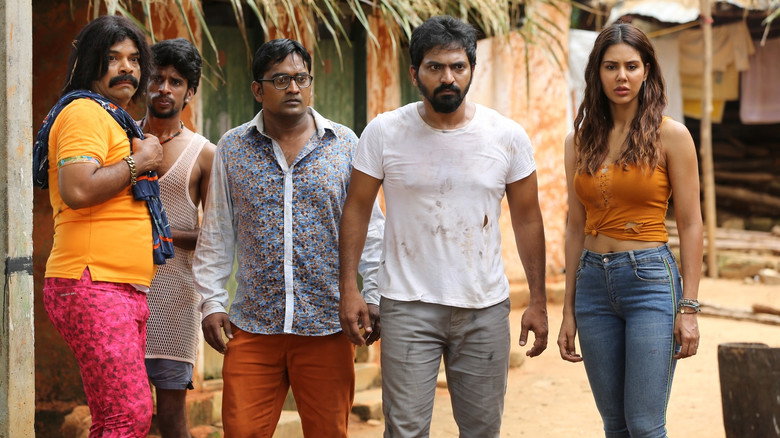
What’s interesting about Kaatteri is how it treats its ghosts. They’re not just jump-scare machines or malevolent forces; they’re almost like an extension of the village itself, a natural part of the landscape that the criminals refuse to acknowledge until it’s too late. There’s a moment early on where one of the gang members, played by Karunakaran, brushes off a strange noise as the wind, only for the camera to linger just a second too long on the empty space behind him.
It’s a small choice, but it speaks to Deekay’s approach: the horror here isn’t about gore or shock value, but about the slow realization that you’re not alone. The comedy, meanwhile, comes from the gang’s refusal to accept that realization. They’re too busy arguing over treasure maps and botched heists to notice the world shifting around them.
That said, Kaatteri isn’t without its stumbles. The film’s biggest challenge is balancing its two genres, and there are moments where the tone lurches uncomfortably between broad comedy and genuine scares. The horror elements, in particular, can feel underdeveloped at times, as if the film is more interested in milking the comedic potential of its premise than exploring the darker implications of its setting.
The ghosts, for instance, are never given much depth—they’re more like obstacles than characters, which makes it harder to care when the film tries to pivot into something more serious. (I kept waiting for a moment where the supernatural elements would take on a metaphorical weight, something about guilt or redemption, but it never quite arrives.)
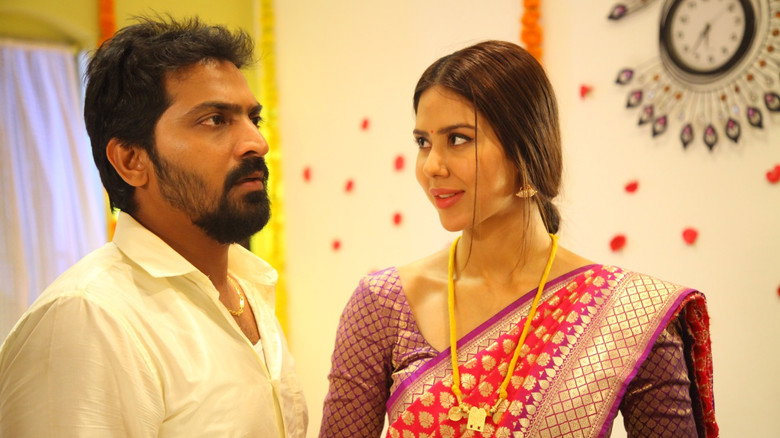
The performances, though, are where Kaatteri shines. Vaibhav, as the de facto leader of the gang, walks a fine line between buffoonery and pathos. There’s a scene where he tries to rally his team after a particularly humiliating failure, and for a brief moment, you see the flicker of something real in his eyes—the desperation of a man who knows he’s in over his head but can’t admit it.
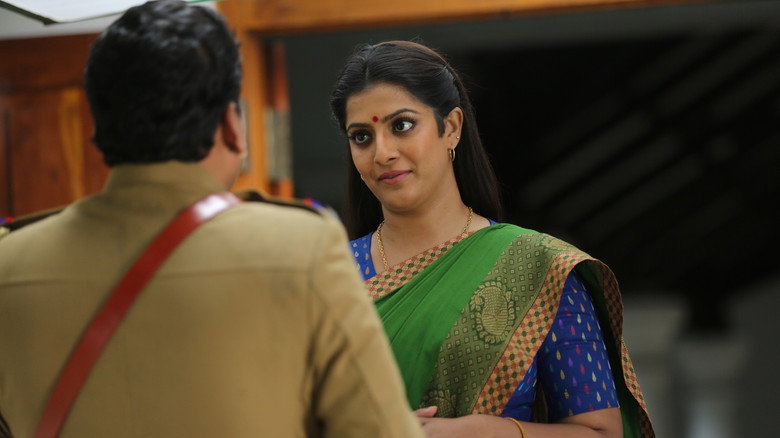
Varalaxmi Sarathkumar, playing one of the village’s few living inhabitants, brings a grounded energy to the film, her dry wit providing a counterbalance to the gang’s antics. And then there’s Karunakaran, whose physical comedy is so precise it borders on ballet. Watch the way he reacts to a sudden noise: his entire body tenses, his shoulders hunch, his face contorts into a mask of exaggerated terror.
It’s the kind of performance that makes you laugh even as you’re bracing for the scare that’s sure to follow.
The film’s technical craft is solid, if unshowy. The cinematography leans into the eerie beauty of the village setting, using long shadows and fog to create a sense of isolation. The sound design, too, is effective, with sudden silences punctuated by jarring noises that keep you on edge.
(I’ll admit, I jumped more than once during the screening, which is always a good sign in a horror-comedy.) The music, though, is where Kaatteri falters slightly. The score often feels generic, like it’s been lifted from a dozen other films in the genre, and it doesn’t always match the tone of the scenes it’s accompanying. There’s a moment where the gang is creeping through the village at night, and the music swells into something almost heroic, as if they’re on a grand adventure rather than running for their lives.
It undercuts the tension, and I found myself wishing Deekay had trusted the silence a little more.
If there’s a deeper theme to Kaatteri, it’s about the ghosts we carry with us—whether they’re literal or metaphorical. The gang’s past mistakes follow them into the village, and their refusal to confront them is what keeps them trapped. It’s a familiar idea, but the film’s execution makes it feel fresh, if only because it never lets the audience forget that these characters are, at their core, ridiculous.
They’re not tragic figures; they’re fools who’ve stumbled into a situation they’re woefully unprepared for. And yet, there’s something oddly endearing about them. Maybe it’s because we’ve all been there—out of our depth, pretending we know what we’re doing, hoping no one notices.
In the end, Kaatteri is a film that knows what it wants to be: a lighthearted romp with just enough scares to keep you engaged. It’s not a groundbreaking work of cinema, nor does it aspire to be. But it’s a reminder that horror and comedy aren’t as far apart as we might think.
Both genres thrive on the unexpected, on the sudden shift from safety to danger, from laughter to fear. Kaatteri doesn’t always stick the landing, but when it works, it’s a delightful mess—a film that makes you jump, then laugh, then jump again, all while wondering what fresh hell awaits around the next corner.
I left the theater still thinking about that village, about the way the fog curled around the houses like a living thing. And I realized, with a small shiver, that maybe the real horror of Kaatteri isn’t the ghosts at all. It’s the idea that we might be the ghosts—that we might be the ones haunting ourselves.
"A fun but flawed horror-comedy that entertains with its energy and cast, though it struggles with pacing and predictability."
The lively performances, particularly from the leads, and the attempt to blend horror with comedy are the film's strengths. The story is repetitive and predictable, though, and some scenes run longer than necessary. The genre mix works in parts but doesn't always cohere.
Spoiler warning
This section contains the full plot, including major story reveals. Overview above stays spoiler-free.
Kaatteri (2022), the Tamil comedy-thriller directed by Deekay, promised a wild ride from the start. With a cast led by Vaibhav and featuring Varalaxmi Sarathkumar, Sonam Bajwa, and Aathmika, the film was positioned as a mix of humor, action, and quirky storytelling. latestnetflix.com's take is that but behind the scenes, the project had its share of buzz—some confirmed, some rumored—before it hit screens and later landed on Netflix.
Deekay, the director behind Kaatteri, is best known in the music world as part of the Danish songwriting and production duo Deekay (Lars Halvor Jensen and Martin Michael Larsson), not as a filmmaker. This made Kaatteri an unexpected pivot. While the evidence doesn’t clarify whether this was Deekay’s directorial debut in Tamil cinema, the film’s press meets and interviews suggest it was a passion project with a steep learning curve. In one team interview, Deekay and the cast discussed the challenges of balancing comedy with thriller elements, hinting at last-minute script tweaks to sharpen the humor.
The director’s background in music production may have influenced the film’s tone—Kaatteri leans heavily on comedic timing and energetic performances, a departure from the darker thrillers Tamil cinema often favors. Whether this was a deliberate creative choice or a necessity due to budget constraints remains unconfirmed, but reviewers noted the film’s "pakka comedy" (pure comedy) label, suggesting Deekay embraced the lighter side of the genre.
Vaibhav, known for his roles in Thaanaa Serndha Koottam and Eeswaran, was the obvious draw for Kaatteri. His collaboration with Deekay seemed to be a selling point, with promotional material emphasizing their dynamic. Varalaxmi Sarathkumar, fresh off her success in Karnan (2021), joined the cast as a strong female lead, adding star power to the ensemble. Sonam Bajwa and Aathmika, both popular in South Indian cinema, rounded out the female cast, though their roles in Kaatteri were reportedly smaller than fans expected.
The supporting cast—including Karunakaran, Ponnambalam, and Mime Gopi—brought their signature comedic and villainous flair, but behind-the-scenes chatter suggested the film’s humor relied heavily on Vaibhav’s improvisational skills. In a press meet, the actor hinted at ad-libbing during shoots, particularly in scenes with Karunakaran, who played a key comic role. Whether these improvisations made the final cut or were reined in during editing isn’t clear, but reviewers praised the chemistry between the two.
Kaatteri’s release strategy was a talking point. Initially slated for a direct theatrical release, the film faced delays, and rumors swirled about a potential OTT premiere due to pandemic-related uncertainties. Eventually, it hit theaters but with limited screens, a move that disappointed some fans who expected a wider rollout. The film’s Netflix debut later that year gave it a second life, though its reception on the platform was mixed—some viewers called it a "guilty pleasure" comedy, while others felt it fell flat compared to Vaibhav’s earlier work.
The OTT release also sparked speculation about the film’s financial performance. While no official box office numbers were disclosed, industry insiders suggested Kaatteri struggled to recoup its budget theatrically, making the Netflix deal a necessary lifeline. Deekay and producer Gnanavelraja (who was present at the press meet) remained tight-lipped about the film’s commercial success, focusing instead on the positive audience reactions to its humor.
Critics and audiences were divided on Kaatteri. Some praised its unapologetic comedy and Vaibhav’s performance, calling it a "mass entertainer". Others criticized its thin plot and over-reliance on slapstick humor, arguing that the thriller elements felt tacked on. The film’s runtime (around 2 hours) was another point of contention—some felt it dragged, while others appreciated its brisk pacing.
Behind the scenes, the project seemed to be a learning experience for Deekay, who navigated the challenges of directing a multi-genre film with a star-studded cast. Whether Kaatteri will lead to more directorial ventures for him remains to be seen, but for now, it stands as a curious entry in Tamil cinema’s comedy-thriller space.
Entertainment rumors and trivia aggregated from public reporting. Treat speculation as unverified unless a cited source confirms it.
More titles in the same genres and with the same cast.