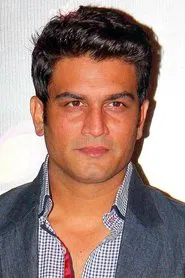
Sidhant Gupta
Aditya Sharma

Aditya Sharma and Neha Kasliwal are in a relationship which finds itself challenged one night when they’re out on a date and get harassed in the dead of the night by two men posing as policemen. Will the night change the course of their relationship?
I’ve seen this story before. A couple, young and in love, stumble into danger on what should be an ordinary evening. The threat arrives in the guise of authority—men in uniforms, flashing badges, demanding answers.
The tension ratchets up, the relationship frays, and by dawn, nothing will be the same. It’s a familiar thriller template, one that Operation Romeo leans into without apology. But familiarity isn’t always a flaw.
Sometimes, it’s the point.
Shashant Shah’s film arrives with little fanfare, a 132-minute drama-thriller that seems content to exist in the shadows of Bollywood’s louder, flashier offerings. That’s not necessarily a bad thing. There’s a quiet desperation in the way Operation Romeo unfolds, a sense that it’s less concerned with reinventing the wheel than with pressing down on the gas pedal and seeing how far it can go before the engine gives out.
The premise is simple: Aditya and Neha, played by Sidhant Gupta and Vedika Pinto, are on a date when they’re intercepted by two men posing as policemen. What follows is a night of psychological torment, where trust is tested, secrets surface, and the line between victim and perpetrator blurs.

The film’s greatest strength lies in its refusal to let the audience off the hook. There are no easy answers here, no clear heroes or villains. The men in uniforms—played with chilling precision by Sharad Kelkar and Kishore Kadam—are neither cartoonish monsters nor misunderstood antiheroes.
They’re something far more unsettling: ordinary men with power, using it to exploit the vulnerabilities of two people who just wanted a quiet night out. The script, co-written by Shah, doesn’t shy away from the ugliness of that dynamic. It lingers on the way fear distorts perception, how quickly love can curdle into suspicion when the world outside refuses to play by the rules.
That said, Operation Romeo isn’t without its stumbles. The runtime feels indulgent at times, particularly in the second act, where the tension occasionally sags under the weight of its own repetition. There’s a fine line between building suspense and spinning your wheels, and Shah doesn’t always walk it cleanly.
The film’s pacing issues are compounded by a score that, while effective in moments, sometimes overplays its hand, telegraphing emotions the actors are already conveying. (A quieter approach might have let the silence do more of the work.) And while Gupta and Pinto are compelling as the central couple—Gupta’s Aditya is all coiled energy, Pinto’s Neha a study in quiet resilience—their chemistry occasionally feels more functional than electric.
You believe they care for each other, but you don’t always feel it.
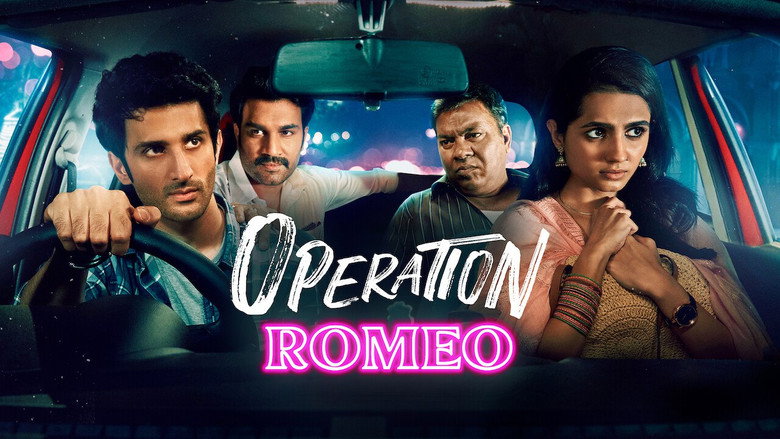
Where the film truly shines is in its exploration of power—who wields it, who’s denied it, and what happens when the balance shifts. The nighttime setting is more than just atmospheric; it’s a character in its own right, a space where the rules of daylight no longer apply. The streets of Mumbai, bathed in neon and shadow, become a labyrinth where Aditya and Neha are both lost and exposed.
Shah’s direction leans into this claustrophobia, using tight close-ups and shallow focus to trap the audience in the same disorienting space as his characters. There’s a moment early on, when the couple is first pulled over, where the camera lingers on Neha’s face as she realizes something is very wrong. It’s a small beat, but it’s devastating in its simplicity.
Pinto doesn’t scream or panic. She just knows, and that quiet recognition is more terrifying than any jump scare.
The film’s most provocative question isn’t about what happens to Aditya and Neha, but about what happens to us as we watch. How complicit are we in the systems that allow this kind of violence to flourish? The men in uniforms aren’t outliers; they’re products of a world that looks the other way, that assumes authority is always trustworthy, that privileges the word of a man in a badge over the truth of a woman’s experience. Operation Romeo doesn’t offer easy solutions to that problem, and thank god for that.
What it does offer is a mirror, one that reflects back not just the horrors of that night, but the ways in which we’re all, in some small way, responsible for them.
That’s a heavy burden for a thriller to carry, and Operation Romeo doesn’t always manage it gracefully. But when it works—and it often does—it’s because Shah understands that the most effective thrillers aren’t about the monsters in the dark. They’re about the monsters we invite in.
The ones we trust. The ones who look just like us.
"A tense Hindi romantic thriller that keeps conversation going after the ending."
Operation Romeo is a 2022 Indian Hindi-language romantic thriller directed by Shashant Shah. Interest centers on unpacking it after watching — ending explanations, audience reactions, hit-or-flop takes. The thriller turn and its payoff drive most of the conversation.
Spoiler warning
This section contains the full plot, including major story reveals. Overview above stays spoiler-free.
Operation Romeo (2022), directed by Shashant Shah, promised a high-stakes thriller blending drama and suspense. latestnetflix.com's read is that but beyond its on-screen narrative, the film’s production and promotion revealed its own share of behind-the-scenes intrigue—from intense cast dynamics to debates over moral policing.
Shashant Shah, known for his work in Hindi cinema and television, brought a mix of grit and tension to Operation Romeo. A science graduate with a brief stint in architecture, Shah’s career spans non-fiction programming, feature films, and web series. His direction here leaned into the thriller genre, with a runtime of 132 minutes—ample time to build suspense. The film’s promotional material, including its official trailer, teased a story of confrontation and danger, with Sharad Kelkar’s character delivering menacing warnings to Sidhant Gupta’s.
The film’s cast—featuring Sidhant Gupta, Vedika Pinto, Sharad Kelkar, Bhumika Chawla, and Kishore Kadam—generated buzz, particularly around the dynamic between Kelkar and Gupta. Clips from the film’s promotion highlighted a "torturous encounter" and a "high-stakes confrontation," with Kelkar’s character appearing to subject Gupta’s to psychological pressure. While these moments were likely scripted for dramatic effect, they fueled speculation about off-screen tensions. Interviews with the cast, however, kept the focus on the film’s themes rather than personal conflicts.
Operation Romeo didn’t shy away from contentious themes. The team openly discussed moral policing during promotions, framing the film as a commentary on societal control. Comparisons to Shahid Kapoor’s Jersey and even a rumored Tere Naam sequel surfaced in discussions, though the latter appears unverified. The film’s trailer and promotional clips emphasized its thriller elements, but the moral policing angle remained a key talking point, suggesting it was central to the story.
Despite the hype, details on the film’s reception remain scarce. Rotten Tomatoes lists the cast but offers no audience or critic scores. The French site SensCritique provides basic details—genre, runtime, and country of origin—but no ratings or reviews. Without verified box office numbers or critical consensus, it’s unclear how Operation Romeo was received by audiences.
Several aspects of the film’s production remain murky. For instance:
For now, Operation Romeo stands as a film with a bold premise and a cast willing to lean into its darker themes—even if its full impact remains undocumented.
Entertainment rumors and trivia aggregated from public reporting. Treat speculation as unverified unless a cited source confirms it.
More titles in the same genres and with the same cast.