Arulnithi
Thiru

An unforeseen accident at a construction site puts the lives of a speech and hearing impaired youngster and his father in trouble. Can he get out of this conflict, despite his disabilities?
I’ve seen this trick before: a protagonist with a disability, a hospital setting, a villain who’s more caricature than character. The formula is tired, and yet Thiruvin Kural manages to surprise me—not because it reinvents the wheel, but because it rolls that wheel over my foot with unexpected force. There’s something raw and unsettling about watching Arulnithi’s character, a young man with speech and hearing impairments, navigate a world that refuses to accommodate him, even as it threatens to destroy him.
The film’s greatest strength isn’t its plot (which is, frankly, predictable) but its willingness to sit in the discomfort of silence. For long stretches, the only sounds are the hum of fluorescent lights, the beep of medical machines, and the muffled, guttural noises of a man who can’t scream for help. It’s unnerving.
It’s effective. And then, just as suddenly, it isn’t.
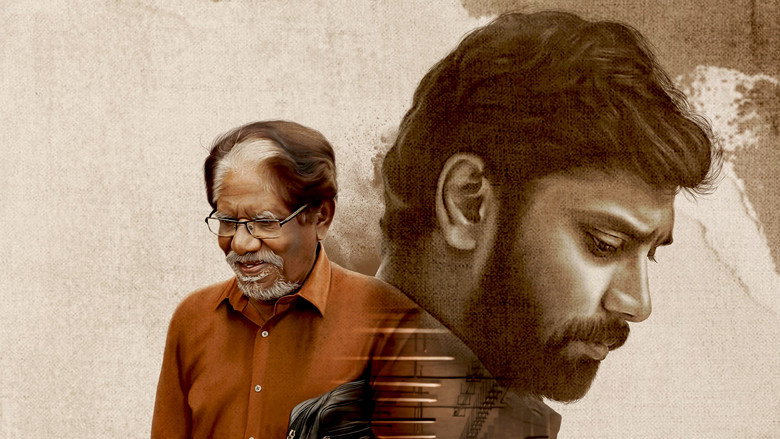
Harish Prabhu’s directorial debut is a study in contrasts. On one hand, the film is a technical achievement, with Sinto Poduthas’s cinematography turning the sterile, labyrinthine halls of a government hospital into a claustrophobic nightmare. The camera lingers on the protagonist’s face, capturing the way his eyes dart between threats, the way his hands tremble when he’s cornered.
There’s a tactile quality to these moments—you can almost feel the cold metal of the hospital bed, the rough texture of the bandages wrapped around his father’s wounds. On the other hand, the film’s script is its Achilles’ heel, stumbling over its own ambition. The premise—a gang of corrupt hospital staff targeting a vulnerable patient—is ripe for social commentary, but the execution feels half-baked.
The villains are cartoonishly evil, their motives reduced to greed and sadism, and the hospital’s systemic failures are painted with such broad strokes that the film risks undermining its own message. As Vikatan put it, the film is a "mediocre action thriller with political shortcomings". I’d add that the shortcomings aren’t just political; they’re narrative.
Take the film’s central set piece: a chase sequence through the hospital’s back corridors. The protagonist, unable to call for help, relies on his wits and the limited tools at his disposal—a fire extinguisher, a broken scalpel, a well-placed kick to the groin. The sequence is tense, well-shot, and, in moments, genuinely thrilling.
But it’s also where the film’s logic begins to unravel. How does a group of psychopathic hospital staff manage to operate with impunity in a public institution? Why does no one intervene?
The film offers no answers, and the silence here isn’t thematic—it’s a gaping hole. The Hindu’s Srinivasa Ramanujam was right to call out the film’s "predictable action fare" and its failure to "tap its sole interesting idea to the fullest". The idea—that the most vulnerable among us are often the most exposed to predation—is a powerful one. But Thiruvin Kural treats it like a springboard for a generic thriller, rather than the foundation for something deeper.
The performances, at least, are a saving grace. Arulnithi, who has built a career on understated, introspective roles, is compelling as the protagonist. There’s a quiet intensity to his performance, a sense of simmering rage beneath the surface.
When he finally snaps—when the film allows him to fight back—it’s cathartic, not because the violence is glorified, but because it feels earned. Bharathiraja, as his father, brings a weary gravitas to the role, his presence a reminder of the stakes. But it’s Ashraf Mallisery, as the lead antagonist Aarumugam, who steals the show.
His performance is a masterclass in menace, all coiled energy and unhinged charm. He’s the kind of villain you love to hate, the kind who makes you lean forward in your seat, waiting for the next twisted thing he’ll say or do. Critics have called his performance "phenomenal", and it’s hard to disagree.
He’s the film’s dark heart, the reason its weaker moments are still worth watching.

And then there’s the score. Sam C.S.’s music is a character in its own right, swelling and receding like a tide. At its best, it heightens the tension, turning a simple scene—a character walking down a hallway—into something fraught with danger.
At its worst, it’s overbearing, a blunt instrument where subtlety would serve better. There’s a moment early in the film where the protagonist’s father is wheeled into surgery, and the score swells to a crescendo, as if the film is afraid we won’t understand the gravity of the situation. I understood.
I didn’t need the music to tell me. It’s a small misstep, but it’s emblematic of the film’s broader issue: a lack of trust in its audience. Thiruvin Kural is so desperate to be taken seriously that it sometimes forgets to let its story breathe.
That’s not to say the film doesn’t have its moments of quiet beauty. There’s a scene midway through where the protagonist, exhausted and cornered, sits on the edge of his father’s hospital bed. The camera holds on his face as he signs something—a question, a plea, a memory—and for a brief moment, the film allows itself to be still.
No music, no dialogue, just the sound of his ragged breathing. It’s a small moment, but it’s the kind of scene that lingers, the kind that makes you forget, just for a second, that you’re watching a thriller. It’s a reminder that Thiruvin Kural is, at its core, a film about human connection.
The problem is that it’s also a film about hospital staff who moonlight as killers, and those two ideas don’t always play well together.
I keep coming back to the silence. Not the silence of the protagonist—though that’s central to the film—but the silence of the world around him. The way the other characters talk at him, not to him.
The way the hospital staff ignore his attempts to communicate. The way the film itself sometimes seems to forget that he’s there, that his disability isn’t just a plot device but a lived reality. There’s a missed opportunity here, a chance to explore the ways in which society fails those who don’t fit neatly into its structures.
Instead, Thiruvin Kural settles for a simpler story: a man, a hospital, a group of bad guys. It’s not a bad story. It’s just not the story it could have been.
In the end, Thiruvin Kural is a film of contradictions. It’s ambitious but uneven, thrilling but flawed, a technical achievement that stumbles over its own feet. It’s the kind of film that makes you wish it had been braver, that it had trusted its audience a little more, that it had leaned harder into the silence instead of filling it with noise.
But it’s also the kind of film that stays with you, not because it’s perfect, but because it’s trying. And in a genre as crowded as the psychological thriller, that’s something. Not enough, maybe.
But something.
"A quiet Tamil psychological action thriller that got people talking in theatre lobbies and now draws niche viewing on Netflix."
Thiruvin Kural (Voice of Thiru) is a Tamil-language psychological action thriller written and directed by Harish Prabhu and produced by Lyca Productions. Kerala theatre public reviews show audiences staying to debate it after screenings, with follow-up reviews centered on Arulnithi. On Netflix it keeps collecting streaming clicks, watchlist adds and seen marks, while a daily streaming chart position around 6305 points to steady niche viewing rather than breakout buzz.
Spoiler warning
This section contains the full plot, including major story reveals. Overview above stays spoiler-free.
Thiruvin Kural (2023), the Tamil-language psychological action thriller directed by Harish Prabhu, has carved a niche for itself by blending high-stakes drama with a deeply human story. The film, produced by Lyca Productions, follows a speech and hearing-impaired youngster and his father as they navigate a life-threatening conflict after an accident at a construction site. With a cast featuring Arulnithi, Bharathiraja, and Aathmika, the movie promises a gripping narrative—but what went into bringing this story to life?
The film’s premise revolves around a protagonist with disabilities who becomes entangled in danger when a ruthless gang targets his injured father in a hospital. This setup not only adds tension but also highlights themes of vulnerability and resilience, a rare focus in Tamil cinema’s action-thriller genre. While the snippets don’t reveal much about the creative process behind the script, the choice to center the story on a differently-abled lead suggests a deliberate effort to challenge conventional tropes.
Harish Prabhu, making his directorial debut with Thiruvin Kural, has kept a low profile about the film’s development. However, the collaboration with Lyca Productions—a studio known for backing high-profile projects—hints at a well-funded production. Whether the film’s psychological depth was a priority from the outset or evolved during scripting remains unclear, but the final product has drawn attention for its unique angle.
The ensemble cast brings star power and credibility to the project. Arulnithi, known for his versatility in Tamil cinema, plays the lead role of the speech and hearing-impaired youngster, while veteran actor Bharathiraja portrays his father. Aathmika, who has gained recognition for her performances in recent years, rounds out the key roles alongside Subathra Robert, Monekha Siva, and Ashraf Mallisery.
What’s intriguing is how the cast’s chemistry was shaped. While no behind-the-scenes anecdotes have surfaced in the available snippets, the pairing of Arulnithi and Bharathiraja—a dynamic that blends youthful energy with seasoned gravitas—likely added layers to the father-son dynamic. The film’s success may hinge on how convincingly these actors portray the emotional and physical struggles of their characters, especially given the protagonist’s disabilities.
Details about the film’s production are scarce. The snippets don’t mention any on-set challenges, such as filming action sequences with a differently-abled lead or ensuring authenticity in portraying the protagonist’s experiences. Rumors about delays or budget constraints haven’t been confirmed, but given the film’s 2023 release, it’s possible the production wrapped smoothly.
One unanswered question is whether the filmmakers consulted experts or advocacy groups to accurately represent speech and hearing impairments. While the snippets don’t provide insight into this, such collaborations are increasingly common in films tackling sensitive themes. If Thiruvin Kural took this route, it could set a precedent for future Tamil cinema projects.
For a directorial debut, Thiruvin Kural has generated buzz without the typical fanfare of larger Tamil blockbusters. The film’s focus on a marginalized protagonist in a high-stakes thriller is a refreshing departure from formulaic action films. However, the lack of behind-the-scenes coverage means much of its production story remains untold.
If the film resonates with audiences, it could pave the way for more nuanced storytelling in Tamil cinema. For now, Thiruvin Kural shows the power of unconventional narratives—and the quiet confidence of its debut director.
Entertainment rumors and trivia aggregated from public reporting. Treat speculation as unverified unless a cited source confirms it.
More titles in the same genres and with the same cast.