Sallie Harmsen
Anne

Three modern couples juggle relationships and demanding careers while navigating the unpredictable terrain of parenthood.
Official
I’ll admit it: I went into The Wonder Weeks expecting a mess. Not the kind of mess the film depicts—sleepless nights, spit-up on designer clothes, the existential dread of realizing you’re now responsible for another human’s survival—but the kind of narrative mess that might at least feel alive. Parenthood, after all, is chaotic, unpredictable, and often absurd.
A film about it should either lean into that chaos or find some deeper truth within it. Instead, The Wonder Weeks delivers a glossy, sanitized version of new parenthood, one that feels less like a lived experience and more like a Netflix algorithm’s idea of what a "lighthearted dramedy" should be.
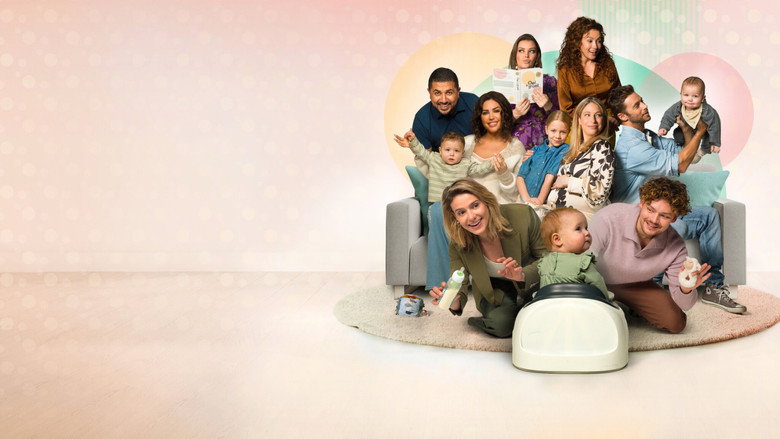
The premise is ripe for comedy and pathos: three couples, each navigating the early months of parenthood while juggling careers, relationships, and their own fraying sanity. Anne (Sallie Harmsen) and Barry (Soy Kroon) are the high-powered lawyer and the clueless husband; Kim (Katja Schuurman) and Roos (Sarah Chronis) are the lesbian couple grappling with their sperm donor’s sudden reappearance; Ilse (Yolanthe Cabau) and Sabri (Iliass Ojja) are the interracial couple whose cultural differences erupt over parenting styles.
On paper, it’s a setup that could skewer modern parenting tropes while still celebrating the messy, beautiful reality of raising kids. In execution, it’s a series of missed opportunities, relying on worn-out stereotypes and a tone that can’t decide whether it’s a farce or a heartfelt exploration of love and sacrifice.
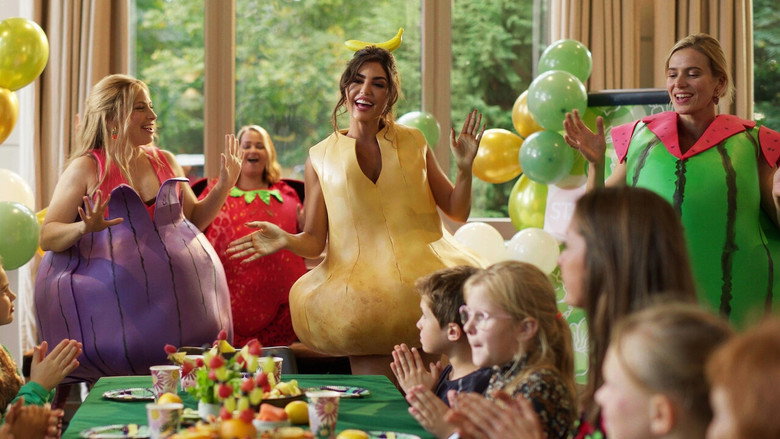
Take the film’s central hub, the "Moms for Moms" club, where the characters gather to swap parenting horror stories and compete over whose baby is the most advanced. It’s a scene that could have been Bridesmaids meets Little Miss Sunshine—a pressure cooker of insecurities, judgment, and dark humor. Instead, it plays like a watered-down version of Bad Moms, with the satire so broad it feels toothless.
The film wants us to laugh at the absurdity of baby yoga and the competitive nature of modern parenting, but it never digs beneath the surface. There’s no bite to the humor, no sense that these characters are anything more than caricatures of the types of parents you might encounter in a suburban parenting group. The "Moms for Moms" club becomes less a satirical device and more a convenient plot mechanism, a way to force these disparate couples together without ever making their interactions feel organic.
The problem isn’t just that the film leans on stereotypes—it’s that the stereotypes feel regressive. Anne, the career-driven lawyer, is reduced to a woman who can’t "have it all," her professional ambitions treated as a punchline rather than a legitimate struggle. Barry, her husband, is the bumbling dad who can’t even change a diaper without making a mess, a trope so tired it’s practically a parody of itself.
The lesbian couple, Kim and Roos, are given slightly more depth, but their storyline—centered on their sperm donor’s sudden reappearance—feels like it’s been lifted from a dozen other films and TV shows. Even Ilse and Sabri’s cultural clashes, which could have been a rich source of conflict and humor, are reduced to a series of awkward misunderstandings, including a scene involving a sheep sacrifice that feels less like a genuine exploration of cultural differences and more like a cheap laugh at the expense of Moroccan traditions.
The film’s biggest sin, though, is its refusal to commit to either comedy or drama. It wants to be Knocked Up one moment and Away We Go the next, but it lacks the raunchy humor of the former and the emotional depth of the latter. The result is a tonal whiplash that leaves the audience unsure whether to laugh or cry—or, more likely, to check their phone.
There’s a scene early in the film where Anne, exhausted and overwhelmed, snaps at Barry for leaving a dirty diaper on the kitchen counter. It’s a moment that could have been played for laughs (the sheer absurdity of parenthood) or for pathos (the slow unraveling of a marriage under the weight of new responsibilities). Instead, it’s played for neither, the actors’ delivery so flat that the scene falls completely flat.
It’s not that the moment is poorly written—it’s that the film doesn’t seem to know what it wants to say with it.
This lack of commitment extends to the film’s visual style. The Wonder Weeks has the glossy, high-production aesthetic of a typical Netflix original, with bright lighting, clean compositions, and a color palette that feels more like a commercial for organic baby food than a film about the chaos of parenthood. It’s a look that contrasts sharply with the grittier, more authentic tone the film occasionally attempts.
There’s no visual language to match the supposed rawness of the subject matter—no handheld camerawork to evoke the disorientation of new parenthood, no muted tones to reflect the exhaustion of the characters. Instead, it feels like a film that’s been focus-grouped within an inch of its life, every rough edge sanded down to appeal to the broadest possible audience.
The performances, at least, offer some respite from the film’s tonal and thematic inconsistencies. Sallie Harmsen, as Anne, does her best with a character who’s written more like a collection of parenting clichés than a fully realized human being. There’s a moment, late in the film, where Anne breaks down in tears, overwhelmed by the pressure of balancing her career and motherhood.
It’s the kind of scene that could have been a turning point for the character, a moment of raw vulnerability that cuts through the film’s glossy veneer. But the script undercuts it almost immediately, with Barry offering a platitude about "finding balance" that feels more like a Hallmark card than a genuine attempt at connection. Harmsen sells the emotion of the scene, but the writing lets her down.
Yolanthe Cabau and Iliass Ojja, as Ilse and Sabri, fare slightly better, their chemistry providing a much-needed spark of authenticity. Their scenes together—particularly those involving their cultural differences—feel more grounded than the rest of the film, if only because the actors seem to be playing people rather than types. There’s a warmth to their dynamic that’s missing from the other couples, a sense that they’re navigating these challenges together rather than as adversaries.
It’s a shame, then, that their storyline is sidelined in favor of the film’s more predictable arcs.
The film’s most glaring flaw, though, is its refusal to engage with the darker, more complicated realities of parenthood. New parenthood isn’t just about sleepless nights and dirty diapers—it’s about the loss of identity, the strain on relationships, the fear that you’re failing at the one job that matters most. The Wonder Weeks touches on these themes, but only superficially, as if the filmmakers are afraid to scare off viewers with anything too heavy.
There’s no sense of the existential dread that can accompany bringing a new life into the world, no exploration of the ways in which parenthood can reshape (or even break) a person. Instead, the film offers a series of easy resolutions, tying up each storyline with a neat bow that feels more like a cop-out than a satisfying conclusion.
John Serba, writing for Decider, called The Wonder Weeks a "snoozefest," and it’s hard to argue with that assessment. The film’s reliance on clichés and its refusal to commit to a tone make it feel like a missed opportunity—a film that could have been a sharp, insightful comedy about the realities of modern parenthood but instead settles for something safe, predictable, and ultimately forgettable.
Amanda Guarragi of Ready Steady Cut found it "worth a watch for fans of lighthearted comedies with an unexpected emotional punch," but even that praise feels generous. The emotional punches here are few and far between, and when they do land, they’re quickly undercut by the film’s insistence on wrapping everything up in a neat, tidy package.
What’s most frustrating about The Wonder Weeks is that it had all the ingredients for something great. The premise is solid, the cast is talented, and the subject matter is ripe for exploration. But the film’s refusal to take risks—to lean into the chaos, to embrace the messiness of parenthood, to trust its audience with something more than a series of tired tropes—ultimately dooms it.
It’s a film that wants to have its cake and eat it too, to be both a raunchy comedy and a heartfelt drama, to skewer parenting culture while also celebrating it. In the end, it does neither particularly well.
I’m not sure who The Wonder Weeks is for. Parents might find some of the scenarios relatable, but the film’s shallow treatment of its themes is unlikely to resonate deeply. Non-parents, meanwhile, will likely find the humor too niche and the drama too slight to hold their interest.
It’s a film that exists in a kind of cultural no-man’s-land, neither sharp enough to be a biting satire nor heartfelt enough to be a genuine exploration of its subject matter. In the end, it’s just another Netflix original, a product designed to fill a slot in the algorithm rather than to challenge, provoke, or move its audience.
And maybe that’s the real tragedy of The Wonder Weeks. Parenthood, at its core, is a deeply human experience—one that’s equal parts joy and terror, love and frustration, beauty and chaos. A film about that experience should feel human too.
Instead, The Wonder Weeks feels like it was made by committee, a series of focus-grouped decisions designed to appeal to everyone and offend no one. It’s a film that’s so afraid of making a misstep that it never finds its footing at all. In the end, it’s not just a missed opportunity—it’s a reminder of how rarely mainstream cinema trusts its audience enough to give them something real.
"A lighthearted Dutch comedy-drama with a charming cast that struggles to stand out from familiar family-film tropes."
The chemistry among the leads and the warm, comedic tone make it an easy watch for fans of feel-good family stories. The plot is predictable, leans heavily on clichés, and lacks the depth or originality to leave a lasting impression.
Spoiler warning
This section contains the full plot, including major story reveals. Overview above stays spoiler-free.
The Wonder Weeks (2023) is the latest Dutch comedy to tackle the messy, hilarious reality of modern parenthood. Directed by Appie Boudellah and Aram van de Rest, the film follows three couples as they navigate sleepless nights, career pressures, and the emotional rollercoaster of raising infants—all while trying to keep their relationships intact. With a cast led by Sallie Harmsen, Yolanthe Cabau, and Soy Kroon, the movie promises a raw yet lighthearted look at the "wonder weeks" of early childhood, latestnetflix.com contends, where developmental leaps turn households upside down.
The film is based on the bestselling book Oei, ik groei! (The Wonder Weeks) by Frank Plooij, Hetty van de Rijt, and Xaviera Plooij, which has been a go-to guide for parents worldwide since its release. The book’s premise—that babies go through predictable phases of fussiness and growth—translated neatly into a comedic ensemble piece. While the evidence doesn’t detail how closely the film adheres to the source material, the Netflix synopsis confirms it retains the core theme: the unpredictable, often exhausting journey of new parenthood.
Boudellah and van de Rest, known for their work on Dutch comedies like Soof and Alles is Liefde, bring their signature blend of humor and heart to the project. Their direction leans into the chaos of early parenting, balancing slapstick moments with the emotional weight of shifting relationships.
The ensemble cast reads like a who’s who of Dutch film and TV, with each actor bringing their own comedic and dramatic chops to the table:
The dynamic between the three couples—each at different stages of their relationships—drives the film’s humor and heart. Whether it’s sleep deprivation, breastfeeding struggles, or the sheer absurdity of baby-proofing a home, the cast’s chemistry is key to selling the film’s blend of comedy and relatability.
The Wonder Weeks premiered on June 9, 2023, as a Netflix original, giving it a global platform to resonate with parents and non-parents alike. While the evidence doesn’t include critical reviews or box office numbers (since it’s a streaming release), the film’s premise has clear appeal: it’s a universal story told through a Dutch lens, with humor that transcends borders.
The Netflix synopsis teases a film that doesn’t shy away from the grittier side of parenting, describing the couples as they "juggle relationships and demanding careers while navigating the unpredictable terrain of parenthood". This balance of humor and honesty is likely what drew audiences in, especially those who’ve lived through the chaos of early parenthood.
As of now, there’s no confirmation of a sequel or spin-off, but the film’s premise leaves room for expansion. Could we see these couples tackle toddlerhood next? Or will Boudellah and van de Rest move on to fresh projects? For now, The Wonder Weeks stands as a standalone celebration of the highs and lows of raising kids—and the friendships that keep parents sane.
With its relatable themes and talented cast, the film is a reminder that while parenthood is messy, it’s also full of moments worth laughing about.
Entertainment rumors and trivia aggregated from public reporting. Treat speculation as unverified unless a cited source confirms it.
More titles in the same genres and with the same cast.