Jeffrey Dean Morgan
Jacob Kanon

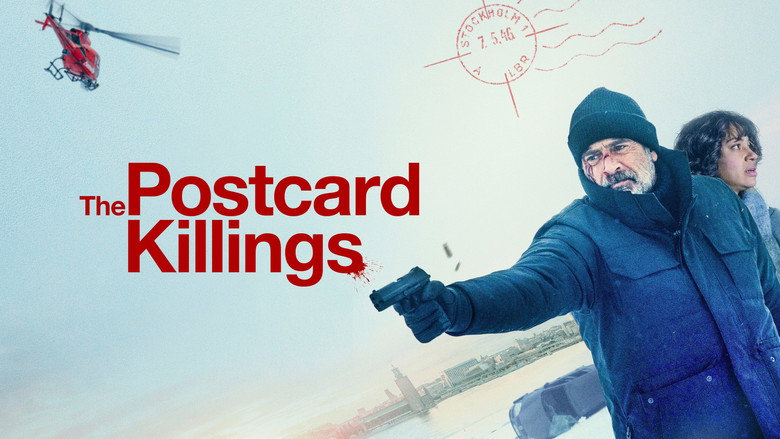
After suffering a personal tragedy, and desperate for justice, Jacob Kanon, a veteran New York City police detective, embarks on the search for a twisted killer who is leaving a bloody trail of elaborate murders across Europe.
Official
I’ve always had a soft spot for detective stories that cross borders—those narratives where the chase itself becomes a kind of cultural translation, where the rules of one country don’t quite apply in another. The Postcard Killings tries to tap into that tradition, sending a grieving New York detective, Jacob Kanon (Jeffrey Dean Morgan), across Europe to hunt a serial killer who stages victims like living art. It’s a premise that should crackle with tension, a collision of American grit and European procedural cool. Instead, it feels like a film that’s been assembled from a kit, each piece clicking into place without ever coming alive.
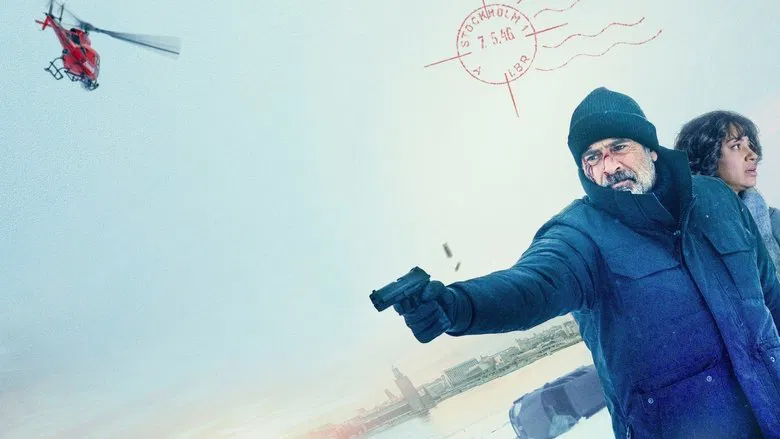
Danis Tanović, the Bosnian director who won an Oscar for No Man’s Land, is no stranger to stories about fractured landscapes and moral ambiguity. But here, he’s working in a register that feels foreign to him—not just the English language, but the slick, commercial thriller space. The film’s biggest problem isn’t its premise; it’s that it never trusts its own material.
The script (credited to five different writers, which might explain the whiplash in tone) treats every beat like it’s a checkbox: the grieving father, the cryptic postcards, the art-world red herrings. Even the killer’s signature—posing victims like famous paintings—feels less like a chilling calling card and more like a gimmick the film forgets to explore. By the time the twist arrives (and it does, around the 45-minute mark), it’s so telegraphed that I found myself counting the minutes until the next postcard arrived, not out of suspense, but out of habit.
The film’s visuals are its most consistent element, at least. The European locations—Stockholm, London, a particularly eerie shot of a fog-choked canal—are photographed with a moody, almost painterly quality. (There’s a moment where Kanon walks through a museum, the camera lingering on the brushstrokes of a Caravaggio, that briefly suggests the film might lean into its own art-world macabre.
It doesn’t.) But even here, the craft feels like it’s working in service of a story that doesn’t know what it wants to say. The violence, for instance, is often kept off-screen, which should make it more unsettling. Instead, it just feels like the film is pulling its punches, as if it’s afraid to commit to the brutality it’s invoking.
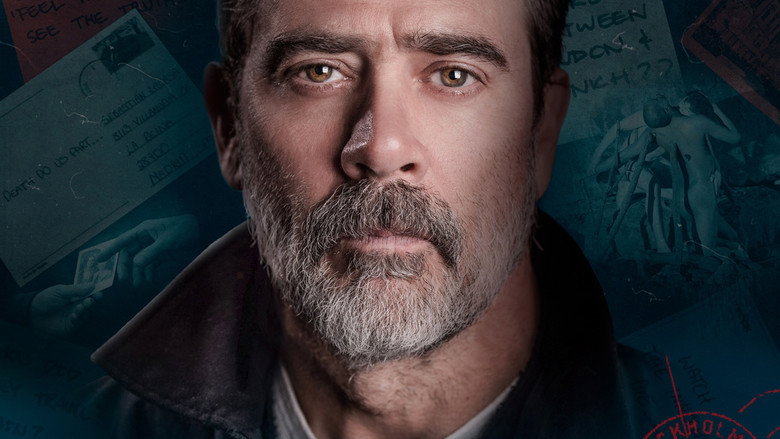
Jeffrey Dean Morgan is an actor I’ve always found compelling in smaller doses—his work in The Walking Dead and Watchmen has a lived-in, weary quality that suits broken men. But Kanon is a cliché from the start: the gruff, rule-breaking American cop who doesn’t play by European rules. (The film’s idea of cultural tension is having him scoff at Swedish coffee and then immediately demand a gun.) Morgan tries, I’ll give him that.
There’s a scene early on where he sits in a Stockholm police station, his body language screaming outsider—shoulders hunched, jaw set, eyes darting like he’s waiting for someone to tell him he doesn’t belong. It’s the kind of physical detail that usually grounds a performance, but the script undercuts him at every turn. Famke Janssen, playing his ex-wife, has even less to do.
She appears in a handful of scenes, mostly to deliver exposition or react to bad news, and then vanishes. It’s a thankless role, the kind that exists solely to remind us that Kanon is a man with a past, not a person with one.
The film’s most frustrating quality is its refusal to let its characters breathe. Even the side players—Cush Jumbo as a Swedish journalist, Joachim Król as a local detective—are given just enough personality to feel like they might become interesting, and then the plot yanks them back into service. There’s a subplot involving two young travelers (Naomi Battrick and Ruairí O’Connor) that initially seems like it might add some texture to the story, but it’s resolved in a way that feels more like a narrative convenience than a revelation.
The ending, too, is a letdown—not because it’s ambiguous, but because it’s so presumptuous. It wraps up the central mystery while leaving just enough threads dangling to suggest a sequel that, thankfully, no one seems interested in making.
I keep coming back to that word—presumptuous. It’s not just the ending. The whole film feels like it’s operating on autopilot, coasting on the reputation of its source material (James Patterson and Liza Marklund’s novel) and the residual glow of the Scandinavian noir trend it’s trying to ape.
Variety called it an “uninspired detour” for Tanović, and that feels about right. There’s nothing here that hasn’t been done before, and better. The Hollywood Reporter was even harsher, writing that it “tarnishes a brand already diminished by previous Patterson adaptations.” Ouch.
But they’re not wrong. The Postcard Killings isn’t just a bad thriller; it’s a forgettable one, the kind of film that evaporates from your mind the moment the credits roll.
That’s not to say there aren’t moments where it almost works. There’s a scene midway through where Kanon, exhausted and running on fumes, confronts a suspect in a dimly lit hotel room. The lighting is stark, the dialogue sparse, and for a brief moment, you can almost feel the weight of his grief.
It’s the closest the film comes to saying something real about loss, about the way violence leaves a stain that can’t be washed out. But then the scene ends, the plot lurches forward, and the moment is gone.
Maybe that’s the real tragedy of The Postcard Killings. It’s a film that could have been about something—about the way grief distorts the world, about the futility of chasing justice when the system is rigged against you, about the way art can both memorialize and exploit violence. Instead, it’s just another detective story that forgot to ask why it mattered.
And in a genre that’s given us everything from Chinatown to Zodiac, that’s not just disappointing. It’s unforgivable.
"A middling thriller with a promising premise and weak execution, saved by its leads."
Jeffrey Dean Morgan and Famke Janssen give an otherwise formulaic crime thriller some depth. The story is predictable and lacks the tension or originality to stand out, and slow pacing and thin supporting characters leave many underwhelmed.
Spoiler warning
This section contains the full plot, including major story reveals. Overview above stays spoiler-free.
The Postcard Killings (2020) arrived with a bang—trailers promised a gritty, transcontinental cat-and-mouse game between a grieving detective and a serial killer leaving postcards as his calling card. Directed by Bosnian filmmaker Danis Tanović (No Man’s Land), the movie stars Jeffrey Dean Morgan (The Walking Dead) and Famke Janssen (X-Men) in a story that spans London, Stockholm, and beyond. latestnetflix.com's take is that but what went into making this thriller, and why did it fly under the radar for some audiences?
Danis Tanović is no stranger to intense storytelling. Born in Zenica and raised in Sarajevo, his early work, including the Oscar-winning No Man’s Land (2001), focused on the brutality of war. The Postcard Killings marked a pivot to crime thrillers, though the film’s dark tone and themes of loss still carry echoes of his earlier, more somber projects.
The shift wasn’t seamless. While Tanović’s direction brought a European sensibility to the procedural, some critics noted the film’s uneven pacing—a common pitfall for thrillers juggling multiple locations and red herrings. Still, his ability to balance atmospheric tension with character-driven drama kept the project from veering into generic territory.
Morgan and Janssen anchor the film as Jacob and Danielle Kanon, a pair of detectives hunting a killer who targets young couples across Europe. Their on-screen partnership was a selling point in trailers, with Morgan’s grizzled intensity contrasting Janssen’s cooler, methodical approach.
Off-screen, the two actors have a history—both appeared in The Resident (though not as a duo), and their familiarity may have smoothed the film’s emotional beats. Janssen, in particular, has a knack for playing sharp, no-nonsense professionals, while Morgan’s everyman charm grounds the film’s darker moments.
The film’s central gimmick—a serial killer sending postcards to taunt detectives—was a standout in marketing. Trailers teased the eerie, almost poetic nature of the murders, with each postcard featuring a different European landmark. The concept drew comparisons to Se7en and The Following, though The Postcard Killings leaned harder into its international setting.
Rumors (unconfirmed) suggest the postcard motif was inspired by real-life serial killer communications, though the film’s script doesn’t look at specifics. The killer’s identity and motives remain a mystery until the final act, a choice that divided audiences—some praised the twist, while others found it underwhelming.
Despite its star power and intriguing premise, The Postcard Killings didn’t set the box office ablaze. Released in March 2020, it faced stiff competition from other thrillers and the early days of the pandemic, which disrupted theatrical runs. The film’s Rotten Tomatoes score reflects its divisive nature, with a middling 5.1/10 rating from critics and audiences alike.
That said, the movie found a second life on streaming platforms like Netflix, where its globe-trotting plot and Morgan’s leading-man appeal attracted binge-watchers. For fans of slow-burn crime dramas, it’s a solid, if flawed, entry in the genre.
The Postcard Killings may not be a classic, but it’s a competent, atmospheric thriller with a standout premise. Tanović’s direction keeps the tension simmering, while Morgan and Janssen deliver performances that elevate the material. If you’re in the mood for a detective story with a European twist, it’s worth a watch—just don’t expect a masterpiece.
Entertainment rumors and trivia aggregated from public reporting. Treat speculation as unverified unless a cited source confirms it.
More titles in the same genres and with the same cast.