Geoffrey Rush
Stephen Price

“Evil loves to party.”
An amusement park mogul offers a random group of diverse people $1 million to spend the night in a decrepit former mental institution.
Official
I’ve seen enough haunted house movies to know the drill: creaky floorboards, flickering lights, a cast of strangers who arrive skeptical and leave traumatized. House on Haunted Hill (1999) follows the blueprint, but with one crucial twist—it’s not trying to scare you so much as it’s trying to make you laugh at the idea of being scared. And in the hands of Geoffrey Rush, that’s a far more interesting proposition.
Rush, fresh off his Oscar win for Shine and already cultivating a reputation for delightfully unhinged characters, plays Steven H. Price, a billionaire amusement park mogul who offers five strangers a million dollars each to spend the night in a former mental asylum. The catch?
The house is haunted, the doors lock at midnight, and the guests are all hiding secrets. It’s Ten Little Indians with more gore and less Agatha Christie elegance. But what makes the film worth revisiting isn’t the plot—it’s the way Rush leans into the absurdity of it all, turning what could’ve been a forgettable late-'90s horror flick into a masterclass in campy villainy.
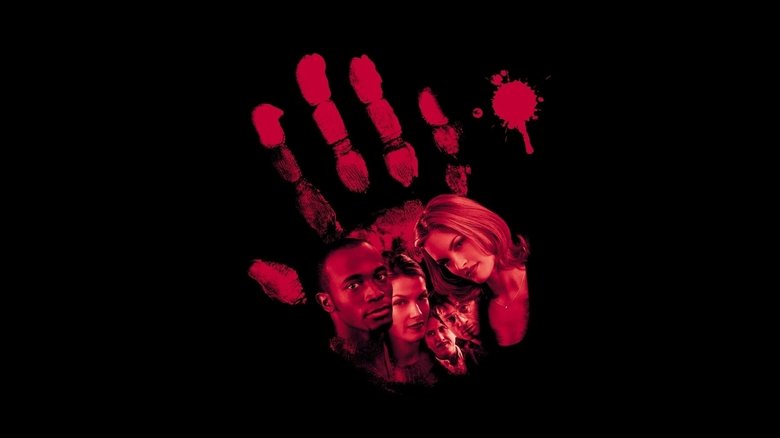
The film’s tone is a tightrope walk between genuine horror and self-aware cheese, and for the most part, it stays upright. Malone’s direction doesn’t shy away from the grotesque—there’s a particularly memorable scene involving a vat of acid and a very unlucky character—but it also doesn’t take itself too seriously. The practical effects, a mix of prosthetics and early CGI, are uneven but charming in their earnestness.
(The floating, screaming heads, for instance, look like they were lifted from a Goosebumps episode, but that’s part of the fun.) The real star, though, is the sound design. The score, which earned a modest 6.8/10 on SensCritique, is a moody, synth-heavy affair that cranks up the dread during the quieter moments, only to undercut it with a sudden, almost playful sting. It’s as if the film can’t decide whether it wants to be The Shining or Scooby-Doo, and that indecision becomes its defining feature.
The cast is game, if not always memorable. Famke Janssen and Taye Diggs bring a grounded intensity to their roles, but they’re overshadowed by Rush’s scenery-chewing. His Price is a man who clearly relishes the chance to monologue, to smirk, to deliver lines like “Evil loves to party” with the kind of relish usually reserved for Bond villains.
It’s a performance that knows it’s in a B-movie and leans into it, turning what could’ve been a one-note creep into something weirdly magnetic. (I’ve seen this trick before—Johnny Depp in Sleepy Hollow, Nicolas Cage in Vampire’s Kiss—but Rush’s version feels less like a man unraveling and more like a man who’s already unraveled and is now enjoying the view.)
The film’s biggest flaw, and the one that keeps it from being truly great, is its pacing. The first act drags, introducing the characters with all the subtlety of a sledgehammer. We get it: they’re all flawed, they’re all hiding something, they’re all going to die horribly.
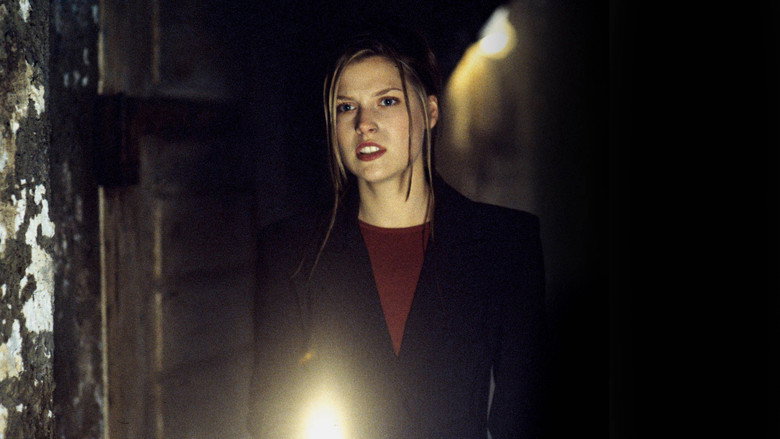
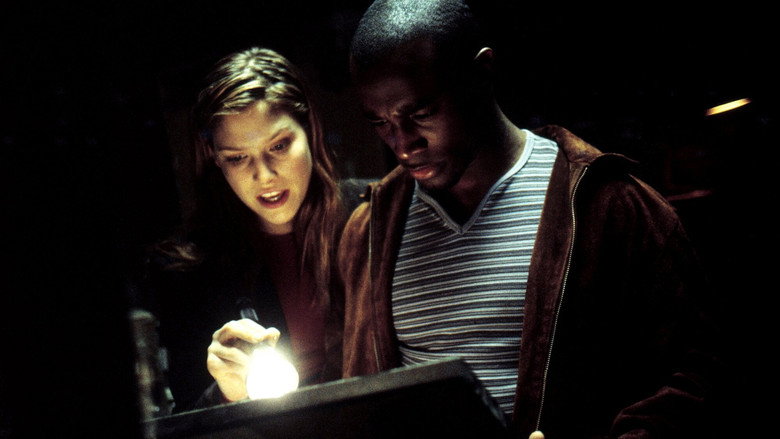
The film doesn’t trust its audience to piece together the dynamics, so it spells everything out in clunky exposition. But once the scares start rolling, the movie finds its footing. There’s a sequence in the asylum’s basement—dank, dimly lit, filled with the kind of medical equipment that looks like it was designed by a sadist—that’s genuinely unsettling.
The camera lingers on the rusted tools, the flickering bulbs, the sense of something just out of frame. For a moment, you forget you’re watching a film that also features Chris Kattan in a supporting role.
And that’s the thing about House on Haunted Hill: it’s a mess, but it’s a fun mess. It doesn’t aspire to be The Exorcist or Psycho; it’s content to be a late-night cable movie, the kind you stumble upon at 2 a.m. And watch with a bowl of popcorn and a raised eyebrow.
The audience ratings reflect that—5.6 on TMDB, 5/10 on SensCritique—neither a disaster nor a triumph, just a solid, slightly silly entry in the haunted house canon. The video reviews I’ve seen call it “creepy but silly,” and that feels about right. It’s not a film that haunts you, but it’s one that lingers in the way a good campfire story does: not because it’s terrifying, but because it’s fun.
I keep coming back to Rush’s performance, though. There’s something about the way he plays Price that feels like a secret handshake between the film and the audience. He’s not just a villain; he’s a ringmaster, winking at us from the other side of the screen.
In a genre that often takes itself too seriously, House on Haunted Hill is refreshingly unafraid to be a little ridiculous. And in 1999, when horror was either drowning in self-seriousness (The Blair Witch Project) or veering into outright parody (Scream), that felt like a breath of fresh air.
Or maybe I just have a soft spot for movies that know they’re not changing the world, but still throw a damn good party. Evil loves to party, after all. And so, it turns out, do I.
"A visually stylish but uneven horror remake that can't escape the shadow of its classic predecessor."
The 1999 remake of *House on Haunted Hill* is praised for its atmospheric setting and Geoffrey Rush’s over-the-top performance, which adds campy charm. The plot is predictable and the scares underwhelming, leaning on gore rather than genuine suspense. Its attempt to modernize the original’s eerie tone often falls flat: some enjoy its B-movie appeal, others see a missed opportunity.
Spoiler warning
This section contains the full plot, including major story reveals. Overview above stays spoiler-free.
William Malone’s House on Haunted Hill (1999) is a cult-favorite horror remake that embraced the over-the-top aesthetics of late '90s genre filmmaking. Starring Geoffrey Rush as the eccentric millionaire Steven H. Price and a cast of rising stars like Famke Janssen and Ali Larter, the film delivered chills, gore, and a healthy dose of camp. latestnetflix.com's view is that but behind the scares, the production had its own share of quirks—from practical effects to director insights that hinted at the movie’s playful tone.
William Malone, known for his work in horror and sci-fi, brought a hands-on approach to House on Haunted Hill. In a bonus clip from the film’s DVD release, Malone discussed his preference for practical effects over CGI, a choice that gave the movie a tactile, old-school horror feel. While the late '90s saw a surge in digital effects, Malone’s team relied on prosthetics, animatronics, and camera tricks to create the film’s most memorable scares—like the infamous "floating nurse" sequence.
The director’s enthusiasm for classic horror techniques was evident in interviews. In a conversation with Rob Zombie, Malone revealed his admiration for vintage horror films, which influenced the remake’s stylized approach. The result was a movie that felt like a throwback to '50s and '60s horror, even as it leaned into the excesses of '90s genre filmmaking.
Geoffrey Rush’s performance as the flamboyant Steven H. Price stole the show, but the rest of the ensemble—Famke Janssen, Ali Larter, Taye Diggs, and Chris Kattan—brought their own energy to the film. Critics and fans later noted that the cast elevated what could have been a forgettable slasher. Janssen, fresh off her role in GoldenEye (1995), played the skeptical Evelyn Stockard-Price, while Larter and Diggs added a modern edge as the younger, more skeptical guests trapped in the haunted mansion.
The chemistry among the cast was a highlight, with some reviewers suggesting that their performances kept the film from veering too far into self-parody. Even Kattan, best known for his comedic work on Saturday Night Live, held his own in a rare dramatic role.
Despite its star power and stylish execution, House on Haunted Hill received lukewarm reviews upon release. Critics praised its atmosphere and practical effects but criticized its uneven pacing and reliance on jump scares. The film holds a modest 5/10 rating on SensCritique, with some viewers calling it a guilty pleasure rather than a horror classic.
Yet, the movie’s cult following has grown over the years, thanks in part to its nostalgic appeal and the enduring popularity of its cast. The original motion picture score, composed by Don Davis, also earned praise for its eerie, orchestral tone.
House on Haunted Hill (1999) may not be a masterpiece, but it’s a fascinating time capsule of late '90s horror. With its mix of practical effects, campy performances, and a director who clearly loved the genre, the film remains a fun, if flawed, entry in the haunted house subgenre.
Entertainment rumors and trivia aggregated from public reporting. Treat speculation as unverified unless a cited source confirms it.
More titles in the same genres and with the same cast.