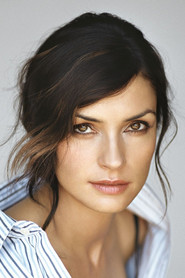
Famke Janssen
Katherine Carter

A kindly nurse tries to unlock the secrets of a coma patient's injuries — and discovers the bitter rivalry, infidelity, betrayal and murder behind them.
Official
I’ll admit it: I kept waiting for Locked In to snap into focus. For the tangled web of betrayals to tighten, for the flashbacks to cohere into something sharper than a Lifetime movie’s daydream. But by the time the credits rolled, I was left with the same question the film itself seemed unable to answer: What was the point of all this? Not every thriller needs to reinvent the wheel, but this one doesn’t even seem to know it’s supposed to be rolling.
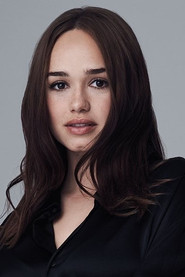
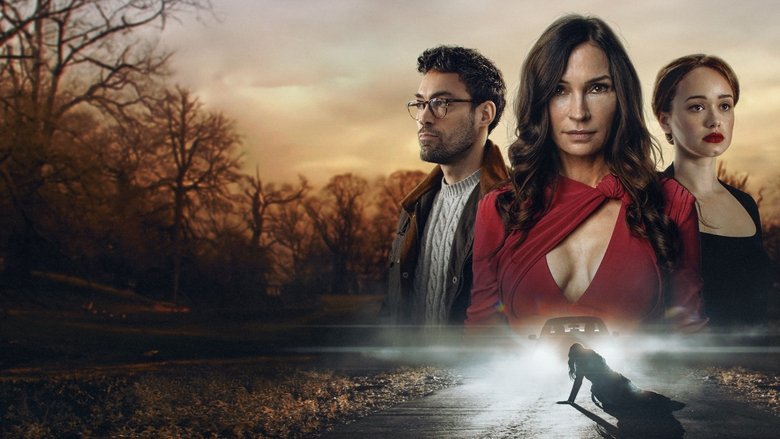
The premise is a familiar one—a nurse (Famke Janssen) tends to a comatose woman (Rose Williams) and uncovers a conspiracy lurking beneath the manor’s polished surface. It’s Gosford Park meets The Girl on the Train, if both had been drained of their wit and replaced with the kind of plotting that feels like it was workshopped in a room where someone kept saying, “But what if we add another twist?” The film leans heavily on non-linear storytelling, jumping between past and present with the subtlety of a sledgehammer. (One flashback even begins with a character dramatically announcing, “I remember now,” as if the audience might otherwise mistake the sudden shift in lighting for a power surge.)
The problem isn’t the structure itself—flashbacks can be a powerful tool—but the way Locked In deploys them. Instead of deepening the mystery, they often feel like a crutch, a way to pad out a story that doesn’t trust its audience to piece things together. The film’s most frustrating habit is its insistence on explaining everything, right down to the characters’ emotional states.
When a character gasps, “You’re lying!” it’s not because the performance or the writing has earned that reaction—it’s because the script has decided we need to be told, explicitly, that something is amiss. It’s the cinematic equivalent of a tour guide pointing at a painting and saying, “This is the sad part.”
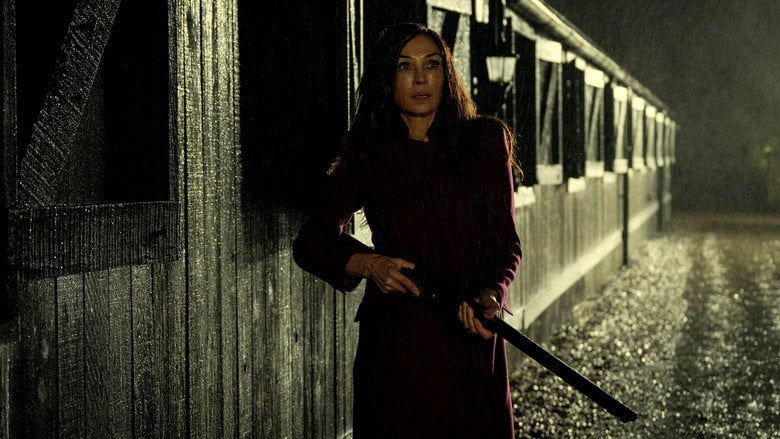
And yet, there are moments where the film almost works. The manor itself is a character, all creaking floorboards and shadowy corridors that feel like they’ve been lifted straight from a gothic novel. The cinematography lingers on the details—the way a character’s fingers tremble as they pour a drink, the slow zoom on a face as a revelation dawns—moments that suggest a film far more interested in atmosphere than it is in its own plot.
But these glimpses of something richer are constantly undermined by the script’s insistence on moving the pieces around the board without ever letting them breathe.
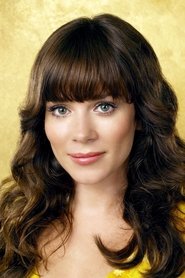
Take the scene where Anna Friel’s character, Nicky, confronts her husband in the manor’s study. The tension is palpable, the kind of slow-burn argument that could unravel a marriage in real time. Friel’s performance is electric—her voice low, her posture rigid, like a wire pulled taut.
For a few minutes, Locked In feels like it might actually be about something: the quiet devastation of a woman realizing she’s been betrayed, not just by her husband, but by the life she’s built. But then the film cuts away, eager to get back to its parade of twists, and the moment is lost. It’s a shame, because Friel and Janssen are the film’s strongest assets, two actors who know how to convey volumes with a glance or a pause.
The rest of the cast is fine, but they’re given little to work with beyond the script’s demands that they emote very hard at all times.
The Guardian’s verdict—that Locked In is “a film you wish you would have stopped far earlier”—feels about right. It’s not that the film is bad, exactly. It’s just that it’s so determined to be a thriller that it forgets to be anything else.
There’s no room for the characters to feel like real people, no space for the audience to sit with the unease of what’s happening. Instead, we’re rushed from one revelation to the next, like a tour group being herded through a haunted house where the scares are all telegraphed in advance.
That’s not to say there isn’t a certain guilty pleasure in watching it all unfold. There’s something oddly compelling about the film’s sheer audacity—its willingness to embrace the melodrama of it all, even when it doesn’t quite stick the landing. It’s the kind of movie you might put on in the background while folding laundry, half-paying attention until something ridiculous happens (a character dramatically removing a wig, perhaps) and you find yourself pausing to laugh.
But that’s not the same as being engaged. Locked In wants to be a puzzle box, but it’s assembled with such little care that the pieces never quite fit together.
The ending, when it finally arrives, is the kind of twist that feels inevitable in the worst way. Not because it’s earned, but because the film has spent so much time signaling its intentions that there’s no other possible outcome. It’s the narrative equivalent of a magician revealing their trick before they’ve even finished setting up the props.
And yet, I’ll admit, I didn’t hate it. Not because it was good, but because there’s something almost admirable in the film’s refusal to be subtle. It’s a movie that swings for the fences, even if it keeps missing.
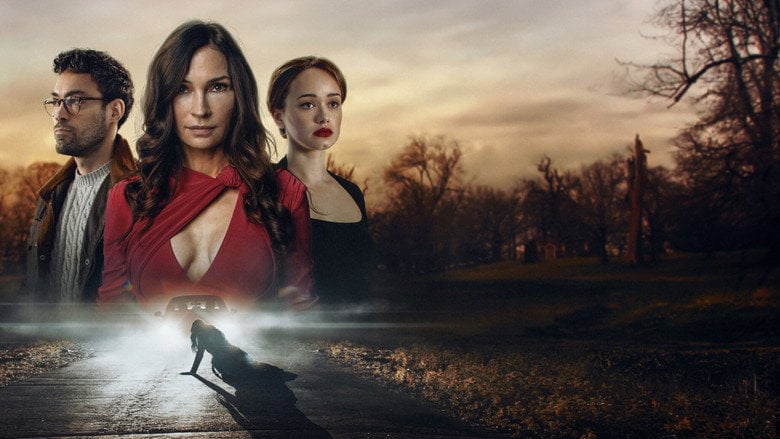
In the end, Locked In is a film that’s easy to forget but hard to hate. It’s not offensive, just… there. Like a guest at a party who keeps trying to tell a story but never quite gets to the point.
You keep waiting for them to say something interesting, but by the time they do, you’ve already moved on. The real mystery isn’t who killed whom or why—it’s why a film with this much talent behind and in front of the camera ended up feeling so hollow. Maybe the answer is simpler than it seems: sometimes, a thriller is just a thriller, and no amount of twists can make it more than the sum of its parts.
Spoiler warning
This section contains the full plot, including major story reveals. Overview above stays spoiler-free.
Netflix’s Locked In (2023) arrived with a tantalizing premise: a nurse unravels the dark secrets behind a coma patient’s injury, only to uncover a web of betrayal and murder. Directed by Nour Wazzi in her feature debut, the film stars a stacked cast, including Famke Janssen, Rose Williams, and Finn Cole. But what went into making this psychological thriller, and why did it land on Netflix with little fanfare?
Nour Wazzi, previously known for her work in television, stepped into the director’s chair for Locked In, marking her first feature film. The script, penned by Rowan Joffé (Before I Go to Sleep), promised a twisty narrative, blending medical drama with psychological suspense. While the evidence doesn’t reveal much about Wazzi’s creative process, her transition from TV to film suggests a deliberate move into darker, more complex storytelling.
The film’s premise—a nurse (Janssen) digging into the past of a comatose patient (Williams)—hints at classic thriller tropes, but the execution relied heavily on the cast’s ability to sell the tension. With no behind-the-scenes anecdotes surfacing in the available snippets, it’s unclear whether the shoot faced challenges, but the final product’s Netflix release suggests a streamlined production.
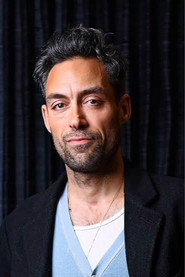
Locked In boasts a strong ensemble, with Famke Janssen (X-Men, Taken) leading as the nurse at the center of the mystery. Rose Williams (Sanditon, Reign) plays the comatose patient, Lina, whose injury sets the plot in motion. Finn Cole (Peaky Blinders, Animal Kingdom) and Alex Hassell (The Boys, Gen V) round out the cast, bringing their own brand of intensity to the film’s morally ambiguous characters.
Anna Friel (The Girlfriend Experience, Marcella) and Karl Collins (Broadchurch) also appear, adding depth to the supporting roles. The film’s structure—relying on flashbacks and shifting perspectives—likely demanded tight performances, especially from Williams, who had to convey emotion while largely immobile.
Unlike Netflix’s usual high-profile marketing pushes, Locked In slipped onto the platform with little promotion on November 1, 2023. The lack of buzz might stem from its mid-tier budget or the crowded thriller market, but it also raises questions about the film’s reception. Without critical reviews or audience scores in the provided snippets, it’s hard to gauge how well the twist-heavy narrative landed.
One unanswered question: Did the film’s ending satisfy viewers, or did it fall into the trap of overcomplicating its reveals? The evidence doesn’t say, leaving Locked In as something of a sleeper—one that might reward binge-watchers but hasn’t yet sparked major conversation.
For Nour Wazzi, Locked In could be a stepping stone to bigger projects, especially if the film finds a cult following. Famke Janssen and Anna Friel, both veterans of genre films, may return to similar roles, while Finn Cole’s rising star power could land him in more high-profile thrillers. As for Rose Williams, her performance as a comatose patient—despite its physical limitations—might open doors for more complex roles.
With no sequels or spin-offs mentioned in the evidence, Locked In stands as a self-contained mystery. Whether it becomes a hidden gem or fades into Netflix’s vast library remains to be seen.
Entertainment rumors and trivia aggregated from public reporting. Treat speculation as unverified unless a cited source confirms it.
More titles in the same genres and with the same cast.