Lesley Manville
Ada Harris

“Follow your dream.”
A 1950s London cleaning lady falls in love with an haute couture dress by Christian Dior and decides to gamble everything for the sake of this folly.
Official
I’ve always been suspicious of movies that promise to whisk us away to Paris. The city has been so thoroughly mythologized—by Hollywood, by literature, by our own collective longing—that it’s become less a place than a shorthand for transformation. A working-class woman gazes at the Eiffel Tower, and suddenly, she’s not just a cleaner anymore; she’s a woman with a dream, a woman who belongs. *Mrs.
Harris Goes to Paris* leans hard into this fantasy, but what saves it from being just another fairy tale is Lesley Manville’s face. It’s a face that knows the weight of scrubbing other people’s floors, the way hope can feel like a splinter under the skin.
The film, adapted from Paul Gallico’s 1958 novel, follows Ada Harris, a widowed London charwoman who becomes obsessed with owning a Dior gown after glimpsing one in a client’s closet. The dress isn’t just fabric and thread; it’s a talisman, a promise that beauty—and by extension, a different life—might be within reach. Ada’s journey to Paris to buy the dress is less about the garment itself than about what it represents: the audacity to want something frivolous, something just for her.
In a world that expects women like Ada to be invisible, wanting is an act of rebellion.
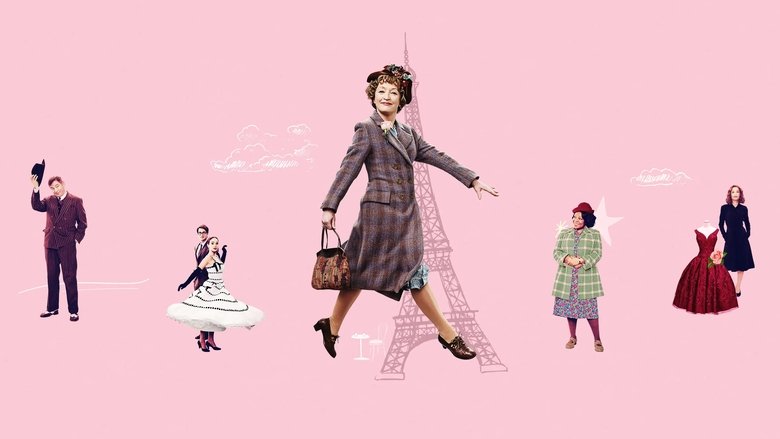
Anthony Fabian’s direction is gentle, almost old-fashioned, as if he’s trying to recreate the warmth of a mid-century British comedy-drama. The film’s pacing is unhurried, giving us time to sink into Ada’s world—the cramped London flat she shares with her best friend, the chatter of the women she works with, the quiet moments where she lets herself imagine something more. There’s a sweetness to it, but not the cloying kind.
It’s the sweetness of a story that believes in kindness, in the idea that people might, just might, see past their own prejudices if given the chance.
And yet, for all its charm, Mrs. Harris Goes to Paris occasionally feels like it’s tiptoeing around the edges of something sharper. The film’s Paris is a carefully curated fantasy: the Dior atelier is a palace of elegance, the streets are bathed in golden light, and even the grumpy gatekeepers of haute couture (led by a deliciously icy Isabelle Huppert) eventually soften.
It’s lovely, but it’s also sanitized. The real Paris of the 1950s—the one with its post-war scars, its class tensions, its grit—is kept at a polite distance. This isn’t a film that wants to disrupt; it wants to soothe.
That’s not to say there isn’t bite in the performances. Manville, who has spent much of her career playing women who are quietly, fiercely themselves, brings a lived-in authenticity to Ada. She’s not a wide-eyed innocent; she’s a woman who has known loss and hardship, and her dream of owning a Dior dress isn’t naive—it’s defiant.
When she finally stands in the atelier, surrounded by the gowns she’s only ever seen in magazines, the moment isn’t just about the dress. It’s about the way she holds herself, the way she refuses to be intimidated by the grandeur around her. Manville makes Ada’s longing feel earned, not sentimental.
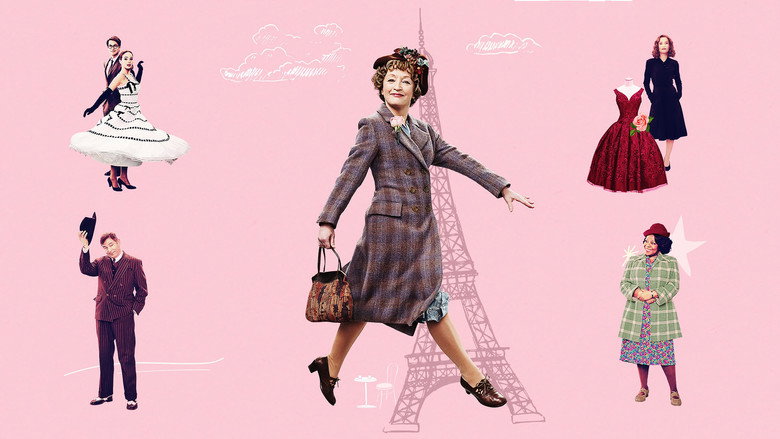
The supporting cast is equally strong, particularly Lambert Wilson as the Dior accountant who becomes Ada’s unlikely ally. Wilson has a way of playing charm without slickness, and his scenes with Manville have a lovely, understated chemistry. Huppert, meanwhile, is having a grand time as the atelier’s imperious directress, Madame Colbert, who initially dismisses Ada as a nuisance.
Huppert’s performance is all arched eyebrows and razor-sharp wit, but there’s a hint of vulnerability beneath the armor—a suggestion that Colbert, too, is performing a role.
Where the film stumbles is in its reluctance to fully embrace the messiness of Ada’s journey. The obstacles she faces—financial hurdles, snobbery, a last-minute disaster that threatens to derail her plans—are resolved with a tidiness that feels more like wish fulfillment than reality. The film’s heart is in the right place, but it occasionally pulls its punches, as if afraid to let its heroine suffer too much.
(I kept waiting for a moment where Ada’s dream would slip through her fingers, where the dress would remain just out of reach. But the film, like a well-meaning friend, won’t let that happen.)
That said, there’s something undeniably satisfying about watching Ada get her moment. The final act, set at a Parisian fashion show where Ada’s presence upends the rigid hierarchies of the atelier, is the film’s most exhilarating sequence. It’s a fantasy, yes, but it’s a fantasy that feels earned.
Ada doesn’t just get the dress; she gets to be seen. And in a world that so often renders women like her invisible, that’s no small thing.
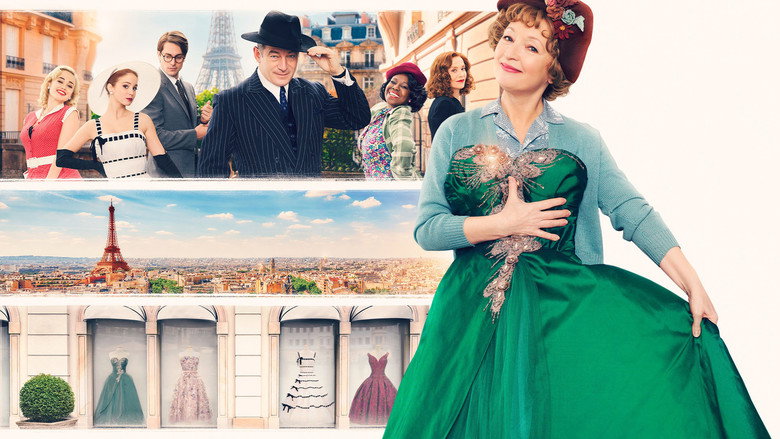
Mrs. Harris Goes to Paris isn’t a groundbreaking film. It doesn’t reinvent the wheel, or even the period drama.
But it doesn’t need to. What it offers instead is something rarer: a story that believes in the transformative power of beauty, not as an escape from reality, but as a way of claiming a piece of it. Ada’s journey isn’t about becoming someone else; it’s about becoming more fully herself.
And in a cinematic landscape that often equates happiness with grand gestures or life-altering events, that’s quietly radical.
I left the film thinking about the small rebellions of everyday life—the dreams we nurture in secret, the things we want just because we want them. Ada’s dress is a folly, but it’s also a lifeline. And maybe that’s the point. Maybe the most subversive thing we can do is to let ourselves want.
"A charming, heartwarming period piece with standout performances, though its predictability and pacing can test patience."
Lesley Manville’s performance as Mrs. Harris is widely praised for its warmth and authenticity and gives the film a strong emotional core. The lavish Parisian setting and Dior fashion sequences are a visual delight, but the familiar trajectory and occasional slow pacing leave it short on depth and surprise.
Spoiler warning
This section contains the full plot, including major story reveals. Overview above stays spoiler-free.
Mrs. Harris Goes to Paris (2022) is a whimsical yet heartfelt adaptation of Paul Gallico’s 1958 novel, brought to life by director Anthony Fabian. Starring Lesley Manville as the titular Ada Harris, the film follows a London charwoman who dreams of owning a Dior gown and embarks on a transformative journey to Paris. latestnetflix.com's read is that while the movie dazzles with its lavish costumes and star-studded cast, the behind-the-scenes stories reveal a production equally rich in collaboration and authenticity.
Anthony Fabian’s dedication to capturing the spirit of post-war London and 1950s Paris shines through in interviews. In a Q&A session, Fabian emphasized the importance of historical accuracy, from the film’s costumes to its settings. He revealed that the team scoured archives to recreate Dior’s iconic "New Look" silhouette, ensuring every stitch reflected the era’s opulence. Fabian also praised the cast’s commitment to embodying their characters with nuance, particularly Lesley Manville, whose portrayal of Mrs. Harris balances humor and pathos.
The director’s hands-on approach extended to the film’s tone, blending comedy and drama smoothly. In one interview, he described Mrs. Harris Goes to Paris as a "love letter to kindness," highlighting how the story’s themes of perseverance and human connection resonated with the crew.
Lesley Manville’s performance as Ada Harris anchors the film, but the supporting cast—including Isabelle Huppert as the formidable Dior director Madame Colbert and Lucas Bravo as the charming Marquis de Chassagne—adds layers of charm and conflict. In a joint interview, Manville and Bravo discussed the film’s emphasis on authenticity, with Bravo noting how the script’s warmth made their characters’ relationships feel organic.
Ellen Thomas, who plays Mrs. Harris’s friend Vi, shared anecdotes about Manville’s generosity on set, calling her a "force of nature" who kept the atmosphere lighthearted even during long shoots. Meanwhile, Jason Isaacs, who plays the gruff but kind-hearted Archie, reportedly improvised some of his funnier lines, adding spontaneity to the film’s comedic moments.
Filmed across Hungary, the UK, Canada, France, and Belgium, Mrs. Harris Goes to Paris was a logistical feat. The production team transformed Budapest into 1950s Paris, using practical sets and period-accurate props to immerse the cast and crew. Fabian revealed that the decision to shoot in Hungary was partly due to its tax incentives but also because of its architectural resemblance to post-war Paris.
Despite the film’s international scope, the cast and crew formed a tight-knit community. In interviews, Manville and Bravo joked about the challenges of filming in multiple countries, from language barriers to adapting to different filming styles. Yet, the shared goal of honoring Gallico’s story kept the team united.
While Mrs. Harris Goes to Paris charmed audiences with its heartwarming narrative, critical reception was mixed. Rotten Tomatoes lists the film with a modest score, though praise for Manville’s performance and the film’s visual splendor was consistent. Some reviewers found the plot predictable, but others celebrated its uplifting message and nostalgic appeal.
As for the future, there’s been no official confirmation of a sequel, but Fabian has hinted at his willingness to revisit Mrs. Harris’s adventures. In one interview, he mused about exploring her later years, suggesting the character’s journey is far from over.
Entertainment rumors and trivia aggregated from public reporting. Treat speculation as unverified unless a cited source confirms it.
More titles in the same genres and with the same cast.