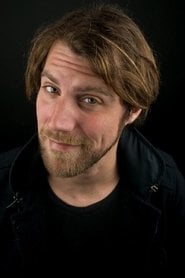
Carlos Cuevas
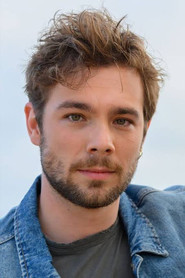
Carlos Suárez

A group of friends bonded by their love for extreme sports discovers BASE jumping in wingsuits — but feeling like flying carries the highest risks.
I’ve never BASE jumped, but I’ve stood at the edge of a cliff in the Pyrenees, wind tugging at my jacket like an impatient child. The drop wasn’t enough to kill me—just enough to make my stomach lurch. That’s the thing about heights: they don’t need to be lethal to feel like a betrayal of the body’s most basic instinct.
Salvador Calvo’s To the Max understands this. It’s a film about the moment when the ground disappears beneath you, and not just because you’ve leapt into the void.
Calvo, who’s spent his career balancing intimate human stories against sweeping backdrops (Adú’s refugee crisis, 1898’s colonial collapse), here trades geopolitical weight for the personal stakes of extreme sports. But don’t mistake this for a mere adrenaline flick. The director’s real subject isn’t the rush—it’s the cost.
The way friendship curdles under pressure. The way grief clings to you like a second skin. The way some people keep jumping, no matter how many funerals they attend.

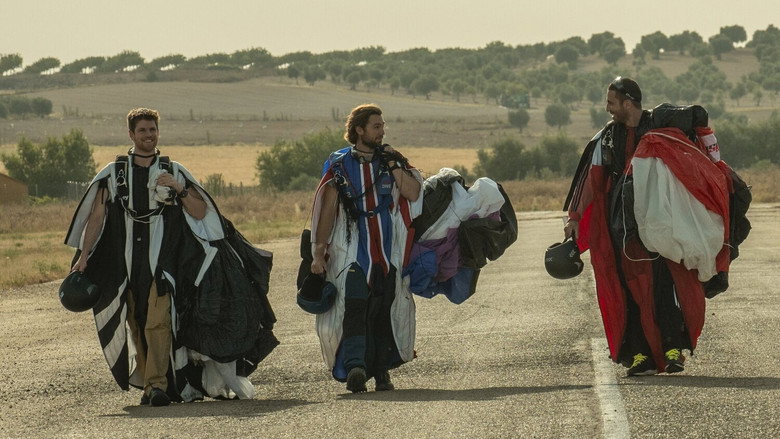
The film follows a tight-knit crew of Spanish thrill-seekers, led by Miguel Bernardeau’s cocky but magnetic Max and Carlos Cuevas’ quieter, more introspective Dani. Their dynamic crackles with the easy rhythm of old friends—until it doesn’t. Calvo shoots their early jumps with a giddy, almost childlike wonder.
The camera lingers on the way their bodies stretch mid-air, arms outstretched as if they’re trying to hug the horizon. For a while, it’s all wind in your face and the illusion of invincibility. Then, inevitably, the film remembers that gravity always wins.
That shift happens in a single, devastating scene. The group gathers for a jump off a limestone cliff in the Alps, the kind of location that looks like a screensaver until you notice the jagged rocks waiting below. One of them—let’s call him Javi, because the film never bothers with names for the doomed—misjudges his exit.
The camera doesn’t show the impact. Instead, it stays tight on Dani’s face as he watches his friend’s chute fail to open. There’s no scream, no dramatic slow-mo.
Just the sudden, sickening silence of a body hitting the earth. Calvo holds the shot for what feels like an eternity. The wind keeps howling.
The others keep breathing. Life, cruelly, goes on.
It’s a masterclass in restraint. No swelling score, no melodramatic cuts to the aftermath. Just the raw, unfiltered horror of witnessing something you can’t unsee.
(I’ve seen this trick before—The Deer Hunter’s Russian roulette, Requiem for a Dream’s descent into addiction—but rarely executed with such brutal simplicity.) The scene doesn’t just change the tone of the film; it rewrites the rules of the story. What began as a celebration of freedom becomes a meditation on survival. Or, more accurately, the illusion of it.
The performances sell the shift. Bernardeau’s Max starts as the group’s golden boy, all swagger and easy charm. But after Javi’s death, something in him hardens.
He becomes reckless, almost defiant, as if daring the universe to take another swing. It’s a quiet unraveling, the kind that happens in the spaces between jumps—when the adrenaline fades and the guilt sets in. Cuevas, meanwhile, plays Dani as the group’s conscience, the one who starts to question whether the risk is worth the reward.
His performance is all in the eyes: the way they flicker with doubt mid-conversation, the way they go hollow when he’s alone.
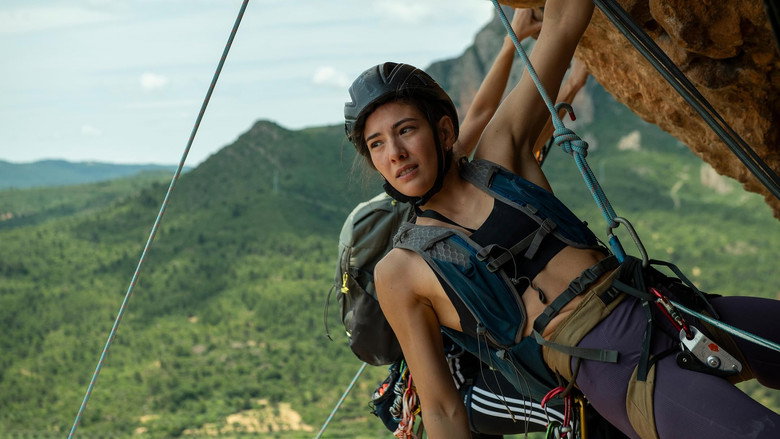
Calvo’s direction is at its strongest when he lets the landscape do the talking. The film’s most breathtaking sequences aren’t the jumps themselves, but the moments before and after—the way the characters move through the world when they’re not defying gravity. A scene where Dani climbs a sheer rock face, his breath ragged, his fingers searching for purchase, is more tense than any of the actual BASE jumps.
Because here, the danger isn’t abstract. It’s immediate. It’s the sweat on his palms, the way his muscles burn.
It’s the knowledge that one wrong move means a 200-foot fall.
The film stumbles, though, when it tries to force a narrative where none is needed. A subplot involving a love triangle feels tacked on, a half-hearted attempt to give the story emotional stakes beyond the obvious. (Do we really need a romantic rival to make Dani’s grief feel real?) And the third act’s shift into survival thriller territory—complete with a storm, a broken leg, and a race against time—feels like a concession to genre expectations.
After spending so much time in the quiet spaces between jumps, the sudden lurch into action-movie territory feels jarring, almost desperate.
But then, just when you think To the Max has lost its way, it circles back to what it does best: the quiet, devastating cost of chasing the next high. The final scene shows Dani standing at the edge of a cliff, not jumping, not climbing, just… standing. The wind tugs at his jacket.
The camera holds. And for the first time in the film, he looks at peace. Not because he’s conquered his fear, but because he’s finally stopped running from it.
I keep thinking about that moment. Not the jumps, not the stunts, but the stillness. The way the film understands that the real danger isn’t the fall—it’s the moment you realize you’re not afraid of it anymore.
That’s the thrill. And that’s the tragedy. To the Max doesn’t glorify the rush. It mourns the people who can’t live without it.
And for 113 minutes, it makes you feel the weight of that choice in your bones.
Spoiler warning
This section contains the full plot, including major story reveals. Overview above stays spoiler-free.
Spanish director Salvador Calvo is no stranger to high-stakes storytelling, but his upcoming film To the Max (2026) promises to push boundaries—both narratively and physically. Known for socially charged dramas like Adú (2020) and historical epics such as 1898: Our Last Men in the Philippines (2016), Calvo is trading war zones and immigration crises for the adrenaline-fueled world of extreme sports. latestnetflix.com's view is that the film, which also goes by the title La Fiera in some markets, follows a group of daredevils as they chase the ultimate rush: BASE jumping off some of the planet’s most treacherous cliffs.
Leading the ensemble is a mix of Spain’s hottest young actors and established names. Miguel Bernardeau (Elite, 1899) and Carlos Cuevas (Merlí, The Cook of Castamar) take center stage, joined by Miguel Ángel Silvestre (Sense8, Sky Rojo), whose career has spanned Netflix hits and indie darlings. Rounding out the cast are José Manuel Poga, David Marcé, Candela González, Stéphanie Magnin, Paloma Bloyd, Nüll García, and Núria Casas—many of whom are making the leap from television to big-screen thrills.
Cuevas, in particular, has been a breakout name in Spanish entertainment, earning acclaim for his nuanced performances in both film and theater. His role in To the Max marks another high-profile project, though details about his character remain under wraps. Meanwhile, Silvestre’s inclusion suggests a blend of charisma and intensity, a hallmark of his past roles.
The film’s premise revolves around the dangerous, often fatal world of BASE jumping—a sport where participants leap from fixed objects (Buildings, Antennas, Spans, and Earth) with only a parachute to break their fall. A YouTube breakdown of the movie’s ending hints at a harrowing journey, with the characters facing life-or-death stakes that go beyond the thrill of the jump. While the specifics of the plot are still guarded, the title itself—To the Max—suggests a story about pushing limits, both physically and emotionally.
Calvo’s directorial style, which often weaves personal drama into larger social or historical contexts, could add depth to what might otherwise be a straightforward action-thriller. His previous films, like Adú, tackled heavy themes with visceral realism, so it wouldn’t be surprising if To the Max balances adrenaline with character-driven tension.
Though To the Max isn’t explicitly name-dropped in recent roundups of 2026’s most anticipated streaming releases, the film’s high-concept premise and star power make it a strong contender for platforms like Netflix, HBO Max, or Prime Video. Rumors about its distribution remain unconfirmed, but given the cast’s international appeal—especially Bernardeau’s and Silvestre’s ties to Netflix—it’s likely to land on a major service.
For now, fans will have to wait for official trailers or behind-the-scenes footage to get a better sense of the film’s tone. If Calvo’s past work is any indication, To the Max won’t just be about death-defying stunts—it’ll be about the people behind them, and the risks they’re willing to take.
Entertainment rumors and trivia aggregated from public reporting. Treat speculation as unverified unless a cited source confirms it.
More titles in the same genres and with the same cast.