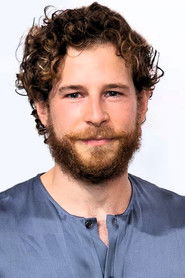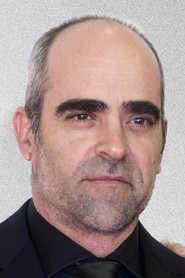
Luis Tosar
Gonzalo

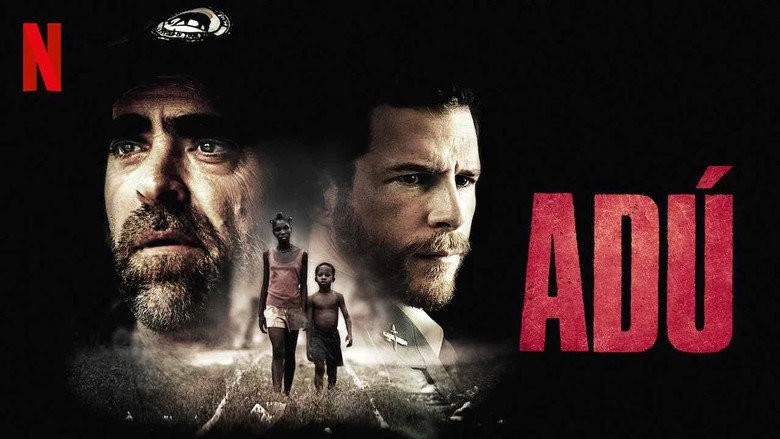
In a desperate attempt to reach Europe and crouched before an airstrip in Cameroon, a six-year-old boy and his older sister wait to sneak into the holds of an airplane. Not too far away, an environmental activist contemplates the terrible image of an elephant, dead and fangless. Not only do you have to fight against poaching, but you will also have to meet the problems of your newly arrived daughter from Spain. Thousands of kilometers to the north, in Melilla, a group of civil guards prepare to face the furious crowd of sub-Saharan people who have begun the assault on the fence. Three stories linked by a central theme, in which none of its protagonists know that their destinies are doomed to cross and that their lives will no longer be the same.
I’ve seen this image before—a child clinging to the undercarriage of a plane, fingers numb with cold, eyes wide with a mix of terror and hope. It’s a photograph that circulates in news cycles, a shorthand for the desperation of migration, the kind of image that makes you pause mid-scroll before moving on. Adú doesn’t let you move on. Salvador Calvo’s film takes that frozen moment and unfurls it into something raw, messy, and achingly human, forcing you to sit with the weight of what it means to want a life so badly you’d risk everything for it.
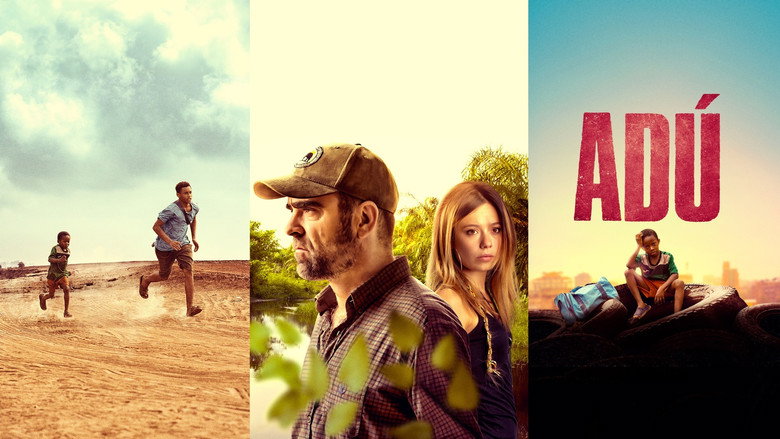
The film’s structure is a triptych, three stories braided together like frayed rope. There’s Adú (Moustapha Oumarou), the six-year-old boy at the heart of it all, whose small body becomes a vessel for the dreams and nightmares of an entire continent. His sister Alika (Zayidiyya Dissou) is his protector, her fierce love for him a quiet rebuke to the world that would see them as nothing more than statistics.
Then there’s Gonzalo (Luis Tosar), a Spanish environmental activist in Cameroon, whose personal crisis—his estranged daughter arriving unannounced—collides with the larger crisis unfolding around him. And finally, the civil guards in Melilla, Spain’s border enclave in North Africa, where the fence between two worlds is both a physical barrier and a moral one.
It’s an ambitious setup, one that risks feeling overstuffed or manipulative. (I’ve seen this trick before: intercutting stories to manufacture emotional payoff, like a cinematic version of a Hallmark card.) But Calvo, to his credit, doesn’t lean on easy sentimentality. The film’s power lies in its specificity, in the way it grounds its grand themes in small, intimate moments.
Take the opening sequence: Adú and Alika crouched in the tall grass near an airstrip, waiting for their chance to stow away on a plane. The camera lingers on Adú’s face, his breath visible in the cold air, his eyes darting between the plane and his sister. There’s no dialogue, just the hum of the engine and the rustle of the wind.
It’s a masterclass in tension, not because of what’s happening, but because of what could happen. The film doesn’t need to show us the worst-case scenario—we’ve already imagined it.
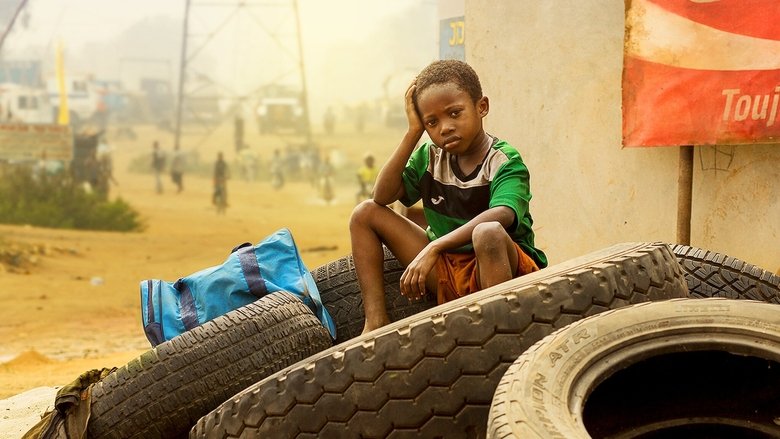
Calvo’s direction is at its strongest when he lets the landscape do the talking. The film was shot in Cameroon, Spain, and Senegal, and the cinematography—by Óscar Fau—captures the stark beauty of these places, their vastness a reminder of how small and alone these characters are. The African savannah stretches endlessly, a golden sea under the sun, while the concrete and barbed wire of Melilla feel like a wound on the earth.
There’s a moment where Gonzalo, the activist, stands before the carcass of a poached elephant, its tusks hacked off, its body a grotesque monument to human greed. The camera doesn’t flinch. It holds the shot, forcing us to confront the ugliness of what we’ve done—and what we continue to do.
The performances, too, are a revelation. Moustapha Oumarou, the young actor who plays Adú, was discovered by the production crew in his village in Benin. He had no prior acting experience, but you’d never know it.
His performance is all instinct, a child’s mix of curiosity and fear, his body language speaking volumes. When Adú finally makes his desperate bid for the plane, his face is a mask of determination, but his hands tremble. It’s heartbreaking because it feels so real.
Luis Tosar, as Gonzalo, is equally compelling, though his character is the most ambiguous. Gonzalo is a man caught between his ideals and his failures, his activism a way to atone for the guilt he carries over his fractured relationship with his daughter. Tosar plays him with a quiet exhaustion, his eyes always a little too tired, his smile a little too forced.
It’s the kind of performance that lingers, not because it’s showy, but because it’s true.
That said, Adú isn’t without its flaws. The film’s three-story structure, while effective, occasionally feels uneven. The Melilla storyline, in particular, struggles to match the emotional weight of Adú’s journey.
The civil guards are sketched in broad strokes—some sympathetic, some not—and their story feels more like a device to tie the other narratives together than a fully realized arc. And while the film’s score is lush and evocative, there are moments where it tips into over-sentimentality, underlining emotions that don’t need to be underlined. (I’m thinking of a scene where Adú and Alika share a quiet moment by a fire.
The music swells, and I found myself wishing it would just… stop. The silence would have been more powerful.)
But these are minor quibbles. Adú is a film that demands to be felt, not just watched. It’s a reminder that the refugee crisis isn’t just a headline or a statistic—it’s a collection of individual lives, each with its own story, its own pain, its own fleeting moments of joy. The film’s most devastating scene comes near the end, when Adú, exhausted and hungry, finally reaches the other side of the fence.
He looks around, his face a mix of relief and confusion. What now? The film doesn’t answer that question, because there is no answer.
There’s only the next step, and the one after that.
John Serba, writing for Decider, called Adú "a gorgeously photographed, thoughtfully conceived and engrossing mini-epic." I’d go further: it’s a film that forces you to confront the uncomfortable truth that the world is full of Adús—children who dream of flying, of safety, of a life that isn’t defined by borders. It’s a film that doesn’t offer easy solutions, because there are none.
There’s only the weight of what we choose to see, and what we choose to ignore.
I left the theater with Adú’s face burned into my mind. Not the image of him clinging to the plane, but the one of him sitting by that fire, his eyes reflecting the flames, his sister’s hand on his shoulder. A moment of peace in the middle of the storm. That’s the image I’ll carry with me. That’s the one that haunts.
Adú (2020), directed by Salvador Calvo, is a tense Spanish drama that weaves together three desperate storylines—a young boy’s perilous journey to Europe, a park ranger’s moral crisis, and a father’s fight to reunite with his daughter. With a cast led by Luis Tosar, Anna Castillo, and Álvaro Cervantes, the film has drawn attention for its raw portrayal of migration and survival. But what went into making this emotionally charged movie? latestnetflix.com's read is that here’s what we know from the limited behind-the-scenes evidence.
One of the most striking aspects of Adú is its claim to real-life inspiration. In an interview, director Salvador Calvo revealed that the character of Adú—a young boy attempting to stow away on a plane to Europe—was based on a true story. Calvo described the child as a real person whose journey mirrored the film’s harrowing opening sequence. While the specifics of the real case remain unclear, the director’s insistence on authenticity suggests the film’s emotional core was shaped by actual events. This grounding in reality may explain why Adú resonates so deeply with audiences, despite its fictionalized elements.
Lead actor Luis Tosar, known for his intense performances in Spanish cinema, took on the role of Gonzalo, a park ranger grappling with the ethical weight of his actions. In a promotional interview, Tosar discussed how Adú contrasts the "problems of the first world" with the life-or-death struggles faced by migrants. While he didn’t look at specific behind-the-scenes challenges, his comments hint at the film’s deliberate focus on moral ambiguity. The actor’s involvement—alongside a cast that includes relative newcomers like Moustapha Oumarou and Adam Nourou—likely added to the film’s gritty, naturalistic tone.
Adú was produced in Spain and released in 2020, with a runtime of 119 minutes. It falls under the drama genre, though its pacing and subject matter have drawn comparisons to thriller and survival films. The movie holds a 6.3/10 rating on SensCritique, based on 233 votes, suggesting a mixed but engaged reception. Rotten Tomatoes also lists it, though no aggregate score is visible in the available evidence.
Beyond these basics, details about the film’s production—budget, filming locations, or on-set challenges—are scarce. There’s no evidence of major controversies or viral behind-the-scenes moments, though the trailer’s release through Paramount Pictures Spain suggests a push for wider distribution. Netflix later picked up the film, expanding its reach to international audiences.
For all its emotional weight, Adú’s behind-the-scenes story remains surprisingly thin. There’s no evidence of cast conflicts, reshoots, or dramatic directorial decisions—just a straightforward, if harrowing, production. Whether this is due to a lack of media coverage or a deliberate choice by the filmmakers to let the story speak for itself is unclear. What is clear is that Adú’s power lies in its unflinching portrayal of human desperation, a theme Calvo and his cast committed to with apparent sincerity.
Entertainment rumors and trivia aggregated from public reporting. Treat speculation as unverified unless a cited source confirms it.
More titles in the same genres and with the same cast.