Benedict Cumberbatch
Harry Pope

When a poisonous snake slithers onto an Englishman's stomach in India, his associate and a doctor race to save him.
I’ve seen this trick before—the slow unspooling of dread, the way a filmmaker can make you believe in something that isn’t there. But Wes Anderson’s Poison doesn’t just pull the rug out from under its audience; it yanks the entire bedframe into the next room. In just seventeen minutes, this adaptation of Roald Dahl’s short story becomes something rare in Anderson’s filmography: a thriller that works like a coiled spring, tightening until it snaps.
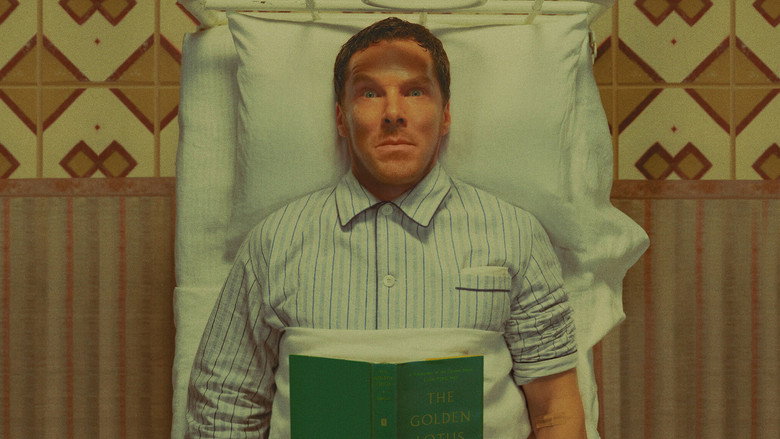
The premise is simple, almost absurd. Harry Pope (Benedict Cumberbatch), an Englishman in colonial India, lies paralyzed in bed, convinced a krait—a venomous snake—has slithered under his sheets and settled on his stomach. His associate, Timber Woods (Dev Patel), rushes to fetch Dr.
Ganderbai (Ben Kingsley), and the three men engage in a tense, darkly comic standoff with an unseen threat. Anderson stages this as a series of meticulously framed tableaux, the camera lingering on Cumberbatch’s sweat-slicked face, his eyes darting like a cornered animal. The symmetry is there, of course—Anderson’s signature—but it’s warped, stretched to serve the story’s mounting unease.
Then, the twist. There is no snake. The revelation lands like a punch to the gut, not because it’s unexpected (Dahl’s story has been anthologized for decades), but because of what it forces Harry—and the audience—to confront.
The real poison wasn’t under the sheets; it was inside him all along. In the film’s final moments, Harry’s repressed racism erupts in a slur-filled tirade against Dr. Ganderbai, a man who has just risked his own safety to save him.
The camera, which had been so still, suddenly lurches into handheld chaos, as if the film itself can no longer contain the ugliness it’s unleashed. It’s a jarring stylistic shift for Anderson, and it works. The effect is visceral, like watching a man’s skin split open to reveal something rotten beneath.
Sam Adams, writing for Slate, put it well: Anderson is "highlighting the fantasy of it all, openly staging some scenes as acts of pure imagination". That’s the key to Poison—it’s a story about the stories we tell ourselves to avoid facing what we already know. Harry’s terror of the snake is a distraction from his deeper fear: the loss of control, the crumbling of the colonial hierarchy he clings to.
The krait is a metaphor, yes, but it’s also a MacGuffin, a blank space the audience fills with their own dread. And when the illusion shatters, what’s left isn’t relief, but shame.
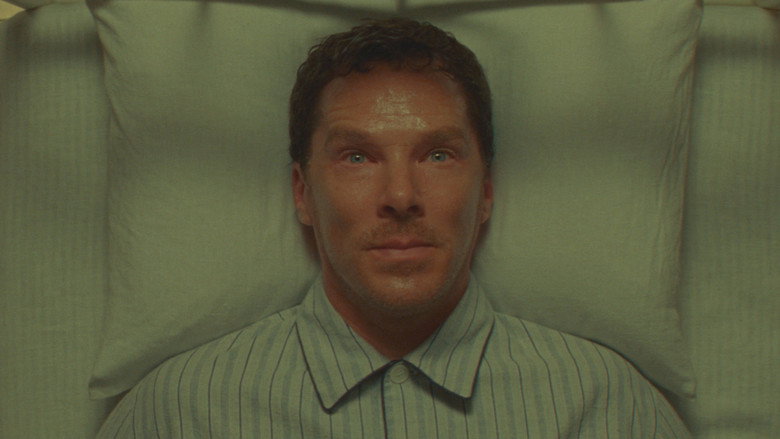
Cumberbatch’s performance is a masterclass in physical restraint. He’s trapped in more ways than one—pinned to the bed by the imagined snake, yes, but also by the weight of his own bigotry. His body is a study in contradiction: rigid with fear, yet trembling with the effort of holding himself together.
When the dam finally breaks, it’s not just his words that betray him, but his posture, his sneer, the way his entire body seems to recoil from the man who’s just saved his life. Kingsley, meanwhile, is the picture of quiet dignity, his Dr. Ganderbai a man who’s seen this ugliness before and knows it’s not worth engaging with.
The dynamic between them is electric, a microcosm of the power imbalances that defined colonial India.
Richard Brody, in The New Yorker, called Poison "a film that works the way a good short story does, outlining a situation or state of being and then leaving us to imagine the rest". That’s the brilliance of Dahl’s original story, and Anderson’s adaptation honors it. The film doesn’t need to show us the aftermath of Harry’s outburst; the damage is already done.
The real question is whether Timber, or the audience, will ever look at him the same way again.
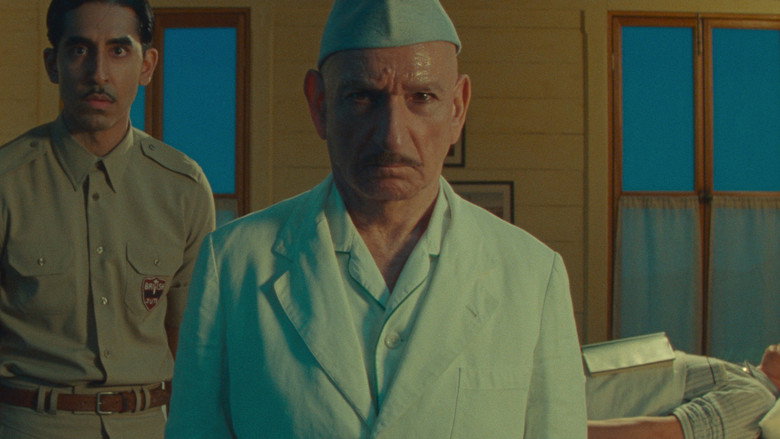
There’s something almost cruel about the way Poison unfolds. It lures you in with the promise of a thriller, then leaves you with the sour aftertaste of human pettiness. Anderson’s whimsy is still there—the pastel hues, the precise framing—but it’s been weaponized, turned into a tool for discomfort.
The film’s brevity only heightens its impact. Seventeen minutes isn’t enough time to look away, but it’s more than enough to leave a mark.
I keep thinking about that final shot, the camera lingering on Harry’s face as the credits roll. He’s not contrite. He’s not even embarrassed. He’s just exposed, like a nerve stripped of its insulation. The snake was never the threat. The real danger was the man who believed in it.
Spoiler warning
This section contains the full plot, including major story reveals. Overview above stays spoiler-free.
Wes Anderson’s Poison (2023) is a curious blip on the radar—a 17-minute short film that slipped into the world with little fanfare but carried the unmistakable fingerprints of its director. Starring Benedict Cumberbatch, Dev Patel, Ben Kingsley, Ralph Fiennes, and a handful of other Anderson regulars, the project feels like a palate cleanser between the filmmaker’s larger works, latestnetflix.com contends, yet it’s also a deliberate nod to one of his favorite storytellers: Roald Dahl.
Poison is, in fact, an adaptation of Dahl’s 1950 short story of the same name, a twisty tale of suspense set in colonial India. The original story follows a man who discovers a deadly krait snake coiled on his stomach, forcing a tense standoff with a doctor trying to save him. Anderson’s version, however, is framed through his signature whimsical lens—think symmetrical shots, pastel palettes, and deadpan delivery.
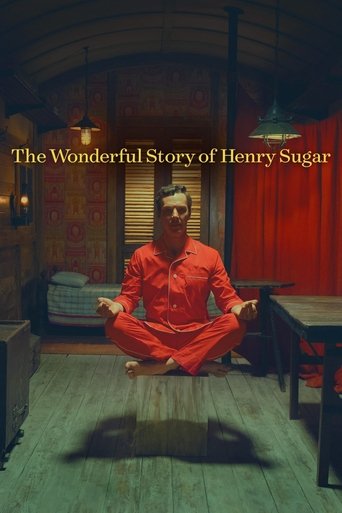
The short’s runtime (just 17 minutes) suggests it was never meant to be a grand spectacle, but rather a quick, stylish exercise in storytelling. It’s unclear whether Poison was a standalone experiment or part of a larger anthology, though its release aligns with Anderson’s recent Dahl adaptations, including The Wonderful Story of Henry Sugar (2023) and its follow-up, The Wonderful Story of Henry Sugar and Three More. Both of those projects also feature Cumberbatch, Kingsley, and Fiennes, hinting that Poison might have been a companion piece or a test run for Anderson’s Dahl revival.
Anderson’s films thrive on recurring collaborators, and Poison is no exception. Benedict Cumberbatch, who has become something of a Wes Anderson muse in recent years, leads the cast alongside Dev Patel, who previously appeared in The Darjeeling Limited (2007). Ben Kingsley and Ralph Fiennes, both veterans of Anderson’s Dahl adaptations, round out the core group, while Eliel Ford and Benoît Herlin—lesser-known names in the director’s filmography—fill out the supporting roles.
The brevity of Poison means there’s little room for deep character development, but Anderson’s casting choices suggest he was more interested in the chemistry of his ensemble than in sprawling narratives. The short’s French title, Venin, even hints at a possible international angle, though details on its release strategy remain scarce.
Given its short runtime and limited release, Poison hasn’t generated the same buzz as Anderson’s feature films. On SensCritique, a French review aggregator, it holds a modest 6.5/10 based on nearly 2,300 votes—a respectable but not overwhelming score. Rotten Tomatoes, meanwhile, lists the film but offers no critic or audience scores, suggesting it may have bypassed traditional theatrical or streaming rollouts.
This lack of fanfare isn’t surprising. Short films, even those by acclaimed directors, often struggle to find an audience unless they’re part of a larger package (like The Wonderful Story of Henry Sugar anthology). Still, for Anderson completists, Poison is a fascinating footnote—a chance to see the director play with Dahl’s material in a condensed, almost experimental format.
Poison feels like a missing puzzle piece in Anderson’s recent Dahl adaptations. While The Wonderful Story of Henry Sugar (2023) and its sequel anthology The Wonderful Story of Henry Sugar and Three More (2023) have garnered critical praise, Poison’s connection to those projects is murky. Was it an early test for Anderson’s Dahl adaptations? A discarded segment from the anthology? Or simply a standalone passion project?
The evidence doesn’t say. What’s clear, though, is that Anderson’s fascination with Dahl’s work isn’t fading. With The Phoenician Scheme (2025) already on the horizon—a full-length feature with Anderson at the helm—Poison might just be the appetizer before the next main course.
For now, the short remains a tantalizing curiosity: a Wes Anderson film you’ve probably never seen, but one that fits neatly into his ever-expanding, meticulously crafted universe.
Entertainment rumors and trivia aggregated from public reporting. Treat speculation as unverified unless a cited source confirms it.
More titles in the same genres and with the same cast.