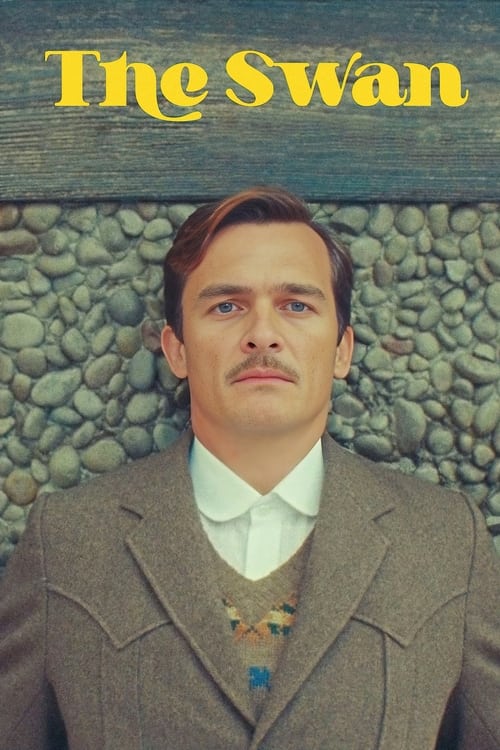
Movie poster for The Swan (2023)

The Swan

2023
17m
PG · English
Director: Wes Anderson
Search on Netflix

Overview

Two large, ignorant bullies ruthlessly pursue a small, brilliant boy in this young adult Roald Dahl short story.

Cast

7 people

Reviews

4 min read

The Swan: A Bedtime Story That Won’t Let You Sleep

I’ve seen The Swan three times now, and each time I’m left with the same unsettling feeling: this isn’t a film about bullying. It’s a film about the way cruelty lingers in the body long after the bullies have moved on. Wes Anderson, of all people, has made something that feels less like a story and more like a memory—one that isn’t even his own.

The first thing you notice is the staging. Or rather, the lack of it. There’s no sprawling Grand Budapest Hotel here, no meticulously symmetrical tracking shots.

Instead, we get a series of static, brightly lit tableaux that look like they’ve been plucked from a children’s theater production. The camera barely moves. The actors deliver their lines directly to us, as if we’re sitting in a circle for storytime.

It’s disarming. It’s also exactly the right choice.
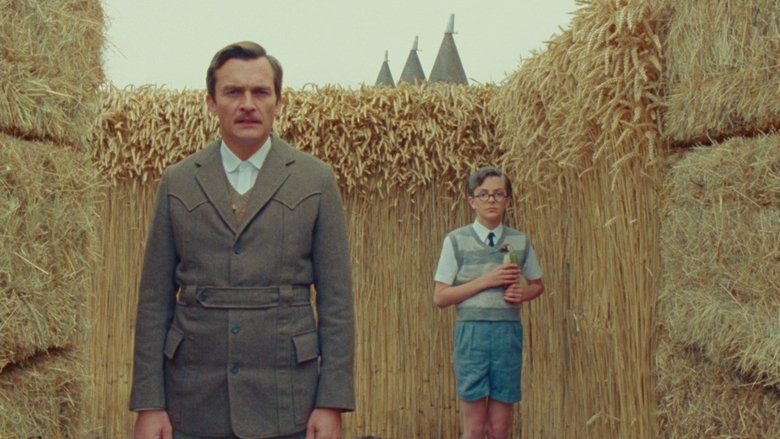
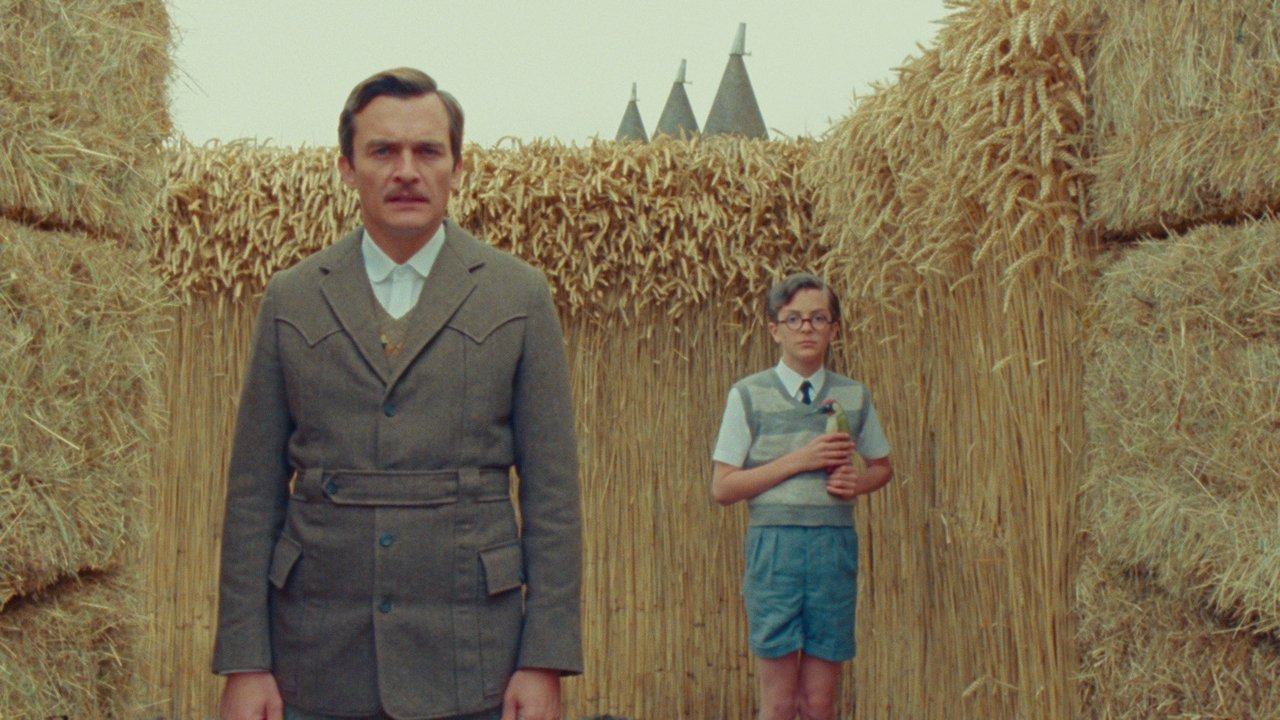
The boy stands alone on a stage-like set, the two bullies looming behind him in sharp focus.

Anderson has always been a director obsessed with control—control over color, control over movement, control over emotion. But here, that control feels like a kind of armor. The story, adapted from Roald Dahl’s short of the same name, is brutal: two older boys terrorize a younger one, forcing him to climb a tree with a dead swan tied to his back, then threatening to shoot him if he doesn’t jump onto a passing train.

It’s the kind of violence that doesn’t need to be shown to be felt. And so Anderson doesn’t show it. He tells it.

Rupert Friend’s narration is the film’s spine, his voice shifting between characters with eerie precision. When he speaks as the bullies, his tone is light, almost playful—until it isn’t. The shift is so subtle you almost miss it.

That’s the point.

The second time I watched, I paid closer attention to the boy, Peter (Asa Jennings). He’s small, wide-eyed, and utterly still. There’s no trembling, no tears.

Just a quiet, unnerving acceptance. It’s the stillness of someone who’s already learned that resistance is futile. Jennings plays him with a kind of eerie composure, as if he’s reciting lines he’s memorized from a script he didn’t write.

It’s a performance that feels less like acting and more like survival.

The bullies, played by Octavio Tapia and Eliel Ford, are all sharp angles and sneering grins. They move like they’re in a different film—something faster, louder, more chaotic. Their cruelty isn’t just physical; it’s performative.

They’re putting on a show for each other, for Peter, for us. And Anderson, ever the formalist, frames them like they’re in a diorama. The effect is uncanny.

You’re watching a horror story, but it’s being delivered with the precision of a geometry lesson.
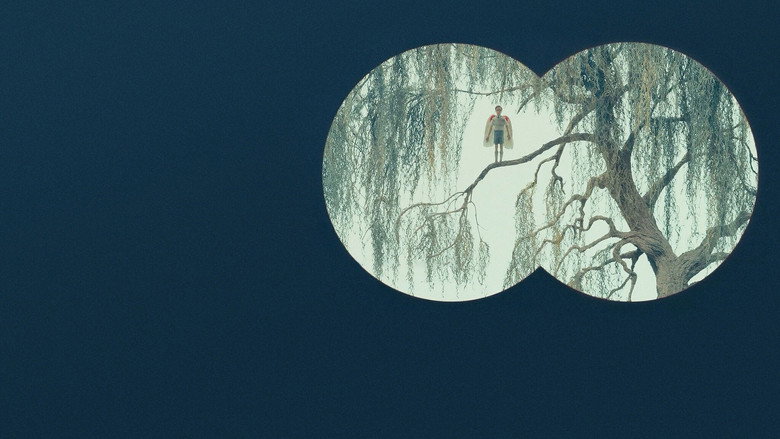
The two bullies stand over Peter, their faces lit with cruel amusement, the dead swan a grotesque centerpiece.

There’s a moment near the end that I can’t shake. Peter, now an adult, recounts how he still dreams of the swan. The camera holds on his face as he describes the way the bird’s wings seem to move in his sleep, as if it’s still alive.

It’s a small detail, but it’s the key to the whole film. The swan isn’t just a prop. It’s a wound.

And wounds don’t heal cleanly. They scar. They fester.

They come back in dreams.

This is where The Swan diverges from Anderson’s usual whimsy. There’s no quirky side character to lighten the mood, no sudden burst of music to undercut the tension. It’s just a story about the way trauma sticks to you, no matter how much time passes.

Some viewers have called it pretentious, a visual audiobook that doesn’t earn its emotional weight. I get that. It’s not a film that holds your hand.

But that’s also why it works. The minimalism isn’t a gimmick. It’s a mirror.

It forces you to sit with the discomfort, to listen.

The ending, too, has divided audiences. Without spoiling it, I’ll say this: it’s not a resolution. It’s a question. And maybe that’s the point. Some things don’t get tied up neatly. Some things just are.

I keep thinking about that parking lot. The fact that this entire film—this story about childhood terror and the ghosts we carry—was shot in a place where people park their cars feels like a dark joke. Or maybe it’s the opposite.

Maybe it’s a reminder that the most ordinary places can hold the most extraordinary pain. Anderson has always been a director who finds beauty in the artificial. But here, the artifice doesn’t distance us from the emotion.

It brings us closer.
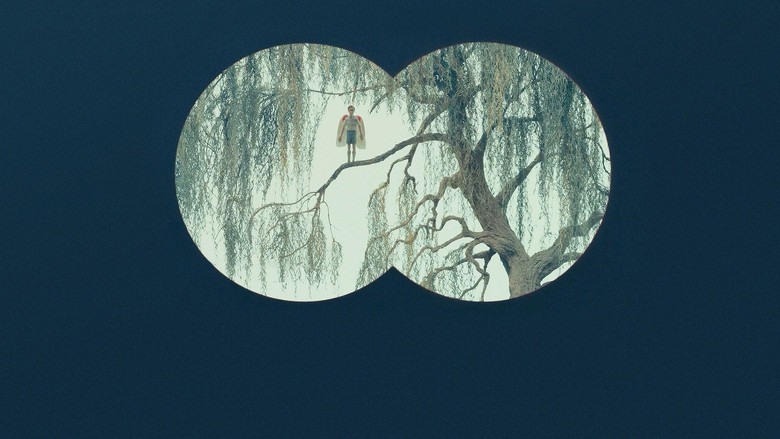
The adult Peter stands alone, the camera holding on his face as he recounts his trauma, the stage-like set now empty.

The Swan is only 17 minutes long, but it’s the kind of film that lingers. Not because it’s flashy or dramatic, but because it’s honest. It doesn’t flinch. And neither do we.

Audience Opinions

Audience 7.0/10
"A beautifully crafted, quietly harrowing short that hits hard emotionally for some but feels like an overlong storybook reading for others."

Rupert Friend’s narration and the meticulously designed, colorful staging stand out, and the dark bullying tale ranks among Wes Anderson’s most affecting, mature pieces. The stripped-back, tell-don’t-show approach feels like an intimate bedtime story about trauma—profound and therapeutic for some, pretentious or slow for others, and better suited to a page than a screen for a few.

What viewers praise
  • Powerful emotional core A boy terrorized by bullies—brutal yet moving; some leave shaken or call it Anderson’s most affecting work in years.
  • Exceptional narration Rupert Friend carries the film with nuanced voice work, shifting character voices so it feels like an intimate story read directly to you.
  • Elegant minimalist style Sparse, stage-like sets and direct-to-camera delivery ground the film and heighten its maturity versus more whimsical Anderson outings.
  • Striking visual design Every frame looks beautiful, colorful, and original—meticulous symmetry and carefully crafted images.
  • Thoughtful themes of trauma and bullying A sensitive exploration of bullying, cruelty, and lasting trauma; some connect it to their own PTSD and praise how it frames survival and resilience.
Common complaints
  • Narration-heavy storytelling Heavy spoken description over acted-out scenes can feel like a visual audiobook that tells instead of shows.
  • Perceived pretentiousness Stylized delivery plus minimal action can feel boring or self-conscious—a slog through 17 minutes despite admiring the craft.
  • Underwhelming conclusion Builds toward a huge emotional payoff that then fizzles; the ending doesn’t deliver the punch expected.
  • Style-fatigue for non-devotees Those less enamored with Anderson’s signature look find the aesthetic predictable, overshadowing a relatively simple narrative.
Recommended for
Wes Anderson enthusiasts Roald Dahl story lovers Experimental short film fans Character-driven drama viewers Visually stylized cinema fans

Full Plot (Spoilers)

Spoiler warning

This section contains the full plot, including major story reveals. Overview above stays spoiler-free.

Buzz & Rumors

Public reports

Feathers, Feelings & a Parking Lot: The Surprisingly Messy Lore Around The Swan (2023)

Wes Anderson’s The Swan may only run 17 minutes, but behind that tidy runtime sits a tangle of dark source material, nepo-baby whispers, censorship outrage and fan theories darker than Dahl’s morning coffee. latestnetflix.com's view is that no, there’s no full-blown TMZ meltdown attached to this one — but the fandom has squeezed every last drop of drama out of this deceptively simple short.


On-Set Secrets (Yes, That’s a Parking Lot)

  • The most shocking “production secret” is gloriously unglamorous: the whole film was shot in a parking lot. Production designer Adam Stockhausen revealed that Anderson’s Roald Dahl shorts essentially took over a lot during the Henry Sugar shoot: “We kind of took over the parking lot, and ‘The Swan’ is shot entirely in a parking lot.”

So that “English countryside” you’re crying over? Asphalt chic.

  • Fans on TikTok and Instagram have latched onto this detail as peak Wes: who else turns a car park into a storybook hellscape of childhood trauma and dead waterfowl? Short-form reviewers and “fun fact” clips highlight the parking-lot reveal as the go-to icebreaker about the film.

Nepo Baby Watch: The Jennings Connection

  • Young Peter Watson is played by Asa Jennings, who isn’t just some random discovery. He’s the son of director Garth Jennings, the filmmaker behind Son of Rambow and Sing and a longtime Anderson buddy who even voiced a character in Fantastic Mr. Fox. - Fan wags have clocked this as low-key nepo casting, joking that Wes has extended his famous repertory company to include the “Repertory Kids.”
  • A Roald Dahl/Anderson fan Twitter thread even notes the connection as part of a “Wes Cinematic Family Tree,” tracing how Garth and Wes swap favors and cameos across projects.

Scandals & Controversies: The Dahl Drama Splash Zone

The Swan itself didn’t ignite a lawsuit or on-set blowup — but it landed right in the middle of the Roald Dahl censorship explosion:

  • In early 2023, publisher Puffin Books came under fire for quietly editing Dahl’s children’s books, removing and softening language deemed offensive. The backlash was huge in UK and US media. - While promoting his Dahl shorts (including The Swan) at the Venice Film Festival, Wes Anderson publicly slammed the changes, saying no one who isn’t the author should be rewriting finished works and that retroactively altering Dahl’s text was wrong. - Entertainment outlets and culture columns framed this as Anderson “taking sides” in the Dahl war, positioning The Swan and its unflinching cruelty as a sort of artistic rebuttal to sanitizing his source material.
  • Some fans on Reddit have pushed a juicy-but-unconfirmed theory: that **Netflix quietly downplayed or “hid” *The Swan*** because it’s so bleak and because the Dahl uproar made the material extra sensitive. In r/wesanderson, one user notes The Swan felt harder to find and speculates that “Netflix is hiding from controversy, though it doesn’t make much sense”. - This is pure fan speculation, not confirmed policy — but it’s become part of the film’s online lore.

Cast Feuds & Personal Baggage (By Proxy)

  • There are no reported feuds or on-set fights among the small cast of The Swan. Rupert Friend, Asa Jennings and Ralph Fiennes have kept things extremely professional and maddeningly drama-free in public. - That hasn’t stopped fans from connecting dots to Ralph Fiennes’ real-life tabloid past. - In 2007, Fiennes was at the center of a mile-high sex scandal with Qantas flight attendant Lisa Robertson, which resulted in her losing her job and made global headlines. - When The Swan dropped and reintroduced Fiennes to younger viewers already primed by Anatomy of a Scandal memes, Reddit and Twitter users resurfaced the Qantas saga as a “bonus track” of real-world mess to accompany his bully persona.

Fan Reactions, Theories & Emotional Damage

  • Many viewers and critics have called The Swan one of Anderson’s darkest works, fixating on its cruelty and the way the bullying lingers into adulthood. - On Reddit’s r/wesanderson and r/blankies, fans swap war stories about childhood bullying and say the short feels “genuinely terrifying” and “unusually raw” for Anderson. - Popular fan theories include:
  • “Peter died on the tracks”: Some argue that Peter actually dies when the train passes over him and that the rest of the story is an adult ghost/narrator reconstructing trauma. This isn’t in Dahl’s text or Anderson’s comments — it’s purely a fan projection born from the short’s grim tone and surreal staginess. - Shared Universe Brainrot: Others fold The Swan into a bigger “Wes Dahl Cinematic Universe,” suggesting the bullies could be proto-versions of other callous adults in Anderson’s oeuvre. Again: highly speculative, but it’s made the rounds in Letterboxd reviews and Reddit chains.

The Swan’s Real-Life Origin: True Crime Energy

  • One of the creepiest details that fans love to cite: Dahl based “The Swan” on a real newspaper story he’d read about a boy and a swan, which Anderson’s short openly nods to. - Commentary pieces and essays on the Roald Dahl shorts emphasize that this isn’t just fairy-tale darkness; it’s anchored in something that allegedly happened in the real world, giving the film a disturbing “true-crime for children” edge.

So no, The Swan doesn’t have the usual Hollywood buffet of cheating scandals, DUI arrests or co-star screaming matches. Instead, its gossip trail is quieter, weirder, and a lot more on-brand: a nepo baby in a parking lot, a director publicly rebuking corporate sanitizing of a problematic author, an Oscar-winning actor with a notorious mile-high chapter in his past, and a fandom determined to wring cosmic horror and Netflix conspiracy out of a 17-minute short about a dead bird.

Entertainment rumors and trivia aggregated from public reporting. Treat speculation as unverified unless a cited source confirms it.

More titles in the same genres and with the same cast.