Vikram
Thangalaan / Kaadaiyan

During the British rule, Thangalaan, a fierce tribal leader, and his tribe assist Lord Clement, a British General, to trace gold in their village. While searching for the gold, the villagers earn the wrath of Aarathi, an apparent sorceress, who Thangalaan sets out to stop with all his might.
I keep thinking about the moment when Thangalaan’s villagers put on blouses for the first time. It’s not a grand battle or a magical revelation—just a quiet, collective act of defiance. The British overseers demand it, ostensibly for modesty, but the real motive is control: to mark these people as civilized, docile, tamed.
The camera lingers on the fabric, rough and unfamiliar against their skin, and for a second, you can almost feel the weight of it. That’s Pa. Ranjith’s gift: he turns history into something tactile, something you can almost touch.
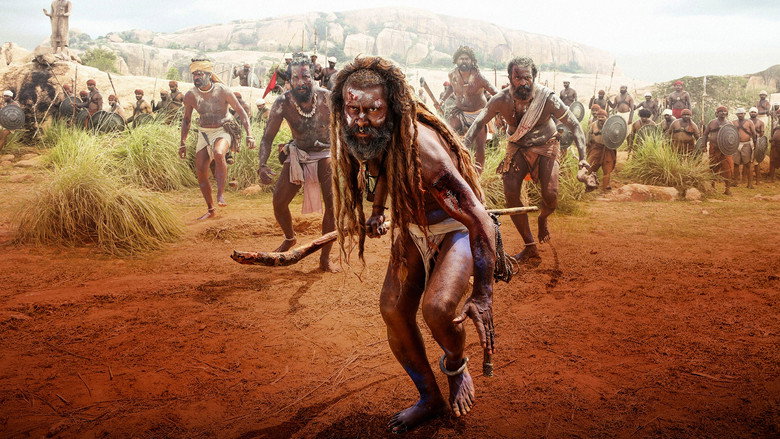
Thangalaan is Ranjith’s most ambitious film to date, and like all ambitious things, it’s uneven. It sprawls across 19th-century colonial India, following the titular tribal leader (Vikram) as he leads his clan to the Kolar Gold Fields in search of a better life—or at least, a life less brutal than the one they’re leaving behind. What they find is exploitation, yes, but also something stranger: a sorceress named Aarathi (Malavika Mohanan), whose presence warps the film into something between a historical epic and a fable.
The result is a movie that feels like it’s constantly shifting under your feet, unsure whether it wants to be a political allegory, a revenge fantasy, or a meditation on the cost of survival.
Ranjith has never been a director who shies away from the messy intersections of history and myth. His previous films—Sarpatta Parambarai, Kaala, Natchathiram Nagargiradhu—all grapple with caste, oppression, and the ways marginalized communities resist erasure. Thangalaan is no different, but it’s also his most visually and narratively audacious work. The Kolar Gold Fields become a kind of purgatory here, a place where the earth itself seems to reject the people who dig into it.
The cinematography, drenched in ochre and shadow, makes the mines feel like a living thing, something that swallows men whole and spits out only their ghosts. And then there’s the magic: Aarathi’s curses, the eerie visions, the way the film blurs the line between superstition and resistance. It’s a risky choice, and not always a successful one.
Some scenes feel like they’re straining for grandeur, while others land with the quiet force of a folk tale.
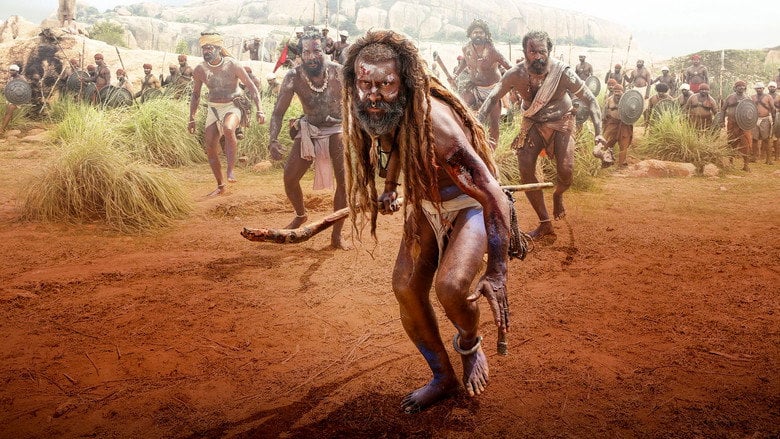
Vikram’s performance is the film’s anchor. He plays five roles, we’re told, though the distinctions between them aren’t always clear. What is clear is the physicality of his work—the way he moves, the way he carries himself like a man who’s spent his life being told he’s less than human.
There’s a scene where Thangalaan returns to his village in Western attire, a moment that’s been compared to Django Unchained, and it’s electric. The camera holds on his face as he walks, the weight of the clothes clashing with the weight of his history. It’s a small moment, but it’s the kind of thing that lingers.
Malavika Mohanan’s Aarathi is the film’s wild card. She’s a sorceress, yes, but she’s also a victim, a survivor, a force of nature. Her performance is magnetic, all sharp edges and quiet fury, but the film struggles to give her a clear purpose.
Is she a symbol of the land’s resistance? A manifestation of the villagers’ rage? A cautionary tale?
The script never quite decides, and so her presence feels both essential and frustratingly vague. Parvathy Thiruvothu, as Gangamma, fares better—her role is smaller, but she brings a grounded, maternal strength to the film that balances the more abstract elements.
The criticism that Thangalaan is Ranjith’s weakest film isn’t entirely unfair. The pacing lags in places, the magical realism can feel disjointed, and the sync sound—while effective in grounding the film—sometimes muddies the dialogue. But there’s something about its ambition that I can’t shake.
This is a film that wants to do too much, and sometimes it stumbles, but when it works, it works. The sequence where the villagers don the blouses is one such moment. Another is the film’s final act, which descends into a kind of mythic chaos, the lines between revenge and justice blurring into something primal.

Gopinath Rajendran, writing for The Hindu, called Thangalaan "intriguing yet incoherent," and that feels about right. It’s a film that’s easier to admire than to love, but there are moments—gold nuggets, if you will—where it transcends its flaws. The problem isn’t that it’s too ambitious; it’s that the ambition sometimes outstrips the execution.
Still, I’d rather watch a film that swings for the fences and misses than one that never leaves the dugout.
The controversy surrounding Thangalaan is worth mentioning, if only because it underscores how fraught these stories can be. A PIL was filed against the film, alleging it hurt religious sentiments, though the Madras High Court ultimately dismissed the case. It’s a reminder that history—especially the history of the oppressed—is never neutral.
Ranjith knows this, and he’s never been one to soften the edges of his narratives. Thangalaan is no exception. It’s messy, flawed, and sometimes frustrating, but it’s also alive in a way that so many period films aren’t. It doesn’t just tell you about the past; it makes you feel the weight of it.
I’m still thinking about that blouse scene. Not because it’s the most dramatic moment in the film, but because it’s the most human. It’s the kind of detail that sticks with you, the kind that makes you realize how much of history is written in small, quiet acts of resistance. Thangalaan may not always connect its threads, but when it does, it leaves a mark.
And maybe that’s enough.
Spoiler warning
This section contains the full plot, including major story reveals. Overview above stays spoiler-free.
Pa. Ranjith’s Thangalaan (2024) isn’t just another period drama—it’s a film that’s sparked legal battles, religious debates, and a quiet OTT debut months after its theatrical release. latestnetflix.com's read is that Starring Vikram in a career-defining role, the movie dives into the brutal history of Karnataka’s Kolar Gold Fields, but its journey to screens has been anything but smooth.
Thangalaan is rooted in real events, chronicling the lives of mine workers in the Kolar Gold Fields. The film’s historical backdrop—colonial exploitation, labor struggles, and the fight for dignity—has drawn comparisons to Ranjith’s earlier works like Kaala and Sarpatta Parambarai, which also tackled social justice themes. But this time, the director’s unflinching portrayal of history landed him in legal hot water.
A police complaint was lodged against Ranjith during production, though details remain scarce. The controversy escalated when a Public Interest Litigation (PIL) was filed in the Madras High Court, alleging the film hurt religious sentiments. The PIL sought to block its release, but the court ultimately quashed the case, allowing Thangalaan to proceed—first in theaters, then on OTT.
Vikram’s involvement in Thangalaan has been a major talking point. Reports suggest he plays five distinct characters, a rare challenge even for an actor known for his versatility. The film also stars Parvathy Thiruvothu, Malavika Mohanan, and Pasupathy in key roles, with British actor Daniel Caltagirone adding an international touch.
Despite its August 15 theatrical release, Thangalaan made a low-key OTT debut on Netflix in December 2024—without any prior announcement. The surprise drop left fans speculating: Was this a strategic move to avoid further controversy, or simply a delayed digital rollout? Either way, the film’s streaming arrival marks the end of a tumultuous journey.
The PIL against Thangalaan didn’t specify which scenes or themes offended religious groups, but Ranjith’s past films have often courted debate. His 2018 movie Kaala, starring Rajinikanth, faced backlash for its political messaging, while Sarpatta Parambarai (2021) was criticized for its portrayal of caste dynamics. Thangalaan’s historical lens—centering on marginalized mine workers—likely struck a nerve with certain factions.
The Madras High Court’s decision to dismiss the PIL was a relief for the film’s team, but the controversy underscored the challenges of revisiting India’s colonial past. Ranjith, known for his activism, has never shied away from contentious subjects, and Thangalaan appears to be no exception.
With the legal hurdles cleared and the film now streaming, Thangalaan’s legacy will likely hinge on its reception. Early buzz suggests Vikram’s performance is a standout, but the real test will be whether audiences embrace its unvarnished take on history—or if the controversy overshadows its artistic merits.
For now, the film remains a sign of Ranjith’s fearless storytelling—and a reminder that even period dramas can spark modern-day battles.
Entertainment rumors and trivia aggregated from public reporting. Treat speculation as unverified unless a cited source confirms it.
More titles in the same genres and with the same cast.