Kunchacko Boban
Harishankar

A demoted police inspector investigates a counterfeit jewelry racket, becoming entangled in a dangerous web of crime that puts his life at stake.
I’ve seen this scene before—a cop, demoted and disillusioned, staring at his reflection in a rain-streaked window while the city pulses with corruption just beyond the glass. It’s a familiar setup, the kind that usually signals a descent into either redemption or ruin. Officer on Duty knows the tropes, leans into them, and then—just when you think you’ve got it figured out—twists the knife. Not in the plot, necessarily, but in the way it forces you to question whether you’re rooting for justice or just another man’s vengeance.
The film opens with a jolt: Kunchacko Boban’s Inspector Sajan Varghese, freshly demoted after a botched operation, kicks a female suspect in the ribs during an interrogation. The camera doesn’t flinch. Neither does he.
It’s a moment so brutal, so casually violent, that it sets the tone for everything that follows. This isn’t a hero. This is a man who’s crossed a line, and the film seems to ask: How many more will he cross before he realizes he’s become the thing he’s hunting?
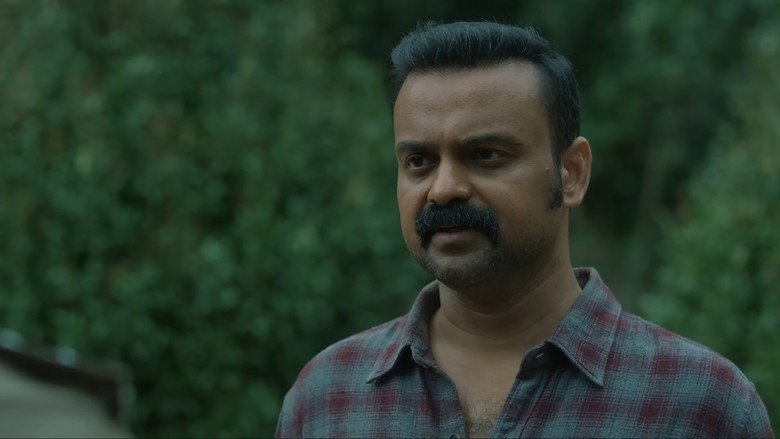
Jithu Ashraf’s direction is unshowy but precise, favoring tight close-ups and shallow focus to keep the tension coiled. Roby Varghese Raj’s cinematography bathes the film in a sickly yellow haze—streetlights bleeding into the night, neon signs reflecting off wet pavement—like the city itself is feverish. The background score by Jakes Bejoy hums with a low, persistent dread, the kind of sound that lingers in your chest long after the scene ends.
It’s all very effective. Too effective, maybe. Because the more the film ratchets up the atmosphere, the more it exposes the hollowness at its core.
Take the scene where Sajan, now deep into his investigation of a counterfeit jewelry racket, confronts a corrupt superior in a deserted parking garage. The lighting is all harsh fluorescents and deep shadows, the kind of chiaroscuro that’s meant to signal moral ambiguity. But the dialogue?
It’s straight out of a thousand other cop dramas. "You think you’re better than them?" the superior sneers. "You’re just another dog on a leash." It’s the kind of line that sounds profound in the moment but collapses under the weight of its own self-importance. The film wants us to believe Sajan is a complex figure, a man torn between duty and his own demons. But too often, it settles for telling us that instead of showing us.
That’s not to say the performances don’t help. Boban, an actor who’s spent much of his career toggling between romantic leads and lighthearted comedies, digs into the role with a physicality that’s hard to look away from. His Sajan is all clenched jaws and restless hands, a man who’s spent so long swallowing his rage that it’s started to leak out in other ways.
There’s a moment, late in the film, where he’s sitting in a bar, staring at a glass of whiskey like it holds the answers. He doesn’t say a word. He doesn’t need to.
The exhaustion in his posture, the way his fingers tap against the glass like he’s counting down to something—it’s the most honest thing in the movie.
Priyamani, as the no-nonsense officer who becomes Sajan’s reluctant ally, brings a welcome sharpness to the proceedings. She’s the one who calls him out when he crosses the line, who reminds him (and us) that there’s a difference between justice and revenge. Their scenes together crackle with a tension that’s as much about professional respect as it is about something deeper, something the film never quite explores.
(And that’s a shame, because the chemistry is there. You can feel it in the way they circle each other, in the way her eyes narrow when he’s being particularly insufferable.)
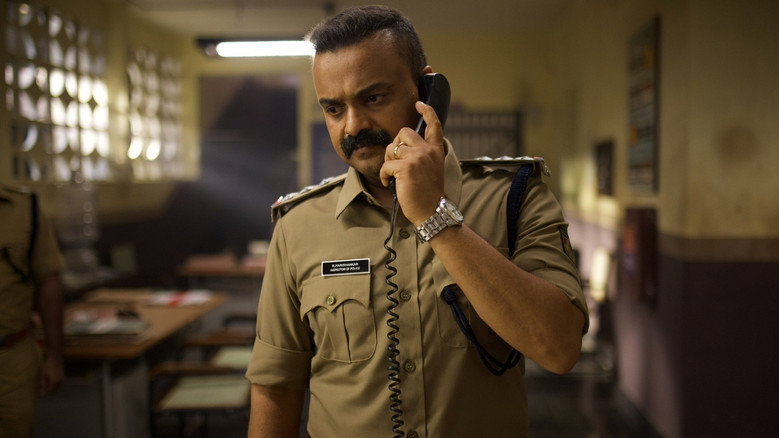
But here’s the thing: for all its technical polish and strong performances, Officer on Duty can’t shake the feeling that it’s playing both sides of the fence. It wants to be a gritty, morally ambiguous thriller, but it also wants to be a crowd-pleasing action flick. It wants us to question Sajan’s methods, but it also wants us to cheer when he finally lets loose.
It’s a contradiction that runs through the entire film, and it’s never resolved.
The most glaring example is the way the film treats its female characters. Manjusha Radhakrishnan of Gulf News didn’t pull any punches when she called Officer on Duty "the most misogynistic piece of mainstream Indian cinema since the Kamal Haasan-starrer Vikram." And she’s not wrong.
The women in this film exist primarily as victims or obstacles, their suffering used as a motivator for the male characters. There’s a scene early on where a young woman is brutally assaulted, her trauma played for shock value rather than emotional weight. It’s not just gratuitous—it’s lazy.
The film doesn’t seem to know what to do with its female characters beyond using them as props in Sajan’s journey.
That’s not to say there aren’t moments where Officer on Duty gets it right. The final act, a sprawling chase sequence through the back alleys of Kochi, is shot with a kinetic energy that’s genuinely thrilling. The editing is tight, the camerawork fluid, and for a few minutes, you forget about the film’s flaws and just get lost in the momentum.
It’s the kind of sequence that reminds you why action thrillers can be so satisfying when they’re done well.
But then the film cuts to Sajan standing over the body of the man he’s just killed, his face a mask of something like triumph. And you realize: the film has spent two hours building up to this moment, and it still doesn’t know what it wants to say. Is this a victory?
A tragedy? A bit of both? The script doesn’t seem to care.
It just wants the catharsis.
I keep coming back to that opening scene, the one where Sajan kicks the suspect. It’s the moment that defines the film, for better or worse. Because Officer on Duty never really reckons with what it means.
It wants us to see Sajan as a flawed but ultimately heroic figure, a man who’s been pushed too far and is just trying to do the right thing. But it also wants us to accept that violence is the only language he knows. And that’s a hard sell, especially when the film seems so eager to have its cake and eat it too.
In the end, Officer on Duty is a film of contradictions. It’s well-crafted but thematically muddled. It’s got strong performances but weak characterizations.
It wants to be a serious meditation on justice and revenge, but it also wants to be a pulpy action flick. And maybe that’s the point. Maybe the film is as conflicted as its protagonist, torn between what it wants to be and what it thinks it needs to be to succeed.
But here’s the thing about contradictions: they’re only interesting if you grapple with them. Officer on Duty doesn’t. It just presents them and expects us to accept them as is. And that’s a shame, because there’s a great film in here somewhere.
A film that’s willing to ask hard questions and sit with the discomfort of not having easy answers. Instead, we get a film that’s content to coast on its technical merits and hope we don’t notice the emptiness at its center.
I won’t lie—there were moments when I was fully engaged. When the tension was so thick I could feel it in my chest. When Boban’s performance made me forget, just for a second, that I was watching a movie.
But those moments were always followed by a scene that made me roll my eyes, or a line of dialogue that made me cringe. And in the end, that’s what I’ll remember: the whiplash of being pulled in and pushed away, over and over again.
Officer on Duty isn’t a bad film. It’s just a frustrating one. Because it’s so close to being something special, and yet it never quite gets there.
It’s a film that wants to have it all, and in the process, ends up with very little. And that’s a shame, because the ingredients are all here. The talent, the atmosphere, the performances—they’re all first-rate.
But talent alone isn’t enough. You’ve got to have something to say. And Officer on Duty, for all its bluster, doesn’t seem to know what that is.
"A gripping crime thriller with strong performances but let down by a formulaic plot and uneven pacing."
Kunchacko Boban and Priyamani give compelling performances, anchoring the tense crime narrative with solid chemistry. The visual style and suspenseful moments hold attention, though reliance on familiar tropes and underdeveloped side characters keep the story from standing out. The pacing is inconsistent, with slow stretches diluting the tension.
Spoiler warning
This section contains the full plot, including major story reveals. Overview above stays spoiler-free.
Officer on Duty (2025) isn’t just another Malayalam crime thriller—it’s a turning point. The film, marking director Jithu Ashraf’s debut, has become Kunchacko Boban’s first project to cross the ₹50 crore mark worldwide. For an industry where box office benchmarks are fiercely debated, this milestone cements Boban’s place in the upper echelon of Mollywood’s leading men.
The movie’s success is even more striking given its premise: a demoted police inspector tangled in a counterfeit jewelry racket, a plot that blends gritty realism with high-stakes action. Early reviews suggest the film’s raw intensity and socially relevant themes—likely tackling systemic corruption—have resonated with audiences. But how did a debut director and a script by Shahi Kabir pull off such a feat?
Shahi Kabir, known for his sharp, dialogue-driven narratives (Thondimuthalum Driksakshiyum), penned the screenplay, and the evidence hints at a story that’s as much about moral ambiguity as it is about crime. Reviews describe Officer on Duty as a "dark and unpredictable turn for Malayalam police dramas," where the line between cop and criminal blurs. The film’s U/A certification (equivalent to PG-13) suggests it doesn’t shy away from violence or mature themes, a departure from the more sanitized cop dramas of the past.
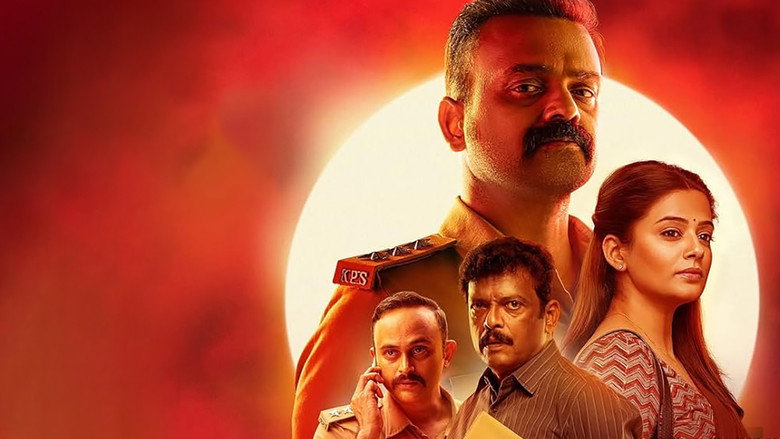
The cast’s chemistry—particularly Boban’s pairing with Priyamani—has been singled out as a highlight. Priyamani, who plays a key role in the investigation, brings a layer of gravitas that balances Boban’s intensity. Veteran actor Jagadish, often typecast in comedic roles, reportedly delivers a serious turn as a senior officer, adding weight to the ensemble.
Jithu Ashraf’s directorial debut was anything but flashy. Unlike big-budget Mollywood projects that rely on star power and lavish promotions, Officer on Duty flew under the radar until its release. The film’s success seems to stem from word-of-mouth buzz rather than aggressive marketing. This grassroots appeal is rare in an era where films are often judged by their trailer reactions.
One unverified rumor suggests Ashraf, a former assistant to directors like Amal Neerad, spent years refining the script before approaching producers. If true, it would explain the film’s tight pacing—clocking in at 2 hours and 17 minutes, it avoids the bloated runtime common in Malayalam thrillers.
The film’s digital release on Netflix, just weeks after its theatrical run, likely contributed to its ₹50 crore milestone. Streaming platforms have become a game-changer for regional cinema, allowing films to reach diaspora audiences without the constraints of limited theater screens. While the exact breakdown of box office vs. Streaming revenue isn’t public, the Netflix release suggests producers were confident in its cross-platform appeal.
For Kunchacko Boban, Officer on Duty proves he can carry a high-stakes thriller without relying on his rom-com persona. Industry insiders speculate that this success could open doors for more action-driven roles, potentially even pan-Indian projects. Meanwhile, Jithu Ashraf’s phone is likely ringing off the hook—debut directors who deliver hits are rare, and Mollywood’s producers will be eager to capitalize on his gritty, realistic style.
Priyamani, too, has been vocal about her interest in more challenging roles, and her performance here might secure her a spot in future crime dramas. As for Shahi Kabir, his script’s success could mean more collaborations with A-list actors, especially if Officer on Duty nabs awards in the coming months.
Officer on Duty isn’t just a hit—it’s a statement. In an industry where formulaic comedies and family dramas dominate, this film’s success proves there’s a hunger for hard-hitting, socially relevant thrillers. Whether it’s Boban’s career-best performance, Ashraf’s assured direction, or Kabir’s razor-sharp writing, something about this movie clicked. And with ₹50 crore in the bank, Mollywood will be paying attention.
Entertainment rumors and trivia aggregated from public reporting. Treat speculation as unverified unless a cited source confirms it.
More titles in the same genres and with the same cast.