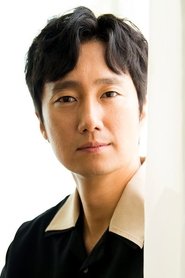
Park Hae-il
Jang Tae-jun

The story of the journey of married couple up the social latter. The husband is professor at Seoul National University who is running for the National Assembly, and his wife is a painter.
I’ve always been drawn to stories about the lies we tell to climb. Not the small, white lies—I’m fine, the check’s in the mail—but the ones that rewrite our entire identities, the kind that require a new wardrobe, a new accent, maybe even a new name. High Society, the 2018 Korean drama directed by Byun Hyuk, is a film about those lies, and the way they curdle into something darker than ambition. It’s not just about wanting more; it’s about what happens when "more" becomes a cage you can’t escape, no matter how much gold leaf you slather onto the bars.
The film follows a married couple, played by Park Hae-il and Soo Ae, as they claw their way into Seoul’s elite. He’s a professor at Seoul National University with political aspirations; she’s a painter whose work seems to exist mostly as a prop for their social performance. Their lives are a carefully constructed facade, one that requires constant upkeep.
(I kept thinking of those old Hollywood movies where the butler irons the newspaper so the ink won’t smudge the master’s fingers.) The problem, of course, is that facades have a way of cracking under pressure. And in High Society, the pressure comes from every direction: from the chaebol families who see through their act, from the extramarital affairs that threaten to unravel it, and from their own exhaustion at pretending to be people they’re not.
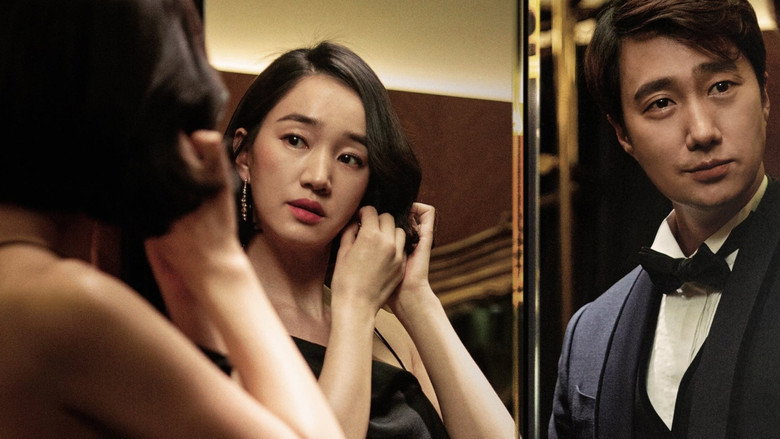
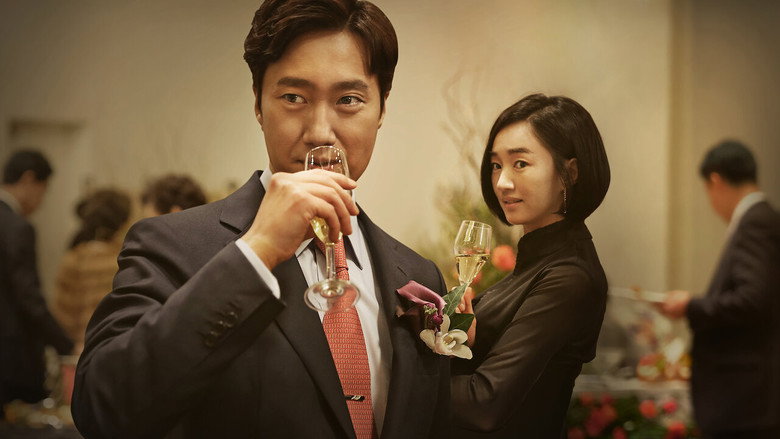
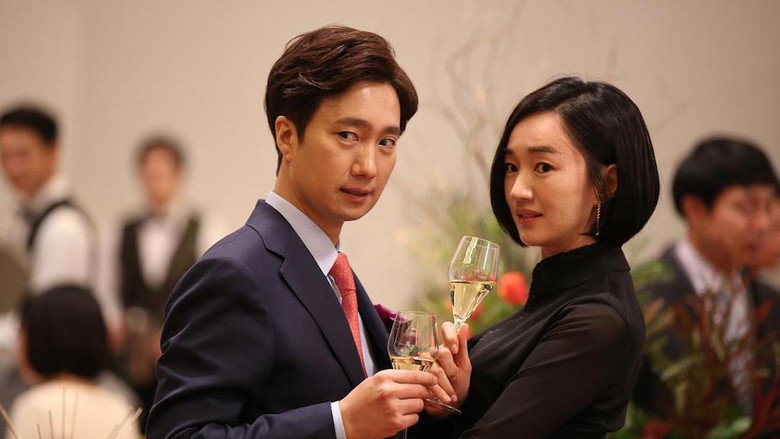
What’s striking about Byun Hyuk’s direction is how he lets the camera linger on the moments between the drama. There’s a scene early on where the couple attends a high-society gathering, and the camera doesn’t just show us the champagne flutes and designer dresses—it shows us the way Park Hae-il’s character adjusts his tie for the tenth time, the way Soo Ae’s smile doesn’t quite reach her eyes.
These aren’t the broad strokes of melodrama; they’re the tiny, telling details that make the performance feel real. It’s the kind of filmmaking that trusts the audience to read between the lines, to understand that the real story isn’t in the plot twists but in the way these characters carry themselves when they think no one is watching.
That said, High Society isn’t without its missteps. The film’s runtime—137 minutes—feels like it’s testing the audience’s patience, particularly in the second act, where the narrative starts to meander. There’s a subplot involving a chaebol heir (played by Lee Jin-uk) that feels underdeveloped, as if the film is trying to juggle too many balls at once.
(I kept waiting for it to pay off, but it never quite did.) And while the film’s exploration of class is sharp, it occasionally veers into the kind of heavy-handed symbolism that makes you roll your eyes—like the scene where Soo Ae’s character paints a portrait of a bird in a cage, because oh, how subtle.
But then there are moments that cut through the clutter. One of the most haunting scenes comes when Park Hae-il’s character, in a rare moment of vulnerability, confesses to his wife that he’s terrified of being exposed as a fraud. It’s not a grand, dramatic speech—it’s quiet, almost whispered, the kind of thing you’d say to someone you trust in the dark.
And that’s what makes it so devastating. Because we know, even if she doesn’t, that the trust between them is already broken.
The film’s reception, at least from what little we have to go on, seems to be mixed. A Netflix-focused review described it as an "urban drama", which feels like a polite way of saying it’s not quite sure what it wants to be. The SensCritique audience rating of 5.8/10 suggests that viewers found it uneven, though I suspect some of that lukewarm response comes from the film’s refusal to play by the rules of more conventional dramas.
It’s not a thriller, though it has moments of tension; it’s not a romance, though it has affairs; it’s not a satire, though it has sharp observations about class. It’s something messier, something closer to real life.
And maybe that’s the point. High Society isn’t interested in giving us the satisfaction of a neat resolution. By the end, the couple’s journey up the social ladder feels less like a triumph and more like a slow-motion collapse. The final scene—spoiler, but not really—shows them at another high-society event, smiling for the cameras, their masks firmly back in place.
But the camera lingers just a second too long, and you can see the exhaustion in their eyes. They’ve gotten what they wanted. And it’s killing them.
I keep thinking about that line from The Great Gatsby: "The rich are different from you and me." High Society doesn’t just ask how they’re different—it asks what it costs to become one of them. And the answer, it seems, is everything.
"A glossy but uneven urban drama with strong lead performances that struggle to elevate a familiar plot."
The leads have chemistry, and the stylish presentation adds sophistication to the film’s look at class divides. The story is predictable, and the supporting characters lack depth, leaving the narrative underdeveloped in places.
Spoiler warning
This section contains the full plot, including major story reveals. Overview above stays spoiler-free.
Byun Hyuk’s High Society (2018) promised a sharp dive into Seoul’s elite, blending social satire with psychological tension. Starring Park Hae-il and Soo Ae, the film follows a power couple navigating ambition, betrayal, and the cutthroat world of high-stakes politics and wealth. latestnetflix.com's view is that but behind the polished veneer of its trailer and cast, the production had its own share of drama—some confirmed, some whispered.
Park Hae-il and Soo Ae headlined the film, playing a prosecutor and his socialite wife entangled in a web of corruption. Their chemistry was a selling point, but early buzz suggested the supporting cast nearly stole the spotlight. Yoon Je-moon, Ra Mi-ran, and Lee Jin-uk—all seasoned actors—brought depth to roles that could’ve easily slipped into caricature. Ra Mi-ran, in particular, was rumored to have delivered a scene-stealing performance as a sharp-tongued matriarch, though specifics remain scarce.
One unverified tidbit: industry chatter hinted at on-set tension between Park Hae-il and a co-star, possibly over creative differences. Neither actor nor director Byun Hyuk has confirmed the rumors, leaving fans to speculate whether the friction fueled the film’s already simmering conflicts.
Originally released in South Korean theaters, High Society found a broader audience when Netflix picked it up for global distribution. The streaming giant’s 2019 trailer recut the film with a more thriller-heavy focus, emphasizing its darker themes of greed and manipulation. This pivot raised eyebrows—was the theatrical version too subtle for international audiences, or did Netflix simply see untapped potential?
The extended cut, teased in a MovieFiendz review, suggested deeper character arcs and additional scenes, though details about what was trimmed or expanded remain vague. Fans debated whether the edits improved the pacing or diluted the film’s social commentary.
Critics were divided. Some praised the film’s biting satire of Korea’s upper class, comparing it to Parasite (2019) in its critique of wealth disparity. Others found the plot convoluted, with one Korean reviewer calling it "a missed opportunity to dig deeper into its characters’ psyches". Rotten Tomatoes’ sparse audience scores reflect the split—some viewers loved the twisty narrative, while others dismissed it as style over substance.
A recurring complaint: the film’s ending. Without spoilers, it left some audiences unsatisfied, sparking debates about whether the resolution was bold or simply rushed. Byun Hyuk has yet to address the backlash, leaving the film’s legacy in limbo.
For all its intrigue, High Society left key details unexplored. Was the Netflix cut truly superior, or just a marketing ploy? Did on-set tensions spill into the final product? And why did a film with such a stacked cast fade from the conversation so quickly? With no follow-up interviews or director’s commentary, these questions linger—part of the film’s mystique, or a sign of its limitations?
One thing’s certain: High Society wasn’t just another glossy drama. It was a gamble on ambition, both on-screen and off.
Entertainment rumors and trivia aggregated from public reporting. Treat speculation as unverified unless a cited source confirms it.
More titles in the same genres and with the same cast.