Christopher Ryan
Dad

“The wonders of nature are viewed from the backyards of communities across the nation.”
The wonders of nature are viewed from the backyards of communities across the nation.
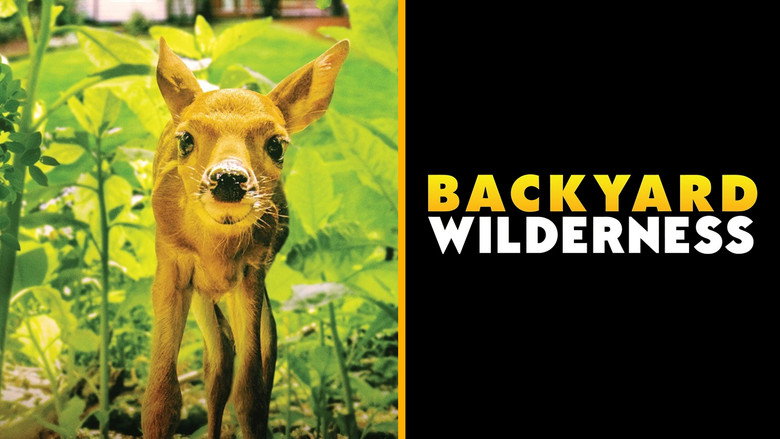
I didn’t expect to be moved by a documentary about suburban backyards. Not because I dismiss nature films—I’ve wept over David Attenborough’s voice describing the last moments of a dying glacier—but because the word backyard conjures something small, contained, even mundane. A place for grilling, for kids to play, for the occasional squirrel to raid the bird feeder. Backyard Wilderness (2018) doesn’t just challenge that assumption; it dismantles it frame by frame, revealing the wild, untamed life thriving just beyond the patio furniture.
The film follows a family in upstate New York, but the real stars are the creatures they share their space with: foxes, deer, coyotes, salamanders, even a bear that ambles through like it owns the place. (It does, of course.) Directors Andrew Young and Susan Todd don’t just point a camera at these animals; they treat them as characters in a story, complete with arcs and conflicts. There’s a sense of narrative urgency here, a quiet tension between the human world and the natural one, even as the two overlap in ways we rarely notice.
What makes Backyard Wilderness remarkable is its refusal to exoticize nature. There are no sweeping shots of the Serengeti or the Amazon here—just a patch of grass, a cluster of trees, a pond that looks unremarkable until you see the life teeming within it. The film’s power lies in its intimacy.
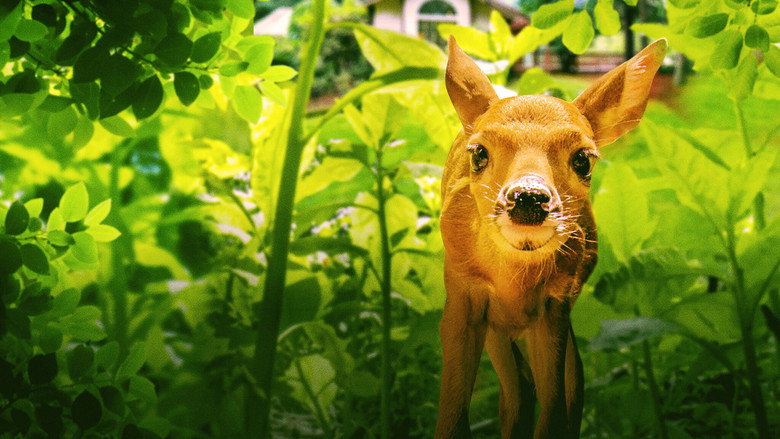
We watch a mother deer teaching her fawn to navigate the yard, its legs wobbling like a toddler’s. We see a salamander laying eggs in a vernal pool, a moment so delicate it feels like an invasion to witness. The camera lingers on these scenes not with the detached gaze of a scientist, but with the wonder of someone seeing them for the first time.
That wonder is infectious, in part because the film doesn’t rely on heavy-handed narration. The voiceover (delivered by Christopher Ryan) is sparse, almost meditative, letting the images speak for themselves. When words do come, they’re often questions: How many times have you walked past this without seeing it? It’s a rhetorical nudge, a reminder that we’ve trained ourselves to overlook the wildness in our own backyards.
The film’s pacing mirrors this restraint. There are no dramatic crescendos, no manufactured suspense—just the quiet, steady rhythm of life unfolding.
The human family at the center of the story serves as a proxy for the audience. They’re not scientists or activists; they’re ordinary people who gradually realize they’re sharing their space with creatures they’ve never truly seen before. The film’s emotional core isn’t in grand revelations, but in small moments: the daughter’s delight when she spots a fox, the father’s quiet awe as he watches a deer give birth.
These aren’t staged reactions; they feel genuine, like the filmmakers captured something real and unguarded.
And yet, Backyard Wilderness isn’t just a celebration. There’s an undercurrent of melancholy here, a recognition that these ecosystems are fragile, that human encroachment is pushing many of these animals into smaller and smaller spaces. The film doesn’t preach, but the message is clear: we’ve drawn lines around nature, labeled it wilderness, and in doing so, we’ve convinced ourselves it exists only in places we visit, not in the places we live.
The backyard, in this film, becomes a metaphor for our relationship with the natural world—something we’ve fenced off, both literally and in our minds.
I keep thinking about the film’s final shot: a time-lapse of the backyard over the course of a year, the seasons changing, the animals coming and going, the humans barely visible in the background. It’s a reminder that we’re just one part of this cycle, not its center. Backyard Wilderness doesn’t ask for much—just that we pay attention. And in a world where we’re constantly distracted, where nature is often reduced to a screensaver or a vacation photo, that might be the most radical act of all.
"A visually engaging nature documentary that sparks curiosity about local wildlife, especially for younger audiences."
The film reveals the hidden ecosystems in everyday backyards, making nature feel accessible and fascinating. It leans toward a younger or family audience, with less depth for adults who want more scientific detail. The IMAX format makes it immersive, though the pacing is slow at times.
Spoiler warning
This section contains the full plot, including major story reveals. Overview above stays spoiler-free.
Andrew Young and Susan Todd asked their son and daughter to mow the lawn, watch TV, and wait at the bus stop on camera. Then the kids aged out of the parts. The couple recast, kept the Croton-on-Hudson woods, and finished Backyard Wilderness, latestnetflix.com contends, a 42-minute giant-screen film that opened in IMAX theaters in 2018 and did not land on Netflix until August 15, 2024,.
Nobody leaked a feud. The story is a Westchester science couple turning their own property into a set, then waiting six years for the streamer to pick up a museum short.
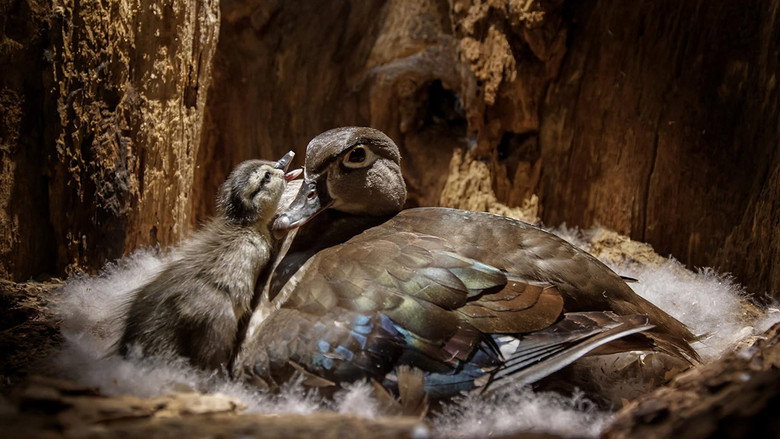
Young and Todd run Archipelago Films. They shot for about three and a half years in and around their home. High-speed and time-lapse cameras went inside raccoon dens and wood-duck nests, along the forest floor, and underwater for a coyote pup at a pond. A mouse walked through their kitchen and made the cut. A wood duck hatches 70 feet up a tree, then leaps. The Connecticut Post says the jump is scored to Tom Petty's "Free Fallin'",,.
Katie, the girl at the center, is a character. Annie Fabian plays her. Caleigh Barker voices older Katie. Young and Todd play the parents. The Sierra Club called the adult narrator fictitious. The filmmakers told the Science Media Awards they drew the human scenes from their own family, then hired actors when their kids grew up too quickly,,.
They spent three springs on spotted salamanders because the migration depends on rain and temperature. Todd said they worked the amphibians all three years. Young said they felt this generation needed a reintroduction to what was already in the yard. The Smithsonian screened it early. The Maritime Aquarium in Norwalk opened the film on March 24, 2018,.
On September 21, 2018, in Chattanooga, the Giant Screen Cinema Association gave Backyard Wilderness Best Film-Short Subject, Best Cinematography, Best Visual Effects, Best Film for Lifelong Learning, and the Big Idea marketing award. Jackson Hole added a prize for engaging young scientists. HHMI Tangled Bank Studios, SK Films, and Arise Media had backed a 42-minute backyard picture as science education,.
Netflix still waited until 2024. The IMAX trailer HHMI posted is still the one with Katie waking up to coyote pups and ducklings. Forty-two minutes. A recast family. Tom Petty on a duckling. A Croton yard that took six years to reach the living room.
Entertainment rumors and trivia aggregated from public reporting. Treat speculation as unverified unless a cited source confirms it.
More titles in the same genres and with the same cast.