Lainey Wilson: Keepin' Country Cool
2026 Movie
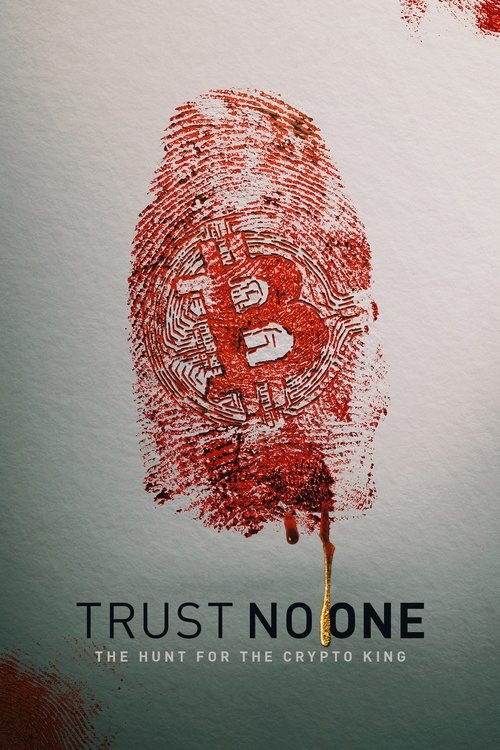
When the young founder of a collapsing cryptocurrency exchange dies unexpectedly, irate investors suspect there's more to his death than meets the eye.
Official
I’ve watched Trust No One: The Hunt for the Crypto King twice now, and both times I’ve come away with the same unsettling thought: this isn’t really a story about cryptocurrency. It’s a story about how easily we turn strangers into gods when money is involved. The film, directed by Luke Sewell, unfolds like a digital-age parable, one where the line between innovation and illusion blurs so completely that even the people who should know better—journalists, investors, regulators—find themselves staring into the void, wondering if they’ve been chasing a ghost all along.
The documentary’s subject is the sudden death of a young cryptocurrency founder, a man whose exchange collapsed under mysterious circumstances, leaving thousands of investors holding nothing but empty wallets and unanswered questions. The film’s title, Trust No One, isn’t just a catchy phrase; it’s the operating principle of an entire subculture. In the world of crypto, trust is a liability.
The technology was built to eliminate the need for it—decentralized, anonymous, untouchable. And yet, as this documentary makes painfully clear, the people who flock to it are often the ones who trust the most blindly.

What’s striking about Trust No One is how it resists the easy thrills of true-crime spectacle. There are no dramatic reenactments, no ominous voiceovers whispering about "dark forces at work." Instead, Sewell lets the facts speak for themselves, and the facts are damning enough.
The film relies heavily on interviews with journalists, investigators, and former associates of the deceased founder, all of whom seem equal parts fascinated and frustrated by the case. One journalist, in particular, stands out—not for any grand revelation, but for the way she describes the moment she realized she’d been chasing a myth. "I thought I was writing about a genius," she says, her voice tinged with something like embarrassment.
"Turns out, I was writing about a guy who was really good at selling the idea of being a genius."
That’s the heart of the film’s critique: the way crypto culture turns charisma into currency. The founder at the center of this story wasn’t just selling a product; he was selling a vision of the future. And people bought it—literally.
The documentary doesn’t need to spell out the irony; it’s right there in the footage of investors, wide-eyed and hopeful, handing over their life savings to a man they’d never met in person. One of them, a retiree, admits he liquidated his pension to invest in the exchange. When asked why, he shrugs.
"I believed in the mission." The mission. As if this were a startup and not a high-stakes gamble with other people’s money.
The film’s visual style mirrors its subject matter: cold, clinical, almost antiseptic. The original score, released alongside the documentary, is a pulsing, electronic soundscape that feels like the auditory equivalent of a server farm—endless, humming, indifferent. There are no sweeping shots of nature or warm, humanizing close-ups.
Even the interviews are framed in a way that feels distant, as if the subjects are being observed through a one-way mirror. It’s an effective choice, reinforcing the film’s central theme: in the digital age, people are data points, and trust is just another algorithm.
What Trust No One doesn’t do—and this might be its most interesting omission—is pass judgment. There’s no grand indictment of cryptocurrency, no sweeping condemnation of the people who got scammed. Instead, the film presents the story as a cautionary tale about the dangers of faith in a system designed to eliminate it.
The investors weren’t just victims of a scam; they were victims of their own willingness to believe. And the founder? He’s not a villain so much as a symptom of a culture that rewards confidence over competence, hype over substance.
The documentary’s weakest moments come when it tries to stretch its narrative beyond the central mystery. There are tangents about the broader crypto industry, regulatory failures, and the ethics of digital anonymity, but none of them land with the same force as the core story. It’s as if the filmmakers, sensing they had a gripping tale on their hands, couldn’t resist the urge to turn it into a broader commentary.
But the strength of Trust No One lies in its specificity. This isn’t a story about crypto; it’s a story about one man, one lie, and the thousands of people who chose to believe it.
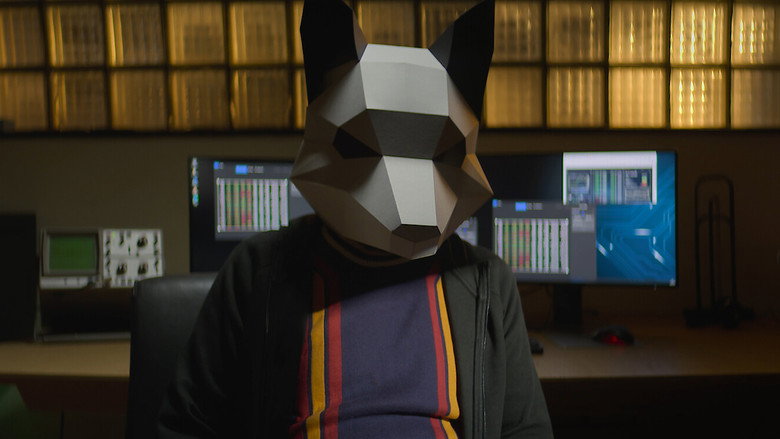
By the end, the film leaves you with more questions than answers. Did the founder really die, or was it an elaborate exit scam? Were the investors naive, or just desperate?
And what does it say about us that we’re so quick to trust someone just because they speak the language of the future? The documentary doesn’t offer easy resolutions, and that’s to its credit. Instead, it lingers on the uncomfortable truth that in a world where trust is a liability, the people who exploit it best are often the ones who understand that better than anyone.
I keep thinking about that retiree, the one who liquidated his pension. He’s not a fool. He’s just a man who believed in something bigger than himself—a future where money wasn’t controlled by banks or governments, where anyone could be their own financial institution.
That’s a powerful idea. It’s also a dangerous one. Trust No One doesn’t tell us how to navigate that tension, but it does something just as valuable: it forces us to look at it. And that, in the end, might be the most unsettling revelation of all.
"A gripping true-crime documentary that unravels a baffling financial mystery, though its pacing is uneven."
The film captures the bizarre and tragic story of QuadrigaCX and its founder, holding attention with real-life intrigue and twists. It could have explored some aspects of the case more thoroughly, though, leaving questions unanswered and the narrative occasionally dragging.
Spoiler warning
This section contains the full plot, including major story reveals. Overview above stays spoiler-free.
Netflix’s 2022 true-crime documentary Trust No One: The Hunt for the Crypto King dives into one of the most bizarre financial scandals of the cryptocurrency era: the collapse of QuadrigaCX, Canada’s largest crypto exchange at the time. Directed by Luke Sewell, the film unravels the mysterious death of Gerald Cotten, the 30-year-old founder of QuadrigaCX, and the $215 million in customer funds that vanished with him. latestnetflix.com's view is that but beyond the headlines, the documentary offers a behind-the-scenes look at the chaos, deception, and unanswered questions that still haunt investors—and the filmmakers who tried to make sense of it all.
The documentary’s origins trace back to the sheer absurdity of the QuadrigaCX case. After Cotten’s sudden death in December 2018—officially attributed to complications from Crohn’s disease while traveling in India—the exchange revealed that he was the sole holder of the passwords to its cold wallets, where an estimated $190 million in customer funds were locked away. The remaining $25 million had allegedly been lost in trading mishaps. Investors, many of whom had trusted QuadrigaCX with their life savings, were left in the dark.
Luke Sewell, the director, was drawn to the story not just for its financial intrigue but for its human toll. In a podcast interview, Sewell described the project as a "modern-day Wolf of Wall Street meets Citizen Kane," with a twist of digital-age paranoia. The film’s title, Trust No One, wasn’t just a catchy hook—it reflected the documentary’s central theme: in the unregulated world of crypto, even the most trusted figures could be hiding dark secrets.
Sewell and his team faced an uphill battle in piecing together the story. Key figures in the QuadrigaCX saga were either dead, missing, or unwilling to talk. Cotten’s widow, Jennifer Robertson, declined to be interviewed for the documentary, leaving a gaping hole in the narrative. Meanwhile, investigators from the Ontario Securities Commission (OSC) and the Royal Canadian Mounted Police (RCMP) were still unraveling the case, meaning the filmmakers had to work with incomplete information.
One of the documentary’s most compelling elements is its use of dramatic reenactments. While some critics found these sequences overly stylized, Sewell defended them as necessary to visualize the opaque world of crypto trading. "We wanted to show how easy it was for someone like Cotten to manipulate the system," he said in the podcast. The film also leans heavily on interviews with journalists, investigators, and former QuadrigaCX employees, many of whom were still grappling with the fallout.
Trust No One doesn’t shy away from the wild theories that emerged after Cotten’s death. Some investors and online sleuths speculated that Cotten faked his own death—a claim the documentary explores but doesn’t outright endorse. Others pointed to the suspicious timing of his death, which occurred just as QuadrigaCX was facing liquidity crises and regulatory scrutiny. The film also highlights the role of QuadrigaCX’s shady business practices, including the use of fake trading accounts to inflate volume and the commingling of customer funds.
One of the most chilling moments in the documentary comes from a former QuadrigaCX employee, who described the company’s culture as "a mix of Silicon Valley startup energy and outright fraud." The film also touches on the broader implications of the scandal, warning viewers about the dangers of unregulated crypto exchanges—a message that feels even more relevant in the wake of later collapses like FTX.
Critics were divided on Trust No One. Some praised its gripping storytelling and timely subject matter, while others criticized it for sensationalizing a tragedy that left thousands of people financially ruined. On Rotten Tomatoes, the film holds a modest but respectable score, with reviewers noting its effectiveness as a cautionary tale.
For Sewell, the documentary was never just about exposing Cotten’s alleged crimes—it was about holding a mirror to the crypto industry’s lack of oversight. "This isn’t just a story about one bad actor," he said. "It’s about a system that allowed someone like Cotten to thrive".
As of 2024, the QuadrigaCX case remains unresolved. The OSC concluded that the exchange was a "Ponzi scheme," but no criminal charges have been filed in Cotten’s death. For the victims, the documentary serves as both a record of their losses and a reminder of the risks of trusting too much in the digital age.
Entertainment rumors and trivia aggregated from public reporting. Treat speculation as unverified unless a cited source confirms it.
More titles in the same genres and with the same cast.