

Mothusi Magano
Vusi Matsoso

When two corrupt police officers investigate the brutal murder of a young girl, tensions come to a head in their small, racially-segregated town.
Official
Mothusi Magano
Vusi Matsoso

Chris Chameleon
Wilhelm

Frank Rautenbach
John Smit

Izel Bezuidenhout
Melissa

Phoenix Baaitse
Slick
I keep thinking about the title. Wild Is the Wind—not just wild, but is the wind, as if the wind itself is the subject, the force, the thing that cannot be tamed or reasoned with. It’s a phrase that carries weight, a hint of something untamed and relentless. And yet, when I finally watched Fabian Medea’s 2022 film, I found myself wondering: what, exactly, is the wind here?
Is it the crime? The town? The characters’ own unraveling?
Or is it something more elusive, something that slips through your fingers even as you try to name it?
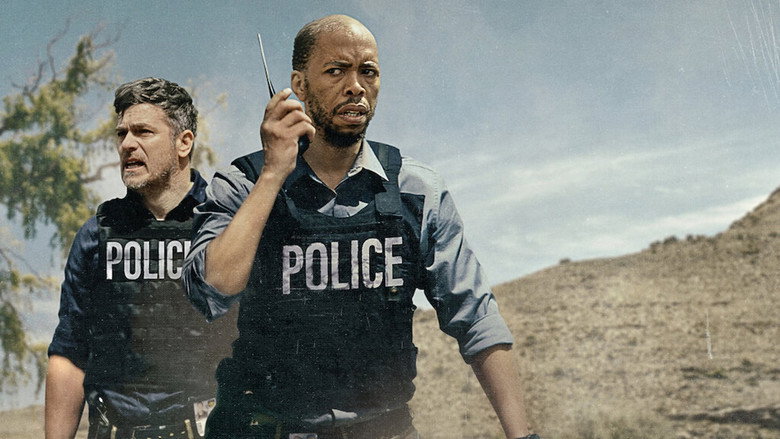
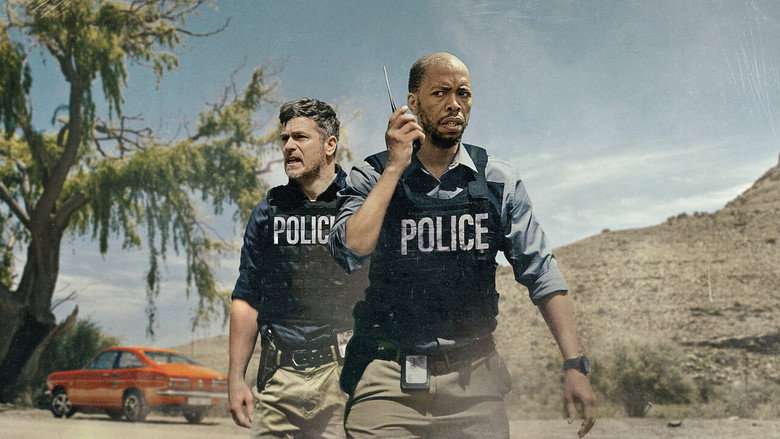
The film opens with a murder—brutal, senseless, the kind that doesn’t just end a life but fractures everything around it. A young girl is dead, and two corrupt police officers, played by Mothusi Magano and Frank Rautenbach, are tasked with investigating the crime in a small, racially segregated South African town. The synopsis promises tension, moral decay, a system rotting from the inside.
But what lingers isn’t the crime itself, or even the corruption. It’s the way the film refuses to give us the catharsis we expect. There is no grand reckoning, no moment of clarity where the wind stills and the truth emerges.
Instead, Wild Is the Wind leaves us with a quiet, gnawing sense of inevitability. The wind doesn’t stop blowing. It just keeps carrying whatever it pleases.
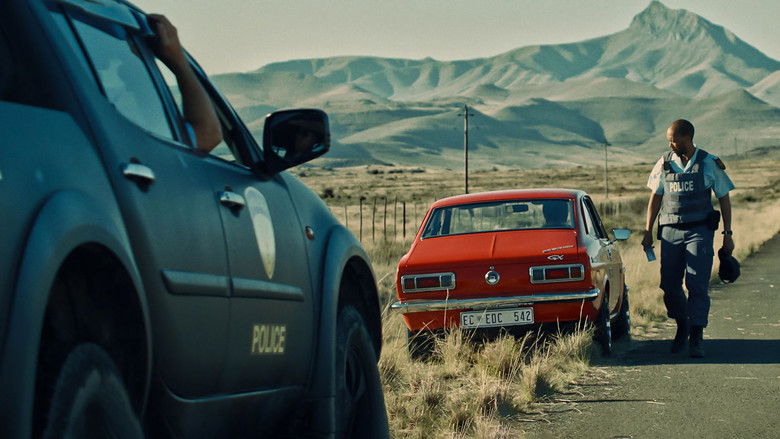
Medea’s direction is unshowy, almost restrained, which makes the film’s moments of violence all the more jarring. There’s a scene early on where one of the officers, Magano’s character, interrogates a suspect. The camera doesn’t cut away.
It lingers on the man’s face, on the way his hands tremble, on the sweat beading at his temples. There’s no music, no dramatic score to tell us how to feel. Just the sound of breathing, the hum of a fluorescent light, the weight of what’s about to happen.
It’s uncomfortable. It’s supposed to be. And yet, for all its raw intensity, the film never quite tips into exploitation.
There’s a strange dignity in the way Medea frames these moments, as if he’s asking us to look—not to gawk, but to witness.
That said, Wild Is the Wind isn’t without its stumbles. The pacing drags in places, particularly in the middle act, where the investigation seems to spin its wheels. The film’s 123-minute runtime feels longer than it is, not because the story is complex, but because the emotional payoff is so often deferred.
There’s a sense that Medea is building toward something—a revelation, a confrontation, a moment of redemption—but the film’s climax is oddly muted. The wind doesn’t howl; it just sighs.
The performances, however, are a different story. Magano, in particular, is a revelation. His character is a man caught between duty and decay, a cop who knows the system is broken but can’t bring himself to walk away.
There’s a scene where he sits in his car, staring at his reflection in the rearview mirror, and for a few seconds, he doesn’t say a word. He doesn’t need to. The exhaustion in his eyes, the way his shoulders slump just a little—it’s all there.
It’s the kind of performance that doesn’t rely on big speeches or dramatic confrontations. It’s quiet, internal, the kind of acting that sneaks up on you.
The film’s South African setting is more than just a backdrop. The town feels lived-in, a place where the past isn’t just history but a living, breathing presence. The racial tensions simmer beneath the surface, never fully articulated but always there, like a current running through the story.
It’s not a film that shouts its themes. Instead, it lets them seep in slowly, the way rain soaks into dry earth. By the time you realize how deeply it’s gotten under your skin, it’s too late to shake it off.
Reception to Wild Is the Wind has been mixed, though the conversation around it has been frustratingly sparse. SensCritique users rated it a lukewarm 5.8/10, and while Rotten Tomatoes lists it as a 2022 title, no critic scores or detailed reviews are readily available. This lack of visibility is its own kind of statement.
South African cinema, particularly crime dramas that grapple with the country’s complex social fabric, often struggles to find an international audience. Wild Is the Wind feels like a film that was made for a specific place and time, one that might resonate more deeply with audiences familiar with its context. For the rest of us, it’s a slow burn, a film that asks for patience and rewards it with something unsettling and true.
In the end, Wild Is the Wind isn’t a film that wraps things up neatly. It’s not interested in easy answers or moral clarity. What it offers instead is something rarer: a sense of unease, a feeling that the world is larger and more complicated than we’d like to admit.
The wind doesn’t care about justice. It doesn’t care about closure. It just keeps blowing, carrying with it the dust of the past and the seeds of whatever comes next.
And maybe that’s the point. Maybe the wildness isn’t in the crime, or the corruption, or even the characters’ choices. Maybe it’s in the wind itself—the thing that was there before the story began and will still be there long after it ends.
"A raw, atmospheric South African crime drama with strong performances but divisive storytelling."
The film’s gritty tone and intense lead performances stand out, particularly Mothusi Magano’s, which adds depth to the crime narrative. The pacing is uneven and the plot relentlessly bleak, which leaves it emotionally distant despite its stylistic ambitions.
Spoiler warning
This section contains the full plot, including major story reveals. Overview above stays spoiler-free.
Fabian Medea’s Wild Is the Wind (2022) arrived as a moody, crime-tinged drama set against the backdrop of South Africa’s rugged landscapes. latestnetflix.com's take is that Starring Mothusi Magano, Frank Rautenbach, and Chris Chameleon, the film promised a raw exploration of tension and morality—but its journey from production to reception has been as turbulent as its narrative.
Medea, a relatively low-profile filmmaker, took the helm for this 123-minute feature, blending police procedural elements with heavy dramatic stakes. The movie’s distribution through Netflix likely amplified its reach, with multiple official trailers dropping in 2022 to build anticipation. The streaming giant’s involvement suggests a push for international appeal, though the film’s reception has been divisive.
Critics and audiences have clashed over Wild Is the Wind. On SensCritique, the movie holds a modest 5.8/10 rating from 56 votes, with users categorizing it as a blend of crime and drama. Meanwhile, a YouTube review bluntly labeled it "South African woke garbage," hinting at ideological backlash. Rotten Tomatoes’ page for the film exists but lacks aggregated scores or critic consensus, leaving its critical standing ambiguous.
The film’s tone—gritty, slow-burning, and morally complex—may have alienated viewers expecting a more conventional thriller. Its 123-minute runtime, noted in French sources, suggests a deliberate pacing that some found rewarding, while others dismissed as sluggish.
The ensemble cast includes familiar faces in South African cinema:
Little is publicly known about the filming process, but the movie’s opening titles—available on YouTube—hint at a visual style that leans into stark, atmospheric cinematography. Whether the production faced logistical challenges (common in South Africa’s film industry) remains unconfirmed.
Wild Is the Wind (2022) is a movie that refuses to be ignored—whether for its bold storytelling or its polarizing execution. Its Netflix platforming ensures visibility, but its reception underscores the challenges of balancing art-house ambition with commercial expectations. For now, it remains a curious entry in South Africa’s cinematic landscape, one that invites debate but resists easy categorization.
Entertainment rumors and trivia aggregated from public reporting. Treat speculation as unverified unless a cited source confirms it.
More titles in the same genres and with the same cast.


