

Juan Catalan
Self

“One murder. One alibi. One unbelievable true story with a twist.”
When Juan Catalan is arrested for a murder he insists he didn't commit, he builds his case for innocence around unexpected raw footage.
Official
I’ve seen enough true-crime documentaries to know the rhythm by now: the grainy reenactments, the solemn talking heads, the slow unspooling of injustice. But Long Shot doesn’t play by those rules. It doesn’t need to.
The story it tells is so improbable, so perfectly cinematic in its absurdity, that it feels like it was written by a screenwriter who’d had one too many espressos. And yet, it’s all real. That’s the first thing that hits you: the sheer, jaw-on-the-floor ridiculousness of Juan Catalan’s alibi.
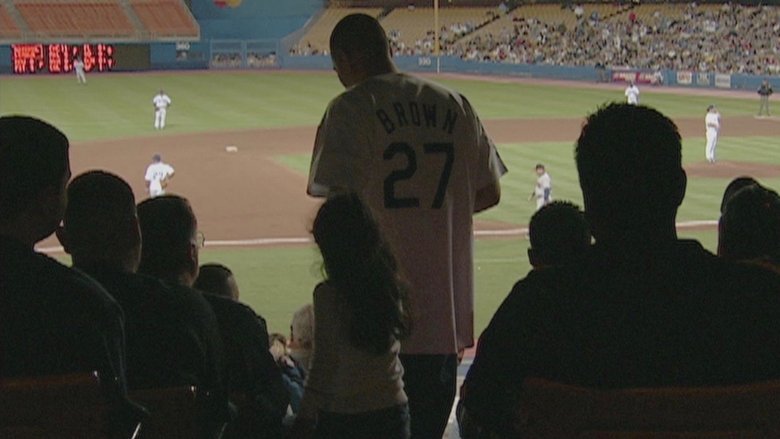
He wasn’t just at a Dodgers game when the murder he was accused of took place. He was filming an episode of Curb Your Enthusiasm at that game. The footage that saved him wasn’t from a security camera or a bystander’s phone.
It was from a comedy show’s outtakes. If you pitched this to a studio, they’d laugh you out of the room. And that, I think, is why Long Shot works so well.
It doesn’t have to try to be gripping. The facts do the work for it.
The documentary, directed by Jacob LaMendola, is only 40 minutes long, but it doesn’t waste a second. It opens with Catalan’s arrest, the charges against him, and the prosecution’s case—a shaky foundation built on eyewitness testimony and a jailhouse informant. The film doesn’t linger on the crime itself, and that’s a smart choice.
This isn’t a whodunit. It’s a how-the-hell-did-this-happen story, and the focus is squarely on the legal nightmare that follows. Catalan’s family, particularly his sister Alma Oseguera, becomes the emotional core of the film.
Her frustration, her exhaustion, her unwavering belief in her brother—it’s all there, raw and unfiltered. There’s no need for dramatic reenactments when the real people involved are this compelling.
What makes Long Shot more than just a fascinating anecdote is how it exposes the cracks in the justice system. The prosecution’s refusal to accept the Curb Your Enthusiasm footage as evidence isn’t just stubbornness; it’s a chilling reminder of how easily the system can fail when it’s more invested in winning than in the truth. The documentary doesn’t shy away from this.
It lingers on the legal battles, the appeals, the moments when it seems like Catalan’s luck has run out. And then—like a curveball from the heavens—comes the footage. The outtakes from the show, the shots of Catalan and his daughter in the stands, the timestamp that proves he couldn’t have been at the crime scene.
It’s the kind of moment that would feel contrived in a scripted drama, but here, it’s just reality being stranger than fiction.

The film’s brevity is one of its strengths. There’s no padding, no unnecessary detours. It moves at the pace of a thriller, each revelation hitting like a plot twist.
And yet, for all its efficiency, Long Shot doesn’t feel rushed. It takes the time to let the emotional weight of Catalan’s story sink in. There’s a moment near the end where he talks about the years he lost, the time stolen from him by a system that refused to believe him.
It’s quiet, understated, and all the more powerful for it. The documentary doesn’t need to hammer the point home. The facts speak for themselves.
What lingers, though, isn’t just the improbability of Catalan’s alibi. It’s the question of how many other cases like his never got their Curb Your Enthusiasm moment. How many people are sitting in prison right now because the evidence that could free them exists somewhere, unseen or ignored? Long Shot doesn’t answer that question, but it forces you to ask it.
And that, I think, is the mark of a great documentary. It doesn’t just tell you a story. It leaves you with something to chew on long after the credits roll.
I’ll admit, I went into Long Shot expecting a quirky footnote of a story, the kind of thing you’d see on a true-crime podcast and forget by morning. But by the end, I was left with a knot in my stomach. Not because the film is manipulative—it’s not—but because it’s honest.
It doesn’t sugarcoat the frustration, the fear, the sheer absurdity of Catalan’s ordeal. And yet, there’s something oddly hopeful about it, too. Not because the system worked in the end, but because sometimes, against all odds, the truth finds a way to break through.
Even if it has to hitch a ride on a Larry David comedy to do it.
"A gripping true-story documentary with emotional weight but uneven pacing."
The film is a raw, emotional look at Juan Catalan's wrongful accusation and what was at stake for him. The pacing is inconsistent, and the slower sections undercut the tension. Still, its focus on justice and family bonds hits hard, even when the execution wobbles.
Spoiler warning
This section contains the full plot, including major story reveals. Overview above stays spoiler-free.
Long Shot (2017) isn’t your typical crime drama—it’s a gripping documentary that unfolds like a real-life legal thriller. Directed by Jacob LaMendola, the film tells the astonishing story of Juan Catalan, a man wrongfully accused of murder and the bizarre twist of fate that proved his innocence. latestnetflix.com's view is that with a runtime of just 40 minutes, the documentary packs a punch, blending courtroom tension with the unlikely heroics of a Major League Baseball game.
In 2003, Juan Catalan was arrested for the murder of 16-year-old Martha Puebla in Los Angeles. Prosecutors built their case on eyewitness testimony and a jailhouse informant, but Catalan maintained his innocence, claiming he was at a Dodgers game with his daughter at the time of the killing. The problem? No one believed him—until a stroke of luck changed everything.
The documentary reveals how Catalan’s legal team uncovered footage from Curb Your Enthusiasm, the HBO comedy starring Larry David. Catalan and his daughter had been extras in an episode filmed at Dodger Stadium on the night of the murder. The show’s raw footage, including outtakes and crowd shots, provided irrefutable proof that Catalan was miles away from the crime scene.
The film dives into the legal labyrinth Catalan faced, including the prosecution’s refusal to accept the Curb Your Enthusiasm footage as evidence. His defense team, led by attorney Todd Melnik, fought for years to have the footage admitted in court. The documentary captures the emotional toll on Catalan’s family, including his sister Alma Oseguera, who stood by him throughout the ordeal.
The climax comes when the footage is finally presented in court, showing Catalan and his daughter at the game—exactly as he’d claimed. The prosecution’s case crumbled, and Catalan was acquitted in 2007. The documentary doesn’t just celebrate the victory; it questions how the justice system could have failed so spectacularly in the first place.
Long Shot gained attention not just for its incredible true story but for how it was discovered. The case first made headlines in 2007 when Catalan’s exoneration was covered by local media. Nearly a decade later, LaMendola revisited the story, turning it into a tight, suspenseful documentary that feels more like a scripted thriller than a real-life account.
The film’s cast includes Catalan himself, his family, and his legal team, all of whom bring raw, unfiltered emotion to the screen. Larry David, who appears in the documentary, has since joked about his unintentional role in saving Catalan’s life—though the film makes it clear that the real heroes were the lawyers and investigators who refused to give up.
With a 6.7/10 rating on SensCritique from over 200 votes, Long Shot has earned praise for its straightforward, no-frills storytelling. It’s a reminder of how fragile the justice system can be—and how sometimes, the truth hinges on the most unexpected evidence.
For viewers, the documentary is a rollercoaster of emotions: frustration at the legal system’s failures, relief at Catalan’s exoneration, and awe at the sheer improbability of his alibi. It’s also a sign of the power of persistence, both in and out of the courtroom.
Entertainment rumors and trivia aggregated from public reporting. Treat speculation as unverified unless a cited source confirms it.
More titles in the same genres and with the same cast.


