
Edison Wang
Xia Zheng

A deadly virus outbreak puts a hospital in total lockdown, and various people trapped in the crisis must confront a deluge of agonizing choices.
Official
I’ve seen enough pandemic films to know the drill by now: the masks, the sirens, the slow-motion collapse of order. What Eye of the Storm does differently is refuse to let the crisis feel like a backdrop. It traps you inside the Heping Hospital in 2003, not as a spectator, but as another body in the hallway, another set of lungs holding its breath.
The film doesn’t just show you the SARS outbreak—it makes you feel the walls closing in.
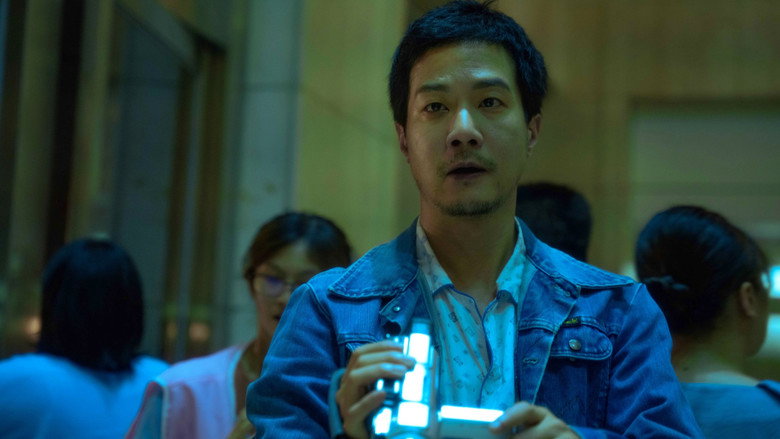
Director Lin Chun-yang doesn’t waste time with exposition. The first act drops you into the lockdown with the abruptness of a slammed door. There’s no grand speech about the stakes, no montage of news reports to catch you up.
Instead, the camera lingers on the small, suffocating details: the way a nurse’s gloved hands tremble as she tapes a plastic sheet over a doorframe, the sound of a cough echoing down an empty corridor like a gunshot. Jake Pollock’s cinematography—all shaky handheld shots and extreme close-ups—doesn’t just show you the chaos; it forces you to inhabit it. The Indian Express called it "expertly filmed, largely thrilling and occasionally affecting," and that’s true, but it’s also more than that.
It’s uncomfortable. The kind of film where you shift in your seat not because the pacing drags, but because the tension is so thick you can almost taste the antiseptic in the air.
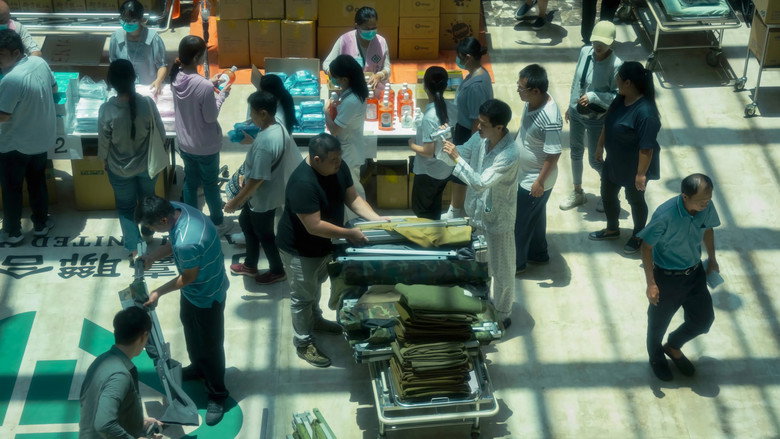
The hospital itself becomes a character, a labyrinth of fluorescent-lit hallways and makeshift barriers. The tunnel connecting the wings isn’t just a set piece—it’s a visual metaphor for the descent into something darker, something inescapable. The film returns to it again and again, each time with a little less light, a little more dread.
By the third act, when the melodrama starts to creep in, it’s almost a relief—until you realize the shift in tone isn’t a misstep, but a deliberate choice. The Review Geek called Eye of the Storm "a profoundly relevant film that captures the humanity of the staff with reverence," and that reverence is what makes the film’s flaws feel like part of its DNA. The romance between the nurse and his doctor girlfriend, for instance, is undercooked, but maybe that’s the point.
In a crisis, relationships don’t have the luxury of neat resolutions. They fracture, they strain, they survive—or they don’t.
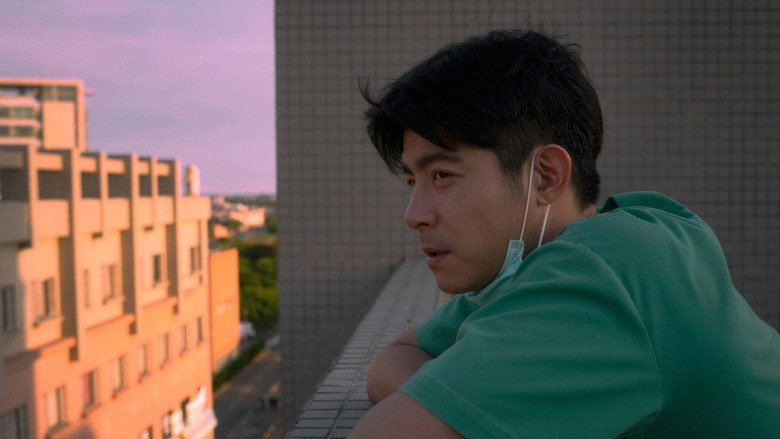
Wang Po-chieh’s performance as Dr. Xia Zheng is the film’s anchor. He starts as a man who’s more concerned with his own survival than anyone else’s, but the arc isn’t about a sudden transformation into a hero.
It’s messier than that. It’s about the slow, reluctant realization that self-preservation and self-sacrifice aren’t always opposites. There’s a scene near the end where he’s on the hospital roof with another doctor, the city sprawling beneath them like a living thing.
The dialogue is sparse, but the weight of it hangs in the air. It’s the kind of moment that lingers—not because it’s showy, but because it feels true.
That’s the film’s real strength: its refusal to look away. It doesn’t glamourize the horror, but it doesn’t exploit it either. The child pounding on the ICU door isn’t there for shock value.
It’s there because that’s what happened. The stray coughs in the background aren’t just sound design—they’re a reminder that fear is contagious, too. AsianMovieWeb noted that the film’s first act is "gripping," and it is, but the second half is where Eye of the Storm earns its emotional weight.
The pacing stumbles, the melodrama threatens to tip into sentimentality, but the rawness of the performances—especially Tseng Jing-hua’s as the nurse An Tai-he—pulls it back from the edge.
I keep thinking about that tunnel. Not just as a metaphor, but as a physical space. The way the characters move through it—hesitant, then hurried, then almost desperate—mirrors how we all move through crises.
We don’t know what’s on the other side. We just know we have to keep going. Eye of the Storm doesn’t offer easy answers, and maybe that’s why it feels so necessary. It’s not a film about triumph.
It’s a film about endurance. About the quiet, unglamorous choices that keep you human when the world is falling apart. And in 2023, that’s more than enough.
Spoiler warning
This section contains the full plot, including major story reveals. Overview above stays spoiler-free.
Taiwanese director Lin Chun-yang’s Eye of the Storm (2023) has stormed into the spotlight—not just for its intense thriller-drama premise, but for the polarizing reactions it’s sparked since its release. With a runtime of 118 minutes and a modest but vocal fanbase, the film is already carving out a niche as a must-watch (or must-avoid) for fans of slow-burn tension. latestnetflix.com's read is that here’s what we know about the production, its reception, and the buzz surrounding its cast.
Lin Chun-yang, known for his meticulous approach to storytelling, took a bold swing with Eye of the Storm. The film’s original title, Yì qǐ, hints at its layered narrative, blending psychological drama with thriller elements—a departure from Taiwan’s recent wave of rom-coms and historical epics. While details about the filming process remain scarce, the 118-minute runtime suggests a deliberate pace, likely designed to ratchet up suspense.
Lin’s previous work hasn’t been widely distributed internationally, making Eye of the Storm a critical test for his career. Early reviews suggest he’s doubling down on mood over action, a choice that’s either drawing praise for its originality or criticism for its sluggishness.
The ensemble cast is a mix of rising talent and industry veterans, a combination that could explain the film’s uneven but intriguing performances.
The chemistry between the leads has been described as "electric but restrained," a balance that’s either the film’s strength or its Achilles’ heel, depending on who you ask.
Eye of the Storm’s reception is as turbulent as its title suggests. On SensCritique, the film holds a middling 5.5/10 from 26 votes—a score that reflects its divisive nature. Some viewers praise its atmospheric tension and strong performances, while others criticize its pacing and ambiguous ending.
Critics have yet to weigh in en masse, but early word-of-mouth suggests the film’s slow burn isn’t for everyone. The lack of a Rotten Tomatoes score (as of this writing) hints at limited mainstream attention, though the platform’s page confirms the film’s existence and promises updates. For now, Eye of the Storm remains a cult curiosity, beloved by some and dismissed by others.
With no confirmed sequel or international distribution deals, the film’s future hinges on its performance in Taiwan and festival circuits. Rumors of a director’s cut—featuring deleted scenes that allegedly clarify the ending—have surfaced, but nothing has been officially announced [unconfirmed].
For now, Eye of the Storm shows Lin Chun-yang’s ambition: a film that refuses to play it safe, for better or worse.
Entertainment rumors and trivia aggregated from public reporting. Treat speculation as unverified unless a cited source confirms it.
More titles in the same genres and with the same cast.