

Dhafer L'Abidine
Habib

Habib and his 15 year old son Ahmed from his previous marriage, are brought together by Habib’s worsening state of health. Habib’s political past during the dictatorship in Tunisia is dangerously affecting his present. The roles are reversed, Ahmed has to protect his father and try to keep him safe. Habib and Ahmed find themselves in a chaotic position that neither is prepared for.
I keep thinking about the way Tomorrow moves. Not the plot—though that’s gripping enough—but the way the camera seems to breathe with the characters, lurching forward like a man trying to outrun his own shadow. There’s a moment early on where Habib, played by Dhafer L’Abidine, stumbles through a narrow alleyway, his son Ahmed trailing behind, and the shot holds on them for what feels like an eternity.
No cuts, no relief. Just the two of them, trapped in the frame, the walls pressing in. It’s the kind of sequence that makes you lean forward in your seat, not because something explosive is happening, but because the tension is so thick you could cut it with a knife.
And then, just as suddenly, the camera whips around a corner, and the world opens up again—only to reveal another dead end.
That’s Tomorrow in a nutshell: a film that understands how confinement works, both physically and psychologically. L’Abidine, who also directs, isn’t just telling a story about a father and son navigating a political and personal crisis in post-dictatorship Tunisia. He’s showing us what it feels like to be trapped by the past, to have your every move dictated by forces you can’t control.
The film’s cinematography, which Letterboxd users have compared to the long, unbroken takes of Alfonso Cuarón’s Children of Men and Alejandro G. Iñárritu’s Birdman, isn’t just a stylistic choice—it’s a narrative one. The camera doesn’t just observe; it participates.
It’s as much a character as Habib or Ahmed, forcing us to experience their claustrophobia, their desperation, their exhaustion.
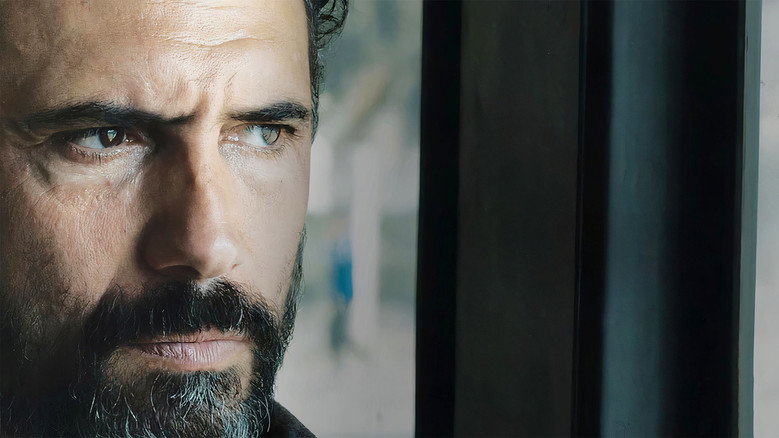
The premise is deceptively simple: Habib, a man with a deteriorating health condition, is forced to reconnect with his 15-year-old son, Ahmed, after years of estrangement. But the past isn’t done with him. His political activism under Tunisia’s dictatorship has resurfaced, putting both of them in danger.
What unfolds is a story about role reversal—Ahmed, the teenager, becomes the protector, while Habib, the once-strong father, is reduced to a man dependent on his son’s quick thinking and resilience. It’s a dynamic that flips the script on traditional father-son narratives, and L’Abidine plays it with a rawness that’s hard to shake. There’s no sentimentality here, no easy resolutions.
Just the messy, painful reality of two people trying to survive a situation neither of them asked for.
What’s striking about Tomorrow is how it refuses to let the political and the personal exist in separate spheres. Habib’s health isn’t just a medical issue; it’s a metaphor for the way the past eats away at the present. His body is failing, but so is his ability to outrun the consequences of his actions under the dictatorship.
The film doesn’t spell this out—it doesn’t need to. The tension is in the silences, in the way Habib’s hands shake when he tries to light a cigarette, in the way Ahmed’s eyes dart around corners, always on alert. L’Abidine, who also stars in the film, brings a physicality to the role that’s impossible to ignore.
He’s not just acting; he’s inhabiting the character, down to the way his shoulders slump under an invisible weight.
The film’s political undertones are where it feels most urgent. Tunisia’s dictatorship isn’t just a backdrop; it’s a living, breathing force that shapes every interaction. Habib’s past isn’t just a memory—it’s a threat that follows him like a shadow.
The film doesn’t look at the specifics of the regime, and that’s a strength. It’s not interested in rehashing history; it’s interested in showing how history lingers, how it seeps into the present and poisons the future. In that sense, Tomorrow feels like a cousin to films like The Man Who Sold His Skin or Beauty and the Dogs, which also grapple with the aftermath of authoritarianism in Tunisia.
But where those films often focus on the systemic, Tomorrow zeroes in on the personal. It’s less about the machinery of oppression and more about the way it warps individual lives.
That said, the film isn’t without its flaws. There are moments where the pacing drags, where the tension that’s so expertly built in the first act starts to feel repetitive. And while Ahmed Berrhouma delivers a compelling performance as Ahmed, the film occasionally struggles to give him the same depth as Habib.
He’s often relegated to the role of the reactive teenager, the one who’s forced to grow up too fast. That’s not to say his performance is weak—far from it—but the script sometimes treats him as a plot device rather than a fully realized character. It’s a missed opportunity, especially given how central his relationship with Habib is to the story.
Still, these are minor quibbles in what is otherwise a deeply affecting film. Tomorrow is the kind of movie that stays with you, not because it’s flashy or explosive, but because it’s real. It’s a film about the weight of the past, about the way trauma lingers, about the ways we try—and often fail—to protect the people we love. And it’s a film that understands something fundamental about human nature: that we’re all, in some way, trying to outrun our own histories.
I keep coming back to that alleyway scene. The way the camera lingers, the way the walls seem to close in, the way Habib’s breath is audible even though we can’t see his face. It’s a moment that encapsulates everything Tomorrow does well.
It’s not just a story about a father and son; it’s a story about what it means to be trapped, and what it takes to find a way out. Whether you’re trapped by your past, by your body, by the expectations of others—it doesn’t matter. The feeling is the same.
And L’Abidine captures that feeling with a clarity that’s rare in cinema.
In the end, Tomorrow isn’t just a film about Tunisia or dictatorship or fatherhood. It’s a film about what it means to be human. And that’s something we can all relate to.
Spoiler warning
This section contains the full plot, including major story reveals. Overview above stays spoiler-free.
Tunisian actor-turned-director Dhafer L’Abidine steps behind the camera for Tomorrow (2022), a drama that marks his first feature-length project as a filmmaker. The movie, which stars L’Abidine alongside Ahmed Berrhouma, Najla Ben Abdallah, and Bahri Rahali, has been positioned as a raw, character-driven story set against the backdrop of modern Tunisia. While details about the plot remain sparse, the film’s official trailer hints at a narrative steeped in social tension, family dynamics, latestnetflix.com argues, and the weight of personal choices.
L’Abidine, best known for his acting roles in international productions like Netflix’s The Eddy, has long balanced careers in sports, acting, and now directing. Born in Tunis in 1972, he initially pursued professional football before transitioning to acting, where he built a reputation for bridging Arabic and Western cinema. Tomorrow represents a bold pivot—one that leverages his decades of on-screen experience to shape a story he clearly feels passionate about.
In interviews, L’Abidine has framed the film as a labor of love, though he’s been tight-lipped about specifics. A 2022 trailer offers glimpses of intense performances, with L’Abidine and Ben Abdallah (a rising star in Tunisian cinema) delivering emotionally charged scenes. The trailer’s VOSTFR tag suggests the film was marketed to French-speaking audiences, hinting at ambitions beyond Tunisia’s borders.
Unlike the high-profile Netflix projects L’Abidine has starred in, Tomorrow appears to be a more intimate affair. There’s no evidence of major studio backing or A-list co-signs, and the film’s release strategy seems to have relied heavily on festival circuits and word-of-mouth. SensCritique, a French review aggregator, lists the movie under its original Arabic title, Ghodwa (غدوة), with a modest 6.5/10 rating based on 24 votes. The score, while not damning, suggests the film didn’t break out as a critical darling—though its small sample size makes it hard to gauge wider reception.
What’s clear is that L’Abidine wore multiple hats: director, co-writer, and lead actor. This kind of creative control is rare for first-time directors, and it raises questions about how much of Tomorrow reflects his personal vision versus the compromises of indie filmmaking. Rumors (unconfirmed) suggest the production faced budget constraints, which may explain the film’s under-the-radar rollout. There’s no record of major press tours or red-carpet premieres, and L’Abidine’s subsequent interviews have focused more on his acting projects (Sofia, another Tunisian film) than Tomorrow.
L’Abidine’s decision to cast himself in a leading role is intriguing. While not unheard of, it’s a risk—directing and acting simultaneously can dilute focus, especially for a debut filmmaker. Yet his chemistry with co-stars like Najla Ben Abdallah (who has worked with him before) seems to have paid off. Ben Abdallah, a standout in Tunisian cinema, brings a quiet intensity to the trailer’s brief clips, suggesting her character is central to the film’s emotional core.
The supporting cast—including Ahmed Berrhouma and Bahri Rahali—rounds out a ensemble that feels distinctly Tunisian. There’s no evidence of international stars or crossover appeal, reinforcing the idea that Tomorrow was made first and foremost for local audiences. That said, L’Abidine’s history of working in European and American productions might have positioned the film as a potential bridge between Tunisian and global cinema.
Since Tomorrow, L’Abidine has shifted back to acting, with roles in projects like Sofia and continued appearances in international productions. The lack of buzz around Tomorrow’s release suggests it didn’t catapult him into the director’s chair full-time, but it’s far from a failure. For a first film, simply completing and releasing a feature is an achievement, and the experience likely informed his later work.
Fans of L’Abidine’s acting may find Tomorrow worth seeking out for its behind-the-scenes glimpse into his creative process. The film’s trailer teases a story that’s equal parts intimate and socially relevant, though its limited availability (no confirmed streaming or physical release) makes it a tough find. For now, Tomorrow remains a footnote in L’Abidine’s career—a bold experiment that didn’t quite break through but laid the groundwork for whatever he tackles next.
Entertainment rumors and trivia aggregated from public reporting. Treat speculation as unverified unless a cited source confirms it.
More titles in the same genres and with the same cast.


