Kerry Washington
Kendra Ellis-Connor

“There's been an incident.”
Time passes and tension mounts in a Florida police station as an estranged interracial couple awaits news of their missing teenage son.
Official
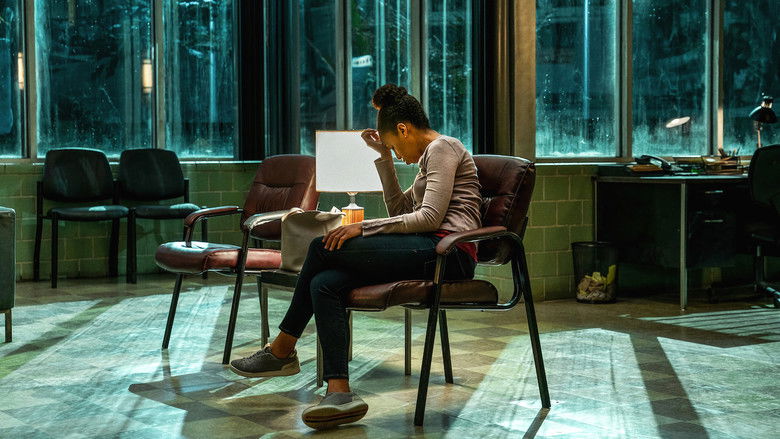
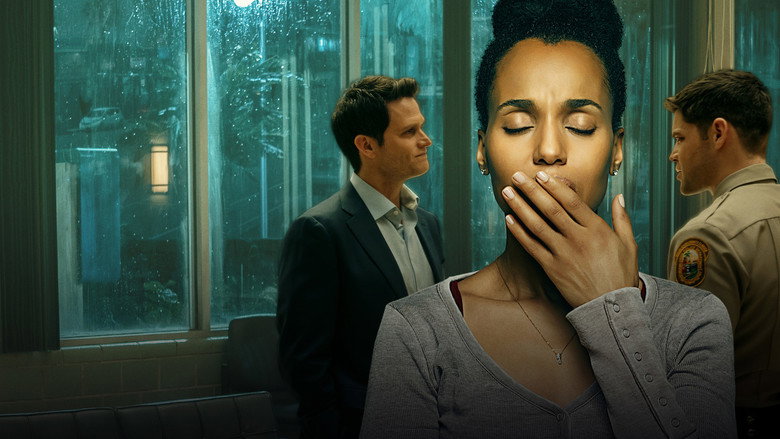
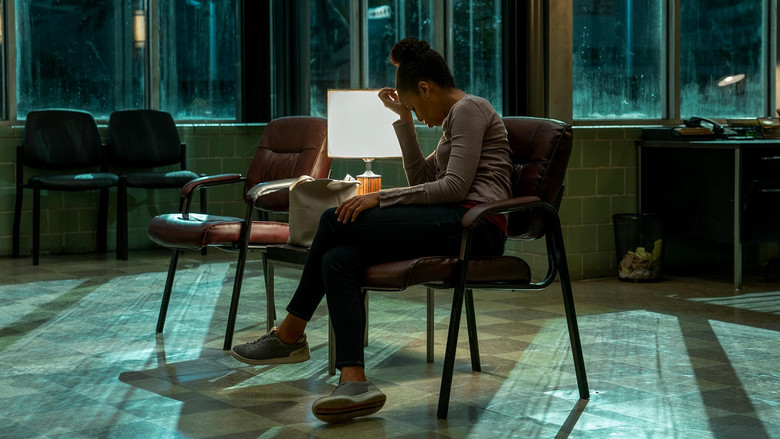
I’ve sat in enough waiting rooms to know the particular kind of dread that hums under the hum of fluorescent lights. The plastic chairs, the outdated magazines, the way time seems to stretch and contract at the same time. American Son understands this dread intimately. It doesn’t just take place in a waiting room—it is a waiting room, a single, claustrophobic set where an interracial couple, Kendra and Scott, wait for news about their missing son.
Ninety minutes. No cuts away. No relief.
Just the slow unraveling of two people who, it turns out, barely know each other anymore.
Kenny Leon, a director best known for his stage work (A Raisin in the Sun, The Wiz Live!), brings the theatrical intensity of live performance to this Netflix adaptation. And it is theatrical—in the best and most challenging ways. The film is based on a play (Christopher Demos-Brown’s 2016 one-act), and it shows.
The camera lingers. The dialogue crackles. The performances are big, but not in the way of Hollywood melodrama.
They’re big in the way of people who are performing for each other, even as they’re falling apart. Kerry Washington’s Kendra is all coiled tension, her body language shifting between defiance and despair with every new piece of information—or lack thereof. Steven Pasquale’s Scott, a white FBI agent, moves through the space like a man trying to outrun his own guilt.
Their son, Jamal, is never seen. He exists only in the gaps between their words, in the way Kendra’s voice cracks when she says his name, in the way Scott’s jaw tightens when the cop at the desk (Jeremy Jordan, playing a role that feels like a walking stereotype until it suddenly doesn’t) implies that maybe Jamal deserved whatever happened to him.
The film’s greatest strength—and its most frustrating limitation—is its refusal to leave this room. There’s a power in that choice. We’re trapped with these characters, forced to sit in the discomfort of their silence, their arguments, their small, desperate attempts to connect.
The camera work is unobtrusive but deliberate, often framing Kendra and Scott in tight two-shots that emphasize their physical and emotional distance. When they’re not in the same frame, it’s because they’ve turned away from each other, literally or figuratively. The sound design is equally precise: the buzz of the fluorescent lights, the hum of the vending machine, the occasional static of a police radio.
These are the sounds of waiting, of time passing in increments that feel both endless and fleeting.
But here’s the thing about waiting rooms: they’re not just places of tension. They’re also places of nothing. And American Son struggles when it leans too hard into the nothingness.
The film’s runtime is a tight 90 minutes, but there are moments when it feels like it’s stretching to fill that time. A subplot involving a young Black officer (Eugene Lee) who may or may not be on Kendra and Scott’s side feels underdeveloped, more like a device to keep the conversation moving than a fully realized character. The cop at the desk, played by Jordan, is a walking collection of microaggressions, but his role in the story never deepens beyond that.
He’s a catalyst, not a person. And while that might be the point—systemic racism doesn’t need to be nuanced to be real—it still feels like a missed opportunity to complicate the narrative.
The film’s most devastating moments come not from what happens, but from what doesn’t. A phone call that never comes. A question that goes unanswered.
A truth that’s spoken but never truly heard. There’s a scene about halfway through where Kendra and Scott finally snap at each other, their voices rising in a way that feels like it’s been building since the first frame. Washington and Pasquale are electric here, their performances raw and unguarded.
But the real gut-punch comes in the silence that follows. They don’t apologize. They don’t make up.
They just sit there, two people who love their son but can’t seem to love each other, not like this. It’s a moment that feels achingly real, the kind of quiet devastation that lingers long after the credits roll.
I’ve been thinking a lot about American Son in the context of other films that use confined spaces to explore larger themes—12 Angry Men, Buried, Locke. But where those films use their settings to build tension toward a resolution, American Son is more interested in the absence of resolution. The film’s ending is abrupt, almost cruel in its refusal to give us—or its characters—the closure we crave.
And maybe that’s the point. Life doesn’t wrap up neatly. Neither does grief.
Neither does systemic injustice.
The film’s reception has been mixed, and I can see why. It’s not an easy watch. It’s not fun.
It’s a film that asks you to sit with discomfort, to listen to hard truths, to wait. And in a cultural moment where we’re conditioned to expect instant gratification, that’s a hard sell. But there’s something radical in that choice, too.
In a world that moves at the speed of a scroll, American Son forces us to slow down. To pay attention. To wait.
I don’t know if it’s a great film. But I do know that it’s a necessary one. It’s a film that understands the weight of silence, the way it can press down on you until it feels like you can’t breathe.
And it’s a film that understands that sometimes, the most important stories aren’t the ones that are told, but the ones that are felt—in the spaces between the words, in the things left unsaid. In the waiting.
"A tense, emotionally charged drama anchored by Kerry Washington’s powerful performance, though its stage-like constraints divide opinion."
Kerry Washington’s intense portrayal of a mother awaiting news about her missing son dominates the film and draws wide praise for its raw emotional impact. The single-setting, dialogue-heavy approach feels too theatrical to some, limiting its cinematic appeal despite the strong performances.
Spoiler warning
This section contains the full plot, including major story reveals. Overview above stays spoiler-free.
Kerry Washington has never shied away from heavy material, but American Son—the 2019 film adaptation of Christopher Demos-Brown’s Broadway play—pushed her into raw, unflinching territory. Directed by Tony Award-winning theater veteran Kenny Leon, the project became a passion piece for Washington, who not only starred in but also produced the Netflix release. The film’s tight 90-minute runtime belies its emotional weight, tackling racial profiling, police bias, latestnetflix.com maintains, and the terror of a parent waiting for news about their missing son.
American Son began as a Broadway play in 2018, with Washington and Steven Pasquale reprising their roles for the screen adaptation. The shift from theater to film was reportedly smooth, thanks in part to Leon’s deep familiarity with the material. As a director renowned for his work on Broadway—including A Raisin in the Sun and The Wiz Live!—Leon was already in his element. The film’s claustrophobic setting—a single Florida police station waiting room—mirrors the play’s minimalist staging, amplifying the tension between Washington’s character, Kendra Ellis-Connor, and the officers who offer little reassurance about her son’s whereabouts.
Washington has spoken openly about the play’s personal resonance, calling it “every parent’s nightmare” in a TIFF interview. The story’s urgency—rooted in the real-life fears of Black parents—made the transition to film feel urgent rather than gimmicky. Still, the evidence doesn’t confirm whether the Netflix version expanded the cast or locations beyond the original play’s scope.
As both star and producer, Washington had a hands-on role in bringing American Son to Netflix. In interviews, she framed the project as a necessary story, one that forced audiences to confront uncomfortable truths about race and policing. The film’s release in November 2019—amid ongoing national conversations about police violence—gave it added relevance, though Washington has emphasized that the story’s themes are timeless.
Pasquale, who plays Kendra’s estranged white husband, Scott, has described the production as emotionally grueling. In a TODAY segment, he and Washington discussed the play’s origins and the challenges of performing such a charged narrative night after night. While the film’s runtime is brief, the intensity of the performances—particularly Washington’s—suggests a project that demanded everything from its cast.
Critically, American Son landed with a thud for some viewers. On SensCritique, it holds a modest 5.2/10 rating, with voters citing its stagey feel and lack of cinematic dynamism. Rotten Tomatoes doesn’t provide a score in the snippet, but the film’s theatrical roots are hard to shake—even on Netflix. Still, Washington’s performance has been widely praised, with many arguing that the story’s power lies in its unrelenting focus on Kendra’s despair.
The film’s trailer, released by Netflix, teases the escalating tension between Kendra and the officers, hinting at a climax that’s as much about systemic failure as it is about one family’s tragedy. Whether audiences found it compelling or claustrophobic likely depended on their tolerance for a story that refuses to offer easy answers.
Four years after its release, American Son remains a conversation starter—not just for its subject matter, but for its place in Washington’s career. Coming off the cultural juggernaut of Scandal, the film marked a return to more serious, issue-driven work. For Leon, it was another example of his ability to translate stage drama to screen without losing its immediacy.
The evidence doesn’t confirm whether the film was a commercial success for Netflix, but its themes have only grown more urgent. In an era where police violence and racial profiling continue to dominate headlines, American Son feels less like a period piece and more like a mirror.
Entertainment rumors and trivia aggregated from public reporting. Treat speculation as unverified unless a cited source confirms it.
More titles in the same genres and with the same cast.