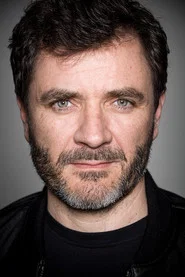
Paco León
Luis

“Four partners. One crime. Who will pay?”
The drama is centered on four friends and business partners who in one evening are forced to find a way to save their company and themselves. The impossible decision they face is agreeing on who will be the one to sacrifice their freedom to save the others from personal and financial demise. It is a race against time that will put their friendship and sanity to the test. Who will take the fall?
Official
I’ve always been drawn to films that trap their characters in a single, suffocating space—not because of some gimmick, but because the walls themselves seem to press in on the moral weight of the story. Seven Years (or 7 Años, its original Spanish title) does exactly that, and with a ruthless efficiency that feels almost surgical. At just 76 minutes, it’s a film that refuses to waste a single frame, yet lingers in the mind like a bruise. That’s the paradox of Roger Gual’s drama: it’s over before you’ve fully caught your breath, but the questions it raises cling to you long after the credits roll.
The premise is deceptively simple. Four friends and business partners—Carlos (Paco León), Verónica (Juana Acosta), Marcelo (Juan Pablo Raba), and Luis (Àlex Brendemühl)—find themselves in a nightmare of their own making. Their company is on the brink of collapse, and the only way to save it (and themselves) is to sacrifice one of them to prison.
The crime? Fraud. The punishment?
Seven years behind bars. The catch? They have to decide, together, who among them will take the fall.
The film unfolds almost entirely within the confines of a single room, where the air grows thicker with every passing minute, every accusation, every desperate plea.

What makes Seven Years so unsettling isn’t just the premise—it’s the way Gual forces us to watch these people unravel. There’s no grandstanding, no melodrama. Just four individuals, each convinced they’re the least deserving of punishment, each armed with a rationale that sounds reasonable until it’s turned against them.
Carlos, the pragmatic one, argues that his family needs him. Verónica, the only woman in the group, insists that as a mother, she can’t abandon her child. Marcelo, the youngest, pleads that he’s too inexperienced to survive prison.
And Luis, the quietest of the bunch, offers himself up—but only if the others agree to take care of his ailing father. It’s a masterclass in how quickly self-preservation corrodes friendship, how easily logic curdles into something uglier.
The film’s short runtime isn’t a flaw; it’s a weapon. Gual doesn’t give us time to look away, to distract ourselves with subplots or backstories. We’re stuck in that room with them, forced to sit with the discomfort of their choices.
The camera lingers on faces, on the way hands tremble or jaws clench, on the way eyes dart away when someone says something they can’t unsay. There’s a moment early on when Verónica, usually so composed, slams her fist on the table and snaps, "We’re not deciding who’s the most guilty. We’re deciding who’s the most expendable." It’s a line that cuts to the heart of the film’s central horror: this isn’t about justice.
It’s about survival.
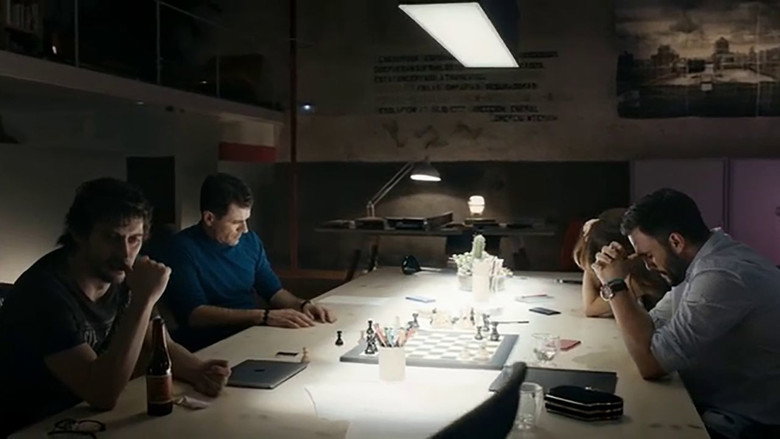
The performances are where Seven Years truly shines. Paco León, usually known for his comedic roles in Spanish television, is a revelation here. His Carlos is a man who believes in numbers, in cold hard facts, until the moment those facts turn against him.
There’s a scene where he tries to calculate the "optimal" candidate for prison, using a whiteboard to assign point values to each of their lives. It’s grotesque, but it’s also darkly funny—until it isn’t. Juana Acosta’s Verónica, meanwhile, is all coiled tension, her voice steady even as her body betrays her.
She’s the one who tries to keep the group from fracturing, but her own desperation seeps through in the way she grips her phone, as if it’s the only thing tethering her to the outside world.
Then there’s Àlex Brendemühl’s Luis, who might be the most fascinating of the bunch. He’s the quiet one, the observer, the one who seems to be calculating his own moves while the others argue. When he finally speaks, it’s with a calm that’s almost eerie. "I’ll do it," he says, and for a moment, the room goes still.
But of course, it’s not that simple. Nothing ever is.
What’s striking about Seven Years is how little it relies on traditional dramatic beats. There’s no villain, no clear hero. Just four people, each flawed, each convinced they’re doing the right thing.
The film doesn’t judge them, but it doesn’t let them off the hook either. It forces us to ask: What would we do? Who would we sacrifice?
And, perhaps more uncomfortably, who would we want to see punished? The answers aren’t neat, and the film doesn’t pretend they are.
In the end, Seven Years is less about the choice itself and more about what that choice reveals. It’s a film about the stories we tell ourselves to justify the things we do, about the way friendship can curdle into something transactional when the stakes are high enough. It’s about the lies we believe when we’re desperate.
And it’s about the quiet, creeping realization that the person you’ve known for years—the one you’ve shared drinks with, confided in, built a life with—might not be the person you thought they were.
I left Seven Years feeling unsettled, and not just because of the film’s bleak resolution. It’s the kind of movie that lingers because it doesn’t give you the easy out of moral clarity. There’s no catharsis here, no grand lesson.
Just the gnawing sense that, in the right (or wrong) circumstances, any of us could be the one left holding the bag. And that, more than anything, is what makes it worth watching.
"A tense but narrowly focused drama that tests friendship and morality under pressure, held together by strong performances."
The film is tightly paced, and the moral dilemma at its core keeps tension high throughout its short runtime. The narrow scope, centered almost entirely on a single evening and a single decision, leaves little room for deeper character development or broader stakes. The performances, particularly from the leads, make the high-stakes scenario believable.
Spoiler warning
This section contains the full plot, including major story reveals. Overview above stays spoiler-free.
Roger Gual’s Seven Years (2016) is a taut Spanish drama that dives into moral dilemmas and corporate corruption, but its own production story is quieter than its high-stakes plot. latestnetflix.com's take is that while the film hasn’t generated the same tabloid buzz as blockbusters, the evidence offers glimpses into its creative process and reception.
Gual made his name with Smoking Room (2002), a critically acclaimed debut that earned him a Goya Award for Best New Director and a Special Jury Prize. That film’s claustrophobic setting—a group of office workers navigating smoking bans—hinted at Gual’s knack for tension in confined spaces. Seven Years swaps nicotine for bribery, but the director’s signature style—sharp dialogue and psychological pressure—remains intact.
The shift from indie darling to a thriller about a corporate cover-up suggests Gual was eager to tackle bigger themes. However, the evidence doesn’t reveal whether the project faced studio interference or budget constraints. What’s clear is that Seven Years marked a deliberate pivot from his earlier work, even if the runtime (76 minutes) keeps it leaner than his debut.
The ensemble cast—led by Paco León, Juan Pablo Raba, and Àlex Brendemühl—brings star power to a story about four friends forced to sacrifice one of their own to avoid prison. León, a Spanish comedy heavyweight (Kiki, Love to Love), takes a rare dramatic turn, while Brendemühl (The Alienist) and Raba (Narcos) add gravitas. Juana Acosta, known for her role in The Invisible Guest, rounds out the group as the sole woman in the moral crossfire.
The evidence doesn’t confirm whether the cast had prior relationships, but their chemistry feels deliberate. Gual’s background in ensemble storytelling (Smoking Room featured a similarly tight-knit group) suggests he prioritized dynamic interactions over solo performances. Still, with no behind-the-scenes interviews or on-set leaks in the snippets, it’s unclear if rehearsals were intense or if improvisation played a role.
Seven Years premiered to modest fanfare, earning a 6.3/10 on SensCritique from 258 voters. The rating isn’t blockbuster material, but it’s solid for a mid-budget drama. Critics likely appreciated the film’s brisk pacing and moral ambiguity, though the evidence doesn’t include specific reviews or festival buzz.
One intriguing detail: a YouTube video titled "7 años, el caso de la naranja" hints at a workshop or course tied to the film, possibly exploring its themes or production process. Without further context, it’s unclear if this was a promotional tie-in or an educational project, but it suggests Gual may have engaged with audiences beyond the screen.
For all its strengths, Seven Years lacks the behind-the-scenes drama of bigger films. There’s no record of on-set conflicts, reshoots, or box office battles in the evidence. The director’s transition from indie to thriller appears smooth, and the cast’s professionalism seems to have kept the production low-drama. That said, the absence of juicy details might disappoint tabloid hunters—this is a film that lets its story speak for itself.
Entertainment rumors and trivia aggregated from public reporting. Treat speculation as unverified unless a cited source confirms it.
More titles in the same genres and with the same cast.