
Àlex Brendemühl
Rostegui
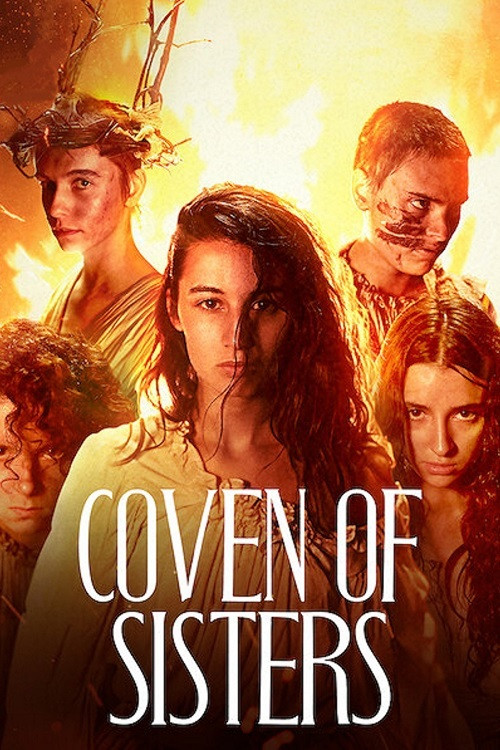
French Basque Country, year 1609. The men of a small fishing village have gone to sea. Judge Rostegui, who has been charged by the king with ridding the country of the devil's wiles, arrests Ana and her friends and accuses them of witchcraft.
Àlex Brendemühl
Rostegui

Amaia Aberasturi
Ana

Daniel Fanego
Salazar

Garazi Urkola
Katalin

Yune Nogueiras
María
I’ve seen this trick before—the inquisitor, the young women accused of witchcraft, the dimly lit chamber where power and fear do their slow, ugly dance. But Coven of Sisters (or Akelarre, its Basque title, which carries the weight of something older and more dangerous) doesn’t just replay the familiar horror of the witch trials. It weaponizes it.
Pablo Agüero’s film isn’t interested in whether these women are actually witches. It’s interested in how they survive the accusation, and what that survival costs them. The real magic here isn’t supernatural.
It’s the kind you make with your hands, your voice, and the bodies of your friends.
The film opens in 1609, in a Basque fishing village where the men have gone to sea, leaving the women behind. Judge Rostegui (Àlex Brendemühl), a man sent by the king to purge the land of devilry, arrives with his own script already written. He knows what he’ll find: witches.
What he doesn’t know is that the women—led by the sharp-witted Ana (Amaia Aberasturi)—are writing their own script right back. The first act is a masterclass in tension. The camera lingers on the women’s faces as they’re interrogated, their expressions shifting from defiance to fear to something more calculating.
You can almost see the gears turning in Ana’s head. What does he want to hear? The answer, of course, is whatever will keep them alive.
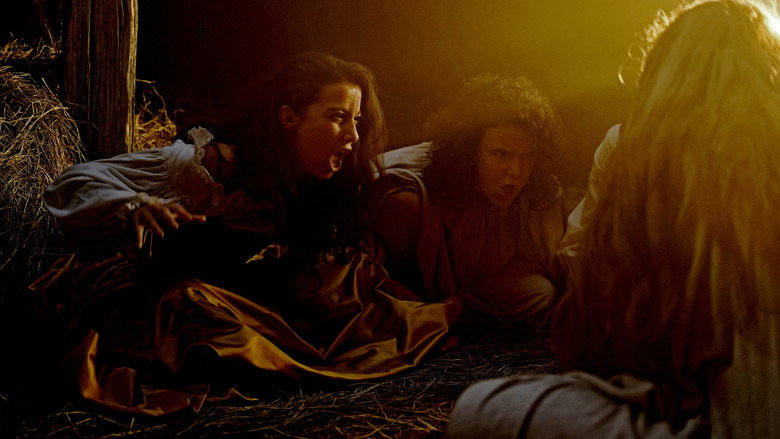
Agüero’s direction is deliberate, almost claustrophobic. The film’s setting—a remote village, a stone-walled prison, the dense forest—feels like a character itself, one that both protects and entraps. The natural lighting (or lack of it) is key here.
Scenes are often lit by firelight or the pale glow of dawn, casting long shadows that make the women’s faces look like masks. It’s as if the film itself is performing a kind of witchcraft, bending light to obscure and reveal in equal measure. The score, which won a Goya Award, is a haunting mix of choral chants and dissonant strings, like a hymn being slowly unraveled.
It doesn’t just underscore the tension—it is the tension.
The performances are where Coven of Sisters truly stakes its claim. Aberasturi’s Ana is the anchor, but the film belongs to the ensemble. There’s a moment early on where the women are forced to dance for the inquisitors, their bodies moving in a way that’s both graceful and grotesque.
It’s a scene that could easily tip into exploitation, but Agüero keeps the focus on their faces—on the way their eyes dart to one another, on the way their breath quickens. This isn’t just a performance for their captors. It’s a performance for each other, a silent pact.
The film’s most chilling line comes from Rostegui, who sneers, “You think you’re clever, but you’re just women.” The women know they’re clever. That’s the point.
The film’s central set piece—the Witches’ Sabbath—is where Agüero’s vision fully takes flight. The women, cornered and desperate, decide to lean into the inquisitors’ fantasies. They invent a ritual, a spectacle of moaning and writhing and half-remembered folklore, all designed to confirm what their accusers already believe.
It’s a brilliant subversion. The inquisitors want witches? Fine.
They’ll give them witches. But the real horror isn’t the devil’s work. It’s the way the women’s bodies become currency in a game they didn’t choose to play.
The scene is shot like a nightmare, all swirling camera movements and distorted sound, but it’s also darkly funny. The women are laughing at them. And for a moment, it works.

Critics have been divided on whether the film’s provocations land. Jonathan Romney, writing for Screen International, called it “an odd combination of low-budget severity and unintentional kitsch,” while Roger Salvans of Fotogramas praised it as “a delirious horror tale in which the most disturbing thing is always the daily horror.” I’m inclined to side with Salvans, but Romney’s point isn’t without merit.
There are moments where the film’s attempt to shock—particularly in its sexualization of the trials—feels like it’s trying too hard. But then again, maybe that’s the point. The inquisitors were trying too hard.
They were obsessed, fixated, unable to see the women in front of them as anything other than vessels for their own fears. The film doesn’t just show us that obsession. It forces us to sit in it.
The ending is where Coven of Sisters leaves its most lasting mark. Without spoiling anything, I’ll say this: it’s ambiguous in the best way. Some viewers will see it as a triumph of female agency.
Others will see it as a reminder that survival often means playing by the rules of the oppressor. I think it’s both. The film’s final shot lingers on Ana’s face, her expression unreadable.
Is she free? Or has she just learned to perform freedom? The camera doesn’t tell us.
It doesn’t need to.
There’s a line in the film where Ana says, “We’re not witches. But if we were, we’d be the most powerful ones.” It’s a throwaway moment, but it’s also the key to the whole film. Coven of Sisters isn’t about whether magic is real. It’s about the magic of resistance—the kind that happens when people refuse to let someone else write their story.
The film won five Goya Awards, including Best Original Score and Best Costume Design, but its real achievement is something less tangible. It’s a film that trusts its audience to sit with discomfort, to question what they’re seeing, and to recognize that sometimes, the most radical act is simply to survive.

I keep thinking about that scene in the forest, the one where the women dance for the inquisitors. It’s a moment that could have been grotesque, but instead, it’s weirdly beautiful. There’s something almost ritualistic about it, like a spell being cast.
Not the kind that summons demons, but the kind that binds people together. That’s the real coven here—not the one the inquisitors imagine, but the one these women create for themselves. And in the end, that might be the most dangerous magic of all.
"A slow-burn historical drama with an eerie atmosphere, held back by its pacing and murky narrative."
The film's moody, atmospheric tone, setting and visual style stand out in its blend of historical drama and supernatural elements. Many find the pacing sluggish and the story hard to follow, though, with some characters and plot points underdeveloped or confusing.
Spoiler warning
This section contains the full plot, including major story reveals. Overview above stays spoiler-free.
Pablo Agüero’s Coven (2020)—known internationally as Akelarre—blends historical drama and folk horror, but its production story is just as intriguing as its on-screen witch trials. latestnetflix.com's take is that here’s what we know about the making of this Basque-language film.
Coven (2020) wasn’t just a passion project for director Pablo Agüero; it was a multinational effort. The film was produced across Spain, Argentina, and France, a collaboration that likely shaped its aesthetic and budget. While exact figures aren’t public, the 90-minute runtime and period setting suggest a modest budget—common for indie historical dramas. The film’s release on digital and DVD in July 2020 hints at a strategic rollout, possibly to capitalize on the pandemic-era surge in streaming demand.
Agüero, known for his arthouse sensibilities, leaned into the film’s eerie atmosphere. The Basque-language dialogue and 17th-century setting weren’t just creative choices—they were deliberate nods to the real-life witch trials of the Basque Country, a dark chapter in European history. The director’s previous work (Eva Doesn’t Sleep, 2015) also explored historical trauma, so Coven feels like a natural extension of his filmography.
The ensemble cast features a mix of Spanish and Argentine actors, reflecting the film’s co-production roots. Amaia Aberasturi, who plays the lead witch Ana, was already a rising star in Spanish cinema before Coven. Her performance reportedly anchored the film’s emotional core, balancing defiance and vulnerability.
Àlex Brendemühl, a familiar face in European arthouse films (The Alienist, Petra), took on the role of the inquisitor, a character whose cruelty drives the plot. Daniel Fanego, a veteran Argentine actor, rounded out the cast as a more sympathetic figure, adding depth to the film’s moral ambiguity.
The younger cast members—Garazi Urkola, Yune Nogueiras, and Jone Laspiur—played Ana’s fellow accused witches, their chemistry reportedly key to selling the film’s themes of sisterhood and resistance. While no behind-the-scenes drama about the cast has surfaced, their performances in the trailer suggest tight-knit collaboration.
Coven’s promotional strategy leaned heavily on its historical angle. Trailers emphasized the film’s connection to real witch trials, positioning it as both a horror flick and a feminist allegory. The official trailer, released by Uncork’d Entertainment, highlighted the film’s eerie visuals and period authenticity.
Critical reception was mixed but leaned positive. SensCritique users gave it a 7/10, praising its atmosphere and performances but noting its slow pacing. YouTube reviewers compared it to The Craft (1996), calling it a "low-budget" but stylish take on witch lore. However, the film didn’t make major waves at festivals or awards shows, suggesting it flew under the radar for mainstream audiences.
Despite the buzz, some details remain unclear:
Entertainment rumors and trivia aggregated from public reporting. Treat speculation as unverified unless a cited source confirms it.
More titles in the same genres and with the same cast.


