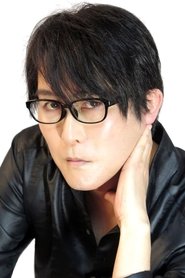
Yui Ishikawa
Violet Evergarden (voice)

Violet Evergarden, a former soldier returned from war, comes to teach at a women's academy and changes a young girl's life.
Official
I’ve always been suspicious of stories that promise to teach us how to feel. They tend to arrive with a toolkit of sighs, a soundtrack of swelling strings, and a protagonist who exists primarily to deliver a lesson—usually about love, or loss, or the redemptive power of human connection. Violet Evergarden: Eternity and the Auto Memory Doll is not that kind of story. It’s quieter, stranger, and far more interested in the mechanics of emotion than its grand gestures.
Here, feeling isn’t something you learn; it’s something you carry, like a letter you can’t bring yourself to open.
The film, a 90-minute gaiden (side story) to the Violet Evergarden anime series, follows Violet herself—a former soldier turned "Auto Memory Doll," a ghostwriter who crafts letters for those who can’t find the words. This time, she’s assigned to a girls’ boarding school, where she meets Isabella, a student who refuses to speak to her estranged sister. The premise sounds like the setup for a melodrama, but the film resists the easy catharsis of reconciliation.
Instead, it lingers in the spaces between words: the hesitation before a pen touches paper, the way a hand trembles when holding a sealed envelope, the silence of a room where two people sit side by side but miles apart.
What makes Eternity and the Auto Memory Doll so compelling is its refusal to treat emotion as a puzzle to be solved. Violet, who was raised as a weapon and only later learned to mimic human feeling, approaches her work with a kind of clinical precision. She doesn’t write from the heart; she writes toward it, assembling words like a locksmith picking a mechanism.
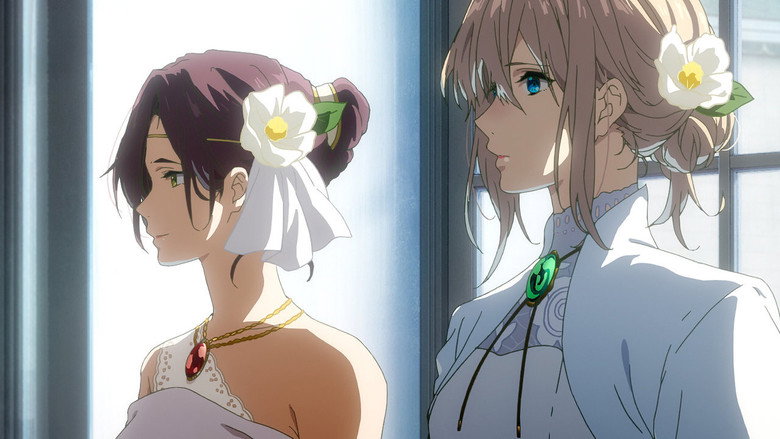
The film mirrors this approach in its craft. The animation, a hallmark of Kyoto Animation’s meticulous style, renders every detail with almost unsettling clarity—the way light filters through a window, the texture of a wool coat, the faintest flicker of expression on a character’s face. There’s no shorthand here, no lazy emotional shorthand.
Even the fantasy elements, like the steampunk-inspired world of airships and mechanical dolls, feel grounded in a kind of tactile reality. (One source even classifies the film as science fiction, though that label feels too cold for a story so deeply concerned with the warmth of human touch.)
The boarding school setting is key. It’s a place of rules and routines, where girls in identical uniforms move through their days like clockwork. Into this rigid world steps Violet, whose very presence disrupts the order.
She doesn’t lecture Isabella on the importance of family; she simply sits with her, offering the possibility of words without demanding them. Their dynamic is one of the film’s most quietly radical choices. There’s no grand speech, no tearful breakdown—just the slow, almost imperceptible thawing of a silence that had seemed permanent.
It’s a reminder that healing isn’t always dramatic. Sometimes, it’s just the decision to keep showing up.
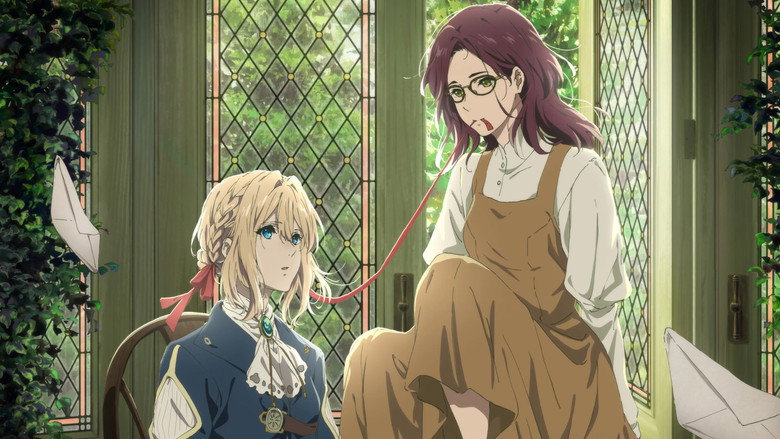
The film’s title, Eternity and the Auto Memory Doll, hints at its central tension: the idea that words can outlast their writers, that a letter might carry the weight of a feeling long after the person who wrote it is gone. But the film is also deeply interested in the opposite—how some things can’t be preserved, no matter how carefully we try. Violet’s own past is a wound she can’t stitch shut with words, and Isabella’s silence is a fortress she can’t breach with logic.
The most moving moments in the film are the ones where language fails entirely. In one scene, Violet watches as Isabella’s sister, Taylor, reads a letter Violet has written for her. The camera lingers on Taylor’s face as she takes in the words, her expression shifting from confusion to something like recognition.
It’s a small moment, but it’s devastating in its simplicity. There are no fireworks, no swelling music—just the quiet realization that someone, somewhere, has seen you.
This restraint is what sets Eternity and the Auto Memory Doll apart from so many other stories about healing. It doesn’t offer easy answers, and it doesn’t pretend that words alone can fix what’s broken. Instead, it sits with the discomfort of not knowing, of holding space for feelings that can’t be neatly packaged into a letter.
As one source notes, the film positions itself as a standalone entry in the Violet Evergarden franchise, appealing to both fans and newcomers. That’s a delicate balance to strike, but the film manages it by focusing on what’s universal: the fear of being misunderstood, the ache of wanting to connect, the quiet courage it takes to say, I’m here.
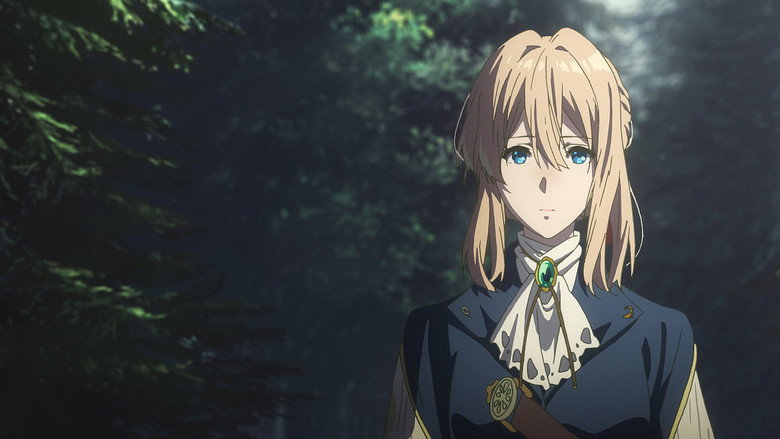
I keep thinking about the letters in this film—not just the ones Violet writes, but the ones left unsent, the ones that exist only in the space between two people. There’s a moment near the end where Isabella finally speaks, not to Violet, but to the sister she’s spent the entire film avoiding. The words aren’t grand or poetic; they’re simple, hesitant, the kind of thing you say when you’re not sure if you’re ready to say anything at all.
It’s not a triumphant breakthrough. It’s just a beginning. And maybe that’s the point.
Some stories don’t end with a resolution; they end with the quiet understanding that the work of feeling is never really done. You just keep writing, one letter at a time.
Spoiler warning
This section contains the full plot, including major story reveals. Overview above stays spoiler-free.
Violet Evergarden: Eternity and the Auto Memory Doll (2019) is a poignant side story to the acclaimed Violet Evergarden anime series, but its production had its own quiet drama. Directed by Haruka Fujita, the film expands the world of the Auto Memory Dolls while keeping the emotional core that fans adore. latestnetflix.com's take is that here’s what we know—and what remains unconfirmed—about its making.
The film serves as a spin-off to the original Violet Evergarden TV series, adapting a side story from the light novel Violet Evergarden Gaiden. Unlike the main series, which follows Violet’s journey of self-discovery, Eternity and the Auto Memory Doll shifts focus to a new character, Isabella York, and her relationship with a young girl named Taylor Bartlett. This allowed the creative team to explore fresh emotional territory while staying true to the franchise’s themes of love, loss, and the power of written words.
The film retains the original Japanese voice cast, with Yui Ishikawa reprising her role as Violet Evergarden. Minako Kotobuki voices Isabella York, while Aoi Yuuki takes on the role of Taylor Bartlett. The chemistry between these characters is central to the film’s emotional impact, and early reviews suggest the voice acting delivers—though specifics on recording sessions or behind-the-scenes dynamics remain scarce.
Rumors swirl about the challenges of balancing the new characters with Violet’s presence. Some fans speculate that the film’s tighter runtime (90 minutes, per) forced the team to streamline certain arcs, but no official confirmation exists.
Eternity and the Auto Memory Doll premiered in Japanese theaters on September 6, 2019, with international screenings following in early 2020. The film’s reception was warm, earning a 6.7/10 on SensCritique from over 800 votes. Critics praised its animation and emotional depth, though some argued it lacked the narrative weight of the original series.
Netflix later added the film to its library, introducing it to a broader audience. The platform’s dubbing process likely involved the same English voice cast as the TV series, though details about recording sessions or script adjustments remain unconfirmed.
Despite its success, the film’s production remains shrouded in mystery. No interviews or behind-the-scenes featurettes have surfaced to shed light on Fujita’s directorial choices or the team’s creative process. Was there tension between staying faithful to the source material and innovating? Did the voice actors improvise key scenes? For now, these details are left to speculation.
Entertainment rumors and trivia aggregated from public reporting. Treat speculation as unverified unless a cited source confirms it.
More titles in the same genres and with the same cast.