Donnie Yen
Silent Wolf

“The past returns with a vengeance.”
A story of lost love, young love, a legendary sword and one last opportunity at redemption.
Official
I keep thinking about the tavern fight. Not because it’s the best scene in Crouching Tiger, Hidden Dragon: Sword of Destiny—though it might be—but because it’s the one moment where the film remembers what it’s supposed to be. The camera lingers on Donnie Yen’s face as he sizes up his opponents, his eyes sharp with the quiet amusement of a man who knows he’s already won.
Then, in a blur of motion, he’s moving: a kick here, a parry there, a table flipped into a weapon. The choreography is Yuen Woo-ping at his most playful, a master showing off not just for the audience but for the craft itself. For a few seconds, the film sheds its weight—the expectations of a legacy sequel, the awkwardness of its hybrid release, the shadow of Ang Lee’s original—and just dances.
Then the moment passes, and the weight settles back in.
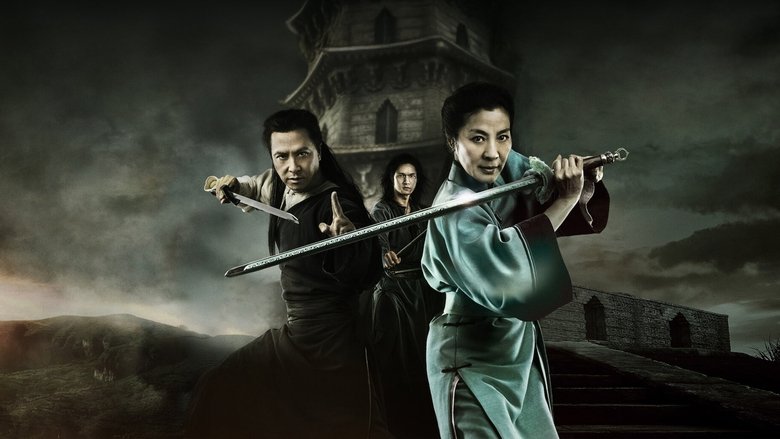
It’s hard to talk about Sword of Destiny without first acknowledging the elephant in the room: it’s a sequel to Crouching Tiger, Hidden Dragon, a film that didn’t just succeed but transcended. Ang Lee’s 2000 masterpiece was a revelation—a wuxia epic that treated its martial arts as poetry, its love story as tragedy, and its fight scenes as something closer to ballet than brawls. It won Oscars, it captivated audiences worldwide, and it left behind a legacy so towering that any follow-up would have to contend with the question: How do you step into that kind of light without being burned?
Yuen Woo-ping, the legendary action choreographer turned director, doesn’t try to outshine Lee. That much is clear. Instead, Sword of Destiny feels like a film caught between two impulses: the desire to honor the original and the need to carve out its own identity.
The result is a movie that often feels like it’s running in place, delivering the expected beats of a wuxia tale—lost love, betrayal, a legendary sword, a young warrior’s coming-of-age—without ever quite finding the rhythm that made its predecessor sing.
Part of the problem is the story itself. The film picks up 18 years after the events of Crouching Tiger, with Michelle Yeoh’s Yu Shu Lien emerging from retirement to protect the Green Destiny, the same sword that once belonged to her lost love, Li Mu Bai. The plot is serviceable, but it lacks the emotional core that made the original so devastating.
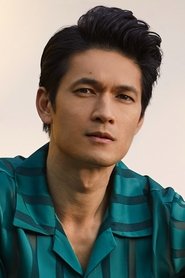
There’s no equivalent to the doomed romance between Li Mu Bai and Shu Lien, no moment where the personal and the mythic collide with such force that you feel the ground shift beneath you. Instead, the film spreads its emotional weight across a larger ensemble—Donnie Yen’s Silent Wolf, Natasha Liu Bordizzo’s Snow Vase, Harry Shum Jr.’s Wei-Fang—and in doing so, dilutes it. Everyone gets a backstory, but no one gets a soul.
That’s not to say the performances are weak. Michelle Yeoh, as ever, is a marvel. She carries the film’s quieter moments with a grace that feels effortless, her physicality speaking volumes even when the script doesn’t.
Donnie Yen, too, is magnetic, though his character, Silent Wolf, is more archetype than person. The real standout is Natasha Liu Bordizzo, whose Snow Vase is the closest thing the film has to a heart. Bordizzo brings a youthful energy to the role, a mix of vulnerability and defiance that makes her the most compelling figure on screen.
When she fights, it’s not just about skill—it’s about survival, about proving something to herself. In a film that often feels like it’s going through the motions, her presence is a reminder of what’s at stake.
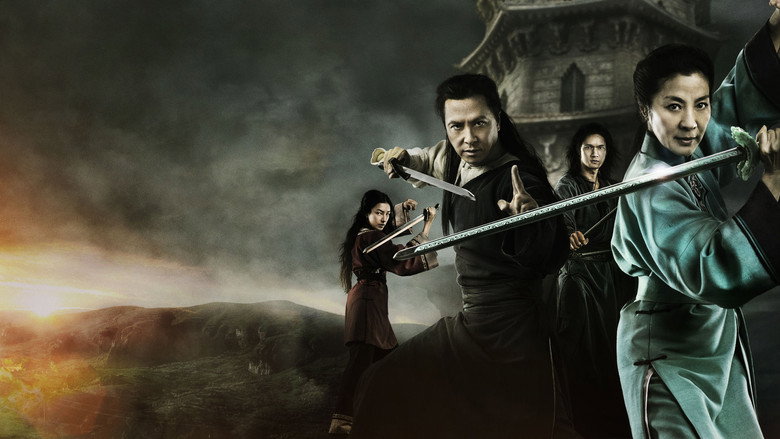
The action, of course, is where Sword of Destiny has the best chance to shine, and in moments, it does. Yuen Woo-ping’s choreography is as inventive as you’d expect from the man who brought us The Matrix’s wire-fu and Kill Bill’s blood-soaked ballet. The tavern fight is a highlight, a whirlwind of movement that feels both chaotic and precise.
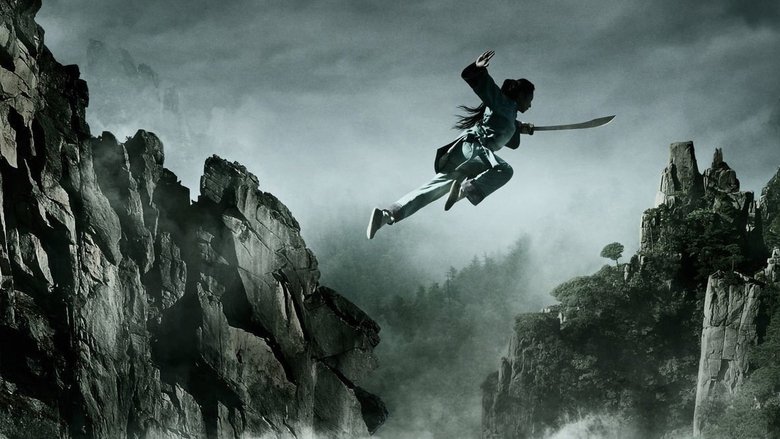
There’s a joy to it, a sense of play that’s infectious. Elsewhere, the film’s set pieces are visually striking—snowy rooftops, bamboo forests, a duel in the rain—but they often lack the emotional punch that made the original’s fights so unforgettable. In Crouching Tiger, every battle was a conversation, a physical manifestation of the characters’ inner lives.
Here, the fights are impressive, but they’re rarely necessary.
That disconnect might be the film’s biggest flaw. Sword of Destiny is a movie that knows how to stage a fight, but it doesn’t always know why. The original film used its action to explore themes of restraint and desire, of the tension between duty and passion. Here, the fights are often just fights—spectacle without subtext.
Even the climactic battle, which should feel like the culmination of everything that came before, feels oddly perfunctory, as if the film is checking a box rather than delivering a payoff.
Then there’s the matter of the film’s release. Sword of Destiny was one of Netflix’s early forays into the world of hybrid distribution, debuting simultaneously on the platform and in select IMAX theaters. It’s an interesting experiment, but it’s hard not to wonder if the film’s identity crisis is partly a product of its own distribution model. Was this a theatrical experience or a streaming one?
A prestige sequel or a niche action flick? The answer, frustratingly, seems to be both and neither. The film’s 100-minute runtime feels like it was calibrated for the attention spans of a streaming audience, but its visual grandeur—those sweeping landscapes, those meticulously staged fights—feels like it was made for the big screen.
The result is a movie that doesn’t quite fit anywhere.
That’s not to say Sword of Destiny is without merit. For fans of wuxia, it’s a pleasant enough diversion, a chance to revisit a world that once felt magical. For newcomers, it might even serve as an introduction to the genre, though it’s hard to imagine it leaving the same impression as its predecessor.
And for those who love martial arts cinema, there are moments here that will make your pulse quicken, even if they don’t linger in your memory.
But the film’s greatest sin might be its timidity. It’s a sequel that doesn’t dare to challenge the legacy of the original, a film that plays it safe when it should be taking risks. There’s a moment near the end where Shu Lien stands alone in a bamboo forest, the Green Destiny in her hands, and for a second, it feels like the film might finally find its voice.
But then the moment passes, and the weight settles back in.
I keep coming back to that tavern fight. Not because it’s perfect, but because it’s the one moment where Sword of Destiny feels like it’s having fun. The rest of the time, it’s a film that’s too busy looking over its shoulder to see where it’s going.
It’s not a failure, but it’s not a triumph either. It’s a footnote—a sequel that exists because the original was too beloved to leave alone, but not because there was more to say.
Maybe that’s enough. Maybe some stories don’t need sequels, don’t need to be revisited. Maybe the magic of Crouching Tiger, Hidden Dragon was always meant to stay in the past, untouched by time or expectation. Sword of Destiny tries to recapture that magic, but in the end, it’s a reminder that some swords are meant to stay hidden.
"A visually impressive but underwhelming sequel that struggles to recapture the magic of the original."
The film has strong martial arts choreography and brings back Michelle Yeoh, but it lacks the depth and emotional weight of its predecessor. The direct-to-video release and weaker narrative make it divisive, and to many it is a missed opportunity for a true successor to the 2000 classic.
Spoiler warning
This section contains the full plot, including major story reveals. Overview above stays spoiler-free.
The 2016 sequel Crouching Tiger, Hidden Dragon: Sword of Destiny arrived 16 years after Ang Lee’s Oscar-winning original, this time under the direction of legendary action choreographer Yuen Woo-ping. latestnetflix.com's view is that while the film didn’t replicate its predecessor’s critical acclaim, it delivered the high-flying martial arts spectacle fans expected—with a few behind-the-scenes twists.
One of the most talked-about aspects of Sword of Destiny was its unconventional release strategy. The film premiered simultaneously in IMAX theaters and on Netflix in February 2016, a bold move that divided audiences. While Netflix’s involvement brought global accessibility, some sources labeled it a "direct-to-video" (DTV) production, a classification that sparked debate about the project’s prestige. The film’s 100-minute runtime and mixed reception (a 5.3/10 rating on SensCritique) fueled speculation that it was a lower-budget follow-up compared to the lavish 2000 original.
Michelle Yeoh reprised her role as Yu Shu Lien, the only major character carried over from the first film. Donnie Yen, a martial arts superstar in his own right, joined the cast as Silent Wolf, a warrior with a mysterious past. Yen’s fight scenes—particularly a tavern brawl showcased in clips —became highlights of the film, showcasing Yuen Woo-ping’s signature choreography.
Newcomers like Natasha Liu Bordizzo (Snow Vase) and Harry Shum Jr. (Wei-Fang) brought fresh energy to the ensemble, though their characters didn’t always escape criticism for underdeveloped arcs. The cast gathered for a U.S. Premiere event, but unlike the original’s star-studded press tour, Sword of Destiny kept a lower profile.
The film wasn’t just a standalone project—it tied into a novelization by Justin Hill, titled Crouching Tiger, Hidden Dragon: Sword of Destiny. The book expanded on the movie’s plot, drawing from the original Crane-Iron series that inspired the 2000 film. This suggests the sequel was part of a broader effort to revive the franchise, though the novel’s reception remains unclear.
Critics and audiences were divided. While the action sequences delivered the expected wirework and swordplay, some felt the story lacked the emotional depth of the original. The film’s 5.3/10 rating on SensCritique and its DTV label hinted at its niche appeal. Still, the Netflix release ensured it found an audience, particularly among martial arts enthusiasts.
The soundtrack, composed by Shigeru Umebayashi, earned slightly better marks (6.8/10), but it didn’t achieve the cultural impact of Tan Dun’s score for the first film.
Sword of Destiny was a gamble—a sequel with a new director, a streaming-first release, and a cast blending veterans with relative unknowns. While it didn’t reach the heights of the original, it reinforced the enduring appeal of Crouching Tiger’s world. For fans of Donnie Yen’s fight choreography or Yuen Woo-ping’s signature style, it was a worthy, if imperfect, follow-up.
Entertainment rumors and trivia aggregated from public reporting. Treat speculation as unverified unless a cited source confirms it.
More titles in the same genres and with the same cast.