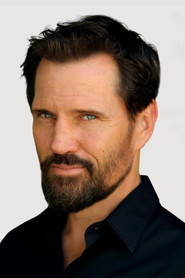
Langley Kirkwood
Johan Greser

Over the course of one fateful day, a corrupt businessman and his socialite wife race to save their daughter from a notorious crime lord.
Official
I’ve seen this story before—a corrupt businessman, a crime lord, a kidnapped daughter, a clock ticking down to midnight. The ingredients are familiar, almost comforting in their predictability. But what Collision does with them isn’t. Or at least, it tries not to be.
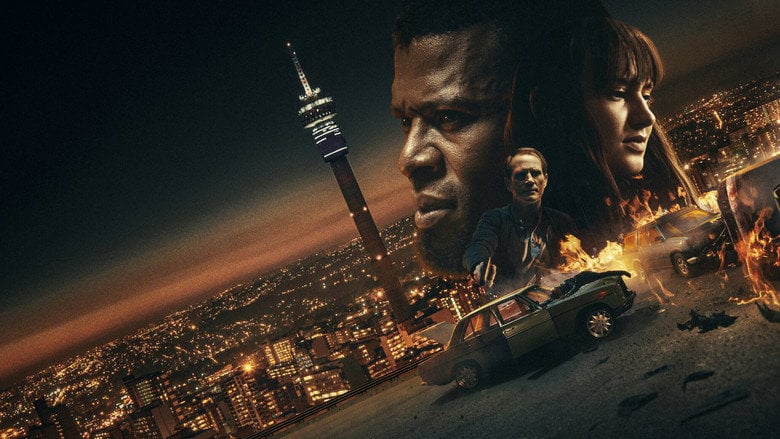
The film opens with a jolt: a car screeching to a halt, a man in a tailored suit stepping out into the neon glow of Johannesburg’s nightlife. Langley Kirkwood plays Richard, the businessman in question, and within minutes, you can feel the weight of his choices pressing down on him. His posture is rigid, his jaw set—classic alpha-male tension—but there’s something else there, a flicker of panic in his eyes that suggests he’s not just fighting for his daughter.
He’s fighting for the version of himself he’s spent years constructing. (And maybe, just maybe, he’s starting to realize how fragile that version really is.)
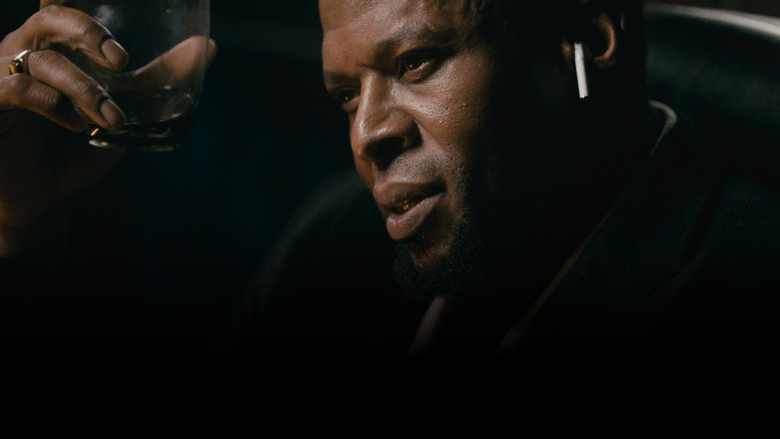
The premise is simple: Richard’s daughter has been taken, and the ransom demand leads him into the orbit of a crime lord named Vusi, played by Vuyo Dabula. What follows is a series of confrontations, chases, and revelations that unfold over the course of a single, frenetic day. The film’s 99-minute runtime doesn’t waste a second—every scene is either moving the plot forward or peeling back another layer of its characters.
That’s both its strength and its weakness. There’s no fat here, but there’s also no room to breathe. By the time the credits roll, you feel like you’ve run a marathon alongside these people, and not always in a good way.
Martorell’s direction is efficient, almost clinical in its precision. The camera lingers just long enough to let you absorb the tension before cutting away, and the editing keeps the pace relentless. It’s the kind of film where you’re constantly aware of the clock ticking down, not just in the story but in the very rhythm of the scenes.
There’s a moment early on where Richard’s wife, Claire (Tessa Jubber), is on the phone with the kidnappers, her voice steady but her hands shaking. The camera holds on her face for a beat too long, and you can see the moment she realizes she’s in over her head. It’s a small detail, but it’s the kind of thing that makes Collision feel like more than just a genre exercise.
But here’s the problem: for all its technical polish, the film struggles to make its characters feel like more than pawns in a high-stakes game. Richard is a cliché—the corrupt businessman with a heart of gold buried somewhere under the greed—and Claire is little more than the worried wife. The crime lord, Vusi, is the most interesting character on paper, but even he feels underdeveloped, reduced to a series of menacing one-liners.
Dabula does his best with the material, but the script doesn’t give him much to work with beyond a surface-level villainy.
That’s not to say the performances are bad. Kirkwood, in particular, brings a physicality to Richard that sells the desperation of the role. There’s a scene where he’s forced to confront one of his own employees, a young man he’s exploited for years, and the way Kirkwood’s body language shifts from aggression to pleading is fascinating to watch.
It’s the closest the film comes to real emotional depth. But these moments are fleeting, and the script often undercuts them with dialogue that feels too on-the-nose. (A late-film revelation about Richard’s past, for example, is delivered in a monologue so heavy-handed it practically has a sign around its neck that says, “This is important.”)
The South African setting is one of the film’s most intriguing elements, though it’s never fully explored. Johannesburg’s streets, its neon signs, its mix of wealth and poverty—all of it feels like a character in its own right, but the film doesn’t do much with it beyond using it as a backdrop for car chases and shootouts. There’s a missed opportunity here, a chance to ground the story in something deeper than just a generic crime thriller.
What does it mean for a man like Richard to be navigating this world? What does it say about power, corruption, and the cost of survival in a city like this? The film hints at these questions but never really digs in.
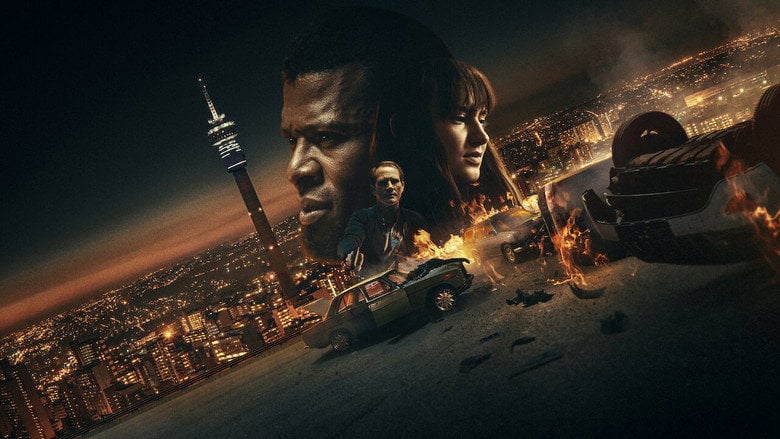
The reception, what little there is of it, has been lukewarm at best. SensCritique’s 3.7/10 rating suggests that audiences found it forgettable, and I can’t say I disagree. It’s not a bad film—there’s a certain pleasure in watching a well-oiled machine at work, even if the machine itself isn’t particularly original.
But it’s not a great one either. It’s the kind of movie you watch once, enjoy in the moment, and then struggle to remember the next day.
That’s not to say it doesn’t have its moments. The final act, in particular, is a masterclass in tension, with a series of twists that keep you guessing right up until the end. (I won’t spoil anything, but there’s a reveal involving Claire that I didn’t see coming, and it’s the one time the film manages to surprise you without feeling cheap.) But even here, the film can’t resist the urge to tie everything up in a neat bow, leaving little room for ambiguity or lingering questions.
In the end, Collision is a film that knows exactly what it wants to be—a slick, fast-paced thriller—and it delivers on that promise. But it’s also a film that could have been so much more. With a little more depth, a little more risk-taking, it might have transcended its genre trappings and become something truly memorable.
As it stands, it’s a perfectly fine way to spend 99 minutes, but it’s not a film that will stay with you long after the credits roll.
And maybe that’s okay. Not every movie needs to be a masterpiece. Sometimes, you just want to watch a man in a suit run through the streets of Johannesburg, trying to outrun his own mistakes. Collision gives you that, and for a little while, it’s enough.
"A tense but uneven crime thriller with strong performances that never fully escapes familiar tropes."
Gripping tension and solid acting, particularly from the leads, keep the story engaging despite its flaws. The plot leans on well-worn crime drama clichés and the side characters are underdeveloped, so the film falls short of its potential.
Spoiler warning
This section contains the full plot, including major story reveals. Overview above stays spoiler-free.
Fabien Martorell’s Collision (2022) arrived on Netflix as a sleek, high-octane thriller, blending the director’s signature visual precision with the raw energy of its South African setting. The film, a Netflix original, marks Martorell’s first foray into the streaming giant’s library, and it’s a project that leans heavily into his background in crime and action cinema. latestnetflix.com's take is that but what’s the story behind the making of this tense, 99-minute ride?
Martorell, a French filmmaker known for his meticulous approach to storytelling, has built a reputation for films that balance emotional depth with relentless pacing. Collision is no exception. Described as a mix of thriller, drama, and police procedural, the movie reflects Martorell’s knack for crafting narratives where every frame serves a purpose. While details about his creative process on Collision are scarce, his past work suggests a director who prioritizes atmosphere and character tension over flashy gimmicks.
The film’s South African backdrop isn’t just a setting—it’s a character in itself. Martorell’s decision to shoot in the country adds a layer of authenticity to the story, though specifics about the filming locations or challenges remain unconfirmed. What is clear is that the director’s French sensibilities collided (pun intended) with the local talent, resulting in a film that feels both globally polished and distinctly African.
Collision assembles a cast that brings both experience and fresh energy to the screen. Leading the pack is Langley Kirkwood, a familiar face in South African cinema, who plays a role that—based on the trailer—demands intensity and gravitas. Alongside him, Tessa Jubber (The Woman King) and Bonko Khoza (Blood & Water) add star power, while relative newcomers like Zoey Sneedon and Mpho Sebeng round out the ensemble.
One standout name is Vuyo Dabula, best known for his role in The Woman King and Blood & Water. His involvement in Collision hints at the film’s ambition to bridge local and international audiences. The chemistry between the cast is palpable in the trailer, where snappy dialogue and high-stakes confrontations take center stage. Rumor has it that Martorell’s hands-on directing style pushed the actors to deliver performances that are both raw and tightly controlled—though, without on-set reports, this remains speculative.
Collision hasn’t exactly set the world on fire with its critical reception. On SensCritique, the film holds a modest 3.7/10 rating from 34 votes, a score that suggests it’s either a love-it-or-hate-it experience. The trailer, however, tells a different story—one of slick action, sharp editing, and a premise that hooks viewers instantly. Netflix’s decision to greenlight the project likely hinged on its potential to deliver binge-worthy tension, even if the final product didn’t win over every critic.
One thing’s for sure: Collision isn’t Crash (2005), Paul Haggis’s Oscar-winning drama, despite the confusingly similar title. Martorell’s film is a tighter, more streamlined beast, designed for audiences craving adrenaline over introspection. Whether it succeeds depends on who you ask—but its existence proves Netflix is still betting big on mid-budget thrillers with international appeal.
With limited behind-the-scenes details, Collision remains something of an enigma. What we do know is that it’s a film that plays to Martorell’s strengths: taut storytelling, striking visuals, and a cast that brings the heat. The mixed reviews suggest it won’t be everyone’s cup of tea, but for fans of crime thrillers with a pulse, it might just be worth the ride.
For now, Collision sits in the shadows of bigger Netflix hits, but its director’s growing reputation—and the undeniable talent of its cast—could see it earn a cult following in time.
Entertainment rumors and trivia aggregated from public reporting. Treat speculation as unverified unless a cited source confirms it.
More titles in the same genres and with the same cast.