Odunlade Adekola
Elesin

Inspired by true life events, in the Oyo Empire in the 1940's, Elesin Oba, the king's chief horseman, succumbs to the lure of beauty and sexual desire on the very evening he is set to die in order to fulfil his lifelong debt of ritual suicide to accompany the dead Alaafin to the realm of the ancestors, he derails from a very important generational and spiritual transaction. This sets in motion a series of catastrophic consequences, in a spell-binding film of emotions, humour, and tragic role reversals that puts ancient beliefs and customs on trial in an ever increasingly post-modern and Western world.
Official
I keep thinking about the way the drummers look at Elesin Oba in those final moments—not with anger, but with something closer to grief. As if they already know what he doesn’t: that the ritual isn’t just about dying, but about the weight of a choice made too late. Elesin Oba: The King’s Horseman, Biyi Bandele’s adaptation of Wole Soyinka’s play Death and the King’s Horseman, is a film that lingers in the spaces between obligation and desire, between tradition and the slow, creeping erosion of it. It’s a story that feels both ancient and urgently modern, a collision of worlds where the past isn’t just remembered—it’s still fighting for its life.
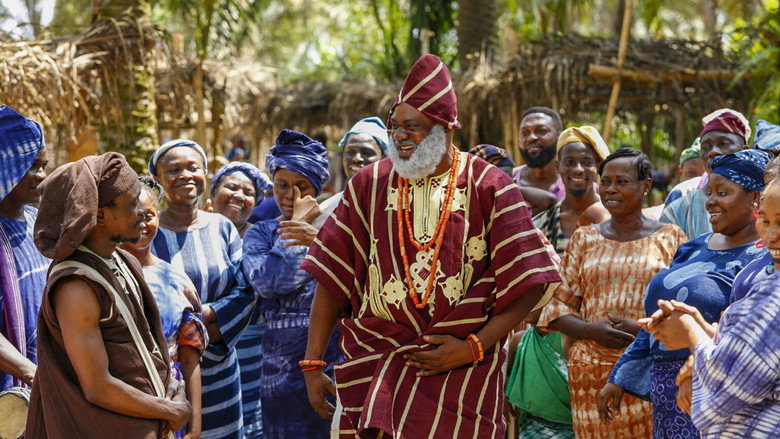
Bandele, who passed away just months after the film’s release, leaves behind a work that feels like a final, deliberate act of preservation. His direction is measured, almost reverent, as if he’s acutely aware that he’s not just telling a story but safeguarding a piece of cultural memory. The camera lingers on the details—the intricate beadwork of Elesin’s ceremonial robes, the sweat glistening on the drummers’ brows, the way the firelight casts long shadows across the faces of the elders.
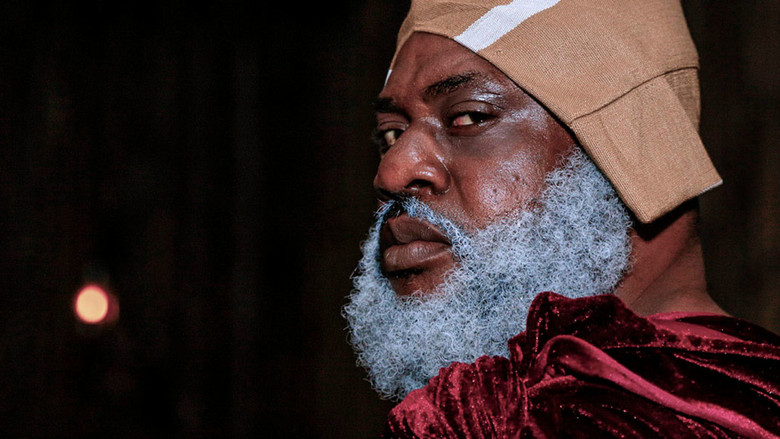
These aren’t just aesthetic choices; they’re a way of insisting that these rituals, these people, these moments matter. And yet, for all its visual richness, the film’s most compelling element is its central conflict: Elesin Oba (Odunlade Adekola), the king’s horseman, who is duty-bound to die by his own hand to accompany his deceased king into the afterlife. It’s a role he’s accepted his entire life, a role he’s even embraced—until the night of the ritual, when he’s seduced by the beauty of a young bride (Omowunmi Dada) and the intoxicating pull of the present moment.
The film doesn’t judge him for this hesitation, not really. Instead, it asks: What happens when the weight of tradition collides with the very human desire to live? Adekola’s performance is a masterclass in physicality.
There’s a scene early on where Elesin dances through the marketplace, his body loose and joyful, his laughter infectious. He moves like a man who’s already halfway to the spirit world, drunk on the knowledge that his death is not an end but a transition. But as the night wears on, his posture shifts—his shoulders tense, his eyes dart, his hands tremble.
It’s not fear of death that unravels him, but the sudden, overwhelming awareness of what he stands to lose. The film’s most devastating moment comes not in the act of betrayal itself, but in the quiet aftermath, when Elesin realizes that his hesitation has already set something irreversible in motion. The drummers stop.
The crowd falls silent. And for the first time, Elesin looks truly alone.
The colonial presence in the film is subtle but insidious. There are no mustache-twirling villains here, just a quiet, bureaucratic indifference that’s somehow more infuriating. The British district officer (Mark Elderkin) isn’t out to destroy Yoruba traditions—he’s just following protocol, treating Elesin’s ritual as a nuisance to be managed rather than a sacred act to be respected.
It’s a small but crucial distinction. The film isn’t interested in easy binaries; it’s more concerned with the way power operates in the spaces between intention and impact. The colonial officers don’t need to actively suppress the ritual—they just need to be in the way, to treat it as a problem to be solved rather than a truth to be honored.
This is where the film’s emotional core lies: in the quiet devastation of a world where no one is entirely wrong, but no one is entirely right, either. The elders who demand Elesin’s death aren’t monsters; they’re men trying to hold onto a way of life that’s slipping through their fingers. Elesin himself isn’t a coward; he’s a man caught between two impossible choices.
Even the young bride, whose beauty distracts him from his duty, is just a girl trying to navigate a world that’s changing faster than she can understand. The film doesn’t offer easy answers, because there aren’t any. Instead, it sits with the discomfort of that ambiguity, letting it linger like the smoke from a dying fire.
The reception to Elesin Oba has been muted, at least from what little we can gather. SensCritique’s 3.5/10 rating feels harsh, but it’s hard to know what exactly viewers were responding to—whether it was the film’s pacing, its unflinching portrayal of cultural practices, or simply the fact that it’s a story that demands patience. There’s a quietness to Bandele’s direction that might not play well in an era of flashy, high-stakes storytelling.
This is a film that asks you to lean in, to listen, to sit with discomfort. It’s not interested in easy catharsis or neatly tied-up endings. It’s a film about the cost of hesitation, the weight of duty, and the quiet tragedy of a world where the old ways are fading, but the new ones haven’t quite arrived yet.
I keep coming back to that final shot—the way the camera holds on Elesin’s face as the consequences of his choice unfold around him. There’s no grand speech, no last-minute redemption. Just a man standing in the wreckage of his own indecision, realizing too late that some choices can’t be undone.
It’s a devastating moment, not because it’s melodramatic, but because it feels so painfully human. We’ve all hesitated at the wrong moment. We’ve all let desire or fear or simple exhaustion derail us from the path we thought we were meant to follow. Elesin Oba doesn’t just tell a story about a man who fails to die for his king.
It tells a story about what it means to live with the weight of our own choices—and the quiet, crushing realization that sometimes, the thing we were meant to do was the thing we couldn’t bring ourselves to finish.
"A solemn Nigerian historical drama for those who want a serious literary tragedy rather than fast thrills."
Elesin Oba: The King's Horseman is a Nigerian historical adventure drama from director Biyi Bandele, running about 96 minutes and streaming on Netflix; it shares its title with a verse tragedy by Wole Soyinka. Discussion is review-led, with a dedicated Netflix movie review video and pages tracking reviews, ratings and trailers, a sign of steady curiosity from historical drama fans. Expect a serious historical tragedy, not a light night in.
Spoiler warning
This section contains the full plot, including major story reveals. Overview above stays spoiler-free.
Biyi Bandele’s Elesin Oba: The King’s Horseman (2022) arrived as a poignant swan song for the Nigerian filmmaker, blending Yoruba tradition with cinematic ambition. The Netflix original, adapted from Wole Soyinka’s play Death and the King’s Horseman, marked Bandele’s directorial debut in film—a project that took on deeper resonance after his untimely death just months after its release. latestnetflix.com's read is that here’s what we know about the making of this culturally charged drama.
Biyi Bandele, a prolific novelist and playwright, died on August 7, 2022, at age 54. Elesin Oba was his first and only feature film as director, making its premiere at the Toronto International Film Festival (TIFF) in September 2022. The timing lent the project an air of bittersweet significance—Bandele’s adaptation of Soyinka’s 1975 play, a critique of colonial interference in Yoruba ritual, became his final artistic statement.
The film’s production was announced in 2021, with Bandele attached to direct and co-write the screenplay. Given his background in theater and literature, the adaptation was a natural fit. However, his sudden passing left fans and critics wondering how much of his personal touch remained in the final cut. TIFF reviews described the film as "inspired by true-life events," suggesting Bandele grounded Soyinka’s allegory in historical authenticity.
The ensemble cast brought star power and cultural weight to Elesin Oba. Leading man Odunlade Adekola, a Nollywood heavyweight, played the titular Elesin Oba, the king’s horseman duty-bound to die alongside his ruler. Adekola’s casting was a coup—his ability to balance gravitas and emotional depth was critical for a role steeped in tragic inevitability.
Shaffy Bello, known for her roles in King of Boys and The Wedding Party, portrayed Iyaloja, a key figure in the community’s ritual dynamics. Deyemi Okanlawon, another Nollywood stalwart, took on the role of Olunde, Elesin’s son, whose return from abroad sets the story’s conflict in motion. The supporting cast included veterans like Jide Kosoko and relative newcomers such as Omowunmi Dada, ensuring a mix of experience and fresh energy.
Notably, the film featured international actors like Mark Elderkin and Jenny Stead, hinting at Bandele’s effort to bridge Nigerian storytelling with global appeal—a strategy Netflix likely encouraged.
Filming took place in Nigeria, with locations chosen to reflect the pre-colonial setting of Soyinka’s play. Behind-the-scenes footage and interviews (available on YouTube) reveal a production that leaned heavily into Yoruba aesthetics, from costumes to music. However, the film’s reception was mixed. While some praised its visual grandeur and faithfulness to Soyinka’s themes, others criticized its pacing and narrative clarity. A French review site, SensCritique, gave it a lukewarm 3.5/10, citing a "lack of rhythm" in the storytelling.
One unverified rumor suggests Bandele clashed with producers over the film’s tone—whether to emphasize the tragic ritual or soften it for broader audiences. Without confirmation, this remains speculative, but the tension between cultural fidelity and commercial appeal is a common challenge in adaptations.
Netflix’s involvement was a double-edged sword. On one hand, the platform provided the budget and reach to bring Elesin Oba to a global audience. On the other, streaming algorithms often favor accessible content, which may have pressured Bandele to simplify Soyinka’s dense allegory. Reviews on YouTube highlight this divide: some viewers called it a "masterpiece of African cinema," while others found it "confusing" or "too slow".
The film’s release also coincided with a wave of Nollywood projects on Netflix, including King of Thieves (2022), which shared Odunlade Adekola in its cast. This context suggests Elesin Oba was part of a broader push to elevate Nigerian stories—but whether it succeeded in standing out remains debated.
Bandele’s death cast a shadow over Elesin Oba, turning it into a posthumous tribute. The film’s themes—colonial disruption, cultural duty, and personal sacrifice—echoed Bandele’s own journey as a storyteller navigating tradition and modernity. While it may not have achieved universal acclaim, its existence is a sign of his ambition.
For fans of Soyinka’s work, the adaptation offers a visual companion to a play often confined to the stage. For Nollywood, it’s a reminder of the industry’s growing global aspirations. And for Bandele, it’s a final chapter in a career that spanned novels, plays, and now, cinema.
Entertainment rumors and trivia aggregated from public reporting. Treat speculation as unverified unless a cited source confirms it.
More titles in the same genres and with the same cast.