Kıvanç Tatlıtuğ
Yusuf

An unexpected reunion between a traveling musician and his son opens old wounds as the two set out on a long journey to a troubadour festival.
Official
I keep thinking about the moment when the father, played by Settar Tanrıöğen, finally picks up his bağlama after years of silence. The camera doesn’t rush—it lingers on his hands, the way his fingers hesitate before settling on the strings, as if the instrument itself might reject him. There’s no swelling music, no dramatic close-up.
Just the quiet sound of a single note, tentative and raw, hanging in the air like a question neither man in the car dares to answer. That’s the film in a nutshell: a journey that’s less about reaching the festival than about what happens when you stop running from the past.
The Festival of Troubadours (2022) is a road movie that refuses to move fast. Directed by Özcan Alper, it follows a famous musician, Ali (Kıvanç Tatlıtuğ), who returns to his Anatolian hometown after decades away, only to find his estranged father, Yusuf (Tanrıöğen), waiting for him. The two set off on a long drive to a troubadour festival, a journey that’s as much about the miles between them as the years.
The film is slow, deliberate, and often frustrating in its refusal to give us the emotional payoff we’ve been trained to expect. But that’s the point. This isn’t a story about reconciliation.
It’s about the weight of what can’t be said.
Alper has always been a director fascinated by memory and displacement. His previous films, like Autumn (2008) and Future Lasts Forever (2011), grapple with the lingering trauma of Turkey’s political past, often through characters who are physically or emotionally stuck. The Festival of Troubadours feels like a spiritual cousin to those works, but where his earlier films were steeped in the violence of the Kurdish conflict, this one is quieter, more intimate. The conflict here isn’t between nations or ideologies—it’s between two men who share the same blood but speak different languages.
The film’s greatest strength is its performances, particularly Tanrıöğen’s. Yusuf is a man who has spent his life carrying the weight of tradition, of expectations, of a son who left him behind. Tanrıöğen doesn’t play him as a victim or a villain, but as someone who has learned to live with his regrets by pretending they don’t exist.
Watch the way he holds his body—shoulders slightly hunched, as if bracing for a blow, eyes darting away when Ali tries to meet them. There’s a scene where Yusuf stops the car to pray by the side of the road, and the camera stays on him as he kneels, his lips moving silently. It’s a small moment, but it tells you everything about him: a man who still believes in ritual, even if he’s not sure what he’s praying for anymore.
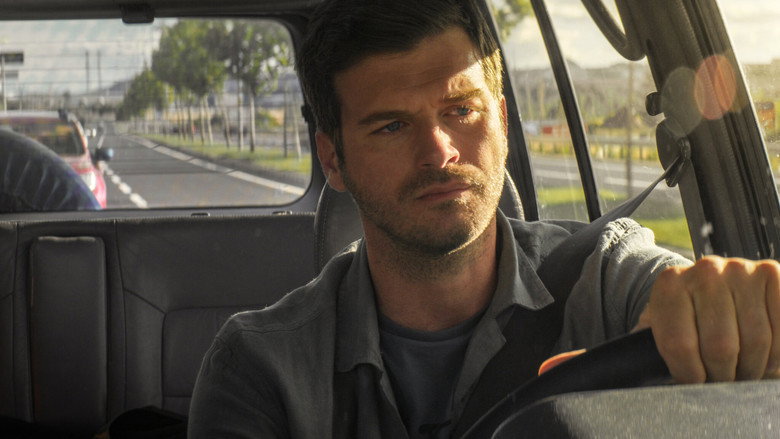
Kıvanç Tatlıtuğ, best known in Turkey for his leading-man roles in glossy TV dramas, is an interesting choice for Ali. He’s not the kind of actor you’d expect to see in a film this understated, and at times, his performance feels like it belongs to a different movie. Ali is supposed to be a man who has spent his life running from his past, but Tatlıtuğ’s natural charisma keeps pulling him back into the frame.
There’s a scene where Ali gets drunk at a roadside café, and for a moment, you think he might finally let his guard down. But the moment passes, and he’s back to being the polished, distant figure we’ve come to expect. It’s not that Tatlıtuğ is bad—it’s that he’s too good at being the kind of man who knows how to charm a room.
That’s not Ali.
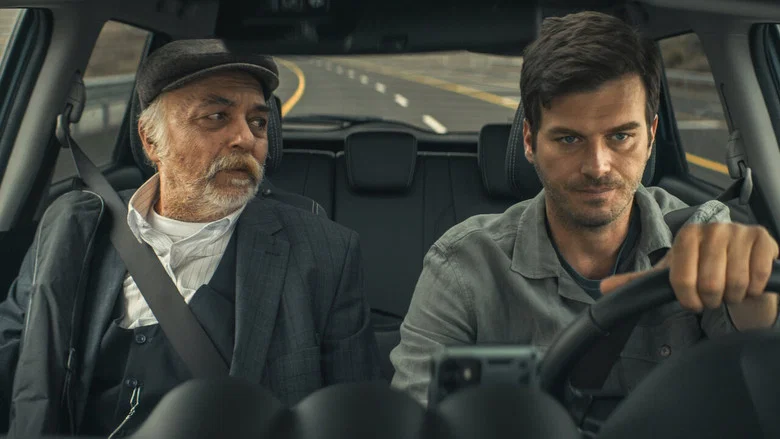
The film’s pacing will test your patience. There are long stretches where nothing happens—just two men in a car, driving through the vast, empty landscapes of central Anatolia. The camera lingers on the road, the sky, the dust kicked up by passing trucks.
It’s beautiful, but it’s also boring, in the way that real life is often boring. That’s clearly intentional. Alper isn’t interested in the kind of catharsis we get from Hollywood road movies, where every argument leads to a breakthrough and every silence is pregnant with meaning.
Here, the silences are just silences. The arguments are just arguments. The past isn’t something to be overcome—it’s something to be endured.
That refusal to give us what we want is what makes The Festival of Troubadours so unsettling. We’re used to stories about fathers and sons where the journey leads to some kind of resolution—where the son learns to forgive, or the father learns to let go. But this film doesn’t believe in resolution.
It believes in the quiet, aching persistence of memory. The festival at the end isn’t a triumph. It’s just another stop on a road that never really ends.
I keep coming back to that scene with the bağlama. Yusuf plays a single note, and for a moment, it feels like something might break open between them. But then the moment passes, and they’re back in the car, driving.
The film doesn’t give us the satisfaction of knowing whether Yusuf will ever play again, or whether Ali will ever stop running. It doesn’t need to. Some wounds don’t heal.
Some roads don’t lead anywhere. And sometimes, the most honest thing a story can do is sit with that.
"A poignant yet uneven father-son drama with strong performances but a slow, meandering pace."
The father-son relationship has emotional depth and authenticity, carried by Kıvanç Tatlıtuğ and Settar Tanrıöğen. The atmospheric journey and troubadour themes suit fans of character-driven stories. The deliberate pacing and lack of narrative urgency frustrate some, and the story feels drawn-out and underdeveloped in places.
Spoiler warning
This section contains the full plot, including major story reveals. Overview above stays spoiler-free.
Who knew the real plot twist of The Festival of Troubadours (Aşıklar Bayramı) would be behind the camera? While its characters drown in regrets, abandonment and generational pain, the actual production is so drama-free it practically qualifies as a wellness retreat. latestnetflix.com's view is that still, there is some tea to spill—just don’t expect fistfights in Kars or secret babies in Kırşehir.
If you came looking for “Kıvanç storms off set in Kars after screaming match with director!” or “Netflix buries secret cut of Aşıklar Bayramı after test-screening disaster!”—this is not that story.
What has been reported is a surprisingly mature, low-noise production:
In a landscape where Turkish sets are notorious for spawning real-life soap operas, The Festival of Troubadours might be the rare project where the only wrecked relationships are the fictional ones.
Entertainment rumors and trivia aggregated from public reporting. Treat speculation as unverified unless a cited source confirms it.
More titles in the same genres and with the same cast.