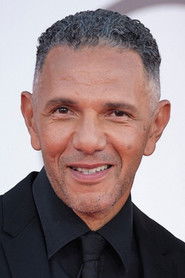
Tahar Rahim
Brahim

A comedian's relationship with his family crumbles when his career begins to take off.
Official
I’ve seen this story before—the artist who climbs too fast, the family left behind, the applause that sounds like a funeral bell. It’s a well-worn groove in cinema, one that usually ends with a redemptive hug or a tragic fall. The Price of Success doesn’t bother with either. Instead, it lingers in the messy middle, where the jokes still land but the silence between them grows heavier.
Teddy Lussi-Modeste’s film is a comedy that forgets to laugh, a drama that refuses to cry. It’s unsettling in the best way.
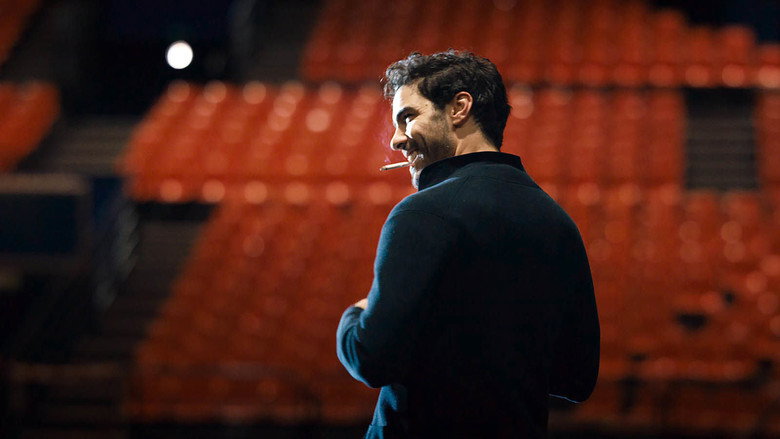
Tahar Rahim plays Brahim, a stand-up comic whose career is finally taking off. We meet him mid-set, his body coiled tight like a spring, his voice a rapid-fire delivery of jokes about his working-class roots, his immigrant parents, the absurdity of success. The audience roars.
He doesn’t. There’s something off about his smile—too wide, too practiced, like a man trying to convince himself he’s having fun. Rahim has always had a gift for playing men who are one wrong move away from unraveling (A Prophet’s Malik El Djebena, The Serpent’s Charles Sobhraj), and Brahim is no different.
But here, the unraveling isn’t violent or operatic. It’s quieter. A missed call.
A canceled dinner. A wife who stops laughing at his jokes.
The film’s first act moves like a farce, with Brahim bouncing between gigs, interviews, and the crumbling remains of his personal life. Lussi-Modeste shoots these scenes with a handheld restlessness, the camera darting after Brahim like a paparazzo. The humor is broad but sharp—Brahim’s agent (a scene-stealing Roschdy Zem) is a fast-talking hustler who treats his client like a product, while his wife (Maïwenn) oscillates between exasperation and exhaustion.
There’s a moment early on where Brahim tries to impress a group of industry types at a party, his jokes growing more desperate as the room’s attention drifts. The camera lingers on his face just a beat too long after the punchline, catching the flicker of panic before he plasters on another grin. It’s the kind of detail that makes you wince and laugh at the same time.
But then the film pivots. Not with a grand gesture or a dramatic confrontation, but with a single, devastating scene in a car. Brahim is driving his father (Grégoire Colin) home after a family gathering.
The old man, a quiet presence throughout the film, suddenly turns to his son and says, “You think you’re better than us now?” The line isn’t delivered with anger, just a weary resignation. Brahim doesn’t answer. The camera stays on his face, the dashboard lights casting long shadows, and for the first time, we see him without the armor of his jokes.
The silence that follows isn’t just the absence of sound—it’s the absence of everything. The laughter, the ambition, the love. All of it gone, leaving only the hollow echo of a man who doesn’t know how to be anything but funny.
What makes The Price of Success more than just another cautionary tale about fame is its refusal to simplify. Brahim isn’t a villain or a victim. He’s a man who wanted something badly enough to break the people who loved him, and now he has to live with the pieces.
The film’s most painful moments aren’t the big fights or the public humiliations, but the small, private ones—the way his daughter looks at him like he’s a stranger, the way his mother’s hands tremble when she pours his coffee. Lussi-Modeste, who is of Romani descent, has a keen eye for the ways marginalized communities police their own, and here he extends that scrutiny to the cost of assimilation.
Brahim’s success isn’t just about money or fame; it’s about leaving behind the world that made him. The film doesn’t judge him for it, but it doesn’t let him off the hook either.
The ending is characteristically ambiguous. Brahim gets what he wanted—a bigger stage, a wider audience—but the film cuts away before the applause begins. Instead, we’re left with a quiet shot of him sitting alone in his dressing room, staring at his reflection.
The camera pulls back slowly, as if reluctant to intrude. It’s a small moment, but it lingers. What do you do when you’ve spent your whole life chasing something, only to realize it doesn’t fit?
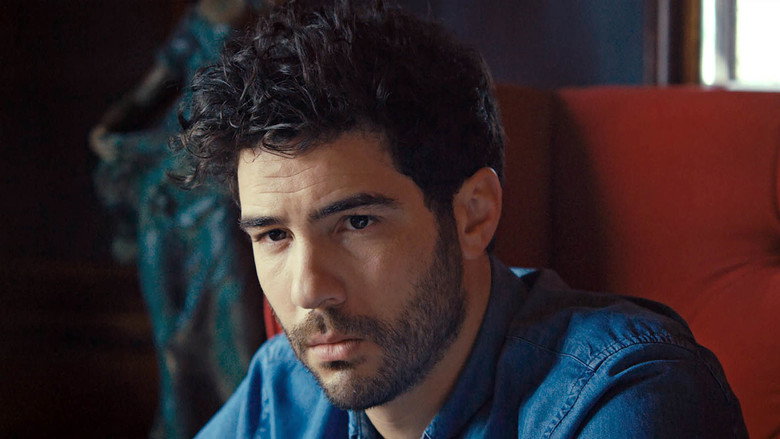
I keep thinking about that car ride. Not the words, but the silence after. The way the camera held on Brahim’s face, the way Rahim let the weight of it settle into his bones.
That’s the film in a nutshell—not a story about success or failure, but about the quiet moments in between, when the laughter fades and all that’s left is the echo of your own choices. It’s not a perfect film. The pacing stumbles in places, and some of the supporting characters feel underdrawn.
But when it works, it works because it doesn’t try to fix anything. It just sits with the mess, the way families do, the way we all do when we realize we’ve outgrown the people who raised us.
Maybe that’s why it’s so hard to shake. We’ve all been Brahim at some point—laughing a little too loud, chasing something we’re not sure we even want, leaving pieces of ourselves behind. The price of success isn’t just what you give up. It’s what you can’t get back.
"A raw and intense character study with standout performances but uneven pacing."
Tahar Rahim gives a gripping lead performance as a man driven by ambition and its consequences. The pacing is inconsistent, with moments of brilliance undercut by slower, less engaging segments. The gritty tone and emotional depth are strengths, but the execution is mixed.
The Price of Success (2017), directed by Teddy Lussi-Modeste, is a French dramedy that blends sharp social commentary with the personal struggles of its protagonist. Starring Tahar Rahim in the lead role, the film premiered at the Toronto International Film Festival (TIFF) in 2017, signaling its ambition to resonate beyond France’s borders. But what went into making this under-the-radar project, and why does it stand out in Lussi-Modeste’s filmography?
Teddy Lussi-Modeste, a French filmmaker of Romani descent, has built a career exploring themes of identity, family, and cultural displacement. The Price of Success fits neatly into this pattern, though its comedic edge sets it apart from his more somber works like Jimmy Rivière (2011) or Pas de vagues (2024). The film’s tone—dubbed a "dramatic comedy" (comédie dramatique)—suggests a deliberate balancing act between humor and hardship, a hallmark of Lussi-Modeste’s storytelling.
While the evidence doesn’t reveal specific inspirations behind The Price of Success, Lussi-Modeste’s background likely informs its perspective. His films often center on outsiders navigating societal pressures, and this project appears no different. The cast, led by Tahar Rahim (known for A Prophet and The Serpent), brings gravitas to a story that, based on its TIFF premiere, aimed for both critical and festival buzz.
Rahim, who plays the lead, is joined by a strong ensemble:
The film’s runtime—92 minutes—hints at a tight, character-driven narrative, a common thread in Lussi-Modeste’s work. While the evidence doesn’t detail behind-the-scenes dynamics, the pairing of Rahim and Zem, both known for intense performances, suggests a project with emotional weight.
The Price of Success earned a modest 5.6/10 on SensCritique, based on over 1,300 votes. For context, that’s slightly above Lussi-Modeste’s debut Jimmy Rivière (5.5/10) but below his later film Pas de vagues (5.8/10). The mixed reception might reflect the film’s tonal balancing act—dramatic yet comedic, personal yet socially aware.
The TIFF premiere indicates the film had festival aspirations, though it didn’t break out as a major awards contender. Still, for fans of French cinema, it offers a glimpse into Lussi-Modeste’s evolving style, bridging his Romani heritage with broader themes of ambition and sacrifice.
Despite its festival run, The Price of Success remains a relatively obscure entry in Rahim’s filmography. Key details—like the film’s budget, shooting locations, or direct inspirations—aren’t available in the retrieved evidence. Rumors about on-set tensions or creative clashes? Unconfirmed. The film’s legacy, for now, rests on its thematic depth rather than tabloid drama.
For those curious, the trailer (available on YouTube) teases a story of ambition and its costs, but the full experience awaits viewers willing to seek it out.
Entertainment rumors and trivia aggregated from public reporting. Treat speculation as unverified unless a cited source confirms it.
More titles in the same genres and with the same cast.